CBD and Your Heart Rate: What the Monitor Data Shows
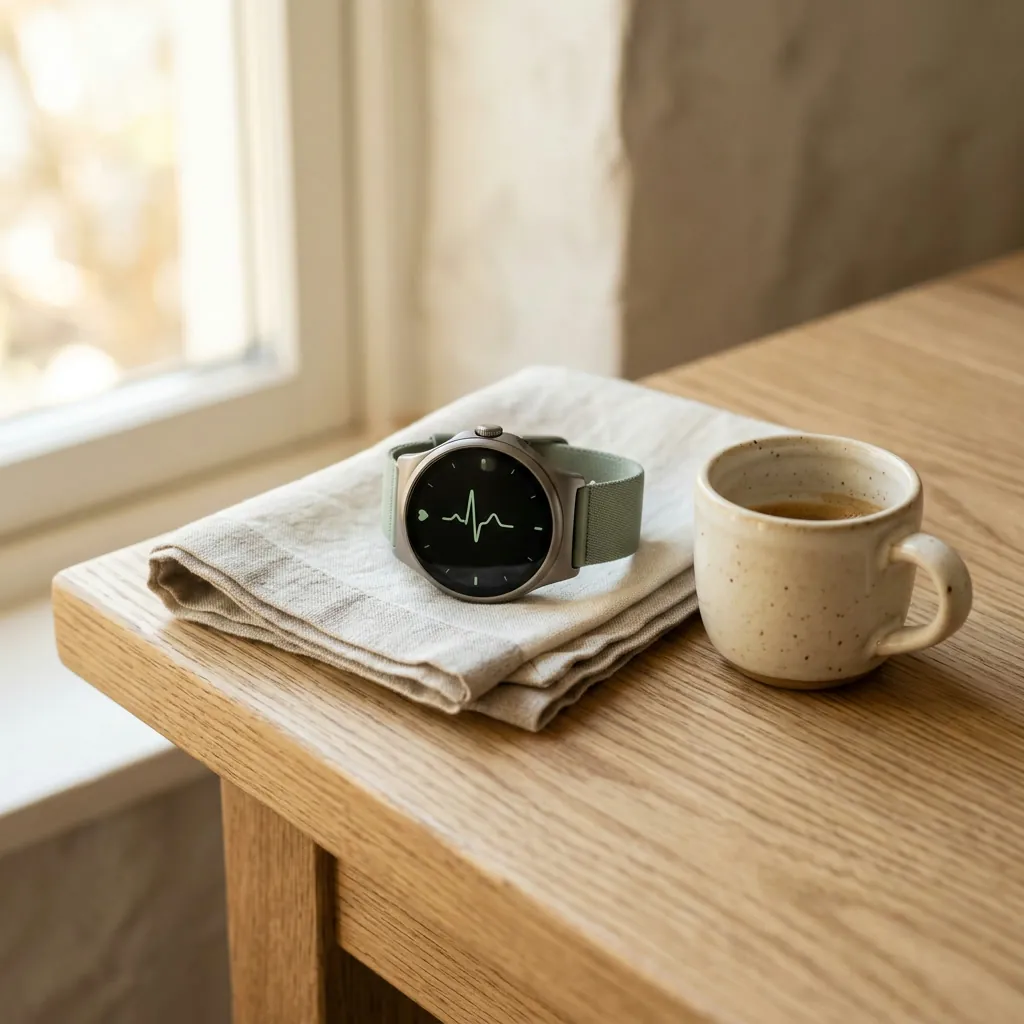
You take your evening oil, sit down, and your watch tells you your resting heart rate is four beats higher than it was last week. You check again twenty minutes later and it is back to normal. You wonder whether you imagined it, whether the CBD caused it, and whether you should care.
That is a better question than most articles answer, because the honest answer is that CBD does measurably affect heart rate and blood pressure in the short term, the effect is usually small and transient, and the size of it depends on things nobody asks you about.
The Short Answer
In controlled studies, acute CBD doses produce small changes in heart rate and blood pressure, most often a slight increase in heart rate and a slight drop in blood pressure, returning toward baseline within hours. The effect is generally modest in healthy people and more relevant if you already have a cardiovascular condition or take medication that affects the same systems.
It is not nothing. It is also not the dramatic cardiovascular event that some marketing implies in either direction.
Why Heart Rate Moves At All
Heart rate is not a single number generated by one mechanism. It is the output of a balance between sympathetic signalling that speeds the heart and parasympathetic signalling that slows it, with the endocannabinoid system sitting across both.
CBD interacts with several targets that touch this balance, including the transient receptor potential channels and, indirectly, the enzymes that break down endocannabinoids. It is also a mild vasodilator in some vascular beds, which lowers blood pressure slightly, and the body compensates for a drop in pressure by raising heart rate. That compensatory step is the most likely explanation for the small heart rate increases seen in trials.
This matters because it means the heart rate change is often a downstream consequence rather than a direct effect on the heart itself. The distinction matters when you are trying to work out whether what you are feeling is a problem.
What the 2023 Onward Research Actually Shows
A 2026 study in the British Journal of Clinical Pharmacology examined acute effects of THC and a CBD plus THC combination on cardiovascular measures. This is important because most real-world products are not pure CBD, and the combination behaves differently from either alone.
A 2026 randomised study in the Journal of Psychopharmacology looked at acute behavioural effects of low-dose cannabidiol. Low dose matters here, because a substantial portion of the consumer market takes doses far below trial levels and still reports effects.
A 2025 study in the American Journal of Physiology, Heart and Circulatory Physiology examined the acute cardiovascular response to dynamic exercise and recovery. Exercise is where heart rate regulation is under the most load, which makes it a useful stress test for any cardiovascular effect.
A 2025 paper in Sports Medicine Open looked at acute effects of cannabidiol on physiological and subjective measures. Athletes are a population that notices heart rate changes immediately, which makes this literature unusually granular.
A 2025 study in Nutrients examined the effects of an acute dose of cannabidiol on health and two-minute walk outcomes. Functional measures like a two-minute walk tell you more about real-world consequence than a single monitor reading.
A 2026 paper in Cannabis and Cannabinoid Research reported on safety and tolerability of low-dose full-spectrum cannabidiol. Tolerability data is where the small effects actually show up as something a person notices.
A 2025 study in the Journal of Pharmacological and Experimental Therapeutics examined effects of THC, CBD and combinations. Combination studies are the ones that most closely reflect what people actually take.
A 2026 case report in the Journal of Medical Case Reports described cannabidiol as an adjunct in refractory paroxysmal sympathetic hyperactivity, a condition involving uncontrolled surges in heart rate, blood pressure and temperature. A single case report is the weakest form of evidence and it is also a reminder that cannabinoids can influence autonomic regulation in unusual populations.
There is real signal here. There is no long-term cardiovascular safety trial of daily CBD in a general population, which is the study that would actually settle the question.
What Counts as a Meaningful Change
This is where most people misread their own data.
A resting heart rate varies by five to ten beats per minute across a normal day, driven by posture, hydration, caffeine, stress, room temperature, sleep debt, whether you have eaten, and where you are in your menstrual cycle if you have one. Any measurement you take after starting a supplement is competing against all of that noise.
A four-beat difference measured once is not a finding. A four-beat difference measured every morning at the same time, for two weeks before and two weeks after starting, is approaching one.
There is also the expectation problem. Heart rate responds to attention. People who are monitoring their heart rate because they started a new supplement are, by definition, paying attention to their heart, and attention itself raises it slightly. Any honest self-experiment has to account for that.
The Interaction Problem
This is the part that matters more than any acute effect.
Several common cardiovascular drugs act on the same systems CBD touches. Beta blockers deliberately lower heart rate and blood pressure. Calcium channel blockers affect vascular tone. Some anti-arrhythmics have narrow therapeutic windows. Anticoagulants, which many cardiac patients take, interact with CBD through the liver enzyme pathway rather than through the heart directly.
If you are on any of those, the correct sequence is to tell the prescriber before you start CBD rather than after you notice something. Our guide to CBD and blood thinners covers the anticoagulant side of this in detail, and our heart health overview covers the wider cardiovascular picture.
There is also a measurement problem in the other direction. If you take CBD and your heart rate rises, you may change your cardiac medication dose in response to a supplement effect. That is the scenario worth avoiding, and it is avoided by disclosure rather than by vigilance.
What the Evidence Does Not Show
Plainly:
- It does not show that CBD raises or lowers resting heart rate in a predictable, clinically meaningful way across a population.
- It does not show a dose relationship that anyone can use to plan their own intake.
- It does not show long-term cardiovascular safety of daily use. The trials are short.
- It does not show that CBD is safe alongside specific cardiac medications. That is a pharmacist question, not a blog question.
- It does not show that a heart rate change you observe is caused by CBD rather than by the dozen other things that move heart rate.
- It does not show that CBD treats any cardiac condition. Nothing in this literature supports a therapeutic claim.
How to Test It On Yourself, Properly
If you want an answer about your own body, the design matters more than the supplement.
Measure at the same time every day, ideally on waking, before coffee and before getting out of bed. Record it for two weeks before you start. Then take a consistent dose at a consistent time and record for two weeks. Keep everything else steady: sleep, caffeine, alcohol, exercise volume.
Then look at the averages, not the individual readings. If your two-week baseline average is 62 and your two-week on-CBD average is 63, you have learned that CBD is not doing much to your heart rate, which is the most common result. If it moves by more than five beats consistently, that is worth raising with a clinician.
Stop if you notice palpitations, chest discomfort, unusual breathlessness, or dizziness on standing. Those are not monitoring data points. They are reasons to seek advice.
Who Should Be More Careful
Some groups have less margin for a small cardiovascular effect.
People with existing arrhythmias, particularly atrial fibrillation, should treat any heart rate effect as clinically relevant rather than cosmetic. People with low blood pressure should watch for dizziness on standing, because a further small drop compounds. Older adults on multiple cardiac medications have both the least margin and the most interaction risk. Anyone with a history of fainting should be cautious about vasodilation.
Pregnancy is a separate category entirely, and our pregnancy safety guide covers why the evidence there is thinner still.
A Note on Wearables
The device on your wrist is better than nothing and worse than you think. Optical heart rate sensors are reasonably accurate at rest and degrade during movement and in cold conditions. They also smooth data in ways that hide short excursions.
If you are genuinely trying to detect a small effect, a chest strap is more accurate, and consistency of measurement conditions matters more than the device. A cheap strap used the same way every morning beats an expensive watch used randomly.
Why the Timing of Your Dose Changes What You See
Almost every report of "CBD raised my heart rate" describes a measurement taken thirty to ninety minutes after a dose. That is not an accident.
Oral CBD absorption is slow and erratic. Peak plasma concentration typically arrives somewhere between one and three hours after swallowing an oil, depending heavily on whether there was fat in the stomach. A capsule taken on an empty stomach may peak earlier and lower. A tincture held under the tongue absorbs partly through the mouth and arrives faster.
So if you measure at the wrong moment, you can catch the peak and conclude CBD does something dramatic, or measure four hours later and conclude it does nothing. Neither conclusion is wrong. They are measurements of different parts of the same curve.
There is a second timing issue that almost nobody accounts for: what you did in the hour before. Caffeine has a half-life of roughly five hours and a measurable heart rate effect for longer than most people assume. A coffee at 3pm is still influencing an evening reading. Alcohol raises heart rate during sleep. A large meal shifts blood flow toward digestion. Standing up changes it. A warm room changes it.
The reason this matters is that the CBD question is a small signal competing against large ones. Studies control for these things. Your living room does not.
What Full-Spectrum Changes
Most trials use isolated CBD. Most people buy full-spectrum products, which contain small amounts of THC and other cannabinoids.
THC raises heart rate more reliably than CBD does, typically by ten to twenty beats in the first hour or two after use, and the effect is larger in people who do not use it regularly. In a full-spectrum product the THC content may be legally tiny and still physiologically active, particularly in someone who is cannabinoid-naive.
This is the single most common explanation for a heart rate rise that a person attributes to CBD. The product was not pure CBD. The label said full-spectrum, which is accurate, and the person read it as "CBD" anyway.
If you are specifically trying to isolate a CBD effect, an isolate is the cleaner experiment. If you are taking full-spectrum for the entourage argument, then you are testing the whole plant and should interpret your heart rate data that way.
The Blood Pressure Side, Which Matters More
Heart rate gets the attention because wearables display it. Blood pressure is the measurement that actually carries risk, and it is the one most people cannot measure at home without equipment.
CBD appears to produce a small drop in blood pressure, most consistently in the systolic reading, in the hours after a dose. In healthy young adults this is unremarkable. In three groups it is not.
People with low baseline blood pressure can feel a further drop as dizziness, particularly on standing. That is orthostatic hypotension, and it is the most commonly reported practical problem with vasodilating compounds.
Older adults have less baroreflex sensitivity, meaning the body corrects for a pressure drop more slowly. The same small drop produces more symptom.
Anyone on antihypertensives is stacking two effects in the same direction, and the combination can overshoot.
If you fall into any of those groups and want to try CBD, the useful practice is to check your blood pressure sitting and then standing, before and after, and to be honest with yourself about whether the dizziness you feel is worth it.
What This Means for Exercise
Athletes ask a sharper version of this question: does CBD blunt training adaptation or performance?
A 2025 study in Sports Medicine Open examined acute physiological and subjective effects, and a 2026 study in the American Journal of Physiology looked at cardiovascular response to dynamic exercise and recovery. Across this literature, the consistent finding is that acute CBD does not meaningfully improve performance and does not clearly harm it.
The more interesting question is whether the small heart rate elevation changes how you should interpret your training data. If your resting heart rate is a training load marker, and CBD nudges it up by two or three beats, then your baseline shifts and your interpretation shifts with it.
The practical answer is to keep the variable constant. If you take CBD, take it at the same time relative to training every day, so the shift becomes part of your baseline rather than noise on top of it.
When a Heart Rate Change Is a Reason to Stop
Most of this article is about small effects worth measuring. This section is about the ones that are not small.
Stop and seek advice if you develop palpitations that feel like a fluttering or a racing that starts and stops abruptly. Stop if you have chest pain or pressure, particularly with exertion. Stop if you become breathless at rest or on minimal exertion in a way that is new. Stop if you faint, or nearly do.
None of those are expected effects of a modest CBD dose, and all of them have causes worth finding. Attributing them to the supplement and waiting is the wrong move.
There is one further caution specific to this subject: CBD can affect the metabolism of some anti-arrhythmic drugs. If you take one, the interaction risk is more significant than the direct effect on heart rate. That is a pharmacist conversation, and it should happen before the first dose rather than after.
The Night-Time Measurement Nobody Takes
Almost all heart rate discussion is about the waking day, and that is the wrong window for this question.
Sleep is when the autonomic nervous system does its most informative work. Heart rate should fall during the night and rise again before waking, and the size of that fall is one of the more reliable markers of recovery and cardiovascular health. A resting heart rate taken at 9am after a coffee is a poor substitute for the same measurement taken from a device that recorded it while you were asleep.
This matters for CBD specifically because CBD is frequently taken in the evening, for sleep, and because the effect on heart rate appears to be short-lived. If the acute effect lasts two to four hours, an evening dose overlaps with the first part of the night, which is exactly when the useful measurement happens.
There are two opposite errors available here. The first is reading a single high morning heart rate as proof CBD is affecting your heart, when the more likely cause is a late meal, alcohol, a warm room, or a poor night. The second is dismissing a consistent change in overnight heart rate, which is a more meaningful signal than any daytime reading and deserves attention if it persists.
If you want to use this properly, look at the weekly average of overnight heart rate rather than any individual night, and compare the weeks before and after starting. Wearables present that figure, and it is far more robust than anything you can take with two fingers on your wrist.
Why Blood Pressure Medication Changes the Whole Calculation
There is a specific scenario worth spelling out, because it is common and poorly understood.
Someone starts CBD for anxiety. They also take a low dose of a beta blocker for blood pressure. The beta blocker is doing two things: lowering their blood pressure and preventing their heart rate from rising in response to stress. CBD, meanwhile, appears to lower blood pressure a little and may allow a slight increase in heart rate.
The net result is unpredictable, because the two drugs are pulling on different parts of the same control loop. The person may feel fine. They may feel dizzy on standing. Their monitor readings may look unchanged while their subjective experience is different.
This is why the advice to tell your prescriber is not box-ticking. A clinician who knows you take both can adjust timing, check for orthostatic changes, or tell you that the combination is fine in your case. A clinician who does not know cannot do any of those things.
The same logic applies to calcium channel blockers, to some anti-arrhythmics, and to any drug with a narrow therapeutic window. It applies doubly if you are older, because baroreflex sensitivity declines with age and the body corrects for a pressure change more slowly.
What the Research Still Cannot Tell You
It is worth being specific about the shape of the gap, because "more research is needed" is a phrase that has stopped meaning anything.
What exists: short trials measuring acute effects in small numbers of mostly healthy volunteers, animal work on mechanisms, and observational data from cannabis registries that mixes THC and CBD together and cannot separate them.
What does not exist: a long trial of daily CBD in people with cardiovascular disease. A trial with enough participants to detect a two-beat change reliably. Any trial that measures hard outcomes rather than surrogate markers. Any study that follows people for long enough to say anything about years of use.
That last absence is the one that matters for anyone planning to take CBD indefinitely. The safety question for chronic use is genuinely open, and the honest position is that nobody knows rather than that it is known to be safe.
A 2026 observational report from the UK Medical Cannabis Registry is the closest thing to long-term data, and it describes a population using prescribed cannabis products under supervision, which is not the same as someone buying an oil online.
A Reasonable Protocol if You Want to Try It
If you have read this far and still want to experiment, the design that gives you a real answer is shorter than you would think.
Pick a consistent dose and a consistent time. Take it for four weeks. Measure resting heart rate on waking, before coffee, every day, using the same method. Keep a note of anything else that might move it: alcohol, late meals, illness, poor sleep, hard training. At the end, compare the four-week average with the four weeks before you started.
If the difference is under three beats, you have your answer: for you, at that dose, CBD is not doing much to your heart rate. That is the most common result and it is a genuinely useful thing to know.
If the difference is over five beats and consistent, stop and speak to a clinician before continuing.
And if you notice palpitations, chest discomfort, unusual breathlessness, or fainting at any point, stop the experiment immediately. Those are not data points. They are symptoms, and they have causes worth finding regardless of what supplement you were taking.
Bottom Line
CBD does move heart rate and blood pressure a little, usually briefly, usually in the direction of a small rise in rate and a small fall in pressure. In healthy people that is unremarkable. In people with cardiac conditions or on cardiac medication, it is worth a conversation before you start rather than after.
The four-beat difference on your watch is probably noise. Measure it properly for four weeks if you want to know, and tell your prescriber either way.
Find Your Perfect CBD Product
Take our 2-minute quiz to get personalized recommendations based on your needs.
Take the Quiz →Disclaimer: This article is for informational purposes only and does not constitute medical advice. CBD products are not FDA-approved to treat, cure, or prevent any disease. Always consult with a qualified healthcare professional before starting any new supplement, especially if you have a medical condition or take medications.