CBD During Pregnancy and Postpartum: What You Need to Know About Safety
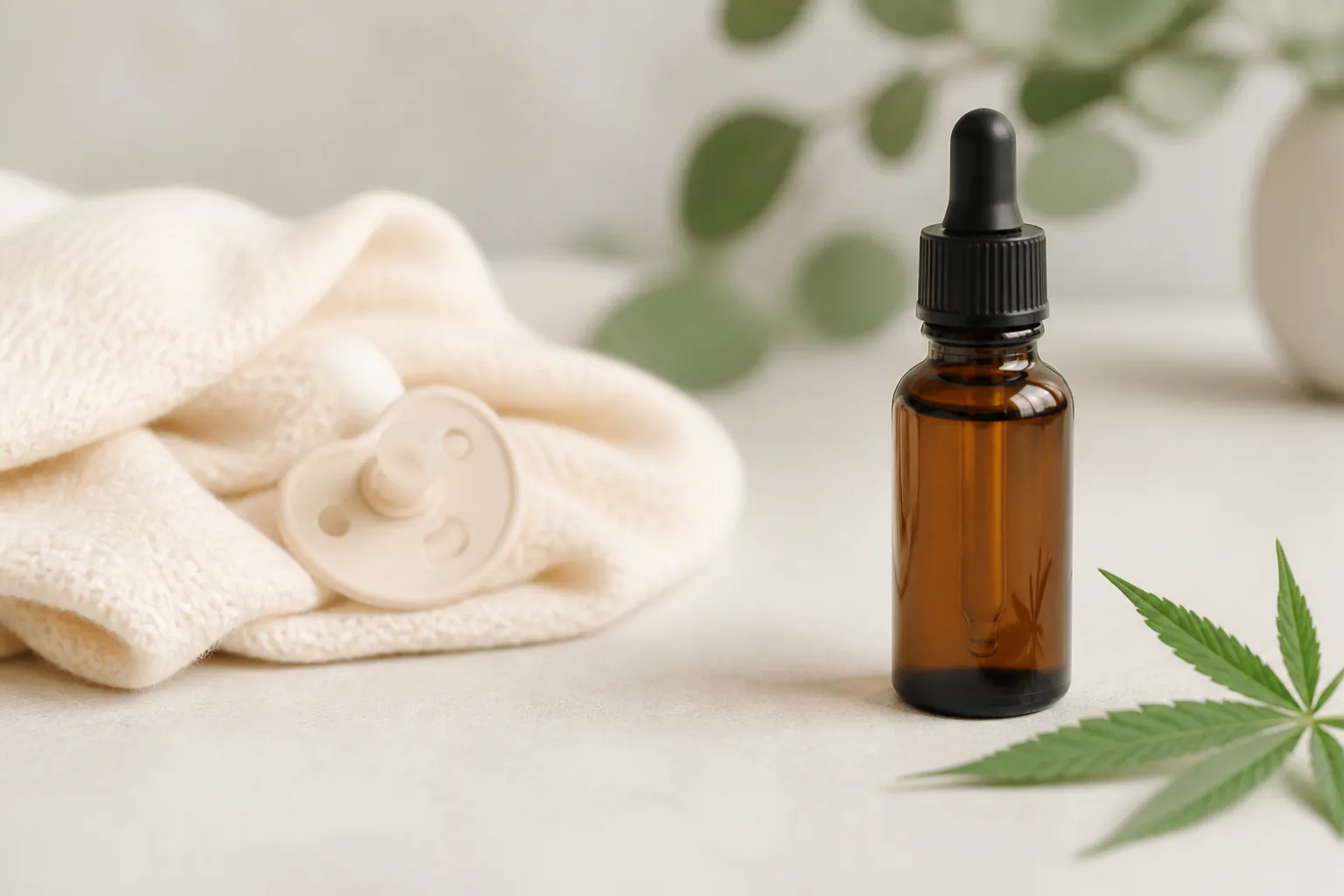
Imagine you are seven months pregnant, exhausted, anxious, and not sleeping. A friend mentions she "took CBD to relax" during her pregnancy and swears it helped her nausea and anxiety. The bottle sits in a well-known wellness store, labeled with pretty leaf art and a claim that it is "natural" and "non-psychoactive." It is tempting. But here is the hard truth that the label does not tell you: there is almost no evidence that CBD is safe for a developing baby, and a growing body of recent research suggests it carries real, measurable risks. The responsible position, echoed by the FDA, the American College of Obstetricians and Gynecologists (ACOG), and pediatric bodies, is that pregnant and breastfeeding people should generally not use CBD without direct medical supervision. This guide lays out what the 2023 and later evidence actually shows, why CBD and THC are not interchangeable, why unregulated products make the problem worse, and safer, evidence-supported alternatives for common pregnancy symptoms.
---
Why This Topic Matters Right Now
Cannabis use during pregnancy has been rising steadily, and CBD products have followed the same curve. A growing share of pregnant people report using cannabis for symptoms like nausea, anxiety, and pain, often believing that hemp-derived CBD is a harmless alternative to THC or to prescription medication. Survey data from the last few years consistently shows that self-reported use during pregnancy is common and frequently motivated by symptom relief rather than recreation. The concern is that many people are making this choice without good safety information, because marketing has outpaced the research.
The gap between belief and evidence is the core problem. Surveys of pregnant people who use CBD or cannabis often find they believe it is "safer than prescription drugs" and "safe for the baby." Neither belief is supported by the medical literature. We do not have a single high-quality clinical trial showing CBD is safe during pregnancy or breastfeeding, and we do have animal studies, pharmacokinetic modeling, and observational data that point to risk. When the stakes include a developing brain and body, the absence of proof of safety is itself a red flag. This is a topic where caution is the evidence-based position.
Does CBD Cross the Placenta and Pass Into Breast Milk?
The short answer is yes, CBD reaches the developing baby both before and after birth. Cannabinoids, including CBD, are lipophilic, meaning they dissolve readily in fat, and they cross the placenta and concentrate in breast milk. This is not a niche concern; it is the biological basis for why maternal use affects the fetus and the breastfeeding infant.
Pharmacokinetic modeling published in 2023 in Clinical Pharmacokinetics specifically examined predicted CBD exposure in breastfed infants whose mothers used marijuana containing CBD. The modeling work projected that infant exposure can be non-negligible, and that factors like maternal dose and the timing of feeds relative to use influence how much the infant absorbs. A 2024 study in Cannabis and Cannabinoid Research took a different approach, dosing adult, neonate, and breastfed rats to compare how the route of administration and the carrier vehicle change THC and CBD pharmacokinetics, underscoring that even "simple" variables like the oil a product is suspended in affect how much of the compound reaches a nursing infant.
The practical takeaway is straightforward: there is no "safe window" where CBD does not reach the baby. If you use CBD while pregnant, it is in the fetal bloodstream. If you use it while breastfeeding, it is in your milk. The recent modeling and animal data consistently confirm transfer, which means the question is not "does the baby get exposed?" but "what does that exposure do?"
What the Newer Evidence Says About Fetal Development Risks
The most important recent research has shifted from asking whether CBD reaches the fetus to asking what it does once it gets there. Several peer-reviewed studies from 2025 and 2026 now report measurable developmental effects from prenatal CBD exposure in animal models, and these are the studies that should give any expecting parent pause.
A 2025 preprint (bioRxiv) and a follow-up 2026 paper in Cannabis and Cannabinoid Research from the same research group found that oral CBD consumption during pregnancy altered offspring behavior in mice. Notably, the 2025 preprint used "clinically relevant" CBD doses, meaning amounts comparable to what a person might actually take, and still observed changes in postnatal behavior. A separate 2026 study in Neurotoxicology and Teratology reported that prenatal CBD exposure altered both physical and behavioral development in rats. And a 2026 paper in the same journal examined the neurodevelopmental effects of exogenous cannabinoids on endocannabinoid and GABAergic signaling, the very systems that shape how the fetal brain wires itself.
Why does this matter so much? The endocannabinoid system is deeply involved in early brain development, including synapse formation, neuronal migration, and the balance of excitatory and inhibitory signaling. Cannabinoids, including CBD, interact with this system at precisely the time the fetal brain is most plastic and most vulnerable. Disrupting that process has the potential to affect behavior, attention, memory, and mood long after birth. These are animal studies, and they do not prove the same effects occur in humans, but they are consistent, peer-reviewed, and dose-relevant, which is far more than we can say for any claim that CBD is safe.
The Problem With Unregulated Products
Even if a person decides to weigh the risks, they run into a second problem: what is actually in the bottle. CBD products in the United States and many other markets are not subject to the same rigorous testing as pharmaceuticals. A "CBD gummy" can legally contain a wide range of actual cannabinoid concentrations, and the label may not match what is inside.
A 2025 study in Cannabis and Cannabinoid Research used LC-MS/MS to measure the actual cannabinoid content of commercially available CBD gummies and found substantial discrepancies between what the label claimed and what the product delivered. Separate 2025 work in Chemico-Biological Interactions examined commercial CBD products and reported oxidative stress and mitochondrial dysfunction in neuronal cells, raising questions about whether impurities or oxidation products in finished products add their own risks. There is also the well-documented issue of unintended THC contamination; a 2026 systematic review in the International Journal of Legal Medicine examined how CBD and hemp oil use affects drug test results, precisely because some products carry enough THC to matter. For a fuller picture of what quality testing should look like, see our CBD 101 safety guide and our guide to reading a lab report and COA.
For a pregnant person, this labeling uncertainty is not academic. You cannot control the dose your baby is exposed to if you cannot trust the concentration on the label, and you cannot assume you are avoiding THC if the product is untested. The combination of an unproven benefit and an unmeasurable, unregulated dose is a poor risk-reward trade-off during pregnancy.
CBD Is Not THC: Why the Distinction Matters
It is common to hear "CBD is non-psychoactive, so it is fine." That framing is misleading. CBD does not produce the "high" of THC, but "non-psychoactive" does not mean "no effect," especially on a developing brain. The two compounds act through overlapping and distinct pathways, and both interact with the endocannabinoid system.
THC is the more thoroughly studied of the two in pregnancy, and the evidence against it is stronger and more consistent. A 2026 study in the journal Cannabis found that cannabis use during early pregnancy was associated with child diagnoses of depressive and anxiety disorders, and a 2025 review in the Journal of Perinatology summarized the evidence on in-utero cannabis exposure and neonatal outcomes. There is also emerging work, such as a 2026 study in Pediatric Research, on co-exposure to cannabinoids and nicotine and its effects on prenatal lung development.
The concern with CBD is different but real. Because CBD interacts with the endocannabinoid system and can cross the placenta, researchers worry it may carry some of the same developmental risk even without the THC high. The 2025 and 2026 animal studies on prenatal CBD mentioned earlier reinforce that worry. The honest bottom line is that we have more evidence against THC, but the evidence we have on CBD is enough to justify caution rather than reassurance. For a deeper comparison of the two compounds, see our guide on CBD vs THC.
Postpartum Use: CBD for Anxiety, Sleep, and Pain
After birth, the calculus changes but does not disappear. Postpartum people frequently struggle with anxiety, disrupted sleep, and recovery pain, and CBD marketing aggressively targets these exact symptoms. Some people assume that once the baby is born, CBD is harmless. That assumption misses two critical points: breastfeeding exposure and postpartum mental health.
If you are breastfeeding, the same milk transfer question applies. The 2023 Clinical Pharmacokinetics modeling and the 2024 rat pharmacokinetics study are directly relevant here. CBD passes into breast milk, and infants have immature livers and endocannabinoid systems, so they clear cannabinoids more slowly than adults. Exposure during a period of rapid brain development is not something we can call safe.
Separately, the underlying condition matters. A 2026 study in the journal Cannabis looked at self-reported cannabis use in pregnancy and maternal psychological health, and the broader literature consistently flags that using cannabis or CBD to manage anxiety may mask or delay treatment of a condition that deserves real clinical attention. Postpartum depression and anxiety are serious and treatable, and self-medicating with an unproven product can postpone the care that actually helps. If you are experiencing postpartum anxiety, depression, or overwhelming mood changes, talk to your provider; do not reach for an unregulated bottle as a substitute.
What Official Guidance Says
The major medical and regulatory bodies have been clear, and their position is caution. The FDA has stated that it has not approved CBD for use in pregnancy or breastfeeding and has warned that CBD can pose risks; it has repeatedly cautioned against using CBD during pregnancy. ACOG advises against cannabis use during pregnancy and lactation, including the use of products marketed as CBD, because of concerns about fetal brain development and long-term child outcomes.
These are not fringe positions. They reflect the same reality this guide has laid out: no high-quality human safety data exists, animal data raises concerns, and products are unreliable. When authoritative bodies look at the same evidence and conclude that the potential for harm outweighs any unproven benefit, that is the signal to pay attention. This does not mean you cannot have an honest conversation with your doctor about your symptoms; in fact, that is exactly what they want you to do.
Safer Alternatives for Common Pregnancy Symptoms
The reason people reach for CBD is real and understandable: nausea, anxiety, poor sleep, and pain are common and miserable parts of pregnancy and the postpartum period. The good news is that there are safer, evidence-supported ways to address each of these that do not involve exposing a developing baby to an unstudied compound.
For nausea and morning sickness, which are common especially in the first trimester, clinicians often recommend eating small, frequent meals, avoiding strong smells, ginger, vitamin B6, and, when symptoms are severe, prescription anti-nausea medications that are considered safe in pregnancy. For anxiety, cognitive behavioral therapy, mindfulness, gentle exercise, and talking to a mental health professional are first-line approaches with far better evidence than CBD; you can explore what the research shows about CBD and anxiety in our wellness page on CBD for anxiety, keeping in mind that those findings do not extend to pregnancy. For nausea, we also cover the science in our blog on CBD and nausea, which again does not change the safety caution for pregnancy. For sleep problems, good sleep hygiene, consistent routines, and addressing underlying anxiety are safer starting points than an untested supplement. For pain, acetaminophen is sometimes appropriate in pregnancy under a doctor's guidance, and physical therapy and prenatal massage can help; always confirm anything you take with your obstetric provider. These are not glamorous, but they are safe and they work, and that is the standard that matters here.
---
The Bottom Line
The evidence is clear enough to state plainly: pregnant and breastfeeding people should generally not use CBD. Recent studies confirm that CBD crosses the placenta and enters breast milk, animal research from 2025 and 2026 reports developmental effects at clinically relevant doses, and unregulated products mean you cannot even trust what is in the bottle. This is not a judgment on anyone struggling with nausea, anxiety, or exhaustion; it is a reflection of what the science does and does not support. If you are considering CBD during pregnancy or postpartum, the right first step is not the dispensary or the wellness aisle, it is an honest conversation with your doctor or midwife. They can help you find safer, proven ways to manage your symptoms, and they will not judge you for asking. Your baby's developing brain is worth that extra caution.
---
Frequently Asked Questions
Can I use CBD for morning sickness during pregnancy?
No. There is no evidence that CBD is safe for a developing fetus, and nausea in early pregnancy is often manageable with safer options like ginger, vitamin B6, small frequent meals, and prescription anti-nausea medication under your doctor's guidance. Do not use CBD for morning sickness.
If CBD has no THC, is it safe while breastfeeding?
Not necessarily. CBD itself crosses into breast milk, and infants metabolize cannabinoids slowly. The 2023 Clinical Pharmacokinetics modeling and 2024 animal studies confirm exposure. Because we lack human safety data, official guidance recommends avoiding CBD while breastfeeding.
Will CBD show up on a drug test or contain THC?
Possibly. Commercial CBD products are not reliably labeled. A 2025 study found discrepancies between label claims and actual gummy content, and a 2026 systematic review examined how CBD and hemp oil use affects drug test results. Some products carry measurable THC.
What should I do if I am already using CBD and just found out I am pregnant?
Stop using it and tell your doctor or midwife right away. Do not feel ashamed; this is common, and your provider is there to help you and your baby, not to judge you. They can help you manage symptoms with safer alternatives.
Are there any proven benefits of CBD for postpartum anxiety or depression?
No. The evidence is too weak to support it, and self-treating with an unproven product can delay effective care for a serious, treatable condition. If you are struggling after birth, talk to your provider about therapy, support, and proven treatments.
Find Your Perfect CBD Product
Take our 2-minute quiz to get personalized recommendations based on your needs.
Take the Quiz →Disclaimer: This article is for informational purposes only and does not constitute medical advice. CBD products are not FDA-approved to treat, cure, or prevent any disease. Always consult with a qualified healthcare professional before starting any new supplement, especially if you have a medical condition or take medications.