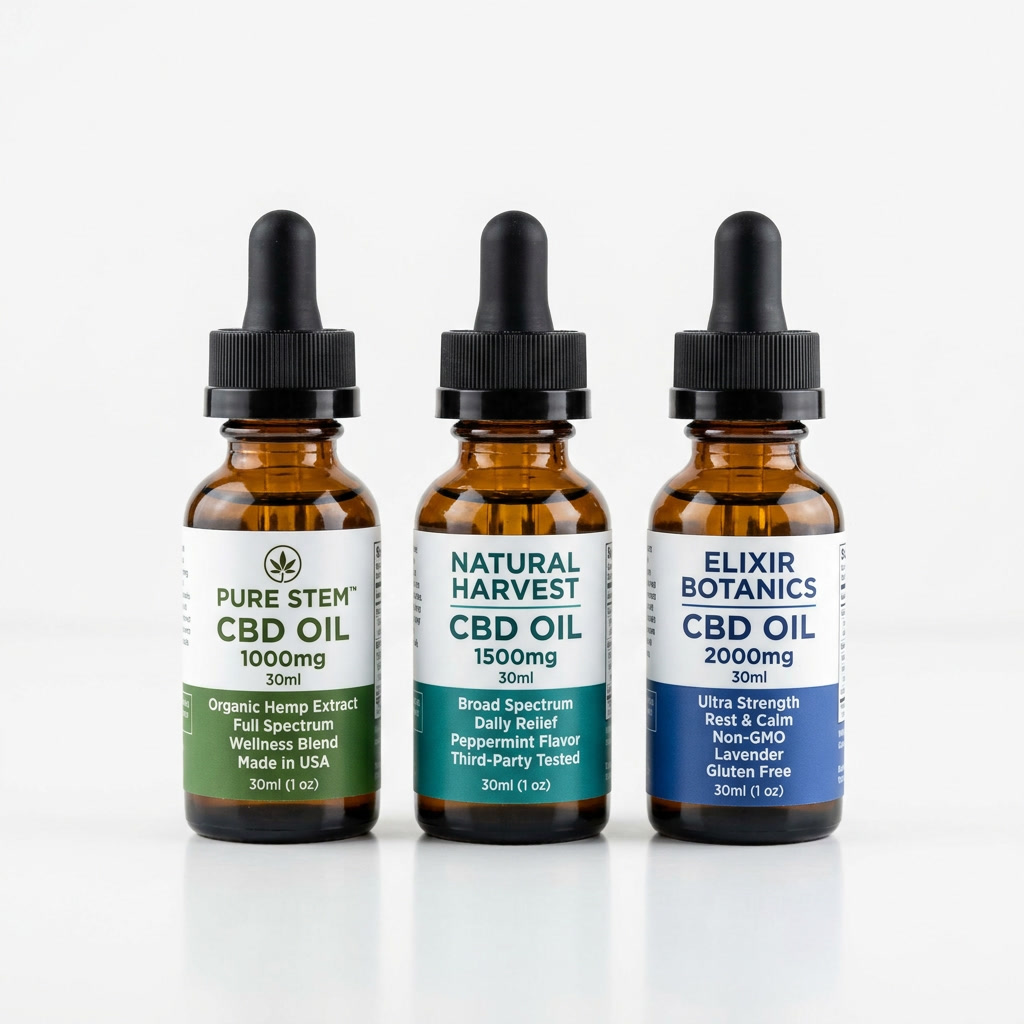
Can CBD Help With Hair Growth? What the Research Really Says
You catch a glimpse of yourself in the bathroom mirror and pause. Is that part wider than it was last year? Or maybe you notice your hairline creeping back just a little further each month, or a few extra strands swirling down the shower drain. It's a scenario millions of people recognize — the quiet worry that hair is thinning and the scramble to find something that actually works before it's too late.
If you've been browsing natural remedies, you've probably seen CBD creams, oils, and shampoos making bold claims about regrowing hair. The marketing is everywhere. But does the science back it up, or is it just another wellness fad? In this guide, we'll dig into the real research on CBD and hair growth — what the hair growth cycle looks like, how your body's endocannabinoid system connects to your follicles, and what recent studies actually found. You'll get an honest read on where CBD shows promise, where it falls short, and how to use it if you decide to try it.
The Hair Growth Cycle in 60 Seconds
Before we talk about CBD, it helps to understand how hair actually grows. Every follicle on your scalp cycles through three distinct phases:
- Anagen (growth phase): The active phase where hair grows, lasting 2–7 years for scalp hair
- Catagen (transition phase): A short 2–3 week window where growth stops and the follicle shrinks
- Telogen (resting phase): A 2–4 month period where the hair sits dormant before eventually shedding
At any given moment, roughly 90% of the hairs on your head are in the anagen growth phase. When this cycle gets disrupted — by hormones, stress, inflammation, or genetics — more follicles stall or shed, and thinning becomes visible. Many hair treatments, from minoxidil to emerging natural options, work by trying to keep follicles in anagen longer or pull them back out of the resting phase.
Here's where CBD enters the picture: the same signaling systems that regulate this cycle are closely connected to your endocannabinoid system, the network of receptors and signaling molecules that help maintain balance throughout your body. If you're new to the endocannabinoid system, our deep dive is a great starting point.
Your Endocannabinoid System and Hair Follicles
The endocannabinoid system (ECS) — a regulatory network discovered in the early 1990s — is best known for helping modulate pain, mood, appetite, and immune response. But it turns out hair follicles are also rich in endocannabinoid receptors.
Receptors like CB1, CB2, TRPV1, and TRPV4 are all expressed in the hair follicle and its surrounding skin. These aren't just bystanders; they appear to play a direct role in regulating follicle activity. In fact, a 2023 review in the International Journal of Molecular Sciences on cannabinoids in skin disease noted that endocannabinoid signaling is involved in the biology of hair follicles and other skin structures.
The upshot: because CBD and other cannabinoids interact with these receptors, there's a plausible biological pathway through which they might influence hair growth. That's the scientific foundation for all the "CBD for hair" products on the market. But as we'll see, a plausible pathway and proven results are two different things.
What the Research Actually Shows
Now for the question you actually care about: is there evidence CBD helps hair grow? Let's look at the most relevant recent studies, and be clear about what they do and don't prove.
A Promising Case Series
The most direct evidence comes from a 2023 case series published in the International Journal of Trichology. Researchers tracked 31 people with androgenetic alopecia (pattern hair loss) who applied a topical hemp extract high in CBD, THCV, and CBDV to their scalps once daily for six months, averaging about 33 mg per day.
The results were striking — every single subject showed some regrowth, with an average increase in hair counts of 246% in men and 127% in women. No adverse effects were reported.
> "The results revealed that all subjects had some regrowth... The average increase was statistically significant."
That quote reflects what the authors reported. But before you get too excited, a few important caveats: this was a case series, not a randomized, placebo-controlled trial. There was no comparison group, it wasn't blinded, and the study had a small number of participants. Case series are useful for generating hypotheses, but they're not proof.
What the Reviews Say
Broader reviews paint a more cautious picture. The 2023 International Journal of Molecular Sciences review, while noting cannabinoids "could hold promise" for hair disorders, was explicit that most of the available data is at the preclinical stage — meaning animal and lab studies, not large human trials.
Similarly, a 2025 review in Biomolecules on CBD's topical applications summarized that CBD may aid "follicular regeneration" in androgenetic alopecia and is being explored for scalp conditions. But it also highlighted major challenges, including CBD's poor skin penetration and a lack of standardized formulations.
The Honest Bottom Line on the Evidence
The honest summary of the research landscape right now:
- Lab and animal studies show cannabinoids can influence hair follicle biology in meaningful ways
- A small human case series showed impressive regrowth results
- No large, rigorous, randomized controlled trials have confirmed CBD works for hair loss
- Most human-level evidence is early and limited
That's the gap between the marketing and the science — and it's important to keep it in mind.
CBD as an Anti-Inflammatory for Scalp Health
Even if the hair-growth claims are unproven, CBD has a more established role that indirectly matters for hair: reducing scalp inflammation.
Conditions like seborrheic dermatitis (the medical name for chronic dandruff with redness and flaking) and general scalp inflammation can weaken follicles and accelerate shedding. When the scalp is chronically inflamed, hair is more likely to fall out and less likely to grow back strongly.
CBD has well-documented anti-inflammatory properties, and the 2025 Biomolecules review noted clinical evidence supporting its use in conditions including seborrheic dermatitis and scalp psoriasis. By calming irritation, reducing redness, and supporting a healthier scalp environment, CBD may help remove one factor that contributes to hair loss — even if it can't single-handedly regrow hair. For a closer look at the evidence behind CBD and psoriasis, we've covered the latest research. For more on how CBD calms inflammation, see our guide to CBD and inflammation.
For anyone with a flaky, irritated, or itchy scalp, addressing that underlying inflammation is a smart first step regardless of which product you choose.
The Stress–Cortisol–Hair Loss Connection
There's another indirect route worth understanding: stress. Chronic stress raises cortisol, and sustained high cortisol is a known trigger for telogen effluvium — the temporary shedding that often follows stressful life events.
Could CBD help here? There's research suggesting CBD may influence the brain regions involved in stress and anxiety. A 2026 systematic review in Frontiers in Neuroimaging examined human brain-imaging studies comparing CBD with placebo under stress and anxiety conditions, finding that CBD appears to modulate regions associated with stress responses — though the authors noted the picture isn't fully consistent yet.
The logic goes like this: if CBD helps you manage stress and keep cortisol in check, it might indirectly reduce stress-related shedding. That's a reasonable, biologically grounded theory. But it's indirect, and CBD shouldn't be treated as a substitute for addressing the actual source of your stress.
Realistic Expectations: CBD Is Not a Cure
Let's be direct about what CBD can and cannot do, because hype helps no one.
For androgenetic alopecia — the genetic, hormonal pattern hair loss that affects most men and many women — there is no proven cure, and CBD is not one either. No rigorous trial has shown it can reverse genetic balding. If you're dealing with pattern hair loss, established treatments like minoxidil and finasteride have far more evidence behind them.
The broader evidence for cannabinoids in treating medical conditions is also mixed. A 2026 systematic review and meta-analysis in The Lancet Psychiatry examined 54 randomized trials of cannabinoids for mental health and substance use disorders and concluded that the certainty of evidence for most outcomes was low, and that routine use is "currently rarely justified."
The takeaway? Approach CBD for hair with cautious optimism, not as a miracle cure. It may be most helpful as a complementary tool for scalp health and stress management — not a replacement for treatments with proven track records.
Topical vs. Oil vs. Supplement: Which Approach?
If you want to try CBD for hair, your choice of format matters. Here's how the main options stack up:
Topical CBD
- Best for: targeting the scalp directly where hair grows
- How it works: applied to the scalp, it can interact with follicle receptors and calm local inflammation
- Research note: the case series that showed regrowth used a topical extract — this is the most directly relevant format
CBD Oil (Sublingual)
- Best for: systemic effects like stress and overall inflammation
- How it works: absorbed under the tongue, enters the bloodstream, may help with the stress-cortisol angle
- Research note: good for the indirect benefits, but doesn't deliver cannabinoids to the scalp specifically
CBD Supplements (Capsules/Edibles)
- Best for: convenience and consistent dosing
- How it works: metabolized through digestion; effects are slower and less predictable
- Research note: least direct for hair; best reserved for general wellness
If scalp health and direct follicle exposure are your goals, a topical is the most logical starting point. If stress management is your priority, sublingual oil may make more sense. Many people use both.
How to Use CBD for Hair, Safely
If you've weighed the evidence and want to try it, here's a sensible, safety-first approach.
- Start with a reputable topical designed for the scalp, ideally a full-spectrum or broad-spectrum formula that includes other cannabinoids like CBDV and THCV, which the case series also used
- Patch test first on a small area of skin to check for any irritation or allergic reaction before applying it to your whole scalp
- Apply consistently — the case series used once-daily application over six months; expect to give it at least 3–6 months to judge results
- Use quality products — check third-party lab tests for potency and contaminants, since the market is unevenly regulated
- Consider sublingual oil for stress support, starting at a low dose like 10–20 mg daily and adjusting based on your response
Safety Considerations
- Talk to your doctor first if you take blood thinners, antidepressants, or seizure medications — CBD can interact with how your liver processes some drugs
- Pregnant or breastfeeding? Avoid CBD, as safety hasn't been established
- Watch for side effects — CBD is generally well-tolerated, but can cause dry mouth, drowsiness, or digestive upset in some people
- Don't stop proven treatments — if you're using minoxidil or finasteride for pattern hair loss, talk to a dermatologist before making changes
Your Action Steps
Ready to take a thoughtful approach to your hair health? Here's a practical plan.
1. See a professional first. If you're noticing real thinning, book a dermatologist visit. They can tell you whether it's genetic, stress-related, or a sign of something else — and that diagnosis changes everything.
2. Address scalp inflammation. If you have dandruff, flaking, or redness, tackle that first. A calm, healthy scalp is the foundation for any hair-growth effort.
3. Choose your CBD format deliberately. For scalp targeting, pick a high-quality topical CBD product. For stress support, consider CBD oil.
4. Use it consistently. Apply topicals once daily and track with monthly photos. Give it 3–6 months before judging — hair cycles are slow.
5. Manage your stress. Combine CBD with proven stress-reduction habits like sleep, exercise, and mindfulness, since cortisol plays a real role in shedding.
6. Keep expectations realistic. Treat CBD as a complementary tool, not a cure. Pair it with lifestyle changes and, if needed, evidence-based treatments.
The Bottom Line
CBD shows genuine early promise for hair health, but the honest truth is that the evidence is still thin. A small 2023 case series reported impressive regrowth with a topical hemp extract, and CBD's anti-inflammatory and stress-relieving properties offer plausible indirect benefits for scalp health and stress-related shedding. But no large, rigorous trials have confirmed it works, and CBD is not a proven cure for genetic hair loss. If you have a flaky, irritated scalp or stress-related shedding, a quality topical CBD product may be worth trying alongside good scalp care and stress management. For pattern hair loss, rely on established treatments and a dermatologist's advice — and treat CBD as a potential complement, not a miracle.
Find Your Perfect CBD Product
Take our 2-minute quiz to get personalized recommendations based on your needs.
Take the Quiz →Disclaimer: This article is for informational purposes only and does not constitute medical advice. CBD products are not FDA-approved to treat, cure, or prevent any disease. Always consult with a qualified healthcare professional before starting any new supplement, especially if you have a medical condition or take medications.