CBD for Pets: What the Science Says About Dogs, Cats, and Cannabidiol

Intro
Maggie is a twelve-year-old golden retriever who used to bound up the stairs. These days she hesitates at the bottom, favoring her right hip, and whines a little when she stands up after a long nap. Her owner, Priya, has tried joint supplements and cut back on long walks, but she still watches her best friend slow down a little more each month. Across town, Sam's cat, Jasper, turns into a trembling mess the moment fireworks season starts, hiding under the bed for days. If you've ever been in either situation, you've probably asked the same question Priya and Sam asked: could CBD help?
It's the most searched pet-health topic in years, and for good reason — CBD products for pets are everywhere, and the marketing makes big promises. But a pet's body is different from ours, the research is genuinely promising but still young, and the product quality in stores varies wildly. This guide cuts through the hype to give you what the science actually says about CBD for dogs and cats: what it is, how it works, what we know works, what's still uncertain, and how to choose a safe product for your animal.
What CBD Is (And What It Isn't)
Cannabidiol, or CBD, is one of over a hundred chemical compounds found in the hemp plant. Unlike THC — the compound responsible for the "high" in marijuana — CBD is non-psychoactive. That distinction matters enormously for pet owners: a properly formulated pet product should never get your dog or cat high. This is covered in more depth in our guide to what CBD is, but the short version is that CBD interacts with your pet's body in a completely different way than THC does. If you're newer to the topic, our guide to what CBD is is a good place to start.
Hemp Oil vs. CBD Oil: Know the Difference
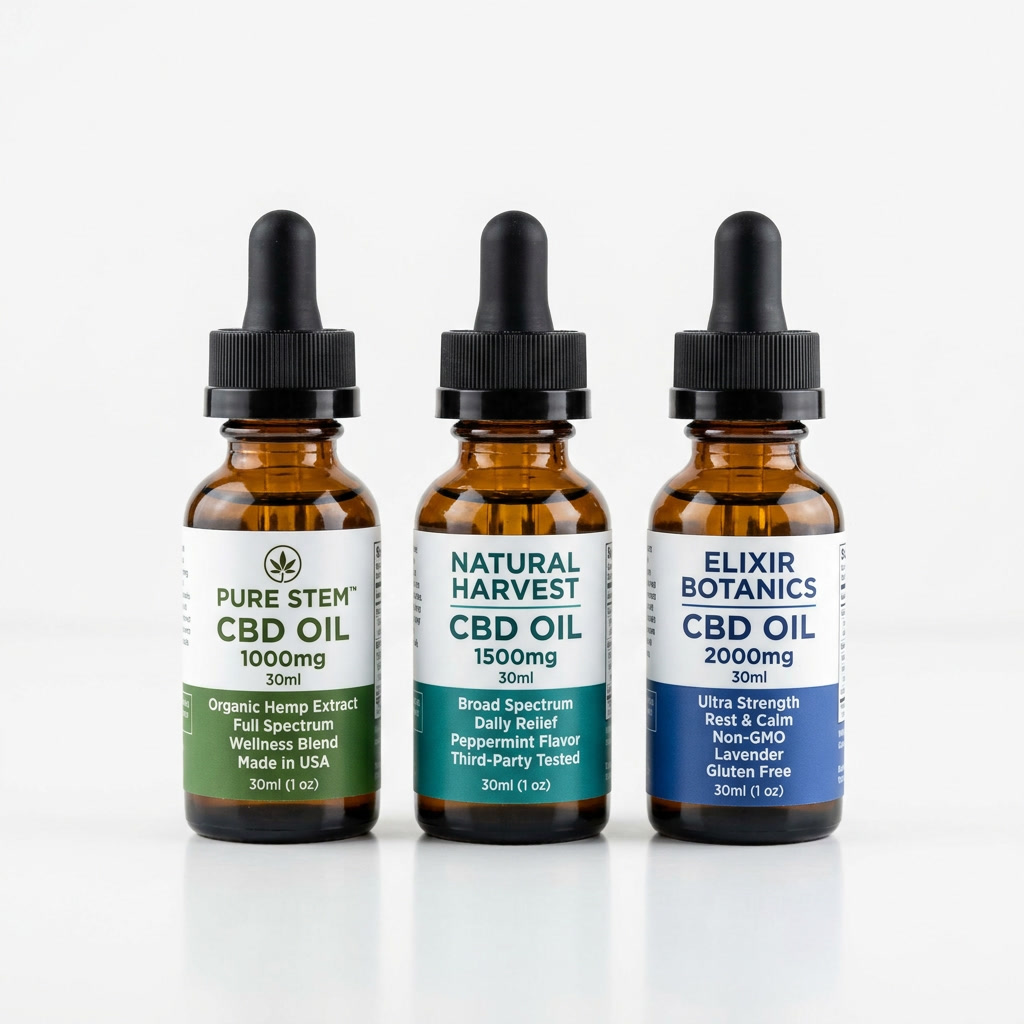
There's a common and costly confusion here. "Hemp oil" (or hemp seed oil) is made by pressing hemp seeds — it contains almost no CBD, though it's rich in healthy omega fatty acids. "CBD oil" is an extract taken from the plant's flowers and leaves, and it's where the actual CBD lives. If a product is labeled "hemp oil" and claims CBD benefits without a lab test proving its CBD content, that's a red flag. When you're shopping for your pet, you want a product that tells you exactly how much CBD is in each dose.
The Difference from THC
Mammals — including dogs and cats — have a natural system called the endocannabinoid system that helps regulate pain, mood, appetite, and stress. CBD interacts with this system in a gentle, modulating way, while THC binds directly to receptors and causes intoxication. Pets are actually more sensitive to THC's negative effects than people are, which is why it's critical to choose a product tested to contain little or no THC. We'll get into exactly how to verify that when we talk about choosing a product.
The Endocannabinoid System in Animals
Here's the reassuring part of the science: your dog and cat aren't being experimented on with a compound their bodies don't understand. Dogs and cats have their own endocannabinoid system, just like humans do — a network of receptors and signaling molecules that helps keep their bodies in balance. This is why CBD research in animals makes biological sense in the first place.
The main receptors — known as CB1 and CB2 — are found throughout a pet's nervous and immune systems. When CBD enters the body, it doesn't bind to these receptors the way THC does, but it influences them indirectly, helping to support the body's own calming and pain-modulating pathways. It's the same fundamental system humans have, which is why findings from veterinary studies can carry real weight rather than being pure guesswork.
That said, there's an important caveat: cats and dogs process CBD differently than humans, and even differently from each other. Research on CBD pharmacokinetics — how the body absorbs and clears the compound — is still developing in veterinary medicine. In short, the system is real and the mechanisms make sense, but dosing and effects don't always translate directly from human studies.
Pain and Arthritis in Dogs
This is where the evidence is strongest, and it's anchored by research out of Cornell University's College of Veterinary Medicine. In a 2018 study published in Frontiers in Veterinary Science, researchers gave dogs with osteoarthritis a CBD-enriched oil and tracked pain and activity levels. The results were encouraging: owner-assessed pain scores dropped and activity scores rose significantly during CBD treatment compared to placebo. Notably, the study reported no observable side effects at the dose used.
That study is often cited as one of the first rigorous looks at CBD for canine arthritis. A follow-up in 2020 built on the idea of using CBD as part of a multimodal pain plan: dogs receiving oral CBD alongside conventional pain medication showed significantly lower pain severity and interference scores at several time points, plus a higher quality-of-life index, compared to dogs on medication alone.
A few things worth keeping in mind. These are relatively small studies, and results vary from dog to dog. And the word "significant" in science doesn't mean "magic" — it means the improvement was large enough to be detected statistically. For many owners of arthritic senior dogs, though, even modest improvements in comfort can mean a better quality of life, which is why this remains the most promising use of CBD in veterinary medicine.
Anxiety and Stress
If you've reached for a calming treat for a thunderstorm-phobic dog or a car-traveling cat, you're not alone. Anxiety is one of the most common reasons pet owners try CBD, and it's also where the evidence gets more complicated — and more honest.
In dogs, the research is mixed. Some smaller studies and owner surveys suggest calming effects during stressful events, but well-controlled clinical trials are still limited. The science is promising but far from settled, and it's fair to say that what works for one anxious dog may not work for another.
In cats, the picture is genuinely split, which is useful to know. A 2024 study in Frontiers in Veterinary Science tested whether a single dose of THC-free CBD reduced stress in cats being transported in a carrier and meeting a stranger in an unfamiliar room. It found no significant effect on stress measures — despite the setup successfully triggering a stress response in the cats. That's an important, honest data point: CBD isn't a universal calm-button.
But a separate 2024 study in Heliyon looked at CBD for separation anxiety in ten cats and reported signs of reduced anxiety, with cats showing a calmer, more balanced response to their caregiver's return after a two-week course of daily CBD. Note the small sample size — ten cats — which means these findings are preliminary rather than definitive.
The takeaway: anxiety research in pets is early and mixed. CBD may help some animals, especially with regular use, but it's not a guaranteed fix, and it should never be the only tool in your kit. Training, environmental changes, and (where appropriate) veterinary behavior support all matter too.
Seizures and Epilepsy
For pet owners facing epilepsy, the stakes feel completely different, and the research here is arguably the most carefully studied — and the most honest about its limits.
The landmark veterinary trial came in 2019, published in the Journal of the American Veterinary Medical Association. In a randomized, blinded, placebo-controlled trial, dogs with intractable (hard-to-control) epilepsy received CBD alongside their existing anti-seizure medication. The CBD group showed a significant median reduction of about 33% in seizure frequency compared to placebo. That's real, meaningful progress.
But the researchers were careful to note the full picture. The proportion of dogs classified as "responders" — those with a 50% or greater drop in seizures — was similar between the CBD and placebo groups. In other words, CBD didn't turn most of these dogs into dramatic responders, and two dogs in the CBD group developed ataxia (wobbliness) and were withdrawn. The authors concluded that higher doses might be worth studying, given a correlation between blood CBD levels and seizure reduction.
Since then, reviews of the epilepsy research have described the evidence as promising but mixed, with results varying between studies and real safety considerations. If your dog has epilepsy, CBD should only ever be discussed as an add-on alongside veterinary-prescribed anticonvulsants — never as a replacement, and never without your veterinarian's involvement. This is one area where self-dosing is genuinely dangerous.
Safety, Dosing, and Side Effects
Let's talk about the practical, real-world stuff, because this is where a lot of well-meaning pet owners make mistakes.
Start Low and Go Slow
The general rule across veterinary research is to start with a low dose and increase gradually, watching your pet's response over several days. Doses in the canine studies above ranged from about 2 mg to 8 mg per kilogram of body weight, given twice daily — but your pet's ideal dose depends on their size, condition, and the specific product's potency. Weight-based dosing is the standard approach: a 10 kg dog is not a 40 kg dog, and a cat is not a small dog.
Common Side Effects
CBD is generally well tolerated in pets, but it's not side-effect-free. The most commonly reported effects are drowsiness and lethargy, dry mouth (which may show up as increased thirst), a temporary drop in blood pressure, and diarrhea. In the 2019 epilepsy study, dogs in the CBD group also showed an increase in a liver enzyme called alkaline phosphatase — a signal that long-term use should involve veterinary monitoring. If your pet seems off, reduce the dose or stop and check in with your vet.
Talk to Your Veterinarian
This is the single most important piece of advice in this entire article. Tell your vet what you're considering. CBD can interact with other medications, especially those processed by the liver, and it may not be appropriate for pets with certain conditions or those who are pregnant or nursing. A veterinarian who knows your animal's history can help you weigh risks, choose a dose, and monitor for problems. No article — including this one — can replace that.
Choosing a Quality Product
Given how much the science still depends on product quality, choosing wisely matters as much as deciding to try CBD at all. Here's a practical checklist.
- Look for a Certificate of Analysis (COA): an independent lab test that confirms the product contains the CBD it claims, and — just as important — that it's free of contaminants and contains little or no THC. Our guide to reading a COA walks you through exactly what to check.
- Choose products made specifically for pets: human products can contain ingredients that are toxic to dogs and cats, such as xylitol, certain essential oils, or chocolate flavorings. A pet-specific product avoids those risks.
- Demand transparency about potency: you should be able to find out exactly how many milligrams of CBD are in each serving, not just a vague "hemp extract" claim.
- Watch for third-party testing: the most trustworthy brands publish lab results you can actually access, not just claim them on the label.
- When in doubt, ask the company: a reputable brand will be able to answer questions about sourcing, extraction method, and testing without hedging.
Products to Consider
If you've decided CBD is worth a try for your dog or cat, the next step is finding a product that meets the standards above. We review and compare CBD products designed specifically for pets — including oils and treats formulated for dogs and cats — so you can compare potencies, ingredients, and testing in one place. Browse our curated selection of CBD for pets to see which options match your animal's size, needs, and your budget. And for a deeper look at how these products fit into everyday pet care, revisit our earlier guide to CBD for pets.
Action Steps
Ready to make a thoughtful decision? Here's a simple path forward.
- Talk to your veterinarian first, especially if your pet is on other medication or has a chronic condition.
- Identify one specific goal — pain relief, anxiety during storms, or seizure support — and track whether you actually see improvement.
- Choose a pet-specific product with a verifiable Certificate of Analysis and low or no THC.
- Start with a low, weight-based dose and increase slowly over days.
- Keep a simple log: dose, timing, and any changes in behavior, appetite, or comfort.
- If you see side effects or no benefit after a fair trial, stop and reassess with your vet.
Bottom Line
The honest summary is this: CBD shows real promise for some of the hardest problems pet owners face — arthritis pain in senior dogs, certain anxiety cases, and as an add-on for epilepsy — but the research is still young, results vary, and it's not a miracle cure. The strongest evidence points to pain and arthritis in dogs, where Cornell-led research has shown meaningful improvements. For anxiety and seizures, the picture is more mixed and demands caution. What matters most is doing this safely: talk to your vet, choose a well-tested pet product, dose by weight, and watch your animal's response. Done that way, CBD can be a thoughtful addition to your pet's care — not a gamble on their health.
If you own a horse, our new guide to CBD for horses covers dosing, safety and why equine evidence is still early.
Find Your Perfect CBD Product
Take our 2-minute quiz to get personalized recommendations based on your needs.
Take the Quiz →Disclaimer: This article is for informational purposes only and does not constitute medical advice. CBD products are not FDA-approved to treat, cure, or prevent any disease. Always consult with a qualified healthcare professional before starting any new supplement, especially if you have a medical condition or take medications.