CBD for Runners: What the 2025–2026 Research Shows About Performance, Recovery, and Muscle Health
You've just finished a hard interval session. Your lungs are still burning, your quads are humming, and you're already thinking about tomorrow's easy run and whether your legs will cooperate. Somewhere in the back of your mind is that question so many runners are asking: could CBD help me run better, recover faster, and feel less beat up? Walk into any running club and you'll find someone who swears by their CBD gummies or balm. But here's the honest truth the marketing doesn't tell you: the science is still catching up, and the 2025–2026 research is a lot more nuanced than the hype.
Runners are one of the biggest CBD-using demographics in sport, and for good reason — the compound touches on pain, inflammation, sleep, and recovery, all of which matter to anyone who trains consistently. But CBD is not a proven performance enhancer, and anyone who tells you otherwise is overselling you. What the recent research actually shows is more interesting: a real performance trial, promising signals for muscle recovery and atrophy, and a growing body of evidence that CBD may support the process of training rather than magically making you faster.
In this guide, we'll break down exactly what the 2025–2026 studies found, what they didn't find, and how to use CBD responsibly as part of your running routine. We'll be honest about the limitations — because you deserve better than hype.
Why Runners Are Turning to CBD
Before we dig into the studies, it's worth understanding why CBD has become so popular in the running world. The reasons mirror what drives CBD use across the general population: pain relief, anxiety, and sleep support. For a runner, that list is practically a training log.
- Recovery comfort — the daily aches, tightness, and soreness that come with consistent mileage
- Sleep quality — deep sleep is when your body actually repairs muscle tissue
- Pre-run nerves — race-day anxiety and the mental load of a hard training block
- Inflammation — the low-grade inflammation that follows hard efforts
CBD (cannabidiol) works through your body's endocannabinoid system, a network of receptors involved in pain signaling, inflammation, mood, and sleep. That's a relevant list for anyone who runs. But here's the crucial distinction: CBD is not a stimulant, and it won't give you a pre-workout jolt. It's better understood as a support tool for the things that surround your training — recovery, comfort, and mental state — so you can show up consistently and train again sooner. If you're new to the topic, our guide to CBD for endurance sports covers the broader picture for endurance athletes.
The Centerpiece: The Two-Mile Time Trial Study
The most important recent study for runners is a 2025 pilot study published in Nutrients that put CBD to the test in an actual performance setting. Researchers gave participants an acute dose of CBD and measured its effects on health markers and two-mile time trial performance. This is exactly the kind of real-world test runners care about — not a lab measure, but an actual race against the clock.
Here's what the study found, and I'm going to be direct about it: the acute dose of CBD did not produce a dramatic performance boost. The two-mile times were not meaningfully faster with CBD than without. That's the honest headline, and it matters because it cuts against the "CBD makes you faster" marketing you'll see online.
But the study wasn't a wash. The researchers also tracked health and tolerability outcomes, and CBD was well tolerated — no serious adverse effects in the acute setting. The takeaway is measured: a single dose of CBD is unlikely to shave seconds off your 5K, but it appears safe to use around exercise. That's a useful, honest signal, and it sets the tone for the rest of the 2025–2026 literature: CBD is a recovery and wellbeing tool, not an ergogenic aid.
What the Research Says About Muscle Recovery
Where the evidence gets more encouraging is recovery from the muscle damage that hard running causes. Every tempo run, hill repeat, and long run creates micro-tears in muscle tissue — that's a normal part of getting stronger, but it's also why your legs feel heavy the next day.
CBD and Exercise-Induced Muscle Injury
A 2026 randomized, placebo-controlled feasibility trial published in the Journal of Cannabis Research examined CBD's efficacy and safety for reducing pain and functional impairment associated with exercise-induced muscle injury. This is the "I did too much, now I'm sore" scenario every runner knows intimately. The study found a signal that CBD may help with pain and functional impairment after muscle-damaging exercise — though, as a feasibility trial, it was designed to test whether a larger study is worth doing, not to deliver a definitive verdict.
Topical CBD for Muscle Recovery
A second 2026 study, also in the Journal of Cannabis Research, looked specifically at topical CBD for muscle recovery after exercise-induced muscle damage. This is the "rubbing balm on sore quads" scenario. The results were mixed and honest: topical CBD showed a signal for one specific measure of muscle recovery — isometric strength — but it did not reduce general soreness. In other words, the cream might help your muscles function better in the days after a hard workout, even if it doesn't make the soreness disappear.
Short-Term Oral CBD and Muscle Recovery
A 2024 randomized, double-blind crossover study in the Journal of the International Society of Sports Nutrition took a different approach, testing short-term chronic oral CBD over an intensive training protocol. The researchers measured both muscle recovery and performance. The results were again measured rather than flashy — CBD did not dramatically boost performance, but it was well tolerated and showed potential for supporting the recovery process over a training block.
The pattern across these studies is consistent: CBD is not a magic bullet that erases muscle damage, but it may help with specific aspects of how you feel and recover — pain, functional impairment, and strength recovery — while remaining safe to use. For a deeper look at the recovery evidence, see our breakdown of CBD for exercise recovery.
CBD and Muscle Atrophy: The Protective Signal
One of the more intriguing 2026 findings comes from a study in Biological & Pharmaceutical Bulletin on the protective effects of CBD on disuse-induced muscle atrophy. This is a different scenario from running — it's about muscle loss when you can't use a muscle, such as during injury, illness, or immobilization. The researchers found that CBD modulated proteolysis (muscle breakdown) and mitochondrial regulation, suggesting a protective effect against muscle wasting.
Why does this matter for runners? Because every runner eventually faces time off — an injury, a forced rest week, a layoff. The idea that CBD might help preserve muscle during periods of reduced training is a genuinely interesting avenue, though it's important to note this is animal research, and human confirmation is still needed. It's a promising signal, not a proven treatment.
Aerobic Training Plus CBD: The Metabolic Angle
A 2026 study in Molecular Biology Reports explored something directly relevant to endurance athletes: aerobic training combined with CBD. In a rat model of diet-induced obesity, the researchers found that aerobic training and CBD together activated the PI3K/AKT/PDX1 axis to ameliorate beta-cell dysfunction — essentially, the combination supported metabolic health in a way that either treatment alone did not.
This is early-stage animal research, so we should be careful not to overstate it. But it points toward a plausible mechanism: CBD may complement the metabolic benefits of aerobic training, which is the kind of synergy endurance athletes care about. The honest read is that this is hypothesis-generating — it suggests CBD could support the metabolic adaptations that come with consistent running, but human trials are needed to confirm it.
The Honest Limitations: Small Studies, Mixed Results
If you've read this far, you've noticed a pattern, and it's worth naming it directly: the research on CBD and running is still in its early days. Here's the honest picture.
- Small sample sizes — most of these are pilot or feasibility studies with modest numbers of participants
- Mixed results — CBD helps some measures (pain, functional impairment, strength recovery) but not others (general soreness, raw performance)
- Animal research — several promising findings, like the muscle atrophy and metabolic studies, come from animal models that need human confirmation
- Acute vs. chronic — we're still learning how single doses compare to daily use over a training block
- No performance boost — the two-mile trial and other studies consistently show CBD does not make you faster
The bottom line is that anyone who tells you CBD definitively fixes your recovery or makes you run faster is overselling you. The honest read of the 2025–2026 data is that CBD might help with specific aspects of how you feel and recover, and it appears safe — but it is not a proven performance enhancer, and the field urgently needs larger, longer trials.
How to Use CBD for Running: Practical Guidance
If you're considering adding CBD to your running routine, here's a practical, responsible framework. Remember that CBD affects everyone differently, and what works for your training partner may not work for you.
Timing
- Pre-run — some runners use CBD before a run for pre-race nerves, though the performance trial suggests it won't make you faster; our guide to CBD as a pre-workout covers this in more detail
- Post-run — many runners use CBD after a hard session to support recovery comfort and sleep
- Evening — because CBD may support sleep, taking it in the evening can help with the recovery that happens overnight
- Pre-run — some use it before a run for pre-race nerves, but the performance trial suggests it won't make you faster, so don't expect a performance boost
Dosing
- Start low — begin with 10–20mg once daily
- Track your response — keep a simple log of dose, timing, and how you feel for 2–3 weeks
- Adjust gradually — increase by 5–10mg if needed, and find your minimum effective dose
- Be patient — CBD's effects can build over days of consistent use rather than appearing instantly
Format
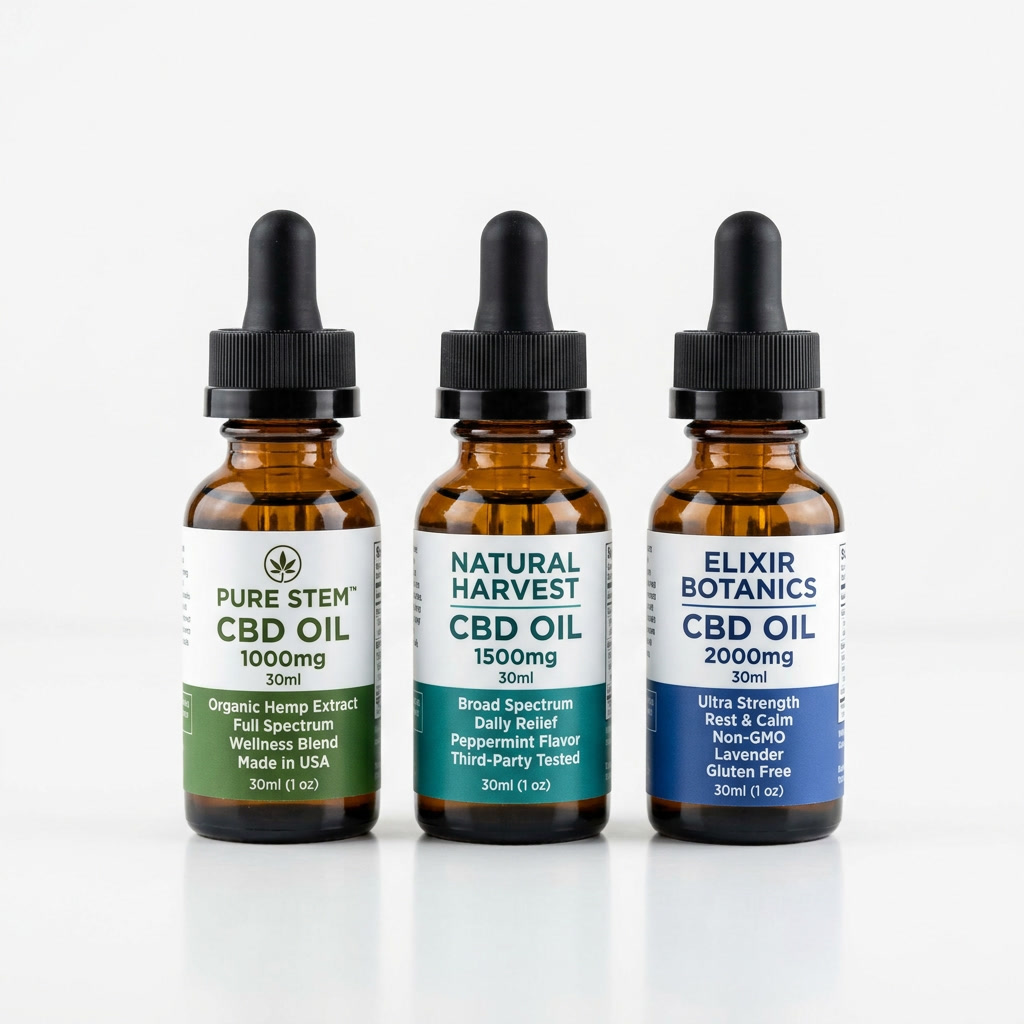
- Oils and tinctures — fast, flexible dosing; good for finding your dose
- Topicals — applied directly to sore muscles; the topical study showed a signal for strength recovery
- Gummies and capsules — convenient, consistent dosing, but slower onset
If you're looking for a place to start, our CBD oils and tinctures are a flexible option for finding your dose.
CBD vs. Traditional Recovery Tools
It's worth putting CBD in context alongside the recovery tools you already use. CBD isn't a replacement for sleep, nutrition, hydration, or mobility work — it's a potential addition to the toolkit.
The key difference: CBD appears to have a favorable safety profile compared to frequent NSAID use, which can irritate the stomach and kidneys over time. But that doesn't mean CBD is a substitute — it's a complementary tool with emerging evidence.
When to See a Doctor
CBD is generally well tolerated, but it's not risk-free, and it's not for everyone. Talk to your doctor before using CBD if you:
- Take blood thinners, antidepressants, or seizure medications — CBD can interact with these
- Have liver conditions — high doses of CBD can affect liver enzymes
- Are pregnant or breastfeeding
- Have a history of substance use concerns
- Are a competitive athlete subject to anti-doping rules — check your sport's regulations, as CBD products can contain trace THC
And if you experience unusual symptoms, persistent pain, or anything that feels off, see a doctor. CBD is a wellness tool, not a substitute for medical care.
Frequently Asked Questions
Does CBD make you run faster?
No. The 2025 two-mile time trial study found that an acute dose of CBD did not produce a meaningful performance boost. CBD is better understood as a recovery and wellbeing tool, not a performance enhancer.
Is CBD good for muscle recovery after running?
The evidence is promising but mixed. A 2026 study found CBD may help with pain and functional impairment after exercise-induced muscle injury, and a topical CBD study showed a signal for strength recovery. But CBD did not reduce general soreness in that study, so it's not a magic bullet.
How much CBD should I take for running recovery?
Start with 10–20mg once daily, track your response for 2–3 weeks, and adjust by 5–10mg as needed. Find your minimum effective dose rather than chasing a high number.
Is CBD safe for athletes?
CBD appears to be well tolerated in the studies reviewed here, with no serious adverse effects in acute use. However, it can interact with certain medications, and competitive athletes should check their sport's anti-doping rules, as some products contain trace THC.
Should I use CBD oil or a topical for running?
It depends on your goal. Topicals are applied directly to sore muscles and showed a signal for strength recovery in a 2026 study. Oils and tinctures offer flexible, systemic dosing that may support sleep and overall recovery comfort.
Can CBD help me if I'm injured and can't run?
Possibly, though the evidence is early. A 2026 animal study found CBD had protective effects against disuse-induced muscle atrophy, suggesting it might help preserve muscle during time off. But this is animal research, and human confirmation is still needed.
The Bottom Line
Here's the honest summary of what the 2025–2026 research shows about CBD for runners. CBD is not a proven performance enhancer — the two-mile time trial study found no meaningful speed boost, and that's the truth you should hold onto. What the research does suggest is more nuanced and arguably more useful: CBD may support the recovery process, with signals for pain relief, functional impairment, and strength recovery after muscle-damaging exercise, plus intriguing early evidence on muscle atrophy and metabolic health.
The studies are small, the results are mixed, and much of the most exciting work is still in animal models. But the safety profile looks good, and for runners who want a support tool for the daily grind of training — recovery comfort, sleep, and the mental load — CBD is a reasonable addition to a solid foundation of sleep, nutrition, and smart training. Start low, track your response, and be honest with yourself about what it does and doesn't do. That's the responsible way to use CBD, and it's the approach the science actually supports.
Citations
- PMID 41515147 | Nutrients | 2025 | The Effects of an Acute Dose of Cannabidiol on Health and Two-Mile Time Trial Performance-A Pilot Study
- PMID 42161484 | Biological & Pharmaceutical Bulletin | 2026 | Protective Effects of the Phytocannabinoid Cannabidiol on Disuse-Induced Muscle Atrophy through Modulation of Proteolysis and Mitochondrial Regulation
- PMID 41721911 | Molecular Biology Reports | 2026 | Aerobic training and cannabidiol activate the PI3K/AKT/PDX1 axis to ameliorate beta-cell dysfunction in a rat model of diet-induced obesity
- PMID 41918004 | Journal of Cannabis Research | 2026 | Efficacy and safety of cannabidiol (CBD) on reducing pain and functional impairment associated with exercise-induced muscle injury: a randomized placebo-controlled feasibility trial
- PMID 41877261 | Journal of Cannabis Research | 2026 | Topical application of cannabidiol for muscle recovery after exercise-induced muscle damage: a randomized, double-blinded pilot study
- PMID 38572744 | Journal of the International Society of Sports Nutrition | 2024 | Influence of short-term chronic oral cannabidiol application on muscle recovery and performance after an intensive training protocol - a randomized double-blind crossover study
- PMID 40839290 | Sports Medicine - Open | 2025 | The Acute Effects of Cannabidiol on Physiological and Subjective Responses to Endurance Exercise: A Dose-Ranging Randomised Controlled Crossover Trial
- PMID 39966566 | Experimental & Molecular Medicine | 2025 | Cannabidiol reshapes the gut microbiome to promote endurance exercise in mice
Find Your Perfect CBD Product
Take our 2-minute quiz to get personalized recommendations based on your needs.
Take the Quiz →Disclaimer: This article is for informational purposes only and does not constitute medical advice. CBD products are not FDA-approved to treat, cure, or prevent any disease. Always consult with a qualified healthcare professional before starting any new supplement, especially if you have a medical condition or take medications.