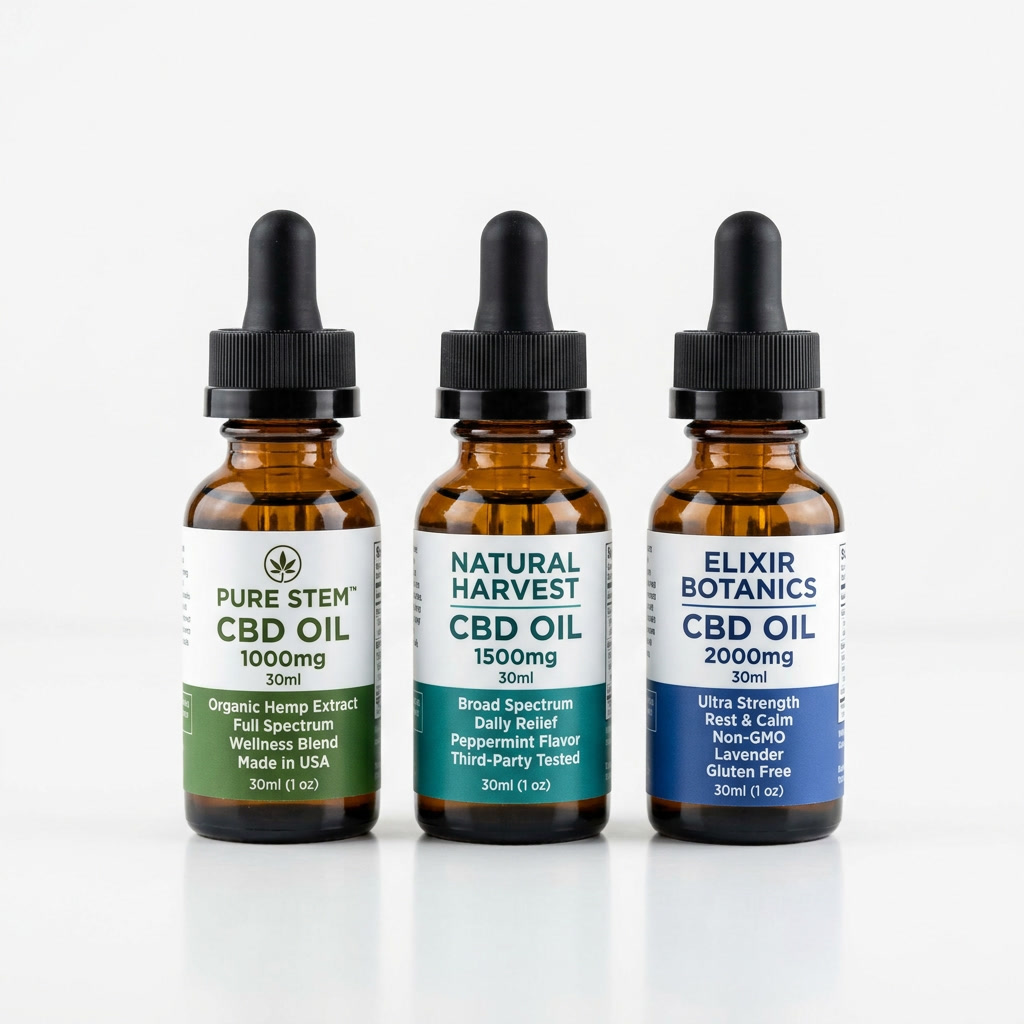
Is CBD Safe After a Transplant?

A kidney recipient, fourteen months out, is doing well. Creatinine is stable, tacrolimus troughs have sat in range for a year, and clinic visits have stretched from weekly to every three months. Then the sleep problems start, or the burning in the feet that nobody can quite explain, and a friend suggests CBD gummies. The patient mentions it at the next appointment and gets a shrug, so the gummies get ordered. Six weeks later the trough is 11 ng/mL, the nephrologist is on the phone, and nobody in the room is certain whether the cause is the gummies, a new antibiotic, or grapefruit juice at breakfast.
That scenario is not rare, and it is why this subject needs its own article rather than a paragraph inside a general piece on CBD drug interactions. Transplant recipients are the population where CBD's effect on drug metabolism carries the most consequence, because the drug it interferes with is the one keeping the organ alive.
The Short Answer
CBD is not off-limits after a transplant, but it is the wrong thing to experiment with alone. Nothing in the current evidence says a transplant patient who uses CBD under supervision will come to harm. What the evidence does say is that CBD changes tacrolimus exposure enough to matter, that the size of the change varies between people, and that the consequences of getting it wrong run in both directions. For the deeper evidence on this, see CBD After Surgery.
There is now a formal Phase I trial rather than only case reports. There is laboratory work explaining why the effect happens. There is a systematic review mapping the wider cannabinoid interaction landscape. And there is a post-transplant review asking why so little of this has reached routine care. The picture that emerges is consistent, and it is not the picture most patients get at a dispensary counter.
The short version for anyone who wants it in one sentence. CBD after a transplant is a decision for your team, made before you start, with a plan for checking levels.
Why Transplant Patients Are the Highest-Risk Group
Three features stack up here, and each makes CBD riskier than it would be for almost anyone else.
The first is a narrow therapeutic index. Tacrolimus has a small window between too little and too much, and both edges are dangerous. Too little and the immune system starts probing the graft. Too much and the kidneys take damage, the tremor worsens, blood sugar climbs, and infections find an opening. Drugs with that profile have no slack for an unmonitored interaction.
The second is permanence. A patient on a statin can pause for a week if a CBD interaction appears. A transplant recipient cannot take a holiday from immunosuppression, so any interaction has to be managed in place.
The third is demand. The symptoms that push people toward CBD are unusually common after transplant. Neuropathic pain from calcineurin inhibitors, musculoskeletal pain, anxiety, insomnia, and the nausea that follows mycophenolate all show up in the same clinic. The population that most needs relief is also the least able to absorb a metabolic surprise.
Tacrolimus Is a Drug With Almost No Room for Error
Tacrolimus is cleared mainly by CYP3A4 and CYP3A5 in the gut wall and the liver, and it is a substrate for P-glycoprotein, the efflux pump that pushes drug back into the intestinal lumen. CBD touches both. Anything that does moves the blood level.
This is why the counselling around tacrolimus sounds peculiar. No grapefruit. No St John's wort. Tell us before you start any new medicine, including things you buy at a petrol station. The list exists because the drug is unforgiving, and clinicians have watched levels double from a supplement a patient did not think counted as a drug.
The clinical habit that follows is therapeutic drug monitoring. Trough levels are drawn before the morning dose and compared against a target that shifts with time since transplant. Monitoring works only when the team knows what changed. A level that rises without explanation gets investigated as non-adherence, dehydration, or infection. The actual cause is often sitting in a cupboard.
What the 2025 Phase I Trial Found
The most important addition to this field came in 2025, when a formal drug-drug interaction study of CBD and tacrolimus was published in Clinical Pharmacology and Therapeutics. It was a controlled pharmacokinetic trial in which participants received tacrolimus with and without co-administered CBD, with full sampling across the dosing interval.
The result was unambiguous. CBD increased tacrolimus exposure and reduced its apparent clearance, and the magnitude was large enough that the investigators treated it as a clinically relevant interaction rather than a curiosity. Their conclusion was not that the combination is forbidden. It was that co-administration calls for a tacrolimus dose reduction and for therapeutic drug monitoring.
Two caveats are worth holding onto. Such a trial usually tests a fixed dose of a purified product in a small group, so it pins down direction and mechanism while leaving individual variation for the clinic to discover. The participants are also unlikely to be transplant recipients, whose handling of tacrolimus differs enough that the effect could land larger or smaller in practice.
The interaction is real, it is clinically meaningful, and it is now documented in a prospective controlled design rather than inferred.
The In Vitro Evidence: The Metabolites Matter Too
A companion line of work published in Clinical and Translational Science in 2025 looked at the mechanism at the enzyme level. The investigators tested CBD and its main circulating metabolites against tacrolimus metabolism and found inhibition of the CYP3A4 pathway that clears the drug. That confirms the clinical finding and explains it.
The interesting part is the metabolites. CBD itself has a short half-life and clears within a day or so, which is why patients assume a gummy taken at bedtime is gone by morning. But the acid metabolite, 7-COOH-CBD, hangs around far longer and reaches concentrations that can exceed the parent compound during repeated dosing. If that metabolite also inhibits the enzyme, the interaction is not limited to the hours after a dose. It accumulates.
This is the most underappreciated point in the whole discussion. The relevant exposure is not what you swallowed yesterday. It is what has built up in your blood over the past two or three weeks of daily use. It also explains a pattern clinicians describe. Levels do not always jump on day one. They drift up over the first fortnight and settle at a new, higher baseline that is easy to mistake for a slow change in graft function.
The Liver Enzyme Story, Briefly
CBD can raise transaminases, and the effect is dose dependent and more common when it is combined with other hepatotoxic drugs. The clearest data come from epilepsy, where CBD was studied alongside valproate and clobazam, and where liver enzyme monitoring became routine for a reason.
After a transplant the stakes are different but not smaller. A liver recipient has a graft that is already the organ under surveillance. Anyone on azole antifungals, common in the first months after transplant, is stacking a second liver stressor on top. We covered the mechanism and the monitoring implications in our article on CBD and liver safety, so this piece will not repeat it. The relevant sentence is that liver enzyme changes are one more reason a transplant patient should not be managing CBD alone.
What the Post-Transplant Care Review Says
In 2025 the International Journal of Molecular Sciences published a review specifically on the use of cannabidiol in post-organ-transplant care. It is worth reading for what it admits as much as for what it concludes.
The review notes the genuine appeal. CBD has anti-inflammatory and immunomodulatory activity in laboratory models, it addresses symptoms transplant patients actually have, and patients are using it whether or not their clinicians know. It also notes how thin the transplant-specific evidence is. Most of what gets applied to recipients is extrapolated from epilepsy or healthy volunteer pharmacokinetics, and little comes from studies that followed transplant patients over time.
The central safety concern the authors raise is the immunosuppressant interaction, which is the same conclusion the Phase I trial reached from the other direction. Their recommendation is not prohibition. It is structured assessment, documentation, and monitoring.
The Systematic Review
Also worth knowing is the 2024 systematic review in Frontiers in Pharmacology covering drug-drug interactions with THC, CBD, and cannabis more broadly. It gathered the available data and made two observations that shape how confident anyone should be.
The first is that the evidence base is lopsided. It clusters around a handful of index drugs, tacrolimus among them, and around purified CBD in controlled settings. Whole-plant products, oils of unknown concentration, and untested edibles are almost absent, which means the risk estimates patients actually need are the least well characterised.
The second is that many interactions in the tables are predicted from laboratory data rather than confirmed in patients. That does not make them wrong, but a cautious reader should distinguish between an interaction measured in people and one inferred from an enzyme assay. For tacrolimus you now have both.
What Patients Report Online
A 2025 paper in Drug Safety makes an argument that would have seemed eccentric a decade ago. The authors showed that patient forum data can be mined systematically for drug interaction signals, and that those signals often appear before they reach formal reporting systems.
The reasoning is simple. Patients describe what happened to them in forums long before anyone files a report, including the supplement they did not think to mention, the timing of the change, and the symptom that followed. Aggregated and filtered, that becomes a hypothesis-generating signal.
The limits are equally straightforward. There is no verification of dose, no confirmation that the person has the condition they describe, no control group, and a strong bias toward dramatic outcomes. A post saying "my levels went crazy after I started CBD oil" is not evidence of causation. It is a reason to look. What the method does establish is that this experience is common enough to surface in unstructured conversation, and the people generating those signals are, by definition, people who did not tell their team.
The Immunology Layer
There is a second question under the pharmacokinetic one, and it is less settled.
A 2025 paper in the International Journal of Molecular Sciences examined the immunomodulatory effects of a high-CBD cannabis extract, comparing how it shifted immune signalling against purified CBD. A 2026 study in Molecular Genetics and Genomics went further, describing how CBD shapes systemic cytokine profiles and transcriptomic signatures.
Both are early-stage, largely in laboratory systems and animal models, and neither answers whether CBD affects graft tolerance in humans. But the direction matters. CBD is not pharmacologically inert with respect to the immune system, and anyone who assumes it is a neutral plant extract is working from an assumption the data do not support.
The 2026 review of cannabis and cannabinoids in JAMA is a useful corrective in both directions. It acknowledges real therapeutic signal in some indications while being blunt that the overall evidence base is modest in quality, heterogeneous in product, and short on long-term safety data. That is exactly the profile that should make a high-risk population cautious about CBD.
The Other Immunosuppressants
Tacrolimus gets the attention because it is the most common calcineurin inhibitor, but it is not the only drug in the regimen.
Cyclosporine is cleared through the same CYP3A4 pathway and is also a P-glycoprotein substrate, so the interaction logic carries across with little modification. Sirolimus and everolimus are similarly CYP3A4 dependent. Mycophenolate runs mostly through glucuronidation rather than CYP3A4, so a direct metabolic interaction is less likely, but its absorption is sensitive to gut effects.
Prednisone is also a CYP3A4 substrate, and steroid exposure carries its own consequences for glucose, bone, and infection risk. A patient on tacrolimus with mycophenolate and prednisone is managing a regimen in which one metabolic change propagates.
What Good Monitoring Looks Like
If a transplant team decides to support a trial of CBD, the plan is not complicated, but it has to be deliberate.
A baseline trough before the first dose establishes where the patient actually sits, which is often different from where the last clinic note assumed. A repeat trough one to two weeks after starting captures the early drift. Further checks follow any dose change in either direction. Creatinine, blood pressure, fasting glucose, magnesium, and tremor are tracked alongside the level, because the clinical picture can move before the number does.
One limitation is worth stating plainly. A trough tells you about the low point only, and single time points can miss differences in total exposure.
Practical Rules for Patients
- Tell your transplant team before you start, not after. Bring the product with you if you can.
- Do not self-start. This is the single decision with the largest consequence.
- Expect a tacrolimus dose adjustment and extra blood tests. That is the normal path, not a failure.
- Do not switch brands or formats mid-course without saying so. A new bottle is a new dose.
- Avoid abrupt starts and abrupt stops. Both directions move the level.
- Keep a simple log of dose, timing, and symptoms. Tremor, sleep, appetite, and handwriting changes are worth noting.
- Read the label for concentration per millilitre, not per dropper. Those numbers are not the same.
- Treat any new medication as a change worth reporting, including antibiotics and over-the-counter sleep aids.
The format question comes up constantly. Oral oils and tinctures, the products most people buy at retail, produce the least predictable blood levels of any common delivery method, because absorption depends on food, formulation, and gut transit. That variability is manageable in a healthy adult. In someone whose immunosuppressant has a threefold therapeutic window, it is the whole problem in miniature. The general principles apply to every form of CBD, and we set them out in our CBD safety guide.
Questions Patients Ask
What about CBD for the nausea from mycophenolate? Worth raising, because there are established antiemetics that carry no tacrolimus interaction. This is a case where the safer option is also the better-studied one.
My levels have been stable for years. Does that change anything? Stability is precisely what an interaction disrupts. A long run of good numbers tells you the current regimen is working. It says nothing about adding a new inhibitor.
How fast would a level change? Days for the parent compound, one to three weeks for the full effect as metabolites accumulate. The delayed pattern is why a single check on day three can look reassuring and be wrong.
Does THC matter as much? THC is a weaker inhibitor of CYP3A4 than CBD in laboratory work, so the metabolic signal is smaller. It is not absent, and smoked cannabis brings separate issues around airway, adherence, and dose control. Do not treat THC as the safe alternative by default.
I already started. What now? Do not panic and do not stop abruptly on your own. Call the transplant clinic, describe the product and the dose, and ask for a level. The most dangerous version of this situation is the one where nobody finds out.
If another operation is ahead, our piece on CBD and anaesthesia covers the perioperative side of the same conversation.
What Good Practice Looks Like
The clinics that handle this well do three things.
They ask. Cannabis and CBD use is on the medication reconciliation form, asked in the same tone as any other supplement. Patients disclose when the question is normal, and they hide it when the question sounds like a warning.
They document. The product, the concentration, the start date, the monitoring plan, and the decision all end up in the record, so the next clinician is not starting from zero.
They decide with the patient rather than at them. A clear no is a legitimate outcome, and so is a supervised trial with a monitoring plan. What is not legitimate is a shrug, which patients reliably read as permission.
The Bottom Line
Transplant recipients are the highest-risk group for CBD drug interactions, and the reason is structural rather than incidental. The drug involved has almost no therapeutic margin, the patient cannot pause it, and the symptoms that drive CBD use are common in exactly this population.
The 2025 evidence moved this from plausible to established. A controlled Phase I trial showed that CBD raises tacrolimus exposure enough to require dose adjustment and monitoring. Laboratory work explained the mechanism and identified the long-lived metabolites that make the effect cumulative rather than transient. Reviews of the wider literature, of post-transplant care, and of patient-reported signals all point the same way.
None of that makes CBD forbidden after a transplant. It makes it a decision that belongs to the patient and the transplant team together, made before the first dose, with levels checked and changes kept slow. The gummies in the cupboard are not the danger. The silence around them is.
Find Your Perfect CBD Product
Take our 2-minute quiz to get personalized recommendations based on your needs.
Take the Quiz →Disclaimer: This article is for informational purposes only and does not constitute medical advice. CBD products are not FDA-approved to treat, cure, or prevent any disease. Always consult with a qualified healthcare professional before starting any new supplement, especially if you have a medical condition or take medications.