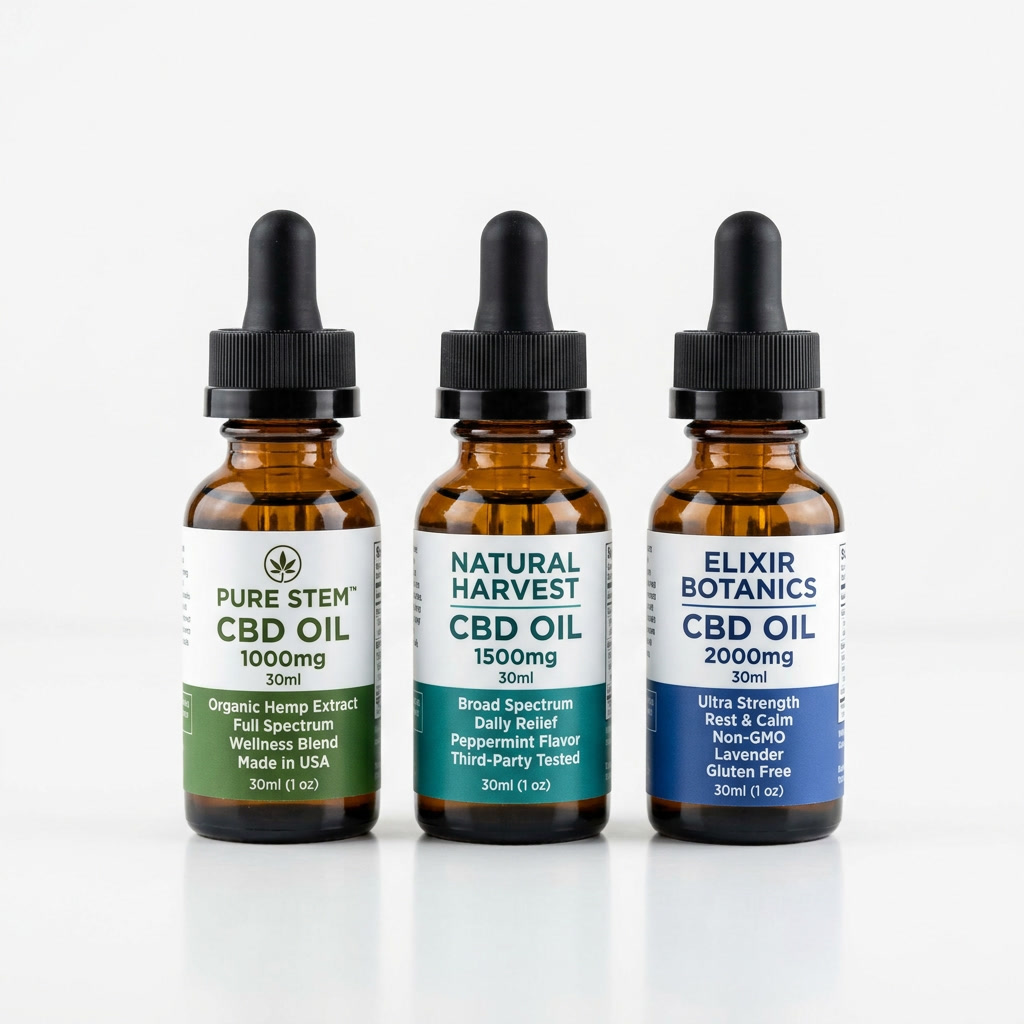
CBD & Driving: Impairment, Drug Tests & Legality
The Morning You Realize You Have to Drive
It's 7:40 AM on a Tuesday. You took your usual CBD oil last night to wind down after a stressful day, slept great, and now you're grabbing your keys for the morning commute. Then it hits you: is it actually safe to drive after CBD? And if you get pulled over, will a roadside test flag you? You're not high. You don't feel impaired. But you've heard the horror stories about people failing drug tests after using "just CBD."
This is one of the most confusing corners of the wellness world, and in 2026 the answers are genuinely fast-moving. The short version: pure CBD does not appear to impair driving the way THC does, but the product you choose, the way it's tested, and the laws where you live all matter enormously. This guide walks you through the science, the roadside testing reality, and the practical steps to protect yourself.
Does CBD Actually Impair Driving?
The honest answer, based on the most recent research, is that pure CBD on its own does not appear to meaningfully impair the skills you need to drive. For a closer look at how CBD and THC affect memory and cognition, see our CBD and memory guide. A 2023 randomized clinical trial in Fundamental & Clinical Pharmacology gave healthy adults CBD and measured subjective states, cognition, and psychomotor function, and found no significant impairment of the kind that would compromise driving performance.
The key distinction is between CBD and THC. THC is the psychoactive compound in cannabis that produces the "high" and is strongly linked to impaired reaction time, lane control, and judgment. CBD is non-intoxicating. A 2026 review in Current Addiction Reports on the science of cannabis-impaired driving makes clear that the impairment risk is driven primarily by THC, not CBD.
But here's the catch: most CBD products aren't pure CBD. That distinction is where the real risk lives.
CBD vs. THC: Why the Difference Matters
To understand why CBD doesn't impair driving the way THC does, it helps to know how the two compounds work. THC binds strongly to the CB1 receptors in the brain, which is what produces euphoria, altered perception, and slowed reaction times. CBD interacts with the endocannabinoid system much more weakly and indirectly, and it does not produce the intoxicating effects that make driving dangerous.
This is why a 2026 study in the Journal of Analytical Toxicology on the pharmacokinetics of oral CBD, with and without low doses of THC, is so relevant. When researchers looked at how these compounds behave in the body, the intoxicating and impairing effects tracked with THC exposure, not CBD. Even a 2023 trial in JAMA Network Open that co-administered THC with CBD found that CBD did not blunt or eliminate the THC-related effects, which reinforces that THC is the compound to watch.
The practical takeaway: if you're using a product that is genuinely CBD-dominant with negligible THC, your driving risk is low. If you're using a full-spectrum product that contains meaningful THC, the calculus changes.
The Full-Spectrum Problem: Hidden THC
This is the single most important thing to understand about CBD and driving. Full-spectrum CBD products are made from the whole hemp plant and legally can contain up to 0.3% THC in the United States. That might sound tiny, but it's not zero, and it can accumulate in your system with regular use.
A 2025 study in the Journal of Chromatography A on separating THC from cannabis extracts highlights just how much THC can be present in plant-derived products and how difficult it is to fully remove. The reality is that "full-spectrum" and "broad-spectrum" products can carry trace amounts of THC, and some products on the market are mislabeled with more THC than their labels claim.
For driving, this matters in two ways. First, even small amounts of THC can produce subtle effects in some people, especially if you're sensitive or take high doses. Second, and more importantly for your peace of mind, that THC can show up on a drug test.
Roadside Drug Testing: The False Positive Problem
Here's where things get genuinely frustrating. Roadside drug testing and workplace drug screens are designed to detect THC, not CBD. Most standard tests look for THC-COOH, a metabolite of THC, in urine, blood, or oral fluid. They do not test for CBD.
So how do people fail drug tests after using CBD? It comes down to THC contamination. If your "CBD" product actually contains THC, whether from full-spectrum processing or mislabeling, that THC can be detected. A 2024 paper in the Journal of AOAC International on translating analytics to recent cannabis use and impairment spells out how complex it is to connect a positive test result to actual impairment, and how easily a positive screen can occur without any intoxication.
The other issue is sensitivity. A 2026 study in Psychopharmacology on THC cutoff levels in blood and oral fluid found that even frequent cannabis users who smoked the "evening before" could still be detected the next day, which shows how long THC can linger. If you're using a product with any THC, you can't assume you'll be clear by morning.
Can CBD Itself Cause a False Positive?
A common question is whether pure CBD can trigger a false positive on a THC test. The scientific consensus is that pure CBD does not convert to THC in the body in any meaningful way, and standard immunoassay screens are not designed to react to CBD. So a truly pure CBD isolate should not cause a false positive.
However, there are two real-world caveats. First, some CBD products are contaminated with THC during manufacturing, which is why third-party lab testing matters so much. Second, some products labeled as "CBD" actually contain more THC than claimed. This is why the safest approach for anyone who is drug-tested is to use a CBD isolate with a verified certificate of analysis showing non-detectable THC.
The "Morning After" Question
If you use CBD in the evening, is it safe to drive the next morning? For pure CBD, the research suggests yes. A 2026 observational study in Drug and Alcohol Dependence Reports looked at cognitive performance the morning after cannabis use and found that the residual effects were tied to THC, not CBD.
But for products containing THC, the morning-after picture is murkier. A 2026 driving simulator study in the Journal of Cannabis Research examined frequent cannabis users driving "the morning after" their last use and found measurable differences in driving performance. The takeaway: if your product has THC, don't assume you're clear just because you slept.
CBD and Alcohol: A Special Caution
If you're combining CBD with alcohol, the picture changes. A 2026 Phase I study in the Journal of Cannabis Research on the safety of co-administered CBD and alcohol found that the combination was generally well tolerated, but it's a reminder that CBD doesn't exist in a vacuum. Alcohol alone impairs driving, and adding any other compound that affects the central nervous system deserves caution.
The responsible approach is simple: never drive if you feel impaired, regardless of what you've consumed. If you've had alcohol, don't drive. If you've taken a high dose of a full-spectrum product and feel any effects, don't drive.
The Legality of Driving After CBD
The legality of driving after CBD depends entirely on where you live and what's in your product. In most places, driving under the influence of THC is illegal, and many jurisdictions have per se laws that make it illegal to drive with any detectable amount of THC in your system, even if you're not impaired.
This creates a real risk for CBD users. If you use a full-spectrum product with trace THC and get pulled over, a roadside test could detect that THC, and you could face a DUI charge even though you feel completely sober. This is why the "I only used CBD" defense often fails in practice, because the test detects THC, not intent.
Pure CBD isolate products, with non-detectable THC, carry far less legal risk. But laws vary by state and country, and they change frequently. Always check the specific rules where you live.
How to Know What's Really in Your Product
The single best defense against both impairment and failed drug tests is knowing exactly what's in your product. This means checking the certificate of analysis, or COA, for every product you buy. A COA is a third-party lab report that shows the actual cannabinoid content, including THC.
Here's what to look for:
- THC content: Look for "non-detectable" or "ND" if you want zero THC. Anything above that means THC is present.
- CBD content: Confirm the product actually contains the amount of CBD claimed on the label.
- Contaminants: Check for pesticides, heavy metals, and residual solvents.
- Lab reputation: Make sure the testing was done by an independent, accredited lab, not the manufacturer.
If a product doesn't have a COA you can verify, treat it with suspicion. Mislabeled products are a real problem, and the consequences for drivers are serious.
Isolate vs. Full-Spectrum: Which Is Safer for Driving?
If driving and drug testing are your concerns, the choice between isolate and full-spectrum is the most important decision you'll make.
CBD isolate is pure CBD with no other cannabinoids, including no THC. It's the safest choice for anyone who drives regularly or is subject to drug testing. The trade-off is that some research suggests full-spectrum products may offer additional benefits through the "entourage effect," where multiple cannabinoids work together.
Full-spectrum CBD contains the full range of hemp compounds, including trace THC. It may offer more robust effects for some people, but it carries the risk of THC accumulation and positive drug tests.
Broad-spectrum CBD is a middle ground, with multiple cannabinoids but THC removed. It's a reasonable option, but you still need to verify the COA to confirm the THC is actually non-detectable.
For most drivers, the safest recommendation is a verified isolate or broad-spectrum product with a COA showing non-detectable THC.
Practical Safety Guidance
Let's put this all together into clear, actionable guidance for anyone who uses CBD and drives:
- Know your product. Read the COA and confirm the THC content before you buy.
- Choose isolate or verified broad-spectrum if you drive regularly or are drug-tested.
- Never drive if you feel impaired. This is non-negotiable, regardless of what you consumed.
- Be cautious with full-spectrum products before driving, especially at higher doses.
- Don't assume you're clear by morning if your product contains THC.
- Avoid combining CBD with alcohol and then driving.
- Keep your COA accessible in case you need to document what you're using.
- Check your local laws, which can change and vary widely.
Action Steps
Ready to make sure your CBD routine never puts you at risk on the road? Here's your action plan:
1. Audit your current product. Find the COA and check the THC content. If you can't find one, consider switching.
2. Switch to a verified isolate or broad-spectrum product if you drive daily or face drug testing. Our CBD oils and tinctures and CBD gummies are good places to start, and you can filter by category to find what fits.
3. Test your own response. If you're trying a new product, take it at home first and see how you feel before you ever get behind the wheel.
4. Set a personal rule. If you feel any effect at all, you don't drive. Period.
5. Keep documentation. Save your COAs and product labels so you can show exactly what you're using if questions ever come up.
6. Revisit your approach regularly. Laws and product formulations change, so review your routine a few times a year.
Related Reading
Bottom Line
The science is reassuring for pure CBD: it does not appear to impair driving the way THC does, and a verified isolate carries minimal risk of a failed drug test. For a deeper look at how CBD interacts with drug screens, see our CBD drug testing guide, and for the broader safety picture, our CBD safety overview. If you're weighing product types, our full-spectrum vs. isolate comparison breaks down the trade-offs, and our CBD drug interactions guide covers how CBD can interact with other substances. But the real-world picture is more complicated, because many products contain trace THC, roadside tests detect THC rather than intent, and laws can be unforgiving. The responsible path is to know exactly what's in your product, choose a verified isolate or broad-spectrum option if you drive, and never get behind the wheel if you feel impaired. With the right product and the right habits, you can enjoy the benefits of CBD without putting yourself or others at risk on the road.
Find Your Perfect CBD Product
Take our 2-minute quiz to get personalized recommendations based on your needs.
Take the Quiz →Disclaimer: This article is for informational purposes only and does not constitute medical advice. CBD products are not FDA-approved to treat, cure, or prevent any disease. Always consult with a qualified healthcare professional before starting any new supplement, especially if you have a medical condition or take medications.