How Long Does CBD Stay in Your System?
It's the night before the biggest opportunity of your career. You passed the interviews, impressed the team, and the offer is conditional on one last step: a standard drug screening. Somewhere between the congratulations email and the testing-center appointment, a thought creeps in — you've been taking a CBD oil every evening for the past few months to help you unwind. Is that going to show up? Will the lab flag it? Or if you're an athlete staring down a random anti-doping control, or a driver facing a roadside saliva test, the question feels even more urgent. Most people never stop to ask how long CBD actually lingers in the body — they just assume it vanishes overnight, or worse, panic and assume it will ruin everything. The honest answer sits somewhere in between, and it depends on your dose, your body, your product, and the type of test being used. In this guide, we'll walk calmly through the science: how your body processes CBD, how long it can be detected in urine, blood, saliva, and hair, what actually changes those timelines, and what you can realistically do if a drug test is on your calendar.
First, the Most Important Fact: Standard Drug Tests Are Looking for THC, Not CBD
Before any timelines, let's clear up the biggest misconception. Standard workplace drug panels — including the common 5-panel tests used for pre-employment screening — are designed to detect THC metabolites, specifically a compound called THC-COOH, which your body produces after metabolizing THC. CBD is a completely different molecule, and everyday CBD products sourced from hemp are federally legal as long as they stay below the 0.3% THC threshold.
Legal CBD is not what these tests screen for.
That said, "CBD isn't the target" is not the same as "CBD is risk-free when testing." Two things can complicate the picture:
- Many hemp-derived CBD products contain trace amounts of THC — legal, but real
- Some product labels are simply inaccurate, containing more (or less) THC than advertised
Label accuracy remains a genuine problem. A 2025 study in Cannabis and Cannabinoid Research analyzed hemp-derived products sold at retail stores and online in the United States and found meaningful discrepancies between label claims and actual cannabinoid content, even in categories like edibles and cosmetics (PMID 39029473). This is why the smartest framing isn't "will CBD show up?" but "could my CBD product have quietly introduced enough THC to matter?" We'll come back to that.
How Your Body Processes CBD: Metabolism and Half-Life
Cannabidiol is fat-soluble, so when you swallow an oil, capsule, or gummy, it's absorbed through the digestive system, processed by the liver, and eventually excreted mainly through the feces, with a smaller fraction leaving via urine. Because it dissolves into fat rather than water, CBD and its metabolites hang around in the body considerably longer than a water-soluble vitamin would.
The key concept here is the half-life — the time it takes for the concentration of a substance in your blood to drop by half. The rule of thumb is that after roughly five half-lives, a substance is essentially cleared from the body.
What does the research say about CBD specifically? Modern controlled pharmacokinetic studies keep refining the numbers. A 2026 trial in the Journal of Analytical Toxicology measured the acute and chronic pharmacokinetics of oral cannabidiol — with and without low doses of delta-9-THC — in healthy volunteers and showed how much the profile changes between a single dose and regular use (PMID 40704705). A 2024 study in Clinical and Translational Science tracked CBD pharmacokinetics in a real patient population over a placebo-controlled trial and found substantial person-to-person variability (PMID 38054364).
Widely referenced clinical data — much of it from earlier work with the pharmaceutical CBD product Epidiolex and summarized in reviews that followed — has long suggested that CBD's half-life in healthy adults after regular oral dosing sits somewhere in the range of roughly 18 to 32 hours, and that regular daily use can extend clearance compared with a single dose. Treat those numbers as a starting frame, not a guarantee: newer 2023-and-later studies consistently emphasize that half-life shifts with dose frequency, formulation, and the individual.
Why the Range Is So Wide
Three reasons the "half a day to a few days" range is honest rather than vague:
- Formulation matters. Oil-based products, nanoemulsions, and capsules are absorbed differently, which changes both peak levels and clearance speed.
- Chronic use builds up. Daily dosing means CBD accumulates in fat tissue, then leaches out slowly.
- Your liver does the work. CBD is metabolized by liver enzymes (the CYP450 family), and those enzymes differ from person to person — and are affected by other medications.
A 2024 comparative review in Chemico-Biological Interactions looking at CBD pharmacokinetics across adult and pediatric populations specifically highlighted how metabolism and dosing context shift clearance times (PMID 38574834). The takeaway: two people taking the identical CBD oil can still have noticeably different internal timelines.
If CBD Half-Life Is 1-3 Days, Why Do Tests Detect It Longer?
This is the part that confuses everyone. The half-life describes when the blood level drops, but drug tests are often looking for metabolites — the breakdown products CBD leaves behind. Those metabolites can persist in stores like fat tissue and get released and excreted gradually, so a lab may still pick up traces after the "active" effects are long gone.
Think of it like footprints on a beach: the person (CBD in your bloodstream) walked away days ago, but the footprints (metabolites) are still visible for a while.
Detection Windows by Test Type: The Honest Ranges
Here's where we need to be really careful. Detection windows for CBD metabolites specifically are far less studied than THC windows, and published figures vary enormously. The ranges below combine recent controlled-dosing research with long-standing toxicology conventions — and each should be read as a rough estimate, not a countdown clock.
Urine Tests
Urine is the default for workplace screening because it's cheap and looks for the last several days' worth of use rather than a moment in time.
- Occasional users: CBD itself and its metabolites are typically cleared within about 1 to 3 days
- Regular daily users: metabolite detection can extend to roughly 1 to 2 weeks, sometimes longer with heavy, sustained use
- THC from full-spectrum contamination: this is what actually poses a real risk — THC-COOH can show up in urine for 3 days to several weeks depending on frequency and body fat
Two important nuances right now:
Narrower point: what recent controlled studies have actually shown
Broader point: historical detection knowledge, referenced as context
A major 2026 systematic review in Pharmacological Research examined urinary delta-9-THC and metabolite concentrations following cannabis use across the literature and confirmed just how much those windows swing with individual factors and usage patterns (PMID 41707818). And a 2026 paper in the Journal of Analytical Toxicology used controlled dosing and liquid chromatography to definitively identify which CBD metabolites appear in urine — work that is helping the field get more precise about what "detection" even means for CBD rather than THC (PMID 41206122).
So what can we say honestly? Historical toxicology guidance, built on years of controlled THC dosing studies, has consistently estimated that a single cannabis exposure may be detectable in urine for up to around 3 days, while regular use can produce detectable THC metabolites for up to 30 days or so — and those long-established THC figures remain the reference point labs still work from today. For pure CBD isolate with no THC, there's no strong evidence that a standard workplace panel would flag it at all.
Blood Tests
Blood tests look for the parent compound in circulation, which makes them the "right now" test rather than the "this month" test.
- CBD itself: typically cleared from blood plasma within about 6 hours to 2 days for a single oral dose
- Regular users: CBD and its metabolites may linger up to roughly a week as slow release from fat stores continues
Blood draws are uncommon for routine employment screening — they're mostly used in accidents, forensic investigations, or clinical settings, because they show current impairment-level presence rather than history.
Saliva (Oral Fluid) Tests
Oral fluid testing has grown in popularity because collection is simple and observed, which cuts down on sample tampering.
- CBD in saliva: the window is short — often roughly 6 to 24 hours after use in most people
- THC from full-spectrum products: recent work shows THC can appear in oral fluid after taking a THC-containing oil, detectable by point-of-collection devices (PMID 38414100)
Two 2026 studies matter here. A controlled human trial in the Journal of Analytical Toxicology mapped the acute and chronic oral fluid profile of oral CBD with and without low-dose delta-9-THC and found that CBD itself appears transiently (usually gone within about a day) while any co-administered THC behaved more like traditional pharmacokinetics — clearly detectable and able to drive positive results (PMID 41252452). And methodological work in Forensic Sciences International demonstrated that modern LC-MS/MS methods can reliably detect and quantify a broader panel of cannabinoids in oral fluid samples (PMID 39111056).
The practical implication: if your test is oral fluid, the same-day risk from even a legal full-spectrum oil is mostly about residual THC in your mouth — which is why rinsing your mouth and timing your last dose with more lead time both genuinely help.
Hair Tests
Hair follicle testing is the long-memory test. It's mainly used in specialized contexts — legal disputes, some safety-sensitive roles, clinical monitoring — not standard pre-employment panels.
- CBD from full-spectrum products: THC metabolites can theoretically integrate into hair as it grows, offering a detection window of up to 90 days
- Pure CBD: there's very little evidence that CBD itself is what hair tests look for; panels overwhelmingly target the THC breakdown product
A 2024 study in Psychopharmacology examined associations between hair-derived cannabinoid levels and self-reported use, and the data reinforced how sensitive these tests are to both frequency and individual biology (PMID 38407636). If you're a light, occasional hemp-CBD user, the odds of a hair test flagging anything from a legal product are quite low — but not zero, especially with broad-spectrum or full-spectrum products used daily for months.
What Actually Changes How Long CBD Stays in Your System
If you've read this far, you've probably noticed a theme: there is no single answer, because your personal timeline depends on several overlapping factors. Here are the ones that matter most.
Your Dosage
Higher doses take longer to clear, plain and simple. Someone taking 10 mg occasionally will clear CBD far faster than someone taking 100 mg daily. If you've been experimenting with higher doses while troubleshooting anxiety or sleep, that accumulation matters if a test is coming. Our guide to how CBD dosage scales with body weight can help you find a dose that fits your needs.
How Often You Use It
Frequency is probably the single biggest lever. Daily chronic use creates accumulation in fat tissue and a much longer tail of metabolites. Occasional weekend use behaves like a single blip on the timeline. Research on chronic dosing — like the 2026 controlled trial comparing single-dose vs. daily-use pharmacokinetics (PMID 40704705) — shows accumulation is real, not theoretical.
Your Body Fat Percentage
Because CBD is lipophilic (dissolves in fat), people with higher body fat percentages tend to store more of it and release it back into the bloodstream more slowly after they stop taking it. Leaner individuals generally clear CBD faster, though not dramatically so in most cases.
Your Metabolism and Liver Health
Liver enzyme activity determines how quickly CBD is broken down. Factors that slow your liver's metabolism of CBD include:
- Certain medications (especially CYP450 inhibitors like some antibiotics and antifungals)
- Liver conditions or reduced liver function
- Genetics — some people naturally metabolize cannabinoids faster than others
A 2025 phase I trial in Clinical Pharmacology & Therapeutics examining CBD's interaction with tacrolimus (an immunosuppressant) confirmed just how significantly CBD can slow metabolism of other drugs processed by the same liver pathway (PMID 39601108). If you're on regular medications and facing a drug test, that interaction matters for both clearance time and overall safety.
The Type of CBD Product You Use
This factor deserves its own section, because it directly affects your drug-test risk.
Full-Spectrum vs. Broad-Spectrum vs. Isolate: The THC Trace Question
Here's where a lot of anxiety comes from, and it's worth unpacking carefully.
Full-Spectrum CBD
Technically legal under the 0.3% THC threshold, full-spectrum products contain all the compounds naturally found in hemp — including trace THC. The entourage effect is the theory that these compounds work better together. But trace THC can accumulate.
If you take a full-spectrum oil daily for months, you're introducing small amounts of THC consistently. That can build up in your system in a way a pure isolate simply can't, and it's precisely this scenario that has led to documented positive drug tests in people using CBD only. A 2023 study in the Journal of Analytical Toxicology examining workplace drug testing data even documented how commonly other hemp-derived THC isomers — like delta-8 — show up in routine workplace panels (PMID 37697897), a signal that the "CBD-only" line can blur more easily than labels suggest.
Broad-Spectrum CBD
Broad-spectrum products go through an additional processing step to remove THC while keeping other beneficial hemp compounds. The THC should be at non-detectable levels. This is a solid middle-ground option for people who want some of the entourage benefits but are concerned about testing.
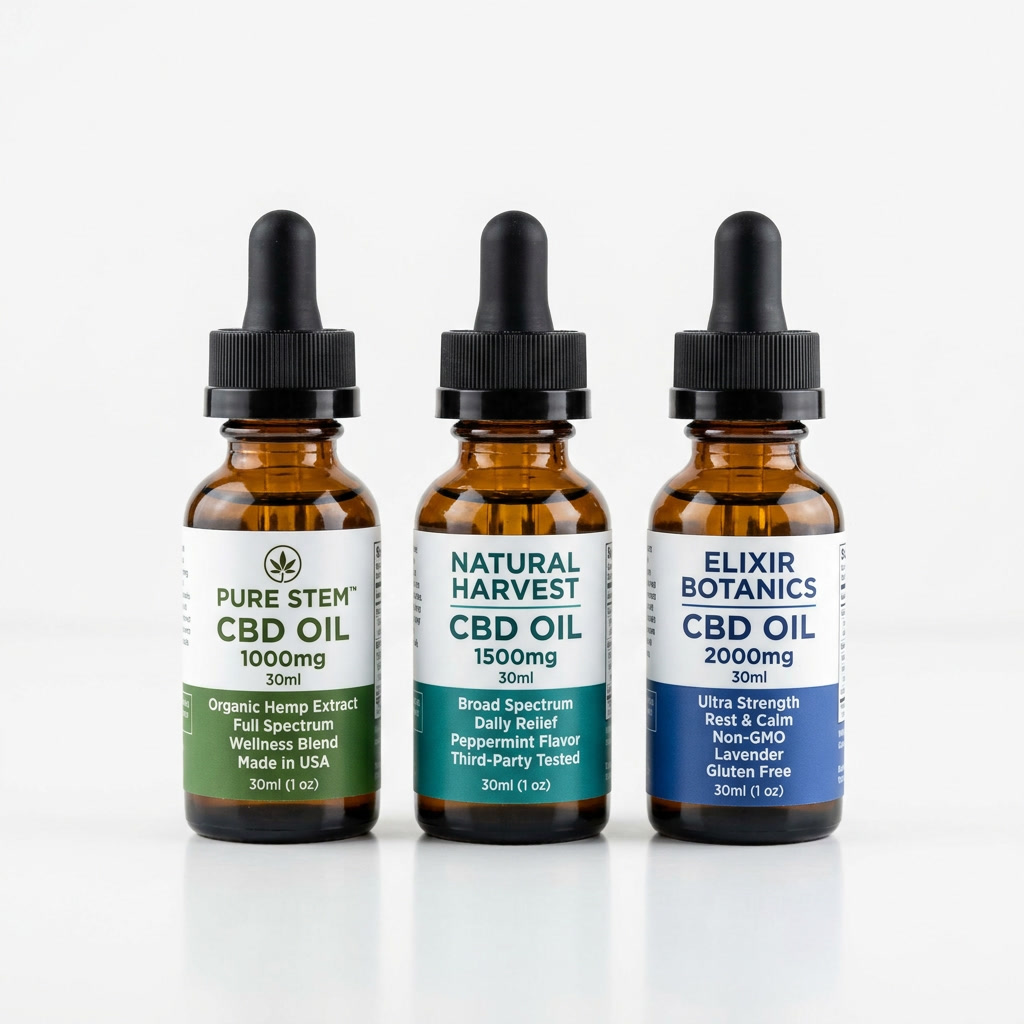
If you prefer keeping oils or capsules in your routine, both our CBD oils and tinctures collection and our capsules and softgels range include clearly labeled broad-spectrum and isolate options with published lab results.
CBD Isolate
Pure, isolated cannabidiol with everything else removed. This is the safest option from a drug-testing standpoint, since there's no THC to accumulate. The tradeoff: you lose the potential entourage effect and may need higher doses for similar perceived benefits.
If drug testing is a real concern in your life — whether you're an athlete, a CDL driver, or starting a new job — broad-spectrum or isolate is simply the more prudent choice. Full-spectrum has its advocates and its place, but it's not the right fit when your livelihood depends on a clean result.
One more layer of caution: a 2026 case series in Acute Medicine & Surgery examining adverse events linked to CBD products suggested that some products on the market may exceed the legal THC limit or be otherwise mislabeled (PMID 38828078). That's not a reason to panic — it's a reason to buy from brands that publish third-party lab results (Certificates of Analysis) and to check them against the actual bottle. A wider look at CBD product quality and safety in our dedicated safety guide covers the red flags to watch for before you buy.
How to Reduce Your Risk Before a Drug Test
There's a lot of bad advice floating around on this topic — detox teas, extreme hydration tricks, charcoal pills. Let's focus on what's actually evidence-based and realistic.
> Quick Take: You cannot accelerate CBD clearance with any supplement, drink, or trick. Your timeline is set by dose, frequency, body fat, and metabolism. The only real levers are time and clean products.
Here's what actually helps:
- Stop early. If you know a drug test is coming, stop taking CBD (especially full-spectrum) at least a few weeks ahead of time. Daily-use metabolite clearance commonly takes weeks, so one week of abstinence is often not enough for regular users of full-spectrum products.
- Switch to CBD isolate if you must keep using CBD. If your wellness routine depends on CBD and you can't go cold turkey, broad-spectrum or isolate at least removes the ongoing trace-THC accumulation.
- Check your product's lab report. A Certificate of Analysis from a third-party lab shows exactly how much THC (if any) your current batch contains. If the brand doesn't publish this, that itself is a red flag.
- Be honest about frequency. If you've been taking a full-spectrum oil daily for months, don't assume a 48-hour washout will protect you. Give yourself a realistic lead time — several weeks is a fairer estimate for regular users.
- Don't rely on "detox" products. There's no published scientific evidence that commercial detox kits reliably accelerate cannabinoid clearance. Hydration dilution can lower concentration in a urine sample, but many labs now flag overly dilute samples.
- Talk to the testing party if CBD is medically necessary. Some employers and athletic organizations allow documented, legal CBD use, especially if a physician prescribed it. disclose proactively rather than test-and-explain.
One question worth asking — and this is where a lot of people get confused — is whether CBD can itself make you fail for impairment. It can't. Unlike THC, CBD is not intoxicating, and our deeper look at how CBD and driving interact explains why "presence" and "impairment" are two entirely different scientific questions. If your concern is whether CBD affects your ability to drive, work, or compete mentally sharp, the answer there is genuinely reassuring.
CBD Metabolites vs. THC Metabolites: Why the Distinction Matters
Standard drug panels are calibrated for THC-COOH, the THC metabolite. They're not built to detect the metabolites CBD produces — 7-hydroxy-CBD and 7-carboxy-CBD don't cross-react with standard THC immunoassays in any meaningful way. This is why pure CBD with zero THC essentially cannot trigger a standard 5-panel test.
The risk isn't chemical confusion, it's product contamination. When someone fails a drug test and swears they only used CBD, the most likely explanation is that their "CBD" product contained more THC than they thought — either legally (full-spectrum trace amounts accumulating) or through mislabeling (a product that claims 0.0% THC but actually contains far more).
This is also why modern analytical labs are increasingly building assays that can separately identify CBD metabolites from THC metabolites — a 2026 study in the Journal of Analytical Toxicology specifically mapped which CBD metabolites appear after controlled dosing using high-resolution mass spectrometry (PMID 41206122), precisely so future testing can distinguish "this person used legal CBD" from "this person used THC." For now, though, most routine panels haven't adopted that level of sophistication.
If you're a dedicated CBD user who's worried about a specific upcoming test, the honest advice remains: check your Certificate of Analysis, know your frequency, and give yourself real time. There's a science-based breakdown of exactly how CBD drug testing works — including what panels look for and what the thresholds actually are — in our complete drug-testing guide, which pairs well with this one.
Action Steps
Here's your practical checklist, based on everything above:
- If you're occasional (less than weekly) CBD user with an isolate or broad-spectrum product: 48-72 hours is a reasonable buffer for most standard tests. Pure CBD poses essentially no risk.
- If you're a daily full-spectrum user: stop at least 2-4 weeks ahead of any urine test. The trace THC accumulation is the actual risk, not the CBD.
- Check your Certificate of Analysis today. Know your product's THC content before you have to guess about it.
- Switch to broad-spectrum or isolate now if you know testing is in your future — don't wait until the week of the test.
- Never rely on detox kits, excessive water, or exercise as a "flush." They don't accelerate clearance, and dilution tricks are detectable.
- If CBD is medically necessary, ask about disclosure rather than gambling on a surprise result.
- Keep calm. A legal hemp CBD routine is not, by itself, a reason to fail a standard drug test — the honest risk lives in trace THC and careless product choices.
Bottom Line
CBD itself isn't what drug tests screen for, and for the vast majority of people using CBD isolate or broad-spectrum products, there's no realistic risk of failing a standard workplace panel. The real story lives in the details: how long CBD stays in your system depends on dose, frequency, body fat, metabolism, and the type of product you're using — with daily full-spectrum users carrying the most real (but still manageable) risk from accumulated trace THC. Urine is the test with the most forgiving timelines for occasional users and the most variance for regular ones; blood and saliva windows are shorter; hair testing is rare outside specialized contexts. The best strategy isn't panic or detox teas — it's knowing exactly what's in your product, choosing isolate or broad-spectrum if testing is on your horizon, and giving yourself honest lead time. If you're navigating this alongside a specific amount of CBD you've been taking, our dosage guide by body weight can help you calibrate both your routine and your risk. Your wellness routine and your career don't have to be at odds — they just need honest information and a little planning.
Find Your Perfect CBD Product
Take our 2-minute quiz to get personalized recommendations based on your needs.
Take the Quiz →Disclaimer: This article is for informational purposes only and does not constitute medical advice. CBD products are not FDA-approved to treat, cure, or prevent any disease. Always consult with a qualified healthcare professional before starting any new supplement, especially if you have a medical condition or take medications.