Tired All Day After Screens? What CBD Can and Cannot Fix
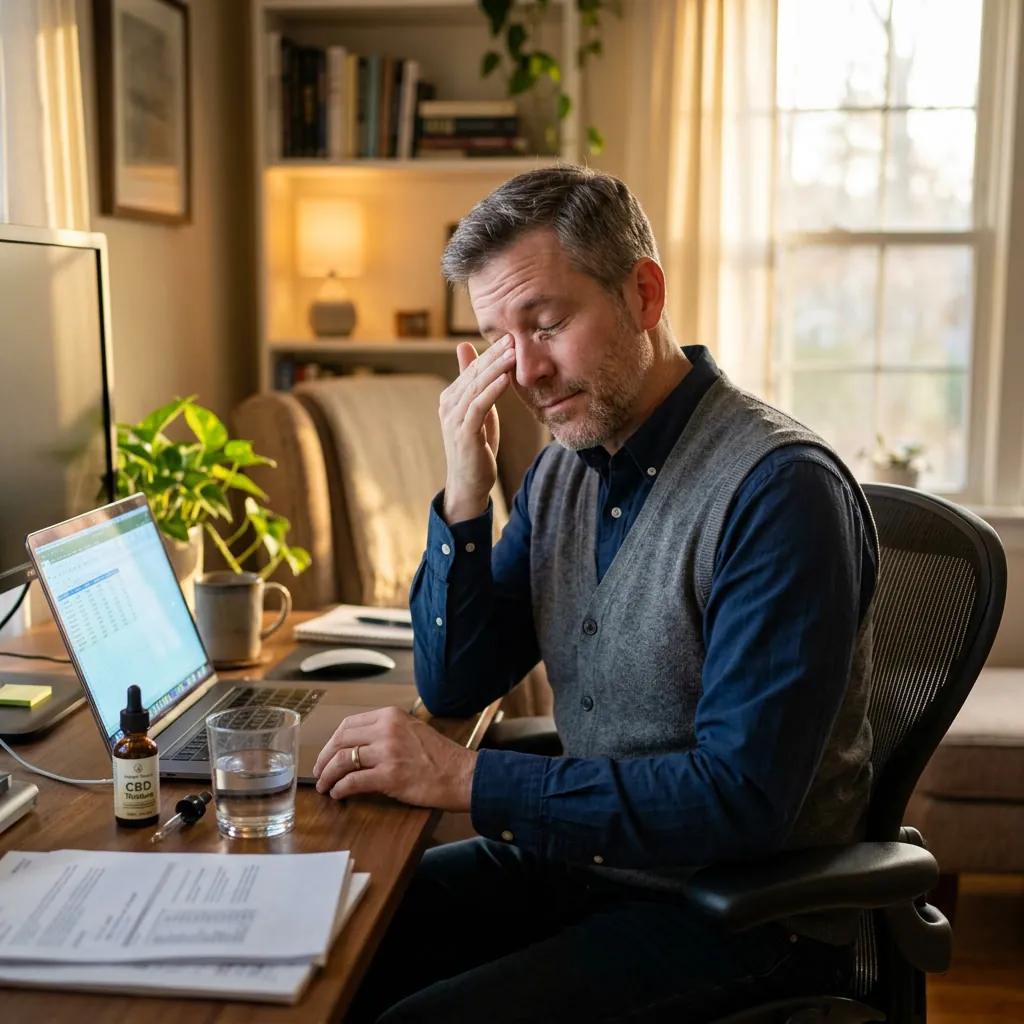
You closed the laptop two hours ago, and your eyes still ache. Your head feels wrapped in cotton, and by early afternoon you are fighting a fog that coffee only seems to deepen. You slept seven hours, yet you feel like you barely slept at all. If that sounds familiar, you are not imagining it, and you are not lazy. Screens, stacked across a full workday, can leave a very real residue of tiredness that lingers long after you log off.
Search the internet for relief and you will quickly run into claims about CBD. Some say a few drops cure screen fatigue, sharpen focus, and replace your afternoon slump. Others say it is snake oil. Neither extreme is honest. The truth sits somewhere in the middle, and the research is still early. This guide walks through what the science actually says about CBD, digital fatigue, and daytime sleepiness, where it might help, and the places where it almost certainly will not. No hype, no promises, just a clear-eyed look at the evidence and a practical way to think about it.
What Digital Fatigue Actually Feels Like
Digital fatigue is the name people give to that specific blend of tiredness that shows up after long stretches of screen work. It is not one single thing. It is usually a stack of small problems piling up on top of each other.
Your eyes do extra work. Screens hold your gaze in a narrow band of distance, so the muscles that focus your vision stay clenched for hours. Your blink rate drops, so your eyes dry out. Your neck and shoulders drift forward, and your lower back follows. Your brain juggles constant notifications, and the line between something important and background noise blurs until everything feels equally loud. By mid-afternoon you are not just sleepy, you are mentally scraped.
That is different from plain sleepiness, the heavy, drowsy pull you feel when you genuinely have not slept enough. Digital fatigue is situational. It shows up after a specific kind of effort and it often fades once you step away from the screen. Daytime sleepiness is more of a background hum that follows you into every room. In real life the two overlap constantly, which is exactly why the topic gets so confusing. Feeling wiped after screens can mean you need more sleep, or that your screen habits are draining you, or both at once.
Why Screens Wear You Out More Than You Think
Part of the problem is light. Bright screens in the evening push your body clock later, and a delayed body clock makes mornings harder. Part of it is posture and eye strain, which quietly tax you in ways you only notice when you finally stop. Part of it is attention. Your brain was not built to hold focus against a steady drip of pings, tabs, and open loops.
Then there is the emotional layer. Doomscrolling, inbox dread, and the low-grade pressure to always be reachable all keep your nervous system half-activated. That state is not restful, even when you are sitting still. A body that never fully downshifts during the day tends to struggle to fully downshift at night.
None of this means screens are evil. It means the tiredness you feel is a signal, and like most signals it is trying to tell you something specific. The useful move is to figure out which layer is doing the most damage for you, because the fix for eye strain is not the same as the fix for a delayed body clock.
The Blurry Line Between Screen Tiredness and Daytime Sleepiness
Here is where people get stuck. Excessive daytime sleepiness is a recognized clinical complaint. It is the sense of being drowsy during hours when you should be alert, and it can show up alongside conditions like poor sleep, chronic stress, or cardiovascular issues such as high blood pressure. Digital fatigue can look almost identical from the inside, even though the causes are different.
If you find yourself nodding off during meetings, needing a nap to function, or feeling drowsy while driving, that deserves a real conversation with a doctor rather than a supplement. Those signs can point to sleep apnea, anemia, thyroid problems, medication side effects, or other issues that CBD will not touch. Self-treating vague tiredness with any product, CBD included, risks missing something that actually needs medical attention. Keep that boundary in mind as you read on.
A Quick, Plain-English Primer on CBD
CBD, or cannabidiol, is one of many compounds found in the cannabis plant. Unlike THC, it does not produce a high. It interacts with your body's endocannabinoid system, a broad network involved in mood, sleep, appetite, and stress response. If you want the fuller picture, our guide to what CBD is covers the basics without the marketing fog.
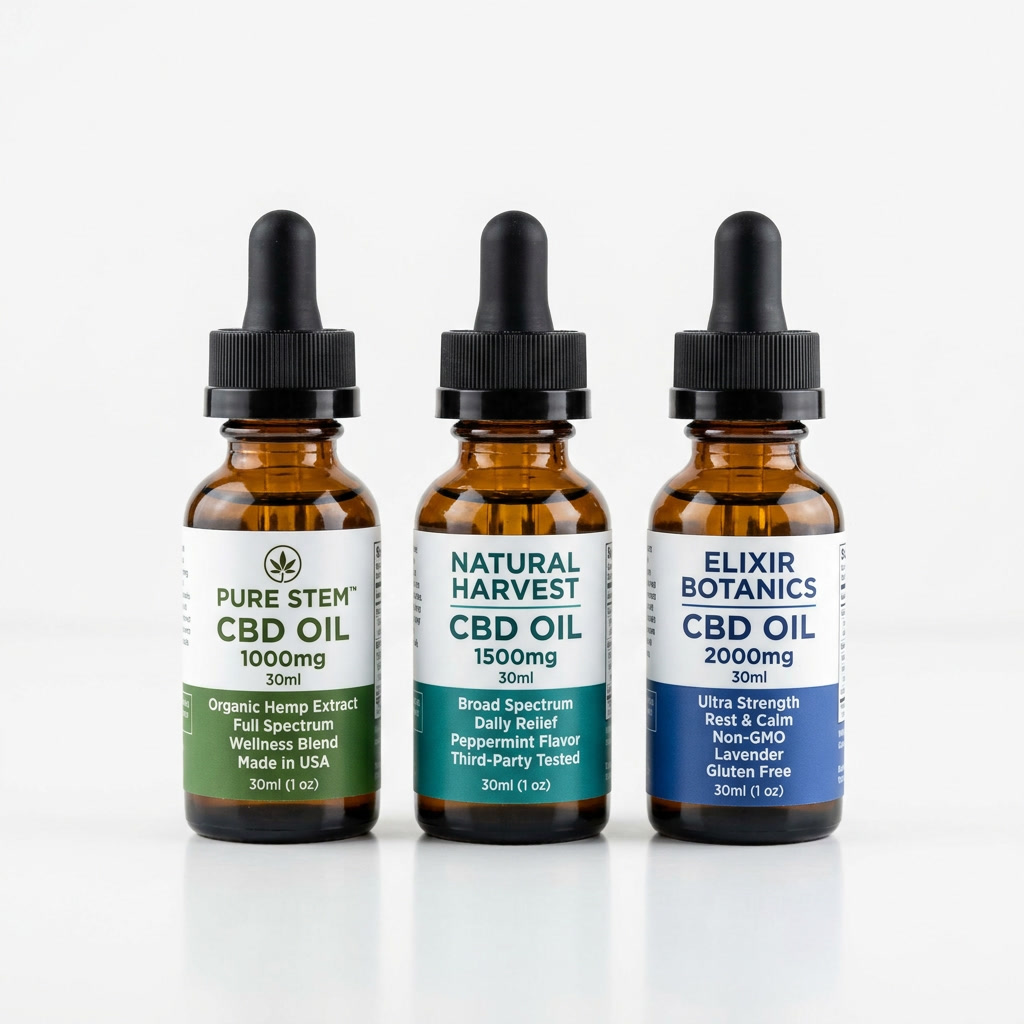
People use CBD for a range of reasons, including wind-down routines, everyday stress, and sleep support. You can find it as oils and tinctures, gummies and edibles, and capsules and softgels. The format matters less than the dose, the timing, and whether it suits your routine.
One honest caveat up front. CBD is not a stimulant and it is not a cure for tiredness. If you were hoping for a drop that wakes you up like caffeine, that is not what this is. The interesting research is about calming and stabilizing systems, not about producing energy directly.
What Early Research Suggests About CBD and Digital Fatigue
A 2026 review in the journal CNS Neurol Disord Drug Targets looked specifically at cannabidiol in the context of digital fatigue, framing it around neuroadaptive mechanisms and the effects of chronic screen exposure. The gist is that heavy screen use appears to nudge certain brain systems into a stressed, over-activated pattern, and CBD's calming interaction with those systems is a plausible target for support. That is a hypothesis backed by mechanism and early thinking, not proof from large human trials.
In plain terms, the theory goes something like this. Constant screen stimulation keeps your alerting and stress networks busy, and over time that can leave you feeling frayed rather than rested. CBD may help take some of that edge off by soothing over-activation, which in turn could make it easier to relax and to sleep. It is a reasonable idea. It is also exactly the kind of idea that needs more human data before anyone should treat it as settled.
So the honest read on digital fatigue specifically is cautious optimism coupled with patience. If you are expecting a dramatic fix, you will likely be disappointed. If you are exploring it as one small part of a broader routine change, that is a more realistic frame.
CBD and Daytime Sleepiness: What the Hypertension Study Found
The most directly relevant human work here comes from a 2025 study in the journal Cannabis Cannabinoid Res. Researchers looked at chronic CBD administration in patients with primary hypertension and found signs that it mitigated excessive daytime sleepiness and fatigue. In other words, in this specific group of people with high blood pressure, longer-term CBD use was associated with feeling less drowsy during the day and less run down.
That is encouraging, and it is also narrow. The participants had a particular cardiovascular condition, and the study examined chronic, ongoing use rather than a single dose. It does not automatically translate to a healthy person who is simply tired after too many video calls. Still, it is a genuine human signal that daytime sleepiness and fatigue can shift with CBD in the right context, which is more than we could say a few years ago.
If you have high blood pressure, that detail matters and should be discussed with your doctor before you add anything to your routine, since CBD can interact with certain medications. If you do not, treat this study as a pointer toward further research rather than a green light.
Why Your Night Matters to Your Day
Your daytime alertness is mostly a report card on your night. That is why sleep research sits at the center of this whole conversation. A 2026 pilot randomised controlled trial in the Journal of Sleep Research examined the acute effects of oral cannabinoids on sleep and high-density EEG in people with insomnia. Being a pilot study, it was small, so its findings are suggestive rather than definitive, but it added useful detail on how these compounds may affect sleep architecture in the short term.
The takeaway is not that CBD is a sleeping pill. It is that sleep quality and daytime energy are deeply linked, and anything that genuinely improves your nights can show up as better days. It also means the timing of a CBD product can matter as much as the dose. Taking something meant for evening wind-down at 9 a.m. and wondering why you are groggy is a classic own goal.
If you are building a routine around sleep support, start with our wellness overview of CBD for sleep and treat CBD as a small supporting piece rather than the main event. Light, caffeine timing, and a consistent schedule will always carry more weight.
Where CBD Probably Will Not Help
Honesty is more useful than enthusiasm here, so let us be blunt about the limits.
CBD is not a replacement for sleep. If you are chronically short on rest, no product will paper over that for long. CBD is not a stimulant, so it will not deliver a caffeine-style lift during a 3 p.m. slump. CBD is not a treatment for a diagnosed sleep disorder, and it is not a fix for medical causes of daytime sleepiness such as sleep apnea or anemia. It will not undo the damage of staring at a screen for twelve hours straight, and it will not make poor ergonomics or a chaotic schedule disappear.
There is also the reality that quality varies wildly between products, and that CBD can interact with medications, including some blood thinners and blood pressure drugs. Anyone who tells you CBD is risk-free and universally helpful is selling something. Used thoughtfully, in the right context, it may be a modest, gentle support. Misused as a cure-all, it will disappoint you and might cost you money you could spend better elsewhere.
Timing, Dosing, and Realistic Expectations
Start low and go slow. A common approach is to begin with a small dose, often taken in the evening if sleep is the goal, and to give it several days before judging the effect. If you are brand new to this, our CBD dosage guide walks through the practical side, and how long CBD takes to work explains why patience with the first attempts is normal.
For daytime use, some people prefer a low dose paired with a focus-friendly intent, which is why we keep a CBD for focus category separate from general support. Be careful, though. Taking a calming product in the morning and then feeling foggy is a timing mistake, not a reason to give up. Keep a simple note of dose, time, and how you felt. Patterns show up fast when you actually write them down.
How to Test This Without Fooling Yourself
The placebo effect is real and it is strong, especially when you want something to work. Here is a simple, low-drama way to test whether CBD is doing anything for you. Pick a week and change only one thing at a time. Keep your screen habits, caffeine, and bedtime roughly the same. Use a consistent dose at a consistent time. Rate your daytime sleepiness and fatigue each evening on a simple one-to-five scale.
If you want to be more rigorous, run a short on-and-off comparison. Two weeks on, one week off, then back on, watching whether your ratings genuinely shift. This is not a clinical trial, but it will tell you more than a single hopeful afternoon ever could. If you notice nothing, that is a real answer, and it saves you from buying bottles out of habit.
Action Steps
The order here matters. Fix the big levers first, then layer in CBD if it still makes sense for you.
1. Track your sleep for one week before changing anything. A simple note of bedtime, wake time, and how drowsy you felt during the day will reveal whether you have a sleep problem or a screen problem.
2. Build screen breaks into the day. A short pause away from the screen every hour, ideally with your eyes on something distant, does more for digital fatigue than any supplement.
3. Move your brightest screens earlier in the evening. Dim or switch to warmer settings as the night goes on to help protect your body clock.
4. Fix the basics before adding products. Sleep schedule, caffeine cutoffs, movement, and hydration all outrank CBD in impact.
5. If you decide to try CBD, choose a third-party tested product, start low, keep the dose and timing consistent, and log how you feel for a couple of weeks.
6. Talk to your doctor before starting CBD, especially if you take medication, have high blood pressure, or have any diagnosed sleep condition. Bring your sleep log to the conversation.
7. Do not ignore red flags. Falling asleep while driving, extreme drowsiness, or a sudden worsening of fatigue deserves prompt medical attention, not a supplement.
Bottom Line
CBD is not a switch that turns off screen fatigue, and it will not replace sleep. What the early research does suggest is more modest and more interesting. A 2026 review in CNS Neurol Disord Drug Targets points toward plausible mechanisms for CBD in digital fatigue tied to chronic screen exposure. A 2025 study in Cannabis Cannabinoid Res found that chronic CBD use was linked to less excessive daytime sleepiness and fatigue in people with primary hypertension. And a 2026 pilot trial in the Journal of Sleep Research added early detail on how oral cannabinoids may affect sleep, which is where daytime energy really comes from. None of that adds up to a promise, and all of it is still early.
The practical conclusion is simple. Put the fundamentals first, sleep, light, screen breaks, and movement. If you still want to explore CBD, do it as a small, well-measured experiment with realistic expectations, and loop in your doctor. The goal is not a magic drop. It is fewer groggy afternoons and a body that can actually rest when the screen finally goes dark.
Find Your Perfect CBD Product
Take our 2-minute quiz to get personalized recommendations based on your needs.
Take the Quiz →Disclaimer: This article is for informational purposes only and does not constitute medical advice. CBD products are not FDA-approved to treat, cure, or prevent any disease. Always consult with a qualified healthcare professional before starting any new supplement, especially if you have a medical condition or take medications.