CBD for Cannabis Use Disorder: What It Can and Cannot Do

You have probably had the thought at 2 a.m., after another night of telling yourself this is the last one for a while. Maybe you cut back before and it went fine for a week. Maybe you tried and the sweating, the irritability, the flat gray mood and the inability to fall asleep sent you straight back. So you searched for something over the counter that might take the edge off. CBD shows up everywhere in those results, attached to a confident claim that it "resets" the endocannabinoid system or "silences" cravings.
Here is the honest version, and it is less exciting than the marketing. CBD is not an approved treatment for cannabis use disorder. The trial evidence is thin, mixed, and rated as low certainty by the people who grade it. Withdrawal is the part that breaks quit attempts, and CBD has not been shown to reliably fix it. Sleep, the other half of the same problem, is also unresolved.
That does not make CBD useless. It makes it a compound with a plausible mechanism, a good safety profile, and a research file that is still mostly empty. Here is what the evidence says, where the gaps are, and how to think about CBD if you are cutting down anyway.
Why So Many People Ask About CBD for Cannabis Use Disorder
Cannabis use disorder is the clinical name for a pattern of use that keeps going despite real problems. The textbook description includes tolerance, withdrawal, unsuccessful attempts to stop, craving, and continued use when it is damaging work, relationships, or health. It is a diagnosis, not an insult, and most people know someone who fits it.
The reason CBD comes up is not random. Cannabis contains both compounds, and they pull in different directions. THC drives the high, the reward, and most of the dependence liability. CBD does not produce a high and does not act on the same receptor the same way. So the pitch writes itself. If THC is the problem, maybe the other half of the plant is the antidote.
That intuition is what researchers have been testing, which is why a small literature exists. It is also why the gap between the pitch and the proof matters. People searching for help with a hard problem are the least well served by claims built on rodent data.
What Cannabis Use Disorder Actually Involves
It helps to separate three things that get bundled together.
The first is dependence, the adaptation to regular use. Your brain adjusts to a steady supply of cannabinoids and starts compensating.
The second is withdrawal, which is what happens when that supply stops. The cluster is well documented and includes irritability, anxiety, restlessness, low appetite, disturbed sleep, vivid dreams, and sweating. It is not usually dangerous the way alcohol withdrawal can be, but it is deeply unpleasant, and it is the most common reason quit attempts fail.
The third is craving, which can outlast the physical symptoms by months. Craving is tied to cues, routines, and emotional states, which is why it ambushes people long after they think they are through the worst of it.
CBD gets discussed as a possible answer to all three. The evidence is strongest, and even then only weakly, for withdrawal. It is weakest for craving and for sustained abstinence.
> The pattern that matters: withdrawal is commonly described as front-loaded, most intense in the first days and easing over the following weeks for most people. That window is where support matters most, and it is the window where the CBD trials are thinnest.
The Cochrane Review Is the Anchor Here
If you read one document about CBD and cannabis use disorder, make it the 2025 Cochrane systematic review on pharmacotherapies for cannabis use disorder in the Cochrane Database of Systematic Reviews. Cochrane reviews are the closest thing this field has to a referee. They pre-specify what counts as evidence, they grade certainty, and they are blunt about how bad the underlying data is.
The blunt finding is this. Across the drug classes tested so far, including cannabinoid-based medicines, certainty ranged from low to very low. Some trials reported reductions in cannabis use. Some reported improvements in withdrawal symptoms. Very few reported clean, durable abstinence, and the studies were short, small, and inconsistent in how they measured outcomes.
That word, certainty, is doing a lot of work. A low certainty result does not mean the drug failed. It means that if you ran the trial again, the answer might flip. The effect could be real, could be noise, or could be an artifact of who dropped out.
For CBD specifically the picture is quieter still. It has been examined, but it has not emerged from the pooled analyses as a dependable treatment. No guideline body has approved it for this indication, and the Cochrane review does not hand you a green light.
What CBD Does in the Body, and Why the Theory Was Reasonable
The mechanism story is genuinely interesting, which is part of why it gets oversold.
CBD does not bind CB1 receptors directly the way THC does. It influences the endocannabinoid system indirectly, modulating enzymes and transporters, and it interacts with other targets including serotonin receptors and ion channels. The net effect in animal models is a dampening of the stress and reward circuitry that drives drug seeking.
The endocannabinoid system is also directly involved in cannabis dependence. Chronic THC exposure downregulates CB1 receptors, and that downregulation is thought to contribute to the flattened mood, poor sleep, and low appetite that make early abstinence so miserable. A compound that nudges the system back toward baseline is reasonable to test.
Withdrawal Is the Hard Part, and CBD Has Not Proven Itself There
Withdrawal is not a footnote. In practice, it is the disorder's enforcement mechanism. People do not usually relapse because they miss being high. They relapse because they cannot sleep, cannot eat, cannot sit still, and feel like a raw nerve for two weeks. Anything that reliably blunted that would be valuable.
CBD has been studied in this role, and the results are not strong enough to build a plan on.
- Trials have been small, often a few dozen participants
- Doses have varied widely
- Outcomes have been measured differently from one trial to the next
- Follow-up periods have mostly been short
- Many studies tested CBD as an add-on, not a standalone
The pattern is not "CBD clearly reduces withdrawal." It is "some signals, inconsistent replication, low certainty." A 2025 review in Clinical Psychology Review on the differential mental health effects of medicinal cannabis reinforces the point, that cannabinoid products do not behave as one uniform drug class and that findings depend on the compound tested and the population.
If you want something that reliably takes the edge off, CBD is not that. It may be tolerable, and tolerability is not nothing, but it is not efficacy.
Sleep Is the Second Hard Part
Ask anyone who has stopped daily cannabis what wrecked them, and sleep is usually at the top of the list alongside irritability. Vivid dreams, hours staring at the ceiling, and a wired-but-exhausted feeling that makes everything else worse.
A 2025 systematic review in Sleep Medicine Reviews looked at the effectiveness of cannabinoids on subjective sleep quality. The takeaway is not a ringing endorsement. The evidence base is limited, effects tend to be modest, and certainty is low, with most trials short and drawn from populations not withdrawing from cannabis.
That matters twice over. You should not assume CBD will rescue your sleep during a quit attempt. And the claim that CBD is a sleep aid is itself softer than the marketing suggests, so importing it into withdrawal is a double extrapolation on weak data.
Sleep is also where the placebo problem is largest. People expect a sleep product to work, they sleep badly anyway for a week, then credit whatever they were taking. That is not dishonesty, it is how expectancy works, which is why blinded trials matter.
Is CBD Addictive? The Abuse Potential Question
One fair objection to any cannabis-related product is simple. Am I just swapping one dependence for another?
On current evidence, CBD does not look like a drug of abuse the way THC does. A 2025 review in Yakugaku Zasshi on plant-derived highly purified CBD concluded that the compound shows low abuse potential, which fits the observation that CBD produces no euphoric high and has no street market of its own.
Caveats worth stating plainly. "Low abuse potential" applies to purified CBD, not to every product sold as CBD. Unregulated products can contain THC, and meaningful THC content carries THC's risks, including dependence. If you are trying to stop cannabis, a full spectrum oil with a high THC load is not a clean break, it is substitution with extra steps.
The safety profile of CBD is generally described as favorable, with the most common issues being gastrointestinal upset, drowsiness, and drug interactions. CBD affects liver enzymes that metabolize many common drugs, including some anticoagulants, epilepsy medications, and antidepressants. If you take prescription medication, talk to a pharmacist or physician first.
What the Broader Reviews Say About CBD and Mental Health
Zoom out and the same pattern repeats, which is itself informative.
A 2026 meta-analysis in Lancet Psychiatry examined the efficacy and safety of cannabinoids for the treatment of mental disorders. It is one of the largest syntheses available, and its message is caution. Across conditions the evidence was limited, certainty was low, and the more rigorous the analysis, the less impressive the benefits looked.
A 2026 review in JAMA on the therapeutic use of cannabis and cannabinoids is a useful reality check. Its list of uses with reasonable supporting evidence centers on chronic pain, chemotherapy-induced nausea and vomiting, spasticity in multiple sclerosis, and certain severe epilepsies. Cannabis use disorder is not on it. Neither CBD nor any other cannabinoid has cleared the bar to be an established treatment.
What CBD Cannot Do
The internet is saturated with what CBD can do, so the negative space is worth spelling out.
CBD will not prevent withdrawal. It has not been shown to do so reliably, and relying on it as your only plan is a gamble.
CBD will not stop craving. Craving is driven by cues, routines, and affect, and no over-the-counter compound rewires that. Behavioral work does.
CBD will not replace medication-assisted treatment. Approved options for cannabis use disorder are scarce, and the ones studied, including cannabinoid-based medicines, have modest and uncertain effects. But the answer to a weak medication cupboard is not a supplement with weaker evidence.
CBD will not fix sleep on its own. If sleep is your main withdrawal symptom, sleep-specific strategies and clinical support will do more.
CBD will not make a relapse-proof plan. Structure, support, and follow-up do that.
> The honest summary: CBD is a reasonable thing to be curious about and a poor thing to depend on. Those two statements can both be true at once.
How to Think About CBD If You Are Cutting Down
If you are going to try CBD anyway, and many people will, here is a framework that respects both the evidence and your autonomy.
Treat it as an adjunct, not a treatment
It should sit alongside a plan, not replace one. That plan can include a taper schedule, a support group, a therapist, or a clinician. The evidence for behavioral support in substance use is far stronger than for any single compound, CBD included.
Be skeptical of dose claims
You will see specific milligram recommendations online presented as settled science. They are not. The trials that exist used a range of doses and never converged on a standard. Start low, change one variable at a time, and keep a record.
Read the certificate of analysis
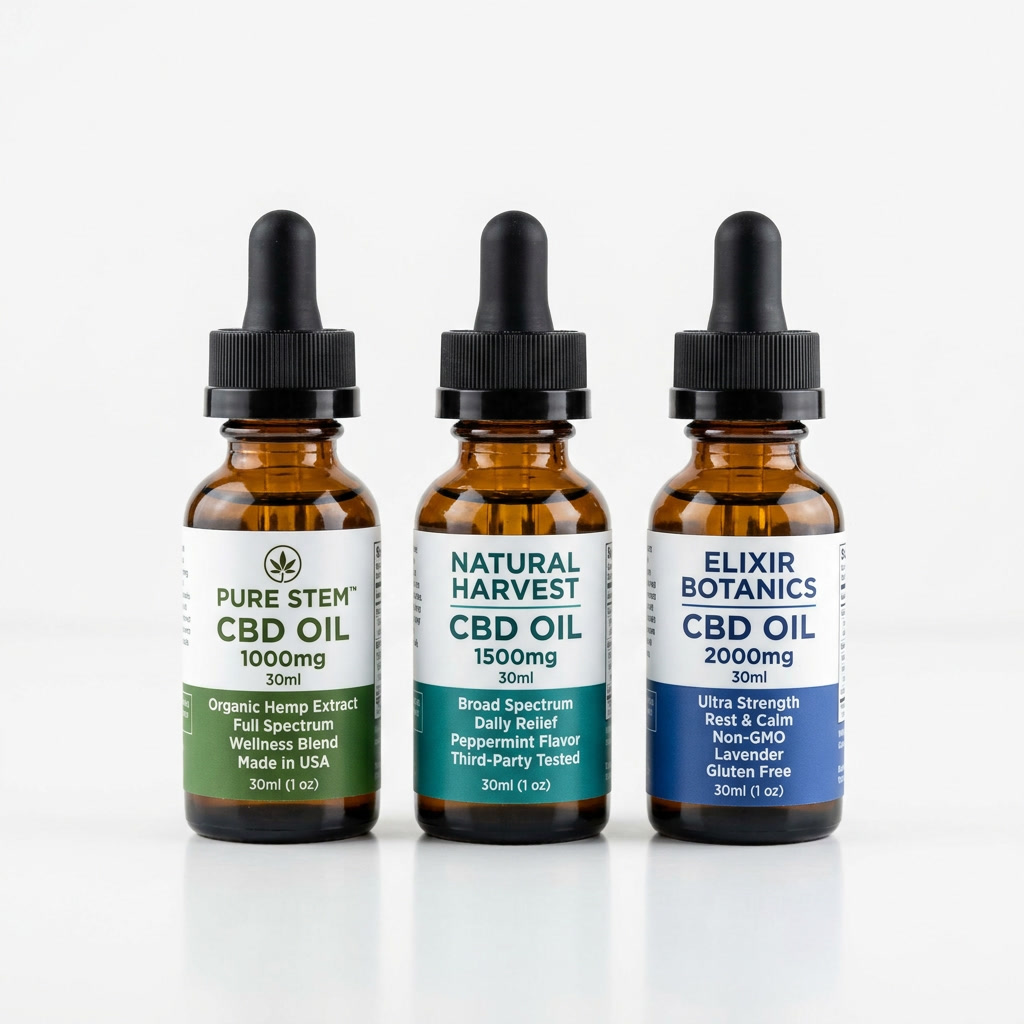
If a product does not publish third-party testing for cannabinoid content and contaminants, you cannot know what you are taking. Our guide to CBD oils and tinctures covers what to look for.
Watch for the substitution trap
If your product contains enough THC to feel like cannabis, you have not cut down, you have relabeled. Purified CBD is the version studied for low abuse potential.
Track withdrawal honestly
Keep a daily note for three weeks. Sleep hours, irritability on a one to ten scale, appetite, craving intensity. Two weeks of your own data will teach you more than any article.
A Realistic Way to Read the Headlines
Headlines about CBD fail in two directions. Either a single small trial becomes "CBD treats addiction," or a null result becomes "CBD is useless." Both are wrong, because a field this young produces noisy results in both directions.
Three questions cut through most of it.
Was there a control group, and was it blinded? Open-label studies in subjective conditions like anxiety and sleep are close to worthless on their own.
How certain is the evidence, in the authors' own words? If a paper says low or very low certainty, the effect size is decoration.
What was measured, and for how long? A reduction in self-reported use over four weeks is a weaker claim than verified abstinence at six months.
Applied to the citations here, those questions produce a consistent answer. The Cochrane review says the evidence is weak. The Lancet Psychiatry meta-analysis says the same across mental disorders. The JAMA review does not list cannabis use disorder among established indications. The sleep review finds modest, low-certainty effects. None of that is a scandal. It is an early-stage field being honest about itself.
If you want to see the same reasoning nearby, the evidence for CBD in alcohol use disorder and opioid use disorder follows a nearly identical arc, with promising animal data and thin human trials. The anxiety question, the most common reason people reach for CBD at all, gets its own treatment in our CBD and anxiety evidence review.
Tolerance is the other piece worth understanding. People assume that because CBD does not act like THC, tolerance is irrelevant. That is not quite right. The receptor changes from chronic cannabis use are real and they shape how the first month of abstinence feels, which our post on CBD and tolerance covers in more detail.
The Bottom Line
CBD is not an approved treatment for cannabis use disorder, and anyone who says otherwise is ahead of the evidence. The 2025 Cochrane review, the most rigorous synthesis we have, graded the certainty of the evidence for the pharmacotherapies examined as low to very low, and CBD has not separated itself from that pack. The 2026 Lancet Psychiatry meta-analysis found limited, low-certainty support for cannabinoids across mental disorders generally. The 2026 JAMA review of therapeutic cannabis does not list cannabis use disorder among its established indications.
What CBD does have is a plausible mechanism, a favorable safety profile, and low abuse potential when highly purified. That makes it a reasonable adjunct to explore with your clinician, not a substitute for a plan. Withdrawal and sleep are the two walls people hit, and CBD has not been shown to knock down either one reliably. Behavioral support, a taper that respects how your body has adapted, and honest tracking will do more than any capsule.
The most useful thing you can do today is write down what withdrawal actually looks like for you, then bring that list to someone who treats substance use. That conversation is worth more than the entire supplement aisle.
Find Your Perfect CBD Product
Take our 2-minute quiz to get personalized recommendations based on your needs.
Take the Quiz →Disclaimer: This article is for informational purposes only and does not constitute medical advice. CBD products are not FDA-approved to treat, cure, or prevent any disease. Always consult with a qualified healthcare professional before starting any new supplement, especially if you have a medical condition or take medications.