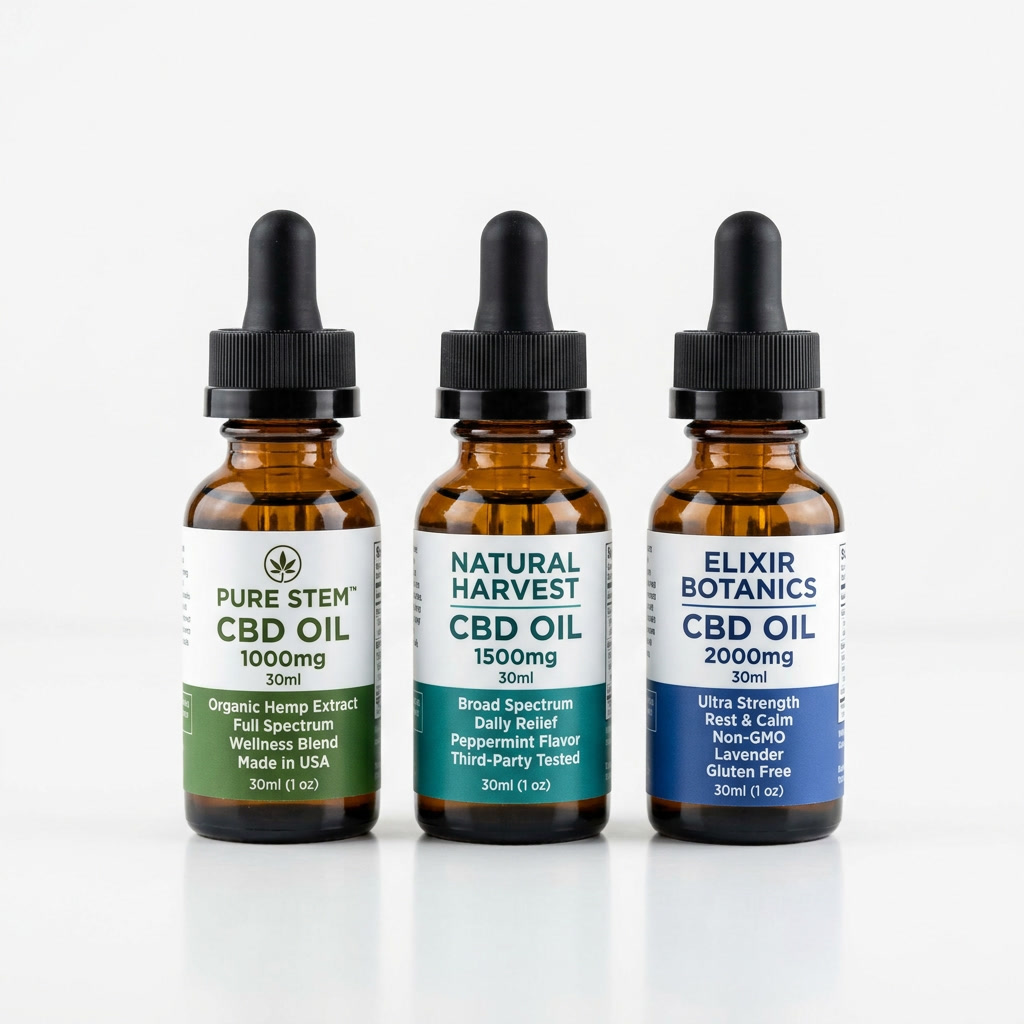
Is CBD Safe With Antidepressants?

You have taken the same antidepressant for two years. The dose has not changed since spring, the startup side effects faded months ago, and you finally feel like a functioning person again. Then a friend mentions that CBD oil fixed her sleep. You read three articles. One says it is completely safe. One says never mix it with SSRIs. A third mentions serotonin syndrome, which sounds terrifying and is explained nowhere in detail. So you close the tabs and wonder whether a bottle of oil is worth the risk.
The question deserves the actual pharmacology rather than a shrug, because the last two years produced the first human trials that measure what CBD does to antidepressant blood levels instead of guessing from a dish of liver cells.
Two 2026 Trials Worth Knowing By Name
For years the warning about CBD and antidepressants rested on enzyme experiments in lab dishes and a handful of case reports. That changed in 2026, when two groups published human pharmacokinetic studies in healthy volunteers.
The first came from the Division of Applied Regulatory Science at the U.S. Food and Drug Administration, published in April 2026 in Clinical Pharmacology and Therapeutics. Salcedo and colleagues gave two cohorts of 20 healthy adults either citalopram or morphine, then repeated the antidepressant after twelve days of daily CBD at 2.5 mg per kilogram twice daily. That dose reflects what people actually consume from unregulated products, not the far higher doses used in epilepsy trials.
The second came from the Centre for Human Drug Research in Leiden, published in 2026 in British Journal of Clinical Pharmacology. Gorbenko and colleagues gave thirteen healthy volunteers a single 25 mg dose of amitriptyline with 50 mg of tramadol, then repeated the combination after a single 30 mg dose of CBD taken one hour earlier.
Both are small, and both used single doses of the antidepressant rather than steady state, which is not how anyone takes these drugs. They remain the best human evidence available.
What Happened to Citalopram
Citalopram exposure rose by roughly 43 percent. The area under the plasma concentration curve, the standard measure of total exposure across a dosing interval, had a geometric mean ratio of 1.43 with a 90 percent confidence interval of 1.34 to 1.52. Peak concentration rose only 12 percent.
That split matters more than the headline number. A peak tells you about the hour after a tablet. Total exposure tells you about the whole day. When the peak barely moves but exposure climbs, the drug is not hitting harder, it is leaving more slowly. Clearance has slowed.
With one 20 mg tablet, a slower exit means a longer tail. With a daily tablet taken for years, it means the drug accumulates toward a higher steady state than the one your dose was titrated for. This is the detail most online warnings miss, and it is why a single cautious test dose of CBD tells you little about week six.
Citalopram also affects the QT interval, the part of the cardiac cycle that governs rhythm. Its label caps the daily dose at 40 mg, and at 20 mg for people over 60, people with liver impairment, and people on cimetidine, a CYP2C19 inhibitor. That last clause is the manufacturer admitting that blocking this enzyme is enough to require a ceiling.
A Low Dose of CBD Still Moved Amitriptyline
Amitriptyline is an older tricyclic, still prescribed for depression, neuropathic pain, migraine prevention and sleep. It has a narrow therapeutic window, which makes any change in clearance worth measuring.
Thirty milligrams of CBD, one hour before a 25 mg amitriptyline tablet, raised amitriptyline exposure over 24 hours by roughly 13 percent, with a ratio of 1.13 and a 95 percent confidence interval of 1.01 to 1.26. Peak concentration rose about 17 percent. Nortriptyline, the active metabolite, did not change significantly. Neither did tramadol.
Those numbers are modest, and 30 mg of CBD is not dangerous on its own. The point is that 30 mg is roughly the dose printed on a starter bottle, and it measurably slowed the handling of a drug with a narrow window.
The authors were direct about the limits of their own result.
> "In patients, CBD-induced drug interactions may be more pronounced in chronic dosing and dependent upon prandial status."
A single dose in a fasting volunteer is the cleanest, smallest version of the interaction. Real life is repeated doses, with food, in an older body, alongside other medications.
Why Morphine Barely Changed
The same FDA study ran a second cohort with morphine, 15 mg, after nine days of CBD. The effect was small and mostly indistinguishable from noise. Exposure ratios of 1.06 and 1.12 depending on the comparison, peak ratios of 1.19 and 1.11, with confidence intervals that crossed 1.
That contrast is the most useful teaching point in either paper. Morphine is cleared mainly by glucuronidation, a different family of enzymes from the CYP family that handles antidepressants. CBD reaches widely but not universally. It does not raise everything in your cabinet by a fixed percentage. It raises the drugs that depend on the specific enzymes it inhibits.
So "does CBD interact with my medication" is the wrong question. "Which enzyme clears my medication" is the right one, and a pharmacist can answer it in about ninety seconds. For the deeper evidence on this, see Does CBD Bring a Fever Down? The Honest Answer.
How CBD Shuts Down CYP3A4 and CYP2C19
The clearest human data on which enzymes CBD hits comes from a 2023 study in Clinical Pharmacology and Therapeutics. Bansal and colleagues gave eighteen healthy adults a brownie containing 640 mg of CBD and 20 mg of THC, followed by a cocktail of probe drugs, each one a marker for a single enzyme.
- Omeprazole, a CYP2C19 marker: exposure up 207 percent
- Losartan, a CYP2C9 marker: exposure up 77 percent
- Midazolam, a CYP3A marker: exposure up 56 percent
- Caffeine, a CYP1A2 marker: exposure up 39 percent
- Dextromethorphan, a CYP2D6 marker: unchanged
A brownie containing THC alone changed none of them. The inhibition belongs to CBD.
Two things follow. CBD is a strong inhibitor of CYP2C19 and a meaningful inhibitor of CYP3A4, which are precisely the two enzymes that clear most SSRIs. It is also a time-dependent inhibitor of CYP3A4, so it does not need to sit at high concentration to keep the enzyme suppressed. It inactivates the enzyme, and the body must synthesise new protein to recover.
Read those percentages carefully. A 207 percent rise in omeprazole exposure is not a 207 percent rise in your escitalopram level. Probe drugs are chosen because nearly all of their clearance runs through one enzyme, so they show inhibition at full strength. A real antidepressant usually has two or three clearance routes. The direction is reliable. The magnitude is drug specific.
Why a Small Dose Is Not a Small Effect
The intuition people use is that a 15 mg gummy cannot matter next to a 20 mg antidepressant. Enzyme kinetics does not run on that intuition.
Inhibition is a fraction, not a subtraction. If CBD removes part of the enzyme's capacity, clearance falls by that fraction, and steady state concentration rises by one over one minus that fraction. Losing a fifth of your clearance raises the level by a quarter. Losing two fifths raises it by two thirds. The curve steepens as inhibition grows, which is why the gap between a little CBD and a lot of CBD is not a straight line.
Then there is time. CBD has a long terminal half-life and accumulates with repeated dosing, so a twice daily oil leaves the liver no clean window between doses. The enzyme stays suppressed for most of the day, every day. Taking the CBD at noon and the antidepressant at bedtime does not solve it, because you are not preventing a collision in the stomach. You are changing the rate at which the liver clears the drug over the following twenty four hours.
That is why dose separation, the advice that circulates most widely, is the least useful advice in this area. It feels like control without providing any.
The Serotonin Syndrome Question
Search for CBD and antidepressants and you will meet serotonin syndrome within the first page of results. It is worth knowing what the term actually describes, because it gets used far more loosely than the diagnosis.
Serotonin syndrome is a clinical diagnosis of serotonergic overactivity, and the widely used Hunter criteria require a specific pattern rather than a single symptom. Spontaneous clonus. Inducible clonus with agitation or sweating. Ocular clonus with agitation or sweating. Tremor with hyperreflexia. Hypertonia and a temperature above 38 degrees Celsius with ocular or inducible clonus. Clonus means rhythmic muscle jerking that a clinician can see and feel, not a vague sense of being wired.
It usually follows a serotonergic load, and the classic scenarios involve two drugs that both raise serotonin signalling in the synapse. An MAOI with an SSRI. An SSRI with tramadol, linezolid, methylene blue or a triptan. A deliberate overdose.
CBD does not work that way. It is not a serotonin reuptake inhibitor. Its serotonergic activity runs through the 5-HT1A receptor, reviewed in Biochemical Pharmacology in 2025, and the proposed antidepressant mechanisms involve 5-HT1A alongside CB1, GPR55 and PPAR gamma signalling, as set out in International Journal of Neuropsychopharmacology in 2025. That is a different mechanism from flooding a synapse with serotonin, and it is not the profile that produces the classic syndrome.
So CBD is an unlikely sole trigger. What it can do is indirect. By slowing CYP2C19 and CYP3A4, it can push an SSRI level above the range your dose was designed for, which is where serotonergic side effects begin.
The realistic sequence is not that CBD causes serotonin syndrome. It is that CBD raises the antidepressant level, and the raised level causes trouble. That distinction tells you what to watch. Sweating, nausea, tremor, loose stools, insomnia and restlessness are common SSRI effects and become more likely as levels climb. They are a reason to call your prescriber this week. Actual clonus, agitation with fever, or confusion is a reason to seek emergency care today.
Adding CBD to a Stable SSRI
This is the lower risk path, and it can be done deliberately rather than hopefully. You have a baseline. You know what stable feels like. Your prescriber knows your dose, your history, and whether you are already near the top of the range.
A reasonable sequence:
- Tell the prescriber before you start, and name the product and dose you intend to use
- Ask whether a drug level is available and useful, since citalopram, escitalopram, amitriptyline and nortriptyline levels are measurable in most clinical labs
- Ask about an ECG if you take citalopram, given its dose-dependent QT effect
- Start low and hold that dose for at least two weeks before changing anything
- Change one variable at a time, so you can attribute whatever happens
- Keep a short log of dose, timing, sleep, mood and any new physical symptom
The most common clinical problem with CBD is not toxicity. It is a person who changed three variables in a week and then cannot tell which one produced the headache.
Product quality matters here more than almost anywhere else, because a bottle that claims 25 mg per serving and delivers 45 is a dose escalation nobody planned. Third-party tested CBD oils and tinctures remove that variable.
Stopping an Antidepressant to Try CBD
This is where the risk stops being theoretical.
Antidepressant discontinuation is not a clean reset. Stopping abruptly produces dizziness, nausea, fatigue, tingling, irritability, insomnia and the electric shock sensations people call brain zaps, and those can persist for weeks. Paroxetine and venlafaxine are the usual worst offenders because of their short half-lives. Even a careful taper produces symptoms in a meaningful share of people.
Then there is the reason you were taking it. Depression recurs, and stopping treatment during a stable period is one of the better documented predictors of another episode. A recurrence is not a bad week. It is the illness returning at full strength, and it carries real risk, including risk to your safety.
And CBD is not a treatment for depression in the sense that an antidepressant is. It is not approved for depression anywhere. The human trial base is small, short, and concentrated in anxiety rather than major depression. The 2025 mechanism paper is a hypothesis about how CBD might act, not a demonstration that it outperforms a proven drug. Our review of CBD and depression walks through that evidence, and the honest summary is that it is early.
So the trade is this. On one side, a treatment with decades of trial data behind it. On the other, a supplement with a plausible mechanism, a thin evidence base, and a documented ability to alter the blood levels of the drug you just stopped. That is not a switch. That is leaving treatment while adding an unpredictable variable.
Antidepressant by Antidepressant
You do not need to memorise enzyme tables, but knowing roughly where your drug sits helps you ask better questions. These are pathways to raise with a prescriber, not instructions to self-manage.
- Citalopram and escitalopram: primarily CYP2C19, with CYP3A4 contributing. This pair has direct 2026 human data, and its label already caps the dose for anyone taking a CYP2C19 inhibitor.
- Sertraline: several routes at once, including CYP2B6, CYP2C19, CYP3A4 and CYP2C9, so one enzyme hit is partly buffered.
- Fluoxetine and paroxetine: primarily CYP2D6, which CBD did not inhibit in the probe study. Fluoxetine has a very long half-life and an active metabolite, so changes take weeks to appear and weeks to fade.
- Fluvoxamine: CYP1A2 and CYP2C19, and it is itself a fairly potent enzyme inhibitor. This is the antidepressant that deserves the most caution and the least guesswork.
- Venlafaxine: CYP2D6 to its active metabolite with CYP3A4 handling the rest, plus a discontinuation profile that punishes abrupt change.
- Mirtazapine: mainly CYP3A4, so a CYP3A4 inhibitor is directly relevant, and its sedation is additive.
- Tricyclics including amitriptyline and nortriptyline: narrow therapeutic window, measurable levels, and direct 2026 evidence of an interaction. Cardiac and anticholinergic effects appear first as levels rise.
- Bupropion: CYP2B6, and it is a strong CYP2D6 inhibitor in its own right, which means it changes the rules for everything else you take.
If your drug is not on this list, the question to ask is not "is CBD safe with this". It is "which enzyme clears this, and does CBD inhibit that enzyme". That framing works for almost any prescription. The broader guide to CBD drug interactions covers the non-psychiatric medications that carry more acute risk.
What Actually Goes Wrong in Practice
The dramatic cases are rare. The ordinary ones are common, and they get misread.
Someone adds 25 mg of CBD for sleep, sleeps badly for a week because CBD at that dose is mildly activating for some people, and concludes their antidepressant has stopped working. Someone else feels nauseous at week three and blames the oil, when the real story is a slowly rising SSRI level.
Liver enzymes belong here too. CBD can raise transaminases, particularly at higher doses and alongside other drugs that stress the liver, which our CBD liver safety guide covers in detail. Most antidepressants are not hard on the liver, but alcohol, valproate and regular paracetamol use all change the arithmetic.
There is also the labelling problem. A 2023 randomised trial in JAMA Network Open found that oral THC co-administered with CBD produced different THC exposure than THC alone, a direction of effect that matches the CYP2C9 inhibition seen in the probe study. A 2024 systematic review in Frontiers in Pharmacology screened thousands of reports and found documented interactions concentrated in narrow therapeutic index drugs, with warfarin, valproate and the transplant immunosuppressants appearing most often. Neither paper is about antidepressants specifically. Both tell you that the interaction surface is real, measurable and dose dependent.
If anxiety is the reason you are considering CBD, the comparison with standard treatment is its own question, covered in CBD versus anxiety medications.
The Practical Rule
Tell the prescriber before you start, and expect a level check or an ECG rather than a shrug. Start low, hold the dose, and change one thing at a time. Never stop an antidepressant abruptly to try CBD, and never treat CBD as a replacement for treatment.
Where This Leaves the Evidence
The evidence in 2026 is better than it was, and still thinner than anyone would like. That picture rests on two small human studies, one clean enzyme probe study, a systematic review of documented cases, and a plausible receptor mechanism. What that combination supports is a specific claim. CBD slows the clearance of some antidepressants by a measurable amount, and the size of the clinical consequence depends on the drug, the dose, the duration and the person.
What it does not support is either extreme. CBD is not harmless because it comes from a plant, and it is not a forbidden combination because it touches an enzyme. The people who run into trouble are rarely the ones who asked a careful question first.
So bring a better question to your prescriber than "can I take CBD". Say which antidepressant you take, say which enzymes clear it, say what dose of CBD you have in mind, and ask what should be measured and when. That is the difference between adding something to a stable regimen and gambling with it.
Find Your Perfect CBD Product
Take our 2-minute quiz to get personalized recommendations based on your needs.
Take the Quiz →Disclaimer: This article is for informational purposes only and does not constitute medical advice. CBD products are not FDA-approved to treat, cure, or prevent any disease. Always consult with a qualified healthcare professional before starting any new supplement, especially if you have a medical condition or take medications.