CBD vs Magnesium for Sleep & Relaxation

It's 11:47 p.m. and you're staring at the ceiling again, replaying the day's worries while your mind refuses to power down. You've tried the melatonin, the white-noise machine, the "no screens after nine" rule — but sleep still feels like a luxury you can't quite afford. If that sounds familiar, you're not alone. Insomnia affects more than a third of adults, and the search for a natural, non-habit-forming answer has never been louder. Two candidates keep rising to the top of the conversation: CBD and magnesium. Both are widely used for sleep and relaxation, but they work through completely different mechanisms, target different problems, and suit different people. That's the confusing part — and it's exactly why most people guess wrong.
Here's the short version: magnesium is a mineral your body already uses, and it works gently on the nervous system by helping you calm down before bed. CBD works through your endocannabinoid system and is more often turned to for the anxiety and racing thoughts that keep sleep out of reach. Neither is a sleeping pill, and neither replaces a doctor's advice. But research published as recently as 2025 and 2026 gives us a much clearer picture of what each one can and can't do. In this guide, we'll break down how each works, what the newest evidence actually says, and how to choose — or combine — the two.
How CBD Works for Sleep
CBD (cannabidiol) is one of over a hundred compounds found in hemp, and unlike THC, it does not get you high. Instead, it interacts with your body's endocannabinoid system (ECS) — a network of receptors and signaling molecules that help regulate mood, stress, pain, and the sleep-wake cycle.
The ECS plays a role in why you can't switch off. When anxiety or chronic stress keeps that "alert" system firing, sleep gets pushed aside. CBD appears to modulate the ECS in a way that can dampen that overactive stress response, which is one reason it's studied for anxiety and insomnia rather than as a direct sedative. It's less about forcing you to sleep and more about removing the barrier — the tension and worry — that's keeping you awake.
Does CBD Help You Fall Asleep or Stay Asleep?
This is where the research has sharpened a lot recently. A 2026 systematic review and meta-analysis in the Journal of the American Association of Nurse Practitioners looked at medical cannabis (including CBD, CBN, and THC) for insomnia in adults. The authors concluded that CBD at 50 to 200 mg was safe and effective for improving sleep, and noted it appeared to help with total sleep time while reducing daytime sleepiness.
That same review flagged something important: CBD doses under 50 mg tended to only help when combined with CBN (cannabinol), and formulations containing THC did not show significant sleep benefit — while reporting higher adverse effects. The takeaway for a hemp-only CBD consumer is clear: higher CBD doses (50 mg and up) matter, and you don't need THC.
There's also a 2026 pilot randomized controlled trial in the Journal of Sleep Research that looked at a single oral dose combining 10 mg THC and 200 mg CBD in people with insomnia, using high-density EEG to measure objective sleep. It found measurable effects on sleep — but also highlighted that the combination didn't reliably improve all sleep architecture, and that individual responses vary widely. That nuance is a theme in the CBD sleep literature.
How Magnesium Works for Sleep
Magnesium is a mineral, not a herb — and your body needs it for hundreds of processes, from muscle and nerve function to blood sugar control and protein building. You can't make it; you have to get it from food or supplements. The connection to sleep comes through its calming effect on the nervous system.
Magnesium acts in a couple of well-understood ways. First, it supports the action of GABA (gamma-aminobutyric acid), the brain's main "inhibitory" neurotransmitter. GABA works like a brake pedal — it slows down brain activity, which is what lets you wind down and drift off. Magnesium also helps regulate the NMDA receptor, which plays a role in arousal and excitability, and it blocks excess calcium from over-activating nerves. The practical result: magnesium helps quiet the "revved-up" feeling and relaxes tense muscles, making it easier to fall asleep naturally.
The form matters. Studies most often use magnesium bisglycinate (glycine-bound, gentle on the stomach) or citrate. The "bisglycinate" form is favored in newer clinical trials because it's well-absorbed and less likely to cause the digestive upset that cheaper forms like oxide can bring on.
The Evidence for Magnesium and Insomnia
A well-designed 2025 randomized, placebo-controlled trial in Nature and Science of Sleep gives us the most current human data. Researchers enrolled 155 adults with self-reported poor sleep and gave them either 250 mg of magnesium bisglycinate or a placebo daily. By week four, the magnesium group had a significantly greater reduction on the Insomnia Severity Index (ISI) — a drop of about 3.9 points versus 2.3 in the placebo group (p = 0.049). The effect was described as modest (a small effect size), but real, and notably stronger in people who had lower baseline dietary magnesium — hinting that magnesium helps most when you're actually deficient.
Animal research adds mechanistic support. A 2026 study in Food & Function found that magnesium combined with apigenin (a compound in chamomile) significantly extended sleep duration in normal and insomnia-model mice, suggesting the mineral acts on sleep in a real, reproducible way.
Sleep Onset vs. Sleep Maintenance: Which Handles Which?
Sleep problems aren't one problem — they're two. There's sleep onset (falling asleep) and sleep maintenance (staying asleep and not waking early). CBD and magnesium tend to shine in different spots here, which is a genuinely useful distinction when choosing.
The honest summary: magnesium is more of a "daily foundation" that gently shifts your sleep quality over time. CBD is more of a targeted tool for the evenings where racing thoughts and tension are the culprit. Neither should be expected to knock you out like a hypnotic sleep aid.
CBD vs. Magnesium for Anxiety & Relaxation
When relaxation itself is the goal — not just sleep — the two start to look different.
CBD's strongest lane is stress and anxiety. Anxiety is one of the most-cited reasons for CBD use, and anxiety is one of the most consistent drivers of insomnia. The 2025 Sleep Medicine Reviews meta-analysis of randomised studies looked not just at sleep but also at anxiety outcomes, and found that — you're treating anxiety-driven sleeplessness, CBD is addressing the root issue rather than just the symptom.
Magnesium's lane is physical calm. If your sleep problem shows up as jaw-clenching, restless legs, tense shoulders, or muscle cramps at night, magnesium is likely the more direct help because of its GABA-supporting and muscle-relaxing action. But magnesium's evidence for generalized anxiety is thinner — the modern sleep trials show modest effects on insomnia severity without strong changes in broader mood measures.
A practical rule of thumb: racing mind at night → CBD; tense body at night → magnesium. And if it's both, that's a sign you might benefit from using them together.
Safety and Side Effects
Both options are generally well-tolerated, and neither carries the habit-forming risk of conventional sleep medications. But "generally safe" isn't "no caveats."
CBD is typically mild in side effects — the most common include fatigue, dry mouth, diarrhea, and changes in appetite. The 2026 nurse practitioner review described a favorable safety profile with "minor adverse effects when dosed and monitored appropriately." There are real caveats, though. A 2025 case report in the journal flagged a potential CBD-induced manic episode, underscoring that CBD isn't free of mood effects in sensitive individuals. And CBD interacts with a liver enzyme (CYP450) that clears many prescription drugs — so if you take blood thinners, antidepressants, seizure meds, or other prescriptions, talk to your doctor first.
Magnesium is one of the safest supplements around, but it has quirks. The bisglycinate form is gentle, but high doses of laxative-type forms (oxide, citrate) can cause loose stools. It's not recommended for people with kidney disease at high doses. And it can interfere with absorption of certain antibiotics (tetracyclines/fluoroquinolones) if taken at the same time — space them out.
One distinction matters for anyone considering a longer-term routine: magnesium is a genuine nutrient — most adults don't get enough from diet alone — so there's a clear "why" for taking it even beyond sleep. CBD is a compound you choose for its effects, not a nutrient your body runs out of.
Dosing: How Much Do You Need?
Dosing is where a lot of people get it wrong, and the 2026 review has useful guidance.
CBD: The review found 50 to 200 mg per day to be the effective range for improving sleep, with CBN doses of 20–100 mg also effective, and CBD under 50 mg usually needing a CBN boost to work. Start low (say 15–25 mg), then step up by 5–10 mg every few days until you find your minimum effective dose. Take it about 30–90 minutes before bed, especially if using an oil held under the tongue for faster absorption.
Magnesium: The 2025 trial used 250 mg elemental magnesium as bisglycinate daily, which is a sensible starting target. The U.S. RDA for magnesium is 310–420 mg/day depending on age and sex, and most people fall short. Pair with an evening meal and give it 2–4 weeks — this is a slow, cumulative shift, not an overnight fix.
Product Considerations: What Form Should You Choose?
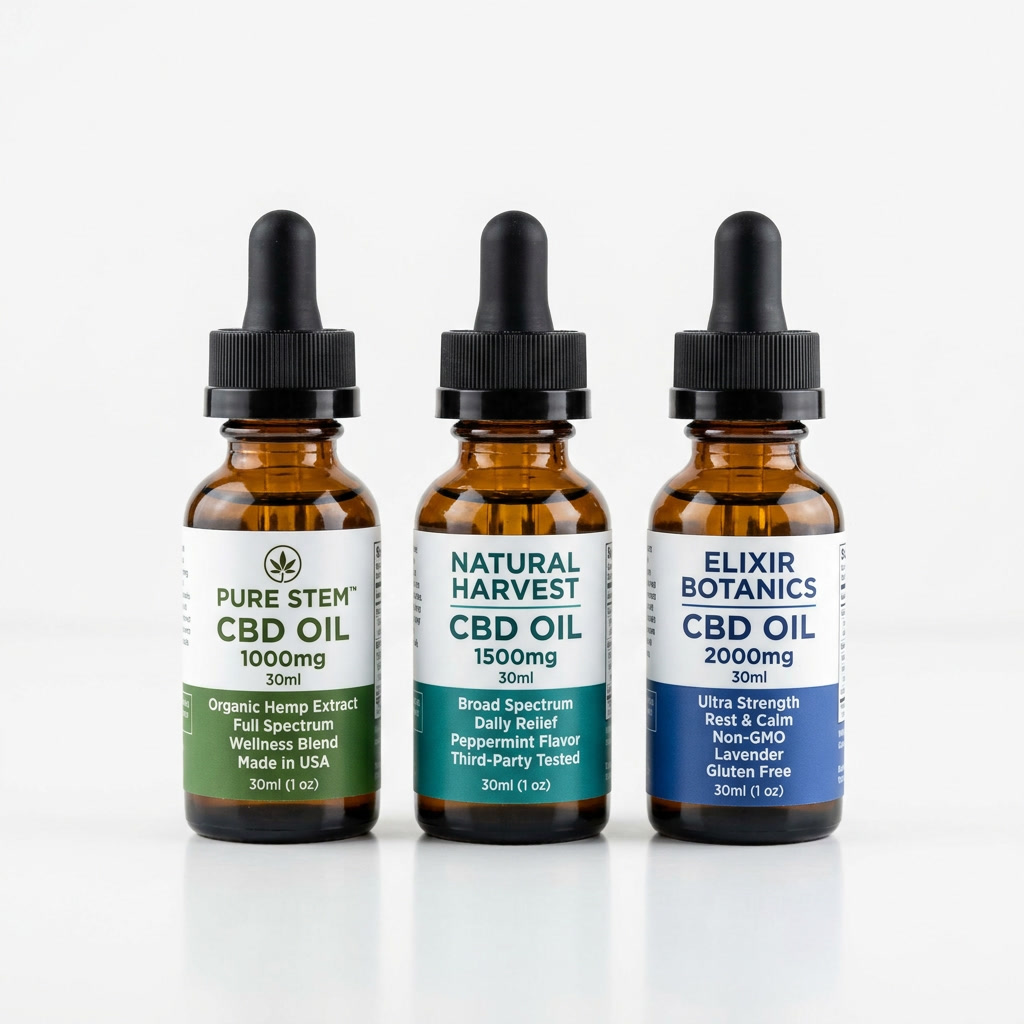
CBD comes in oils, gummies, capsules, and more, and each has a slightly different effect curve. If you want flexibility and faster onset, a sublingual oil in our CBD Oils & Tinctures range is a strong fit — you can dial in your exact dose drop by drop. If you prefer something convenient and pre-dosed that you don't have to taste, our CBD Gummies & Edibles are the easier entry point. For sleep specifically, take a look at the CBD for Sleep collection, which pairs CBD with supporting ingredients (like CBN or melatonin) designed for evening use.
One warning: some "CBD for sleep" products lean on melatonin, which is its own story. If you want the CBD-versus-melatonin breakdown, we compare them head-to-head in our deep dive on CBD vs melatonin for sleep.
Who Should Choose CBD — and Who Should Choose Magnesium?
No single supplement is right for everyone. Here's a scannable way to decide:
- Choose CBD first if your sleep problem is really an anxiety problem — racing thoughts, a "monkey mind," stress-driven wakefulness. You tolerate oils or edibles, and you don't take meds that conflict.
- Choose magnesium first if your sleep problem is more physical — tense muscles, leg cramps, general restlessness — or if you suspect you're low in magnesium (which most of us are) and want a foundational daily mineral.
- Choose both if anxiety and physical tension both keep you awake. CBD in the evening for the mind, magnesium nightly as a mineral base — the two work through separate mechanisms and don't interfere.
- Skip or adjust if you're on medications that interact with CBD (talk to a clinician), have kidney disease (magnesium caution), or are pregnant/breastfeeding (get specific advice).
Frequently Asked Questions
Is it safe to take CBD and magnesium together?
Yes — they work through different systems (endocannabinoid vs. GABA/mineral) and are commonly combined. Start each at a low dose and adjust one at a time so you can tell what's helping.
Which works faster: CBD or magnesium?
CBD acts faster as a topical response — often within 30–90 minutes if taken sublingually. Magnesium works cumulatively, building its effect over a few weeks.
Is CBD or magnesium better for falling asleep?
For sleep driven by anxiety, CBD tends to help faster. For pure body relaxation, magnesium is the more direct support. There's no single "better" — it depends on why you can't sleep.
Can I just take CBD every night?
Most people tolerate nightly use, and research on efficacy spans multi-week use. But it's not a replacement for healthy sleep hygiene, and if you're on other medications, run it past a clinician.
How long does it take for magnesium to improve sleep?
Most trials show changes emerging at the 2–4 week mark, and the 2025 RCT saw significant differences by week four. Give it time.
Does CBD make you drowsy like a sleeping pill?
Not in the same way. CBD doesn't typically force sedation — it calms anxiety, which lets your mind settle enough to sleep naturally. Overly high doses can cause sleepiness/fatigue as a side effect.
Related Reading
Bottom Line
CBD and magnesium are two of the most popular natural sleep-and-relaxation tools — and for good reason, because they answer two genuinely different problems. Magnesium is the gentle, proven mineral that supports the "GABA" quiet-down your nervous system and relaxes the body, with the strongest new evidence (a 2025 RCT) showing a modest but real reduction in insomnia severity when taken daily at 250 mg. CBD, meanwhile, is the more targeted tool for the anxiety and the racing thoughts that steal sleep, with a 2026 meta-analysis supporting 50–200 mg doses as safe and effective for sleep — and a clear steer to avoid THC-containing formulas if sleep is the goal.
Neither is a miracle cure, and neither replaces sleep hygiene or a medical opinion. But if you understand what each one does — and who you are as a sleeper — you can pick the one (or the combination) that fits your nights. If anxiety is your thief, a CBD oil from our sleep range is worth trying. If it's a tense, restless body, start with nightly magnesium and give it a few weeks. And if it's both? That's exactly the case where these two can earn their keep together.
Find Your Perfect CBD Product
Take our 2-minute quiz to get personalized recommendations based on your needs.
Take the Quiz →Disclaimer: This article is for informational purposes only and does not constitute medical advice. CBD products are not FDA-approved to treat, cure, or prevent any disease. Always consult with a qualified healthcare professional before starting any new supplement, especially if you have a medical condition or take medications.