CBD for Travel and Motion Sickness: A Practical How-To Guide
You know the feeling. You've booked the window seat, the bags are packed, and the alarm is set for 4 a.m. Then the plane starts to taxi, the car winds through mountain switchbacks, or the ferry starts to roll — and your stomach drops right along with the horizon. For millions of travelers, motion sickness and travel anxiety turn what should be an adventure into a countdown to the next rest stop. If you've been curious whether CBD could help you get through a flight or a long drive more comfortably, you're not alone. CBD has become one of the most talked-about wellness products for travel, and a growing body of research is starting to look at how it affects anxiety and nausea. But here's the honest part: the evidence is still limited, and CBD is not a proven cure for motion sickness. This guide walks you through what the science actually says, which formats work best on the road, how to time and dose your intake, and how to travel with CBD legally and safely — so you can make an informed decision rather than a hopeful guess.
Why Travel and CBD Go Together
Travel is a perfect storm of the two things CBD research has focused on most: anxiety and nausea. Flying combines enclosed spaces, crowds, delays, and turbulence. Road trips add hours of repetitive motion, unfamiliar food, and cramped seating. Ferries and winding mountain roads trigger the sensory mismatch — your inner ear says you're moving, but your eyes say you're not — that drives motion sickness. Meanwhile, the anticipation of a trip can spike anxiety days before you even leave. CBD, or cannabidiol, is a non-intoxicating compound from the hemp plant that interacts with your body's endocannabinoid system, which helps regulate mood, stress, and digestive function. That overlap is why so many travelers reach for it. The appeal is practical: it doesn't produce the "high" associated with THC, it comes in portable formats, and it's widely available. But wanting something to work and knowing it works are two different things, and the research picture is more nuanced than the marketing suggests.
What the Research Says About CBD for Motion Sickness and Nausea
Let's be direct: there is no high-quality, 2023-or-later study that proves CBD prevents or cures motion sickness specifically. That's an important gap to acknowledge. What the research does show is that cannabinoids have a real, documented relationship with nausea and vomiting — but most of that evidence comes from chemotherapy-induced nausea, not from cars and boats. A 2024 randomized, placebo-controlled phase II/III trial in the Journal of Clinical Oncology found that an oral cannabis extract reduced chemotherapy-induced nausea and vomiting in patients who hadn't responded to standard antiemetics. That's meaningful evidence that cannabis compounds can influence nausea pathways in humans. A 2023 review in Clinical Gastroenterology and Hepatology on cannabinoids and the gastrointestinal tract similarly noted their effects on nausea and gut function. The catch is that these studies use cannabis extracts that often contain THC alongside CBD, and they target nausea caused by treatment, not by motion. So while the biology is promising, you should treat "CBD for motion sickness" as an area where the evidence is suggestive at best and largely unproven.
CBD for Travel Anxiety: What the Evidence Shows
The anxiety side of the equation has a bit more support, though it's still far from settled. A 2024 systematic review and meta-analysis in Psychiatry Research examined the therapeutic potential of CBD in anxiety disorders and found encouraging signals, while noting the need for larger, more rigorous trials. A 2026 systematic review in Frontiers in Neuroimaging looked at functional neuroimaging studies of CBD in stress and anxiety, adding to the picture of how CBD may act on brain regions involved in threat and stress responses. Major clinical reviews — including a 2026 review in JAMA — describe CBD as a promising but not yet established treatment for anxiety, emphasizing that most evidence comes from small studies and that dosing is inconsistent across trials. A 2023 update in Current Opinion in Psychiatry on anxiety treatments reached a similar conclusion. The honest takeaway: CBD may help some people feel calmer before and during travel, but it's not a guaranteed or FDA-approved anxiety treatment, and individual responses vary widely.
Best CBD Formats for Travel
Choosing a format is really about matching onset time, portability, and discretion to your travel situation. Here's how the main options stack up.
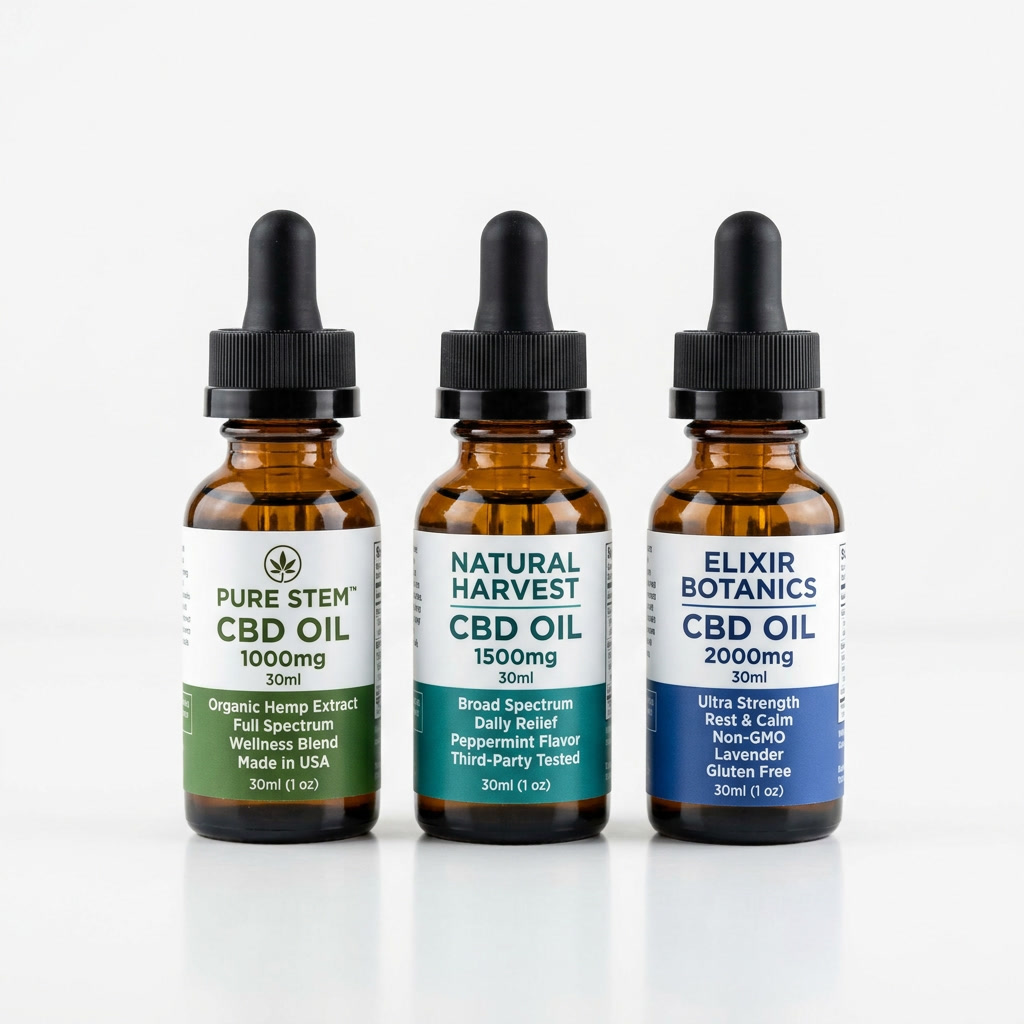
- CBD oils and tinctures: These are absorbed under the tongue, so they tend to kick in faster than edibles — often within 15 to 45 minutes. They're easy to dose precisely with a dropper, and a small bottle fits in a carry-on. The downside is that oil can be awkward to use discreetly on a plane or in a crowded car, and the taste isn't for everyone. Browse our CBD oils.
- CBD gummies: These are the most travel-friendly option. They're pre-dosed, portable, discreet, and taste good, which makes them easy to take before boarding or during a rest stop. The trade-off is that gummies are edibles, so they take longer to work — typically 30 to 90 minutes — and the effects can be harder to fine-tune. See our CBD gummies.
- CBD capsules: Capsules are the most consistent and the easiest to swallow with water, and they're very discreet. Like gummies, they're edibles, so expect a slower onset of 30 to 90 minutes. Capsules are a good choice if you want a predictable, no-fuss dose. Check out our CBD capsules.
For motion sickness specifically, the faster onset of an oil might be more useful, since you often need relief quickly once symptoms start. For pre-trip anxiety, a gummy or capsule taken well before you leave can give you a smoother, longer-lasting effect.
How to Time Your Dose
Timing matters more than most people realize, because CBD doesn't work instantly. If you're using it for travel anxiety, the general approach is to take your dose before the stressful part of the journey begins — roughly 30 to 60 minutes before you leave for the airport or get in the car, so the effects have time to build. For edibles like gummies and capsules, add more lead time, since they take longer to absorb. For motion sickness, the challenge is that symptoms can come on suddenly, and by the time you feel nauseous, an oral dose may be too slow to help. That's why many travelers who use CBD for motion sickness take a preventive dose before the motion starts — for example, 30 minutes before boarding a ferry or starting a winding mountain drive. The key is to plan ahead rather than react, because CBD is not a fast-acting rescue remedy.
Dosing for Travel: Start Low and Go Slow
There's no universal CBD dose, and that's one of the most frustrating parts of using it. Research studies use wildly different amounts, which is one reason the evidence is hard to interpret. The safest and most sensible approach for travel is to start low and increase gradually. A common starting point is 10 to 25 milligrams of CBD, taken once, to see how your body responds before you're stuck in a plane seat. If you're new to CBD, it's especially important to test it at home first — not on the day of a big trip — so you know how it affects you and whether it makes you sleepy or groggy. Keep in mind that CBD can interact with other medications, so if you take prescription drugs, especially ones that warn about grapefruit or liver interactions, talk to your doctor before adding CBD to your travel routine. And remember that more isn't necessarily better; higher doses can sometimes increase drowsiness, which isn't ideal if you're driving.
Traveling With CBD: Rules, Legality, and Packing
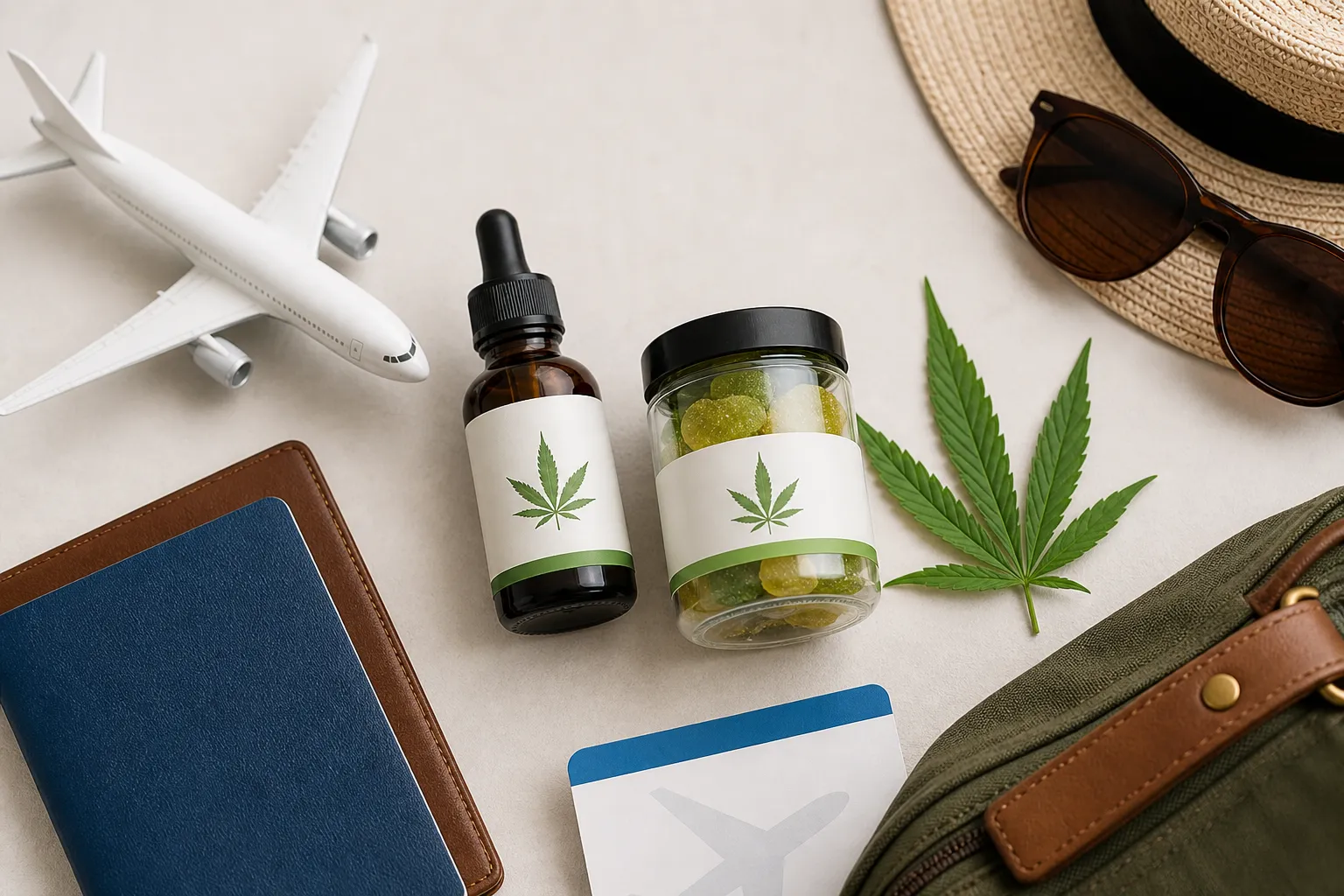
Before you pack your CBD, you need to understand the rules, because they vary by mode of transport and destination. In the United States, hemp-derived CBD products with less than 0.3 percent THC are federally legal, and the TSA allows passengers to fly with hemp-derived CBD products in both carry-on and checked bags, as long as they comply with federal law. That said, TSA screening is focused on security threats, not on searching for CBD, but agents can refer suspicious items to law enforcement, so it's wise to keep products in their original packaging with a label showing the CBD content and THC level. Internationally, the rules are much stricter and vary widely by country — some nations treat any cannabis-derived product as illegal, so always check the laws of your destination before you travel. For a deeper look at the legal landscape, read our guide to CBD legality by state. When packing, keep liquids under the TSA's 3.4-ounce limit for carry-ons, and consider keeping gummies or capsules in their labeled containers to avoid confusion.
Practical Tips for a Smoother Trip
CBD is just one tool, and it works best as part of a broader strategy for comfortable travel. Here are some practical, evidence-friendly habits to pair with it.
- Stay hydrated, but avoid heavy meals right before or during travel; a light stomach is generally more resilient to motion.
- Ginger is one of the best-studied natural remedies for nausea, and it can be a useful complement to CBD. Many travelers keep ginger chews or tea on hand.
- Choose your seat strategically: over the wing on a plane, in the front seat of a car, and mid-ship on a boat, where motion is least pronounced.
- Focus your gaze on the horizon or a stable point, and avoid reading or scrolling on a phone while in motion.
- Get fresh air when you can, and take breaks on long drives to reset your system.
- If you're prone to motion sickness, consider over-the-counter options like antihistamines as a first-line option, and talk to a doctor about what's right for you.
The Honest Limits of CBD for Motion Sickness
It's worth saying plainly: CBD is not a proven motion-sickness cure, and no reputable 2023-or-later study has established it as one. The nausea evidence that exists comes largely from chemotherapy-induced nausea and vomiting, which is a different mechanism from the sensory mismatch that causes motion sickness. The anxiety evidence is more encouraging but still based on small studies with inconsistent dosing. CBD is also not regulated as a treatment by the FDA, and product quality varies widely between brands, so what's in the bottle may not match the label. That doesn't mean CBD can't help you — many people report genuine relief from travel anxiety and mild nausea — but it means you should approach it with realistic expectations, test it in advance, and treat it as one part of a broader travel plan rather than a guaranteed fix. If you have a medical condition or take medication, check with your healthcare provider first.
Bottom Line
CBD can be a reasonable addition to your travel toolkit, especially for pre-trip anxiety, and the research on CBD and anxiety is more supportive than the research on motion sickness. But the honest bottom line is that CBD is not a proven cure for motion sickness, the evidence is still limited, and individual responses vary. The smart approach is to start with a low dose, test it at home before your trip, choose a format that matches your timing needs, and pair it with proven strategies like ginger, good seat selection, and hydration. For more on building a calmer travel routine, see our wellness guide to anxiety. If you're curious to try it, browse our CBD oils, gummies, and capsules to find a format that fits your travel style — and always check the legality of CBD at your destination before you go.
Frequently Asked Questions
Does CBD actually help with motion sickness?
There's no strong 2023-or-later evidence that CBD prevents or cures motion sickness specifically. Most nausea research on cannabis compounds comes from chemotherapy-induced nausea, which works through a different mechanism. Some people report relief, but it's not a proven treatment.
How long before travel should I take CBD?
For anxiety, take it roughly 30 to 60 minutes before the stressful part of the journey. For edibles like gummies and capsules, add more lead time since they take longer to absorb. For motion sickness, a preventive dose before the motion starts is usually more useful than waiting for symptoms.
Can I fly with CBD?
In the United States, hemp-derived CBD with less than 0.3 percent THC is federally legal, and the TSA allows it in carry-on and checked bags. Keep products in their original labeled packaging. International rules vary widely, so check your destination's laws before traveling.
What's the best CBD format for travel?
Gummies and capsules are the most portable and discreet, while oils act faster. For motion sickness, the faster onset of an oil may be more useful; for pre-trip anxiety, a gummy or capsule taken in advance can provide a smoother effect.
Is CBD safe to take before driving?
CBD can cause drowsiness in some people, especially at higher doses. If you're new to it, test it at home first and avoid driving until you know how it affects you. Never drive if you feel impaired or overly sleepy.
Find Your Perfect CBD Product
Take our 2-minute quiz to get personalized recommendations based on your needs.
Take the Quiz →Disclaimer: This article is for informational purposes only and does not constitute medical advice. CBD products are not FDA-approved to treat, cure, or prevent any disease. Always consult with a qualified healthcare professional before starting any new supplement, especially if you have a medical condition or take medications.