CBD and Thyroid Health: What the 2023+ Research Actually Shows

You've been dragging through your days — tired no matter how much you sleep, cold when everyone else is warm, your mood flat and your energy gone by mid-afternoon. Your doctor runs a blood panel and mentions your thyroid. Then a friend suggests CBD, and suddenly you're down a rabbit hole of wellness blogs promising it can "balance your hormones." It's an appealing idea. But before you spend money on another bottle, it's worth asking what the science actually says — and the honest answer is more nuanced than the marketing suggests. Here's what the recent research really shows about CBD and thyroid function, and where the evidence is still thin.
What the Thyroid Actually Does
Your thyroid is a small butterfly-shaped gland at the base of your neck, but it punches far above its weight. It produces two main hormones — thyroxine (T4) and triiodothyronine (T3) — that act like a thermostat for nearly every cell in your body. The pituitary gland in your brain releases thyroid-stimulating hormone (TSH) to tell the thyroid how much to produce, forming a feedback loop that keeps things in balance.
When that loop runs smoothly, your metabolism hums along, your energy stays steady, and your mood is more even. When it doesn't, the effects ripple outward. An underactive thyroid (hypothyroidism) can bring fatigue, weight gain, and low mood. An overactive thyroid (hyperthyroidism) can bring anxiety, racing heart, and unintended weight loss. Because these symptoms overlap so heavily with everyday stress, thyroid issues are easy to miss — and easy to blame on the wrong thing.
Why Thyroid Symptoms Feel So Overwhelming
Because thyroid hormones touch so many systems, the symptoms of imbalance rarely stay in one place. Fatigue, brain fog, weight changes, temperature sensitivity, anxiety, and low mood can all trace back to the same small gland. That's part of why thyroid conditions are so commonly missed or misattributed — the signs look like stress, burnout, or just a bad season of life.
It's also why the topic attracts so much wellness interest. When you feel off in a dozen ways at once, the idea of a single supplement that "balances hormones" is deeply appealing. The problem is that the thyroid's reach is exactly what makes it risky to assume a supplement will help. A gland that influences your metabolism, your energy, and your mood deserves respect — and the evidence behind any intervention should be held to a high bar.
The Endocannabinoid System and the Thyroid
To understand how CBD might touch the thyroid, you first need to know about the endocannabinoid system (ECS). It's a signaling network found throughout your body, made up of cannabinoid receptors, naturally produced endocannabinoids, and the enzymes that break them down. Its job is largely regulatory — helping your body maintain balance, or homeostasis, across many systems.
The ECS and the thyroid are connected, though the relationship is indirect. A 2026 review in Endocrine Regulations examined how endocannabinoid signaling influences the hypothalamic-pituitary neuroendocrine circuits — the control centers that govern hormone release, including the thyroid axis. The authors describe the ECS not as a primary driver of hormone production, but as a "dynamic regulatory network" that fine-tunes how neural activity translates into hormonal responses. In other words, the ECS may modulate thyroid function at the margins, rather than switch it on or off.
That distinction matters. It means CBD's effects on the thyroid, if they exist, are likely subtle and context-dependent — not the dramatic "rebalance" that wellness marketing implies.
What the 2023+ Research Actually Shows
Here's the honest part: direct human research on CBD and thyroid hormones is extremely limited. Most of what we know comes from animal studies, cell experiments, and reviews — not from large clinical trials in people. That's not a reason to dismiss the topic, but it is a reason to keep expectations realistic.
The most relevant recent work falls into a few buckets: one randomized trial in healthy adults, a handful of preclinical studies on thyroid cancer cells, and safety reviews that flag the thyroid as an area of concern. Let's look at each.
The One Human Trial That Matters
The strongest human data comes from a 2025 randomized, double-blinded, placebo-controlled trial published in JAMA Internal Medicine. Researchers gave 201 healthy adults either CBD at 5 mg per kilogram of body weight per day or a placebo for 28 days, then tracked a range of lab values.
The trial's main focus was liver safety — and it found that a small percentage of CBD users (about 5.6%) developed elevated liver enzymes, a signal worth taking seriously. But it also measured thyroid hormones directly. The researchers reported no differences between the CBD and placebo groups in thyrotropin (TSH), total triiodothyronine (T3), or free thyroxine (T4) over the four-week period.
That's a meaningful finding: in healthy adults at a moderate dose, short-term CBD use did not measurably shift thyroid hormone levels. It's the closest thing we have to a clean answer, and the answer is essentially "no obvious effect." The caveat is that it was short-term, in healthy people, at one dose — so it can't tell us about long-term use, higher doses, or people with existing thyroid conditions.
CBD and Thyroid Cancer Cells: Preclinical Only
Beyond hormone levels, some researchers have looked at whether cannabinoids affect thyroid tissue itself — specifically in papillary thyroid carcinoma, the most common form of thyroid cancer.
A 2025 study in Integrative Cancer Therapies tested a cannabinoid-containing product on papillary thyroid cancer cells in the lab. The product reduced cell viability in a dose- and time-dependent manner and appeared to shift the expression of genes involved in cell growth and death. The authors were careful to call it a "potential" regulator and stressed that much more work is needed.
Separately, a 2023 study in the International Journal of Biological Markers found that the cannabinoid receptors CB-1R and CB-2R were expressed at significantly higher levels in papillary thyroid carcinoma tissue than in benign thyroid lesions. The authors suggested this could eventually aid diagnosis or risk assessment.
Both of these are important to read correctly: they're cell and tissue studies, not evidence that CBD treats or prevents thyroid cancer in people. They point to an interesting biological connection between the endocannabinoid system and the thyroid, but they're a long way from clinical application.
The Big Caveat: Most Evidence Is Preclinical
If you're sensing a pattern, you're right. Almost all of the mechanistic research on CBD and the thyroid comes from animal models, cell cultures, and tissue samples. That's not unusual for a young field, but it means the evidence base is early and limited.
The 2026 Endocrine Regulations review makes this explicit, noting that for most neuroendocrine systems — including the thyroid — the evidence for endocannabinoid involvement is "largely based on preclinical studies" and the underlying cellular processes remain "less well-defined." In plain terms: researchers believe there's a connection, but they can't yet say exactly how it works or what it means for a person taking CBD.
There's also a safety angle worth flagging. The European Food Safety Authority's 2026 update on CBD as a novel food noted that animal studies have shown endocrine effects, including altered thyroid hormone levels, and concluded that the safety of CBD for people on concurrent medications "cannot be established." That's a regulatory body being cautious — and it's a reminder that "no effect in one short trial" is not the same as "proven safe for everyone."
CBD and Thyroid Medication: The Interaction Question
This is the section that matters most if you actually take thyroid medication. If you're on levothyroxine (or another thyroid hormone replacement), the question isn't really whether CBD changes your thyroid — it's whether CBD changes how your body handles your medication.
CBD is known to inhibit certain liver enzymes in the cytochrome P450 family, the same enzymes that help break down a wide range of drugs. When CBD slows those enzymes down, it can raise the level of a medication in your bloodstream, potentially amplifying its effects — or, in the case of a drug with a narrow therapeutic window like levothyroxine, making your dose less predictable.
Here's the honest caveat: I could not find a 2023-or-later human study that directly tested CBD plus levothyroxine. The interaction is a real, mechanism-based concern, and both the JAMA trial and the EFSA review flag caution around CBD combined with other medications. But the specific CBD-levothyroxine interaction hasn't been nailed down in recent human research. That means the responsible takeaway is to treat it as a genuine possibility — and to talk to your doctor before combining them, especially if you're just starting either one.
What This Means for You
If you're curious about CBD and you have a thyroid condition, here's a sensible, evidence-aware approach:
1. Talk to your doctor first, especially if you take levothyroxine or any daily medication. Ask specifically about potential interactions.
2. If you get the green light, start low and go slow. A common starting point is 10–20 mg once daily, and our CBD dosage guide walks through how to find your minimum effective dose.
3. Keep your thyroid medication and your CBD on separate schedules — taking them hours apart is a reasonable precaution given the enzyme question.
4. Don't stop or change your thyroid medication based on CBD. Nothing in the current research supports that.
5. Track your symptoms and your labs. If you're on thyroid medication, your doctor can check your TSH, T3, and T4 after a few weeks to see if anything shifted.
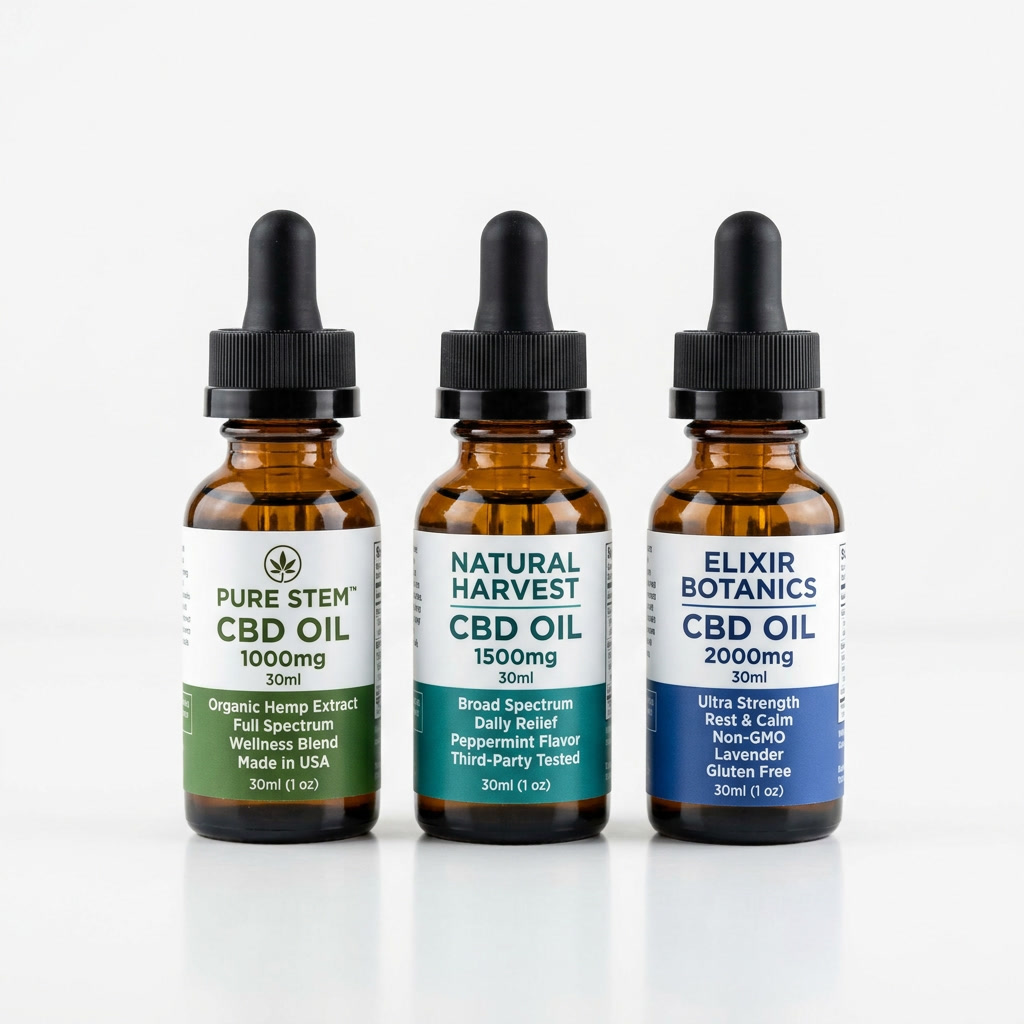
6. Choose a product you can trust. The market is uneven, so look for third-party testing and clear labeling — our CBD oils roundup is a good place to start.
If you're exploring CBD for other reasons — like the inflammation that often accompanies thyroid conditions — the same principles apply. And if you want the bigger picture on how CBD interacts with your body's systems, our guide to the endocannabinoid system covers the fundamentals.
Bottom Line
The honest summary is this: the 2023+ research shows a real biological connection between the endocannabinoid system and the thyroid, but the evidence that CBD meaningfully changes thyroid hormone levels in people is thin. The one solid human trial found no effect on TSH, T3, or T4 in healthy adults over four weeks. Preclinical studies on thyroid cancer cells are intriguing but far from clinical relevance. And the most important practical concern — how CBD might interact with thyroid medication — remains understudied, which is exactly why caution is warranted. CBD isn't a thyroid treatment, and no credible research suggests it is. If you're considering it, treat it as a supplement to discuss with your doctor, not a replacement for anything your thyroid actually needs.
Find Your Perfect CBD Product
Take our 2-minute quiz to get personalized recommendations based on your needs.
Take the Quiz →Disclaimer: This article is for informational purposes only and does not constitute medical advice. CBD products are not FDA-approved to treat, cure, or prevent any disease. Always consult with a qualified healthcare professional before starting any new supplement, especially if you have a medical condition or take medications.