CBD for Spinal Cord Injury: What the Trials Actually Show

A spinal cord injury rearranges a life in a single moment, and then keeps rearranging it for years. The paralysis is the part outsiders see. The part that dominates daily life for many people is the pain, a burning or electric sensation that arrives in limbs with no feeling left in them, and the spasticity that makes those limbs jump and lock without warning.
That is where CBD usually enters the conversation. Someone reads a headline, or a forum thread, or a product page claiming that cannabinoids support spinal cord recovery. The claim is doing a great deal of work with very little behind it.
This piece separates the questions that get bundled together. Pain, spasticity, inflammation, regeneration and cure are five different problems, studied with different methods, and the evidence for each is not equally strong. For the deeper evidence on this, see CBD vs Curcumin for Inflammation.
The Short Answer
No human trial has shown that CBD repairs a spinal cord. The regeneration claims you see online come from animal studies, cell cultures, and a small number of tissue engineering papers that place cannabinoids directly into an implanted material at the injury site. None of that describes something you can swallow.
The human evidence sits in a narrower place. CBD, and cannabis-based medicines more broadly, have been tested for two symptoms that follow spinal cord injury. The first is neuropathic pain, the burning and electric pain that comes from damaged pathways rather than from a wound. The second is spasticity, the involuntary tightness and spasming that affects most people with an injury above the conus.
For both, the signal is real in some trials and absent in others. Effect sizes are small to moderate when they appear at all, and the preparations that have performed best are not the ones sold in shops.
Spinal Cord Injury Is Not One Condition
The most common mistake in this literature is treating spinal cord injury as a single diagnosis with a single biology. It is not.
An acute injury, days to weeks old, is a wound in progress. There is swelling, cell death spreading beyond the original damage, and a cascade of inflammatory signalling that continues for weeks. Most of the striking animal results come from this window, and most of them come from giving a drug before or immediately after the injury. That is a prophylactic design, not a treatment design.
A chronic injury, years old, is a different problem entirely. The inflammation has settled into something low grade and persistent. Scar tissue has formed. The pathways that survived have reorganised around the lesion. Pain at this stage is generated by a nervous system that has rewired itself, and it does not respond to the same interventions that might have helped in the first month.
Almost every headline about CBD and spinal cord injury comes from the first category. Almost every person asking the question belongs to the second. That mismatch is the single most important thing to understand before reading a result.
What the Human Trials Actually Show
The human literature is small, and it splits by product rather than by symptom.
The High-Dose Test
The most direct human test to date appeared in eClinicalMedicine in 2026, a randomised trial of high-dose cannabidiol for chronic neuropathic pain associated with spinal cord injury.
Two features make it useful. It enrolled people with an actual spinal cord injury rather than a mixed group of neuropathies, and it used a dose far above anything a retail bottle delivers per serving. Earlier human work could always be dismissed with the objection that the dose was too low to reach plasma levels comparable to the animal studies. A high-dose design removes that objection.
What a trial cannot do is manufacture an effect that is not there. Across this literature the reported reductions in pain score have been modest, often below the margin usually accepted as clinically meaningful, and inconsistent between studies. The value of a clean high-dose trial is that it establishes where the ceiling actually sits. Read the confidence intervals rather than the abstract, because that is where the honest answer lives.
The Cannabis-Based Medicine Trials
The other main body of human evidence uses a different product. A multicentre randomised double-blind trial published in Pharmaceuticals in 2023 tested a cannabis-based medicine for neuropathic pain and spasticity. That medicine is an oromucosal spray containing THC and CBD in close to equal proportions, and it is a licensed pharmaceutical in several countries, not a wellness product.
This distinction gets lost constantly. When a review concludes that cannabinoids reduce spasticity, it is usually summarising trials of a THC-containing medicine at a fixed ratio, absorbed through the lining of the mouth. That is not evidence for a 10 mg gummy, nor for a full spectrum oil of unknown composition.
What Modest Actually Means
A modest effect is not nothing. Where existing drugs work partially and carry real side effects, a small additional reduction can matter to the person living with it.
Modest also means it will not be obvious. If you expect the pain to disappear, you will read a 20 percent reduction as failure. If you expect a bad week to become a manageable one, you might notice it. Setting the expectation before you start is most of the work.
Pain and Spasticity Are Different Targets
These two symptoms are usually discussed together and should not be. They run on different circuitry and respond differently to the same drug.
Neuropathic pain after spinal cord injury is generated above the lesion, in a nervous system that has lost normal input and turned up its own gain. Treating it means calming hyperexcitable pathways. Spasticity is a reflex problem, driven by lost descending inhibition of stretch reflexes within the cord itself. Treating it means restoring inhibition or reducing reflex excitability.
A drug can affect one and leave the other untouched. In practice, the cannabis-based medicine literature is stronger for spasticity than for pain, which is the opposite of what most people expect when they search for CBD and pain relief.
The THC Problem
Here is the uncomfortable part for anyone selling CBD alone.
The best spasticity evidence involves THC. The licensed oromucosal spray contains roughly equal parts THC and CBD, and the trials that showed benefit used the combination. Isolating CBD removes the psychoactive component and, with it, a plausible share of the mechanism the positive trials depended on.
That leaves CBD in an awkward position. It has a better safety profile and no intoxication, which is why people prefer it. It also has thinner evidence for the two symptoms a spinal cord injury actually produces. Both things are true at once, and marketing does not resolve the tension.
What the Animal Work Adds
The preclinical literature is where most of the mechanistic enthusiasm originates.
Neuroinflammation and FKBP5
A 2023 study in Brain, Behavior, and Immunity reported that CBD alleviates neuroinflammation and attenuates neuropathic pain through a pathway involving FKBP5. This is a genuinely interesting result because it connects CBD to a specific molecular handle rather than a vague anti-inflammatory gesture. It is also a rodent study, and the doses used were not scaled to human oral consumption.
The Spinal Mechanism
A 2025 paper in Journal of Pain reported that CBD reduces neuropathic pain and cognitive impairment through a spinal mechanism. Cognitive fog alongside chronic pain is underdiscussed in this population, so a drug that touches both is worth attention. The finding remains mechanistic and preclinical.
A 2023 study in PLoS One found that CBD combined with beta-caryophyllene reduced chronic pain in a spinal model. That pairing is interesting because beta-caryophyllene is a common cannabis terpene, and the result suggests the two together do more than either alone. It also shows how far a mouse spinal model sits from a person with a lesion at C5.
There is a related 2023 paper in Phytotherapy Research on CBD-rich, non-psychotropic cannabis oils attenuating peripheral neuropathy. Peripheral and central injuries are not the same problem, but the result supports the general point that the non-THC fraction has biological activity. Our guide to CBD and nerve repair goes further into where that line of work stops.
Regeneration Is Not on the Table
Nothing in the human literature shows that CBD regrows a spinal cord, and the biology makes it unlikely in the extreme.
A spinal cord injury leaves a cavity, scar tissue, and axons that have retracted from the damage. Repair would require bridging the cavity, persuading axons to grow across it, and getting them to reconnect with the correct targets. That is a tissue engineering problem, and it is being worked on by people who do not sell capsules.
Why the Scaffold Papers Are Not Supplements
A 2024 paper in Molecules described chitosan scaffolds incorporating CBD and platinum, studied in a tissue engineering context. Read what that sentence says. CBD is a component of an implanted material, and the scaffold is the intervention. The cannabinoid is present to modify the local environment around the implant.
Nobody will reproduce that by taking an oil. These papers are legitimately exciting for the future of spinal cord repair and entirely irrelevant to a purchase decision today. Confusing the two is the mechanism by which a real finding becomes a fake product claim.
Why Route and Dose Decide Everything
If an effect depends on concentration at a specific tissue, then the formulation is the therapy. This is where consumer products diverge sharply from the research.
Oral Bioavailability
Oral CBD has poor and variable bioavailability. It is poorly absorbed, heavily metabolised on its first pass through the liver, and the fraction reaching circulation differs between people and between products. A 2023 study in Pharmaceutics examined the pharmacokinetics of oral cannabinoids in a nerve-injury mouse model, and the useful takeaway is that the injury itself changes how the drug is handled. Data from healthy animals does not transfer cleanly to injured ones, and neither does data from healthy humans.
What That Means for a Spinal Cord
The cord sits behind the blood brain barrier and inside a bony canal, and achieving a meaningful concentration there from a swallowed oil is not straightforward.
This is why the field keeps returning to local delivery, to sprays absorbed through mucosa, and to implanted materials. Route is not a detail. It is the variable that decides whether the mechanism you read about has any chance of operating in your body.
How to Read a Trial in This Field
Most people read the headline and the abstract. Four questions do more work than either.
What was the population. A trial in people with chronic spinal cord injury is relevant. A trial in diabetic neuropathy is not, and the 2024 review in American Family Physician is a good illustration of how differently clinicians approach that condition, with glucose control as the foundation and drug therapy layered on top.
What was the product. Purified CBD, a THC-containing oromucosal spray, and a full spectrum oil of unknown cannabinoid content are three different interventions. If a paper does not state the dose of CBD and THC per administration, its result cannot be applied to whatever is in your cupboard.
How long did it run, and what did it measure. Pain scores move on expectation in the first weeks, so a trial running eight weeks with a validated scale is worth more than one running two weeks.
What was the effect size. A statistically significant result can be a two point drop on a ten point scale. Ask whether the change is one a person would actually notice in a normal day.
The Interactions That Actually Matter
Spinal cord injury comes with a long medication list, and CBD is not metabolically inert. The full pharmacology is in our guide to CBD and drug interactions. Three classes deserve attention here.
Baclofen
Baclofen is the standard treatment for spasticity and is often delivered by an implanted pump in severe cases. It is cleared largely unchanged by the kidneys, so a metabolic interaction with CBD is unlikely on paper. The practical concern is additive sedation and additive muscle relaxation. Combining a centrally acting muscle relaxant with a cannabinoid that also causes drowsiness is a recipe for falls in someone whose balance is already compromised.
Gabapentin and Pregabalin
Gabapentinoids are also renally cleared and are not meaningfully metabolised by the liver, which limits the potential for a pharmacokinetic interaction. The risk here is pharmacodynamic. Both cause dizziness, somnolence and unsteadiness, and so does CBD at higher doses. If you are already on a large gabapentin dose, adding CBD can tip you from functional to foggy without any lab test showing a problem.
Antidepressants
This is where the real pharmacological concern sits. Several antidepressants used for neuropathic pain are metabolised by the same liver enzymes that CBD inhibits, including CYP2D6 and CYP2C19. Amitriptyline and duloxetine are the common ones in this context. Inhibition can raise plasma levels of the antidepressant, which means more side effects at an unchanged prescription.
The direction and size of that interaction depends on the person, the dose and the specific drug. It is not something to work out by trial and error alone. If you take an antidepressant and want to add a high dose of CBD, that belongs in a conversation with the prescriber, and the useful thing to bring is the actual milligram amount you intend to use.
Practical Guidance
There is no established dose of CBD for spinal cord injury, because there is no established indication. What follows is harm reduction rather than a protocol.
Start low and stay there longer than you want to. Twenty to thirty milligrams once daily for two weeks tells you more than a fast escalation, and it limits the cost of a bad reaction.
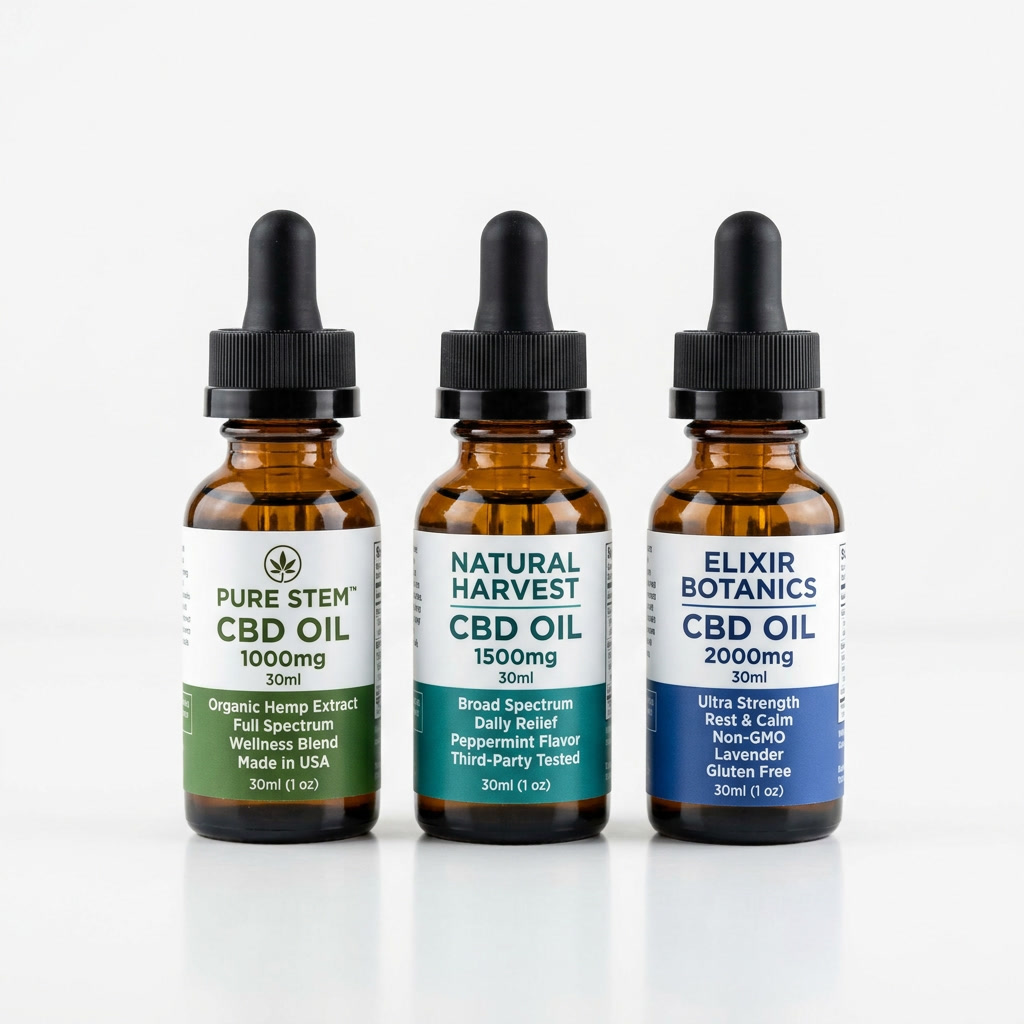
Buy a product with a batch certificate showing cannabinoid content. The plausible mechanism depends entirely on dose, and labelling accuracy in this sector is poor. Our guide to CBD safety covers what to look for on a certificate and which contaminants matter. For a measured dose, drops are the most practical format, and the CBD oils and tinctures collection lists cannabinoid content per bottle, which is the number that matters.
Separate your doses from other sedating medication by a couple of hours if you can, which makes it easier to tell what caused what.
Keep a written log for four weeks. Dose, time, pain score, spasticity score, sleep, and any new symptom. Retrospective memory is unreliable, and a log is the only way to know whether you are reporting a real change.
Do not stop baclofen abruptly under any circumstances. Abrupt withdrawal, particularly from an intrathecal pump, can cause rebound spasticity, fever and rhabdomyolysis.
What the Evidence Does Not Show
It does not show regeneration. Not in humans, not at any dose, not with any product.
It does not show a cure, and the word should be treated as a red flag in any advertisement.
It does not show that CBD outperforms the drugs already approved for spasticity. The trials compare against placebo, not against baclofen or tizanidine.
It does not show that CBD is free of interactions. The absence of warnings on a label reflects the absence of regulation, not the absence of pharmacology.
It does not show that mechanical back pain, common after injury for structural reasons, will respond. Mechanical and neuropathic pain are different, and the evidence here concerns the second. Our guide to CBD and neuropathic pain covers that boundary in more detail.
The Cost of Overpromising
The damage from inflated claims in this area is rarely physical. It is the displacement of things that work.
Rehabilitation after spinal cord injury is slow and unglamorous, and its returns diminish. Someone in year four, doing the same stretches and transfers, is exactly the person most vulnerable to a story about a molecule that could change the trajectory. Money spent there is money not spent on a better cushion, a standing frame, or physiotherapy hours. Hope is not free.
There is a second cost, which is trust. When a product fails to deliver what a marketing page promised, people reasonably conclude that nothing in this space works, which makes the honest conversation about a modest benefit harder still.
Bottom Line
CBD has been tested in people with spinal cord injury, and the results are small, inconsistent, and concentrated in symptom control rather than repair. The strongest human evidence for spasticity involves a THC-containing pharmaceutical, not a CBD oil. The most direct test of high-dose CBD for chronic neuropathic pain is recent enough that it should be read closely rather than summarised by a headline.
What the biology supports is a compound that dampens neuroinflammation and hyperexcitable signalling in injured systems. That is a plausible comfort measure. It is not a treatment for the lesion, and the lesion is what determines everything else.
If you try it, try it the way you would try any drug with an uncertain effect and a real interaction profile. A measured dose, a written record, a conversation with the person who prescribes your baclofen, and a clear idea in advance of what would count as success.
That last part is the one most people skip, and it is the difference between using a tool and being sold one.
Find Your Perfect CBD Product
Take our 2-minute quiz to get personalized recommendations based on your needs.
Take the Quiz →Disclaimer: This article is for informational purposes only and does not constitute medical advice. CBD products are not FDA-approved to treat, cure, or prevent any disease. Always consult with a qualified healthcare professional before starting any new supplement, especially if you have a medical condition or take medications.