How to Use CBD for Acid Reflux and GERD: What the 2023–2026 Research Actually Shows

If you've ever woken up with a burning chest and a sour taste at the back of your throat, you know acid reflux is more than a nuisance — it can wreck your sleep, your focus, and your quality of life. And if you've been searching for a natural way to manage it, you've almost certainly seen CBD marketed as the answer. But here's the honest truth: there is no clinical trial proving CBD cures or reverses GERD. What the 2023–2026 research actually shows is more nuanced — and more interesting. The endocannabinoid system runs through your esophagus and gut, and early lab work suggests CBD-like compounds may blunt the inflammatory and even DNA-damaging effects of reflux on esophageal tissue. At the same time, CBD interferes with enzymes your body uses to break down heartburn medications like omeprazole — a real interaction most articles skip. This guide walks you through what the evidence supports, what it doesn't, how to use CBD safely if you decide to try it, and exactly when to avoid it.
Does CBD Actually Help Acid Reflux and GERD?
Let's be blunt: no, CBD is not a proven treatment for acid reflux or GERD. As of 2026, there are no randomized controlled trials in humans demonstrating that CBD reduces acid reflux episodes, heals esophagitis, or tightens the lower esophageal sphincter. If you see a product or influencer claiming otherwise, treat it with deep skepticism.
What the research does show is a more limited, mechanistic picture. CBD and other non-psychotropic cannabis compounds have demonstrated genuine anti-inflammatory and antioxidant effects in the gastrointestinal tract in lab and animal models, and at least one 2025 study found that specific cannabinoid–terpene combinations reduced the DNA-damaging "mutagenicity" of gastric reflux on esophageal cells. That's a promising lead — but it's a long way from "CBD treats heartburn." Think of the current evidence as supporting CBD as a potential adjunct worth discussing with a doctor, not a replacement for proven GERD care like PPIs, lifestyle changes, or weight management.
If you're new to CBD entirely, our CBD 101 guide explains the basics of what it is and how it works before you read any further.
What the Research Actually Shows (2023–2026)
The most directly relevant study to reflux is a 2025 preprint from researchers at Harvard-affiliated institutions and the VA Boston Healthcare System. They exposed human esophageal cells — including a Barrett's esophagus model — to the low pH and bile acids characteristic of reflux, and found that optimal cannabinoid–terpene combination ratios suppressed the mutagenic and cytotoxic effects of gastric reflux on those cells (bioRxiv, 2025, PMID 41040236). In plain terms: bile-acid reflux drives oxidative DNA damage and resistance to cell death in the esophagus, and certain cannabinoid-terpene mixes appeared to counter that stress in the dish.
> "The human endocannabinoid system (ECS) regulates diverse anti-inflammatory, antioxidant, and analgesic pathways implicated in disease modulation. Despite its therapeutic promise, effective pharmacological activation of the ECS remains challenging."
> — Goldman et al., bioRxiv, 2025 (PMID 41040236)
That quote matters for two reasons. First, it confirms the endocannabinoid system is plausibly involved in reflux-related tissue damage. Second — and this is the part most CBD marketing won't tell you — the authors themselves flag that reliably "activating" the ECS in a real person is still an open problem. A cell culture result, however elegant, is not a swallowed capsule in your digestive tract.
A broader 2026 review in Redox Biology reached a similar conclusion about the gut as a whole, describing CBD as "a potential intestinal guardian" with dual antioxidant and anti-inflammatory roles — it helps regulate reactive oxygen species, activates the Nrf2–Keap1 antioxidant pathway, and dials down inflammatory signaling including NF-κB and the NLRP3 inflammasome (Redox Biology, 2026, PMID 41713221). And a 2026 review on the gut–liver axis added that CBD has shown hepatoprotective effects in animals by improving gut barrier integrity, reducing intestinal permeability, and modulating the microbiota — while candidly noting that clinical data remain inconsistent and that dosing, formulation, and patient differences muddy the picture (Curr Rev Clin Exp Pharmacol, 2026, PMID 41935387).
The Endocannabinoid System and Your Esophagus
To understand why anyone thinks CBD might matter for reflux, you need to know about the endocannabinoid system (ECS) — a signaling network of receptors (CB1 and CB2), enzymes, and endocannabinoids that helps regulate pain, inflammation, gut motility, and the immune response. It's not a niche curiosity; the ECS is one of the body's master regulators, and it's active throughout the digestive tract, including the esophagus.
The 2025 esophageal study directly engaged this system, using the ECS as its mechanistic target for blunting reflux damage (bioRxiv, 2025, PMID 41040236). In theory, CBD's anti-inflammatory effects on gut tissue — via pathways like NF-κB and NLRP3 that the 2026 Redox Biology review describes (Redox Biology, 2026, PMID 41713221) — could apply to reflux esophagitis, which is fundamentally an inflammatory response to acid and bile.
But theory isn't evidence of clinical benefit. The ECS is also implicated in gut motility and lower esophageal sphincter tone, and here's the catch: we don't actually know whether CBD relaxes or tightens the sphincter in humans. Some patients report CBD worsens their reflux, possibly by relaxing the sphincter or slowing gastric emptying — the opposite of what you want. If you have a hiatal hernia or severe GERD, this uncertainty is a reason for caution, not confidence.
CBD, Gut Inflammation, and the Reflux Connection
Even though CBD's direct effect on reflux is unproven, the anti-inflammatory picture in the broader gut is one of the better-supported areas of CBD research. A 2025 study in Journal of Cannabis Research tested non-psychotropic Cannabis sativa extracts (standardized for CBD and CBG) in an in vitro model of intestinal inflammation. The extracts inhibited the release of key inflammatory chemokines (CXCL-9, CXCL-10, and CCL-20) triggered by the pro-inflammatory cytokines IL-1β and IFN-γ, and the effect ran at least partly through NF-κB — with CBD content paralleling the inhibitory activity (J Cannabis Res, 2025, PMID 41053843). Notably, the full extracts outperformed individual cannabinoids, supporting the "entourage effect" idea that whole-plant combinations may work better than isolates alone.
For a reflux-focused read, this matters because chronic reflux often coexists with broader digestive complaints and gut inflammation. If your heartburn is part of a wider pattern of gut sensitivity or an IBS-type picture, the anti-inflammatory and gut-barrier effects of CBD may be more relevant to you than to someone whose only issue is a structurally weak sphincter. Our deep dive on CBD for IBS and digestive issues and our CBD for inflammation guide cover these angles in more detail.
There's also an honest counterpoint worth holding onto. A 2026 randomized pilot study of 16 adults found that four weeks of low-dose CBD (30 mg twice daily) did not change glucose tolerance, the gut microbiome, or inflammation in overweight adults (Cannabis Cannabinoid Res, 2026, PMID 41167732). Translation: CBD is not a guaranteed gut-modifier, and at low doses it may do very little at all. Effects, if they happen, likely depend on dose, formulation, and the specific person.
The Drug Interaction You Need to Take Seriously: CBD and PPIs
This is the section that could genuinely protect you, because it's the one almost no CBD-for-heartburn article mentions. Many people with GERD take a proton pump inhibitor (PPI) like omeprazole (Prilosec) or pantoprazole. CBD is a known inhibitor of cytochrome P450 enzymes — the liver enzymes that metabolize these drugs. And omeprazole is metabolized primarily by CYP2C19.
A 2023 human pharmacokinetic study in Clinical Pharmacology & Therapeutics gave 18 healthy adults a CBD-dominant cannabis extract (640 mg CBD) alongside a CYP probe-drug cocktail that included omeprazole. The result was striking: the CBD extract increased omeprazole's area-under-the-curve by 207% — more than tripling drug exposure — while also raising losartan (CYP2C9) by 77%, midazolam (CYP3A) by 56%, and caffeine (CYP1A2) by 39% (Clin Pharmacol Ther, 2023, PMID 37313955). The 640 mg dose is high, so the magnitude won't translate 1:1 to typical retail CBD doses — but the interaction is real, dose-dependent, and worth respecting.
What does that mean for you in practice?
- If you're on a PPI (especially omeprazole), adding CBD can raise your drug levels, potentially increasing side effects or requiring a dose adjustment.
- Don't self-adjust your PPI dose to "make room" for CBD. That's a conversation for your prescriber.
- The interaction is broader than PPIs — CBD also affects many drugs processed by CYP2C9, CYP3A, and CYP1A2. Our full guide on CBD drug interactions lists the most important ones.
- The 2026 gut–liver axis review flags possible drug–drug interactions and hepatic metabolism as a major limitation on CBD's therapeutic use (Curr Rev Clin Exp Pharmacol, 2026, PMID 41935387), and the 2023 study's authors stress that people using CBD alongside prescription drugs should be evaluated carefully (Clin Pharmacol Ther, 2023, PMID 37313955).
If you take any heartburn medication — PPI or H2 blocker — this single interaction is the strongest reason to talk to your doctor before starting CBD.
When CBD Probably Won't Help (and Could Hurt)
Being honest about the limits protects you from wasting money and, worse, from masking a serious problem. CBD probably won't help if:
- Your reflux is caused by a structural problem (hiatal hernia, weak sphincter). No amount of CBD will fix anatomy.
- You're already on effective treatment. CBD isn't proven to add benefit on top of a well-managed PPI.
- You're looking for acute relief of a burning episode. CBD is slow and unreliable for sudden, severe heartburn — an antacid is the right tool there.
It could actively hurt if:
- It relaxes your lower esophageal sphincter. Some people find cannabis products make reflux worse. If you notice this, stop.
- You take PPIs or other CYP-metabolized drugs without medical oversight (see the interaction above).
- You vape or smoke it. Inhaled irritants can worsen throat irritation and reflux symptoms. This is one area where the route matters more than the compound.
- You have liver concerns. CBD is processed by the liver, and high doses carry a known hepatotoxicity signal. The 2026 review specifically flags hepatic metabolism and drug interactions as restrictions on use (Curr Rev Clin Exp Pharmacol, 2026, PMID 41935387).
Our CBD safety guide covers the liver, drowsiness, and other side-effect considerations in depth, and the CBD drug-interactions post is worth reading before you buy anything.
How to Use CBD for Acid Reflux and GERD: A Step-by-Step Guide
If, after talking to your doctor, you decide to trial CBD for reflux-related discomfort or inflammation, here's a cautious, evidence-aware protocol. This is not medical advice — it's a framework to discuss with your clinician.
Step 1: Talk to your prescriber first.
This is non-negotiable if you take a PPI, H2 blocker, blood thinner, anti-seizure drug, or anything metabolized by CYP enzymes. Given the 2023 finding that CBD can triple omeprazole exposure (Clin Pharmacol Ther, 2023, PMID 37313955), your doctor needs to know before you start.
Step 2: Pick an oral product, not an inhaled one.
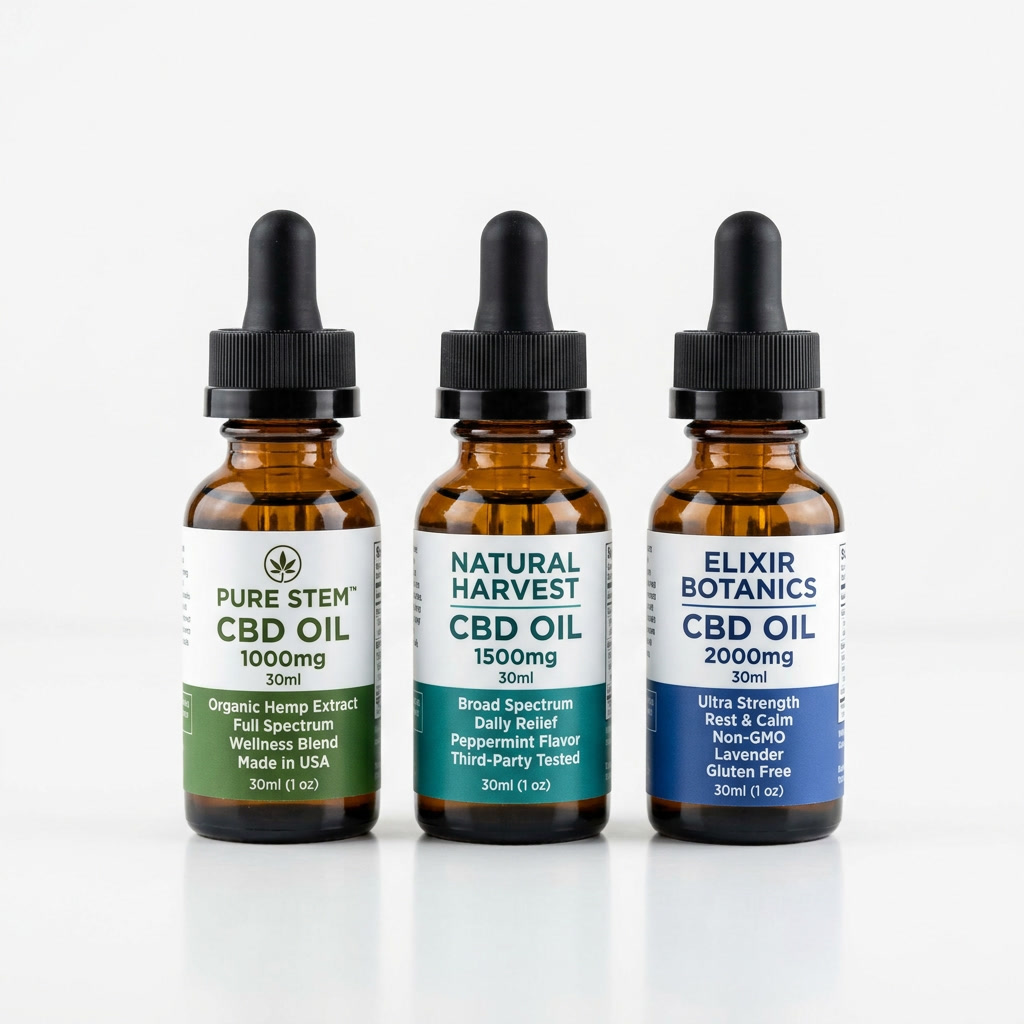
Choose a CBD oil or tincture taken sublingually, or a CBD gummy or edible if you prefer that format. Avoid vaping or smoking — inhaling irritants can aggravate throat and reflux symptoms.
Step 3: Start low and go slow.
Begin at 5–10 mg once daily, taken with food to reduce the chance of GI upset, and hold there for at least a week. Low-dose CBD did little to gut measures in the 2026 pilot (Cannabis Cannabinoid Res, 2026, PMID 41167732), so give it a fair window before judging. Our CBD dosage guide explains how to titrate.
Step 4: Log your symptoms.
Track heartburn frequency, severity, sleep quality, and any side effects (drowsiness, loose stools, dry mouth) in a simple daily note. CBD is slow-acting and effects are subtle; a log prevents you from attributing a good week to CBD when it was really diet or stress.
Step 5: Titrate slowly, if at all.
Only increase after 1–2 weeks at a stable dose, and keep the dose low if you're on any medication. Higher doses mean more enzyme inhibition and more side-effect risk.
Step 6: Set a stop rule.
If you see no improvement after 4 weeks, or if reflux gets worse, stop and reassess with your doctor. Don't keep escalating a product that isn't working.
Choosing the Right CBD Product for Reflux
Product choice genuinely matters here, for two reasons: the entourage effect and the isolate-versus-full-spectrum debate. The 2025 intestinal inflammation study found full Cannabis sativa extracts outperformed single cannabinoids like CBD alone (J Cannabis Res, 2025, PMID 41053843), and the 2025 esophageal study specifically used cannabinoid–terpene combinations rather than pure CBD (bioRxiv, 2025, PMID 41040236). That points toward full-spectrum or broad-spectrum products if you want the compounds working together.
A few practical filters:
- Prefer full-spectrum or broad-spectrum over pure isolate, given the entourage-effect data — but check your THC limit. Full-spectrum contains trace THC (under 0.3% in most legal products), which is fine for most people. If you must avoid THC entirely, broad-spectrum keeps other cannabinoids and terpenes while removing THC. Our isolate vs full-spectrum explainer breaks down the trade-offs.
- Look for third-party lab testing with a certificate of analysis, and confirm the labeled CBD dose is real.
- Watch added sweeteners and sugar in gummies — high-sugar or acidic edibles can themselves trigger reflux. A plain oil tincture is the cleanest choice if reflux is your concern.
- Mind the carrier oil. MCT oil is common and generally well tolerated; if you have a sensitive gut, a simple olive-oil base can be gentler.
For more on how CBD interacts with the digestive tract overall, including conditions that often overlap with reflux, see our CBD and gut health and CBD for IBD articles.
The Bottom Line
Here's the honest summary. CBD is not a proven treatment for acid reflux or GERD, and anyone claiming otherwise is overselling the data. What the 2023–2026 research genuinely supports is that the endocannabinoid system is involved in reflux-related esophageal stress, that CBD-type compounds can suppress inflammatory and even DNA-damaging effects of reflux in the lab, and that full-spectrum extracts may work better than isolates. None of that is the same as clinical benefit in a human esophagus.
The two practical takeaways:
1. The safety issue is real and under-discussed: CBD can meaningfully raise levels of PPIs like omeprazole by inhibiting CYP enzymes (Clin Pharmacol Ther, 2023, PMID 37313955). If you take heartburn meds, this is a doctor conversation, not a supplement decision.
2. The upside is speculative but plausible: for reflux that overlaps with gut inflammation or IBS, CBD's anti-inflammatory and gut-barrier effects (Redox Biology, 2026, PMID 41713221; J Cannabis Res, 2025, PMID 41053843) make it a reasonable topic to raise with your clinician — at low doses, with a stop rule, and never as a substitute for proven care.
If you try it, start low, log everything, and let your symptoms — and your doctor — be the judge.
Find Your Perfect CBD Product
Take our 2-minute quiz to get personalized recommendations based on your needs.
Take the Quiz →Disclaimer: This article is for informational purposes only and does not constitute medical advice. CBD products are not FDA-approved to treat, cure, or prevent any disease. Always consult with a qualified healthcare professional before starting any new supplement, especially if you have a medical condition or take medications.