CBD Drinks Are Everywhere. Here Is What the Liquid Actually Delivers
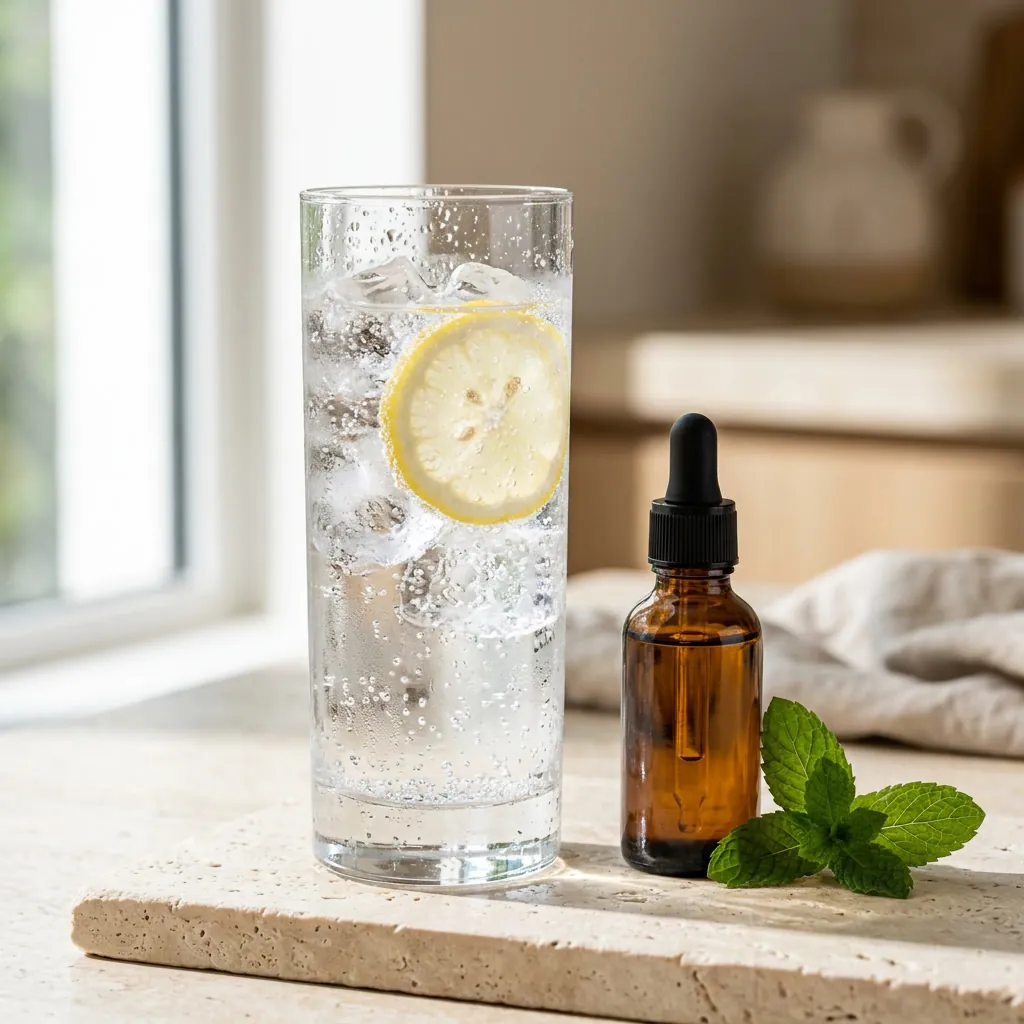
Walk into almost any convenience store or wellness shop and you will find CBD in a can. Sparkling waters, citrus sodas, cold brew blends, little shot bottles with bold type and a number on the front. The format has exploded because it fits modern habits. It is portable, social, and it does not ask you to hold oil under your tongue in a parking lot. That is genuinely appealing, and it is why drinks are one of the fastest growing categories in the entire CBD market.
The problem is that the number on the can tells you almost nothing about what your body will actually get. CBD is a fat-loving molecule dropped into a mostly water product. Making that work requires chemistry, and the chemistry chosen by the manufacturer determines how much CBD survives the shelf, how much dissolves in your gut, and how quickly it shows up in your blood. This article is not an attack on drinks. It is a guide to reading them honestly, because the delivery science, not the milligram count, decides the value.
Why CBD and Water Do Not Get Along
CBD is lipophilic, which is a polite way of saying it prefers fat and oil to water. If you put plain CBD isolate into water and shake it, most of it will clump, settle, or cling to the container. Your gut is a watery environment with a lipid-processing layer on top. A molecule that cannot disperse into that watery phase has trouble reaching the intestinal wall in a usable form, and what does get absorbed faces first-pass metabolism in the liver before it reaches circulation.
This is the root of the well-known bioavailability problem with oral CBD. O'Sullivan and colleagues reviewed the situation in Pharmaceuticals in 2024, and their paper reads like a catalog of workarounds: lipid-based systems, self-emulsifying formulations, nanoemulsions, cyclodextrin complexes, solid dispersions, and prodrug approaches. The review is a useful reality check. Nobody solved the solubility problem by pretending it does not exist. Every serious CBD drink on the shelf is an attempt to solve it, and the quality of that attempt varies enormously.
A 20 mg Drink Is Not a 20 mg Oil
Milligrams measure how much CBD was put into the product. They do not measure how much CBD your body absorbs. This distinction gets lost in marketing because the milligram number is easy to print in large font.
A CBD oil inside a capsule arrives already dissolved in a lipid carrier. When you swallow it, digestion can package the oil into mixed micelles, the body's natural transport vehicles for fats, and that process helps carry CBD toward absorption. A drink has no such luxury. The CBD must be pre-dispersed in water and kept that way through shipping, storage, and the hours it sits in your hand. If that dispersion fails, you may be drinking an expensive flavored beverage with less active CBD than the label implies.
The practical consequence is that two products both labeled 20 mg can produce very different blood levels. One may be carefully emulsified and tested. The other may be a coarse suspension that separates in the can. You cannot tell which is which from the front of the package.
What Emulsification Actually Does
An emulsion is a mixture of two liquids that do not normally mix, held together by an emulsifier. In a CBD drink, tiny oil droplets containing the cannabinoid are dispersed through the water phase, and the emulsifier forms a protective layer around each droplet so they do not immediately merge back together.
That layer does two useful things. It keeps the product physically stable, and it presents the CBD to your digestive system in a form with far more surface area than a single blob of oil. More surface area gives digestive enzymes and absorptive surfaces more places to act. Food science has used this trick for decades in milk, mayonnaise, and salad dressing. CBD drinks borrow it.
The emulsifier itself matters. Lecithin, gum arabic, modified starch, polysorbates, and various plant-derived saponins all behave differently, and some consumers have strong preferences about synthetic versus natural ingredients. A label that lists an emulsifier is not a red flag. A label that claims a stable CBD water with no emulsifier and no other delivery technology deserves a closer look at the COA.
Nano-Emulsification and the Smaller Droplet Bet
Nano-emulsification pushes droplet size down into the nanometer range, often small enough that the drink looks translucent rather than milky. The pitch is straightforward: smaller droplets mean more surface area, faster dispersion, and potentially more consistent absorption.
There is real science behind the idea, and nanoemulsions are one of the most studied delivery strategies for poorly soluble cannabinoids. But nano is not a magic prefix. Small droplets are thermodynamically restless. They can grow over time through coalescence and a process called Ostwald ripening, and heat, light, and acidity can accelerate that. A nanoemulsion that is perfect on the day it is made may not be the same product six months later.
Evidence strength here is moderate and mostly from small pharmacokinetic studies rather than large clinical trials. That does not make it wrong. It means you should treat specific absorption claims as plausible and product-specific, not as a general law of nature.
The Acid Test: What Happens in a Citrus or Cola Drink
Most CBD drinks are acidic. Citrus flavors bring citric acid, cola-style drinks bring phosphoric acid, and both push the product toward a low pH. That is a difficult environment for cannabinoids and for emulsions.
Mullen and colleagues examined exactly this in Cannabis and Cannabinoid Research in 2025, looking at the stability of nano-emulsified CBD in acidic foods and beverages. The work highlights a practical point that shelf-stable marketing rarely mentions: CBD can degrade over time in acid, and the emulsion itself can become less stable. Degradation means potency loss. Destabilization means the CBD may no longer be dispersed the way it was designed to be.
None of this makes acidic drinks unsafe. It makes freshness, storage, and batch testing important. A can that has spent a summer in a warm warehouse is not chemically identical to one that left the production line last week. If a brand cannot tell you when its product was made and how it performed in stability testing, you are guessing.
Powder Formulations and the Proof That Format Matters
If you want the clearest recent evidence that formulation is pharmacology rather than marketing, look at powder formulations. Bendik and colleagues published a comparative pharmacokinetic and safety study in CNS Drugs in 2026, comparing a powder formulation called CBtru against a reference formulation. The study is specific to that product, so it is not proof that every powder is superior. Its value is conceptual. Same molecule, different delivery format, different blood levels and different safety profile.
That is the whole argument in one sentence. If changing the format changes the pharmacokinetics, then the format is part of the dose. A drink, a softgel, a tincture, and a powder are not interchangeable units. They are different delivery systems that happen to contain the same active ingredient.
Onset, Duration, and the Drink Curve
Liquids tend to leave the stomach faster than capsules, and an emulsified drink is already dispersed before it arrives. Many users report that drinks feel faster than oil, with an effect that builds within roughly 30 to 90 minutes. That matches the general pattern for liquid formulations, though individual variation is large and food in the stomach can slow everything down.
The trade-off is duration. A faster rise often comes with a shorter plateau, and the total exposure may be lower if absorption is incomplete. If you are used to a capsule that carries you through an afternoon, a drink may feel like a different experience entirely. For a deeper look at timing, see our guide on how long CBD takes to work.
The Label Problem Nobody Checks
CBD labeling has a long history of inconsistency. Independent testing has repeatedly found products with more or less CBD than stated, and drinks add new variables because potency can change during storage. A label is a claim. A certificate of analysis is evidence.
Look for a batch-specific COA from an accredited third-party lab. It should show cannabinoid potency, the test date, and the batch it corresponds to. For beverages, ask whether the brand has stability data across the product's shelf life, not just at release. Our walkthrough on how to read a COA explains the sections that matter.
One more label issue is spectrum. A drink made with isolate contains only CBD. A broad or full spectrum product contains other cannabinoids and terpenes, which changes the taste and potentially the experience. Neither is inherently better, but you should know which one you are buying. Our comparison of isolate versus full spectrum covers the trade-offs.
Drinks With Caffeine or Sugar
Many CBD drinks are also stimulant drinks. Coffee blends, energy-style cans, and cola formats can deliver meaningful caffeine alongside the cannabinoid. Caffeine and CBD are not a dangerous combination for most people, but the pairing can muddy what you are feeling and make it harder to judge the CBD dose. We covered that interaction in more depth in our piece on CBD and caffeine.
Sugar is the other quiet variable. A drink with 30 grams of sugar is a dessert with CBD in it, and the metabolic load may matter more to your health than the cannabinoid does. If you are using a drink daily, read the nutrition panel as carefully as the supplement facts.
Cost Per Milligram and the Cheaper Illusion
Drinks are often the most expensive way to buy CBD per milligram. A can priced at several dollars may contain 20 to 30 mg, while a bottle of oil can deliver dozens of doses at a lower unit cost. You are paying for convenience, format, flavor, and packaging, and that can be a fair trade. What is not fair is assuming drinks are a budget route to dosing.
Do the math before you commit to a daily habit. Cost per milligram, plus the realistic absorption difference, tells you what you are actually paying for each unit that reaches your bloodstream. Sometimes the answer is that the drink is worth it because you will actually use it consistently. Sometimes the answer is that a tincture is the smarter buy.
Action Steps
- Read the batch-specific COA before trusting the label, and check that the batch code matches the can.
- Look for the emulsifier or delivery technology on the ingredient list, and be skeptical of stable CBD water with no explanation of how it stays stable.
- Check the acid profile and the best-by date, especially for citrus and cola formats.
- Do the cost-per-milligram math and compare it with oils and capsules.
- Start with a low dose and treat a drink as its own format, not as a substitute for a capsule you already know.
- Note the caffeine and sugar content if you plan to drink it regularly.
- If you take prescription medication, review the interaction question with a clinician, and see our overview of CBD drug interactions.
Bottom Line
CBD drinks are a real innovation, not a gimmick. They solve a genuine problem, which is that cannabinoids are awkward to deliver in water, and the best formulations use legitimate food science to make the format work. But the category rewards careful reading. The milligram number is a starting point, not an answer. Emulsification, droplet size, acid stability, batch testing, and the actual pharmacokinetic evidence all shape what you get from the can. Judge the drink by its delivery science, and you will spend your money on products that deserve it. If you want to see how format and potency compare across the category, browse our CBD beverages.
Find Your Perfect CBD Product
Take our 2-minute quiz to get personalized recommendations based on your needs.
Take the Quiz →Disclaimer: This article is for informational purposes only and does not constitute medical advice. CBD products are not FDA-approved to treat, cure, or prevent any disease. Always consult with a qualified healthcare professional before starting any new supplement, especially if you have a medical condition or take medications.