Can CBD Help With PCOS? What the Science Really Says
The Honest Truth About CBD and PCOS
It's 11 p.m., and Maya is scrolling her phone again, searching for something — anything — that might make the PCOS symptoms she's lived with for years feel less overwhelming. The irregular periods. The stubborn weight that won't budge no matter what she eats. The fatigue, the acne, the anxiety that spikes right before her cycle. She's read about CBD in a dozen wellness posts, and now she's wondering the same thing so many women with polycystic ovary syndrome ask: could this actually help me?
It's a fair question. PCOS affects roughly 1 in 10 women of reproductive age, making it one of the most common hormonal disorders in the world. And CBD — the non-intoxicating compound from hemp — has become one of the most talked-about wellness products of the past decade. But here's the honest truth you won't find in most marketing: the direct research on CBD specifically for PCOS is extremely limited. There is no clinical trial showing CBD treats, cures, or reverses PCOS. Anyone who tells you otherwise is overselling.
That doesn't mean CBD is irrelevant to the PCOS conversation. It means we need to be precise about what the science actually supports. In this guide, we'll separate what's proven from what's hopeful, look at how CBD might touch some of the symptoms that make PCOS so hard to live with, and give you a realistic, safety-first framework for deciding whether it's worth trying.
What PCOS Actually Is
Polycystic ovary syndrome is a hormonal and metabolic condition. The name comes from the small, fluid-filled sacs (follicles) that can form on the ovaries, but PCOS is far more than an ovarian issue. It's a whole-body condition driven by a combination of factors, including elevated androgens (male hormones), insulin resistance, and chronic low-grade inflammation.
The symptoms vary widely from woman to woman, but common ones include:
- Irregular, infrequent, or absent periods
- Elevated androgen levels, which can cause acne and excess facial or body hair
- Weight gain, especially around the abdomen, and difficulty losing weight
- Fatigue and low energy
- Sleep problems, including a higher risk of obstructive sleep apnea
- Mood issues, including anxiety and depression
- Pelvic pain and heavy, painful periods
PCOS is also strongly linked to long-term health risks, including type 2 diabetes, cardiovascular disease, and infertility — and it often overlaps with other hormone-driven conditions like endometriosis. Because it's so complex, there's no single "cure" — management typically involves lifestyle changes, medication, and addressing individual symptoms. That's the context any conversation about CBD needs to start from.
Why Women With PCOS Are Turning to CBD
It's not hard to see the appeal. Many of the symptoms that dominate life with PCOS — chronic inflammation, stress, poor sleep, and pain — are exactly the areas where CBD has generated the most research interest. When conventional treatments feel slow, incomplete, or come with side effects, a natural supplement that might ease a few of those burdens is understandably attractive.
There's also a growing scientific thread connecting the body's own endocannabinoid system to PCOS. The endocannabinoid system is a signaling network involved in regulating metabolism, inflammation, mood, appetite, and reproduction. CBD interacts with this system, which is one reason researchers have begun asking whether it could play a role in PCOS-related symptoms.
But wanting something to work and having evidence that it works are two different things. Let's look at what the research actually shows.
The Endocannabinoid System and PCOS: A Real Connection
This is where the science gets genuinely interesting. A 2026 review in the journal Molecules examined the role of fatty acid amide hydrolase (FAAH), an enzyme that breaks down endocannabinoids, in PCOS. The authors described how endocannabinoid signaling appears to be involved in the reproductive, metabolic, and inflammatory dysfunctions seen in the condition. In plain terms, the body's own cannabinoid-like signaling is part of the PCOS picture.
A related 2026 review in the same journal looked at FAAH signaling and ovarian disorders more broadly, reinforcing the idea that the endocannabinoid system is relevant to ovarian and hormonal health. And a 2024 randomized controlled trial in the Journal of Ovarian Research tested oleoylethanolamide (OEA), an endocannabinoid-like compound, in women with PCOS, reporting effects on glycemic status, oxidative stress, and inflammation.
Here's the crucial caveat: these studies are about the body's own endocannabinoid system and related compounds — not about CBD. They suggest the endocannabinoid system is a legitimate area of PCOS research, which is promising. But they do not prove that taking CBD changes PCOS outcomes. The connection is real; the leap to "CBD treats PCOS" is not yet supported.
What the Research Actually Says (and Doesn't Say)
Let's be direct: a search of the medical literature for studies on CBD specifically for PCOS returns essentially nothing in the way of clinical trials. There is no randomized controlled trial testing CBD in women with PCOS. That's the single most important fact in this entire article.
What we do have is a body of research on CBD for individual symptoms that overlap with PCOS — inflammation, stress and anxiety, sleep, and pain. This is indirect evidence. It's worth taking seriously, but it's not the same as proof that CBD helps PCOS. Throughout this guide, we'll use hedged language deliberately, because the evidence is thin and it would be dishonest to pretend otherwise.
CBD and Inflammation
Chronic low-grade inflammation is a hallmark of PCOS and is thought to contribute to insulin resistance, cardiovascular risk, and other complications. It's also one of the most studied areas of CBD research.
CBD is widely recognized for its anti-inflammatory properties, and this is supported by a range of studies. A 2025 randomized, double-blind, placebo-controlled trial in the Journal of Dermatological Treatment tested CBD oil in people with psoriasis, an inflammatory skin condition, and reported both efficacy and a good safety profile. While psoriasis is not PCOS, the trial demonstrates that CBD can have measurable anti-inflammatory effects in humans.
The honest framing: CBD's anti-inflammatory activity is reasonably well supported in the broader literature. Whether that translates into meaningful improvements in the specific inflammation associated with PCOS is not yet known, because it hasn't been studied directly. Some research suggests CBD may help with inflammation-related symptoms, but we can't say it treats the underlying inflammatory state of PCOS.
CBD and Stress, Cortisol, and Anxiety
Stress and anxiety are common companions to PCOS — both because the condition itself is stressful to live with and because hormonal fluctuations can amplify mood symptoms. This is arguably the area where CBD has the most human research.
A 2026 systematic review in Frontiers in Neuroimaging examined functional neuroimaging studies of CBD in stress and anxiety, looking at how the compound affects brain activity in regions involved in emotional processing. The review points to CBD's effects on stress- and anxiety-related brain circuits. A 2026 animal study in the Journal of Xenobiotics also found that CBD influenced behavior and oxidative stress in a rat model of depression under chronic stress.
The honest framing: there's a reasonable body of evidence suggesting CBD may have calming, anxiety-reducing effects, and some research suggests it can influence stress responses. For a woman with PCOS whose anxiety is a major daily burden, this is the most plausible area where CBD might offer genuine relief. But individual responses vary, and it's not a treatment for anxiety disorders.
CBD and Sleep
Sleep problems are disproportionately common in PCOS, and poor sleep can worsen insulin resistance, mood, and fatigue — creating a vicious cycle. Many people report that CBD helps them fall asleep or sleep more soundly, and this is one of the most common reasons people use it.
The evidence here is mixed. Some studies and reviews suggest CBD may improve sleep quality, particularly when sleep problems are tied to anxiety or pain. But other research has found that CBD's effects on sleep are inconsistent, and some people actually feel more alert after taking it. The relationship between CBD and sleep is dose-dependent and highly individual.
The honest framing: some research suggests CBD may help with sleep, especially when poor sleep is driven by anxiety or discomfort. But it's not a reliable sleep aid for everyone, and it shouldn't be treated as a substitute for addressing the underlying causes of PCOS-related sleep issues, like sleep apnea.
CBD and Pain
Pelvic pain, painful periods, and chronic pain are real and often under-treated parts of life with PCOS. CBD's potential role in pain is one of the most heavily researched areas in the field.
A 2026 randomized clinical trial in EClinicalMedicine tested high-dose CBD for chronic neuropathic pain associated with spinal cord injury. A 2026 randomized controlled trial in Movement Disorders examined cannabis-based oil for pain in Parkinson's disease. Both are examples of the growing human research on cannabinoids and pain, though neither involves PCOS.
The honest framing: there is accumulating evidence that CBD and other cannabinoids may help with certain types of chronic pain, and some research suggests CBD may be useful for pain-related symptoms. But the results are not uniform, and the specific pain patterns of PCOS haven't been studied with CBD. It's plausible, not proven.
How to Choose a CBD Product for PCOS Symptoms
If you decide to explore CBD, product quality matters enormously. The market is poorly regulated, and independent testing has repeatedly found that many products don't contain what their labels claim. Here's what to look for:
- Third-party lab testing with a certificate of analysis you can actually see
- Clear labeling of CBD content per serving
- Full-spectrum, broad-spectrum, or isolate — each has trade-offs
- A reputable brand with transparent sourcing
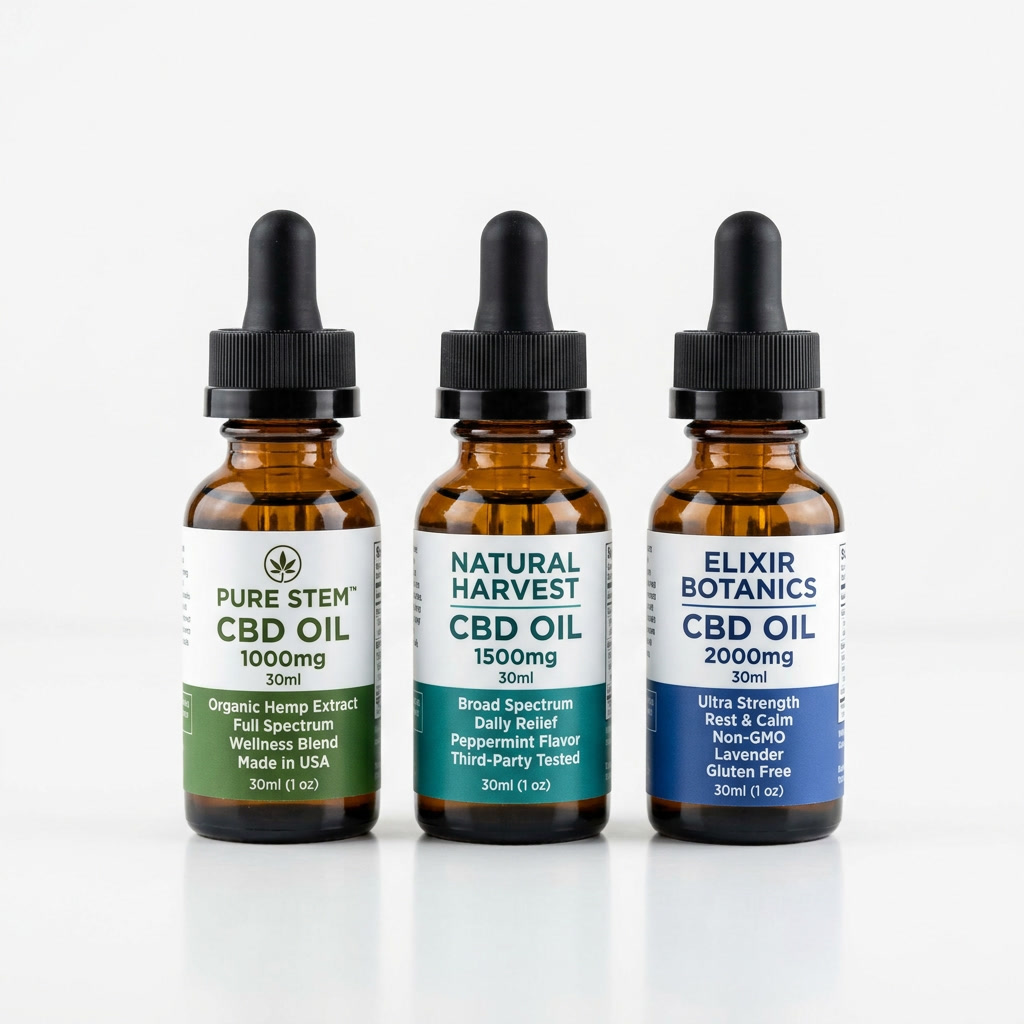
For daily symptom support, many people prefer a CBD oil or tincture, which allows precise dosing. If you struggle with swallowing oils or want a more convenient option, CBD gummies and edibles are a popular choice, though they take longer to kick in. For localized discomfort like pelvic or abdominal pain, a CBD topical or cream can be applied directly to the area.
You can browse our curated selection of CBD oils and tinctures, CBD gummies and edibles, and CBD topicals and creams to see third-party-tested options.
Dosing: Where to Start
There's no established CBD dose for PCOS, because it hasn't been studied. That means the only responsible approach is to start low and go slow. A common starting point is 10 to 20 mg of CBD once daily, taken consistently for a week or two to see how your body responds.
- Beginners: 10 to 20 mg daily
- Moderate users: 25 to 50 mg daily
- Experienced users: 50 to 100 mg daily
Keep a simple journal. Note your dose, the time of day, and any changes in sleep, mood, pain, or stress. Give it at least two to three weeks before judging whether it's helping. If you feel no effect, you can gradually increase by 5 to 10 mg. If you feel drowsy or unwell, reduce the dose or stop.
Safety, Side Effects, and Drug Interactions
CBD is generally well tolerated, but it's not risk-free. Common side effects include fatigue, diarrhea, changes in appetite, and dry mouth. A 2026 review in the British Journal of Clinical Pharmacology examined the pharmacokinetics, efficacy, and safety of low-dose CBD, adding to the picture of its safety profile.
The bigger concern is drug interactions. CBD can affect how your liver processes certain medications, which can raise or lower their levels in your blood. This is especially important if you take blood thinners, antidepressants, seizure medications, or hormonal treatments — and many women with PCOS take hormonal birth control or other medications. A 2026 systematic review in the Journal of Cannabis Research also examined CBD's effects on blood pressure, which is relevant given the cardiovascular risks associated with PCOS.
Because PCOS often involves multiple medications and underlying metabolic issues, it's essential to talk to your doctor before adding CBD. This is not optional — it's the responsible way to approach any supplement when you have a complex condition.
Action Steps: A Sensible Approach
If you're considering CBD for PCOS-related symptoms, here's a realistic, safety-first plan:
1. Talk to your doctor or a pharmacist first, especially if you take any medications
2. Choose a third-party-tested product from a reputable brand
3. Start with a low dose, around 10 to 20 mg daily
4. Track your symptoms and dose in a journal for two to three weeks
5. Increase gradually by 5 to 10 mg only if needed
6. Watch for side effects and drug interactions
7. Reassess honestly — if it's not helping, it's okay to stop
Remember that CBD is a potential complement to your PCOS care, not a replacement for it. Lifestyle changes, medical treatment, and symptom management remain the foundation.
The Bottom Line
The honest answer is that CBD is not a treatment for PCOS, and no credible research says otherwise. What the science does suggest is more modest: CBD may help with some of the symptoms that make PCOS so hard to live with — inflammation, stress and anxiety, sleep, and pain — based on research in related areas. The endocannabinoid system's connection to PCOS is a genuinely promising line of inquiry, but it's early days.
If you're curious, the responsible path is clear: talk to your doctor, choose a high-quality product, start low, and track your results honestly. CBD might be a useful tool in your wellness toolkit. But it's not a cure, and anyone who tells you it is isn't being straight with you. Your health deserves better than hype — it deserves evidence, patience, and care.
Find Your Perfect CBD Product
Take our 2-minute quiz to get personalized recommendations based on your needs.
Take the Quiz →Disclaimer: This article is for informational purposes only and does not constitute medical advice. CBD products are not FDA-approved to treat, cure, or prevent any disease. Always consult with a qualified healthcare professional before starting any new supplement, especially if you have a medical condition or take medications.