CBD for Nausea: What the 2026 Research Actually Says

You know the feeling: the room starts to spin, your throat tightens, and suddenly the only thing in the world is the urgent need to find a bathroom. For the roughly 50 million Americans who deal with nausea from chemotherapy (and CBD for cancer symptom management), pregnancy, motion sickness, or chronic digestive conditions, that moment can arrive daily — and conventional meds don't always stop it.
Enter CBD. The non-intoxicating compound from hemp has exploded in popularity, with around 10.5% of the U.S. population now reporting use of CBD for therapeutic purposes, according to a 2026 review in JAMA. And one of the most common reasons people reach for it is stomach distress — nausea, retching, and that miserable rolling queasiness that won't quit.
But here's the honest truth: CBD for nausea is a story of promising but still-developing science. Some of the most convincing evidence actually comes from combinations of THC and CBD, not CBD alone. In this guide, we'll break down what nausea is, how CBD interacts with your body's nausea-control pathways, what recent clinical research really shows, and — most importantly — how to use it safely and realistically.
What Nausea Actually Is
Nausea isn't a disease. It's a symptom — your brain's alarm system telling you something is wrong. The queasy sensation and the urge to vomit are controlled by a network of brain regions, including the vomiting center, the area postrema (a structure that senses toxins in your blood), and the gut itself.
Researchers now understand that nausea and vomiting are driven by multiple overlapping signals:
- Chemical triggers — toxins, medications, and chemotherapy drugs
- Neural triggers — signals from the stomach and intestines via the vagus nerve
- Vestibular triggers — the inner-ear balance system behind motion sickness
- Psychological triggers — stress, anxiety, and anticipation
That's why a single medication often isn't enough. Nausea can stem from a headache, a bumpy car ride, a chemo infusion, morning sickness, or a flare-up of irritable bowel syndrome (IBS) — and each pathway may respond differently to treatment.
The Endocannabinoid System: Your Body's Built-In Reset Button
The endocannabinoid system (ECS) is a network of receptors, enzymes, and signaling molecules that helps regulate appetite, mood, pain, and — critically for our topic — nausea and vomiting. The system's first discovered signaling molecule, anandamide, was identified in 1992, and research since then has made clear the ECS plays a central role in gut-brain communication.
The ECS works through two main receptor types:
- CB1 receptors — heavily expressed in the brain and gut, and directly involved in suppressing nausea and vomiting
- CB2 receptors — more prominent on immune cells, linked to inflammation
Your body's own endocannabinoids normally help keep the system in balance. When that balance slips — during chemotherapy, pregnancy, or a GI flare — the queasiness can spiral. That's the theory behind using plant-derived cannabinoids like CBD to nudge the system back toward equilibrium. If you're new to this, our deeper dive on the endocannabinoid system is a great starting point.
How CBD Fits Into the Picture
Here's where it gets nuanced. Unlike THC, CBD doesn't strongly activate CB1 receptors — which is exactly why it doesn't produce a high. Instead, CBD works through a mix of indirect pathways that researchers are still untangling:
- 5-HT1A receptor agonism — CBD activates this serotonin receptor, which is involved in reducing nausea and anxiety
- Anandamide modulation — CBD can inhibit the enzyme that breaks down your body's own "bliss molecule," boosting its levels
- Gut-brain axis signaling — CBD influences the communication highway between your digestive tract and your brain
A 2026 chapter in Current Topics in Behavioral Neurosciences by researchers Rock and Parker — leaders in this field — reviews the evidence and concludes that while high-quality human trials remain limited, the pre-clinical data for anti-nausea effects are consistent enough to warrant more clinical study. In plain terms: the mechanism makes sense, but the human proof is still catching up.
What Clinical Research Shows for Chemotherapy-Induced Nausea
Chemotherapy-induced nausea and vomiting (CINV) is where the cannabis research is strongest — and it's worth noting this evidence centers on cannabinoid combinations, not CBD alone.
A landmark 2024 randomized, placebo-controlled Phase II/III trial published in Journal of Clinical Oncology tested an oral capsule containing 2.5mg THC plus 2.5mg CBD in patients whose nausea persisted despite standard antiemetic therapy. The results were meaningful:
- Complete response (no vomiting, no rescue meds) rose from 8% to 24%
- That's an absolute improvement of 16% (95% CI, 4 to 28)
- Similar gains appeared in nausea scores and quality of life
> "THC:CBD is an effective adjunct for chemotherapy-induced nausea and vomiting despite standard antiemetic prophylaxis."
The catch? Side effects were more common — sedation (18% vs 7%), dizziness, and transient anxiety. Importantly, no serious adverse events were attributed to the THC:CBD capsules, and the FDA has long recognized cannabinoids as approved treatment for chemo-induced nausea and vomiting.
A 2026 review in JAMA reinforces this, noting a meta-analysis of randomized trials found prescribed cannabinoids reduced nausea and vomiting from various causes compared with placebo, with a standardized mean difference of −0.29. And a 2025 systematic review in Therapeutics and Clinical Risk Management catalogues how medicinal plant compounds — including cannabinoids — show antiemetic and chemosensitizing potential, though it stresses many remain under-studied in humans.
The takeaway for CBD specifically: pure CBD lacks the strong Phase III backing that THC:CBD combinations have. If you're considering CBD for chemo-related nausea, an honest conversation with your oncologist — and awareness that most high-dose CBD-only products haven't matched the trial data — is essential.
CBD for Pregnancy-Related Nausea
Many pregnant people use CBD for nausea, insomnia, and anxiety — but the science sends a clear warning.
A *2026 study in Cannabis and Cannabinoid Research*** found that even a moderate oral dose of CBD (10 mg/kg/day) given to pregnant mice altered the behavior of their offspring, including increased pain sensitivity in males and impaired cognition in females. The authors note that CBD crosses the placenta and can affect targets important for fetal brain development.
The cautious reading:
- Avoid CBD during pregnancy unless your obstetrician explicitly recommends otherwise
- The safest options for morning sickness remain standard, doctor-approved approaches
- Animal data can't be directly translated to humans, but they're a clear signal to err on the side of caution
We'll say it plainly: for pregnancy-related nausea, the evidence does not currently justify using CBD, and the emerging safety concerns argue against it.
Motion Sickness: An Emerging Area
Motion sickness is a fascinating frontier. Researchers at the University of Sydney's Lambert Initiative designed a randomized, double-blind, placebo-controlled trial to test whether a low dose of CBD (150mg) — the kind actually available over the counter — could reduce motion sickness and cybersickness induced by virtual reality. The protocol, published in BMJ Open in 2024, is one of the few studies to examine low-dose CBD in this context, and its results are still pending.
That's an important reality check: most clinical success with CBD has come at higher doses (300mg+) that outpace typical store-bought products. For motion sickness, the evidence is genuinely preliminary. If you're prone to carsickness, don't count on CBD as your primary defense yet — but stay tuned, because this is exactly the kind of study that could change the guidance.
CBD for GI Conditions and Chronic Nausea
For chronic nausea linked to digestive issues like IBS, the picture is more indirect. CBD's anti-inflammatory effects and its role in gut-brain communication are active research areas, and many users report relief. But well-controlled trials specific to CBD and GI-driven nausea remain scarce.
What we can say with confidence:
- The ECS is deeply involved in gut motility and visceral sensation
- CBD's calming effects may help the anxiety that often worsens nausea
- Evidence for CBD in gut health is building, but still preliminary
For a fuller look at the gut-brain connection, see our guide to CBD for gut health. Just keep expectations realistic: CBD is unlikely to be a silver bullet for IBS nausea, and it should complement — not replace — the care of a gastroenterologist.
CBD vs. Conventional Anti-Nausea Medications
So how does CBD stack up against the meds your doctor might prescribe? Here's an honest comparison:
- Effectiveness — Conventional antiemetics (ondansetron, metoclopramide, NK-1 antagonists) have strong, repeated trial evidence. CBD alone has far weaker evidence; the best cannabinoid data involves THC:CBD combinations.
- Side effects — Conventional meds can cause headache, constipation, or drowsiness. CBD is generally well-tolerated but can cause fatigue, diarrhea, and appetite changes.
- Dependency risk — Low for CBD, though THC-containing products carry their own considerations.
- Speed — Sublingual CBD oils absorb faster than capsules; oral edibles take longer to kick in.
The realistic framing: CBD is best viewed as a complementary option, not a replacement. If your current medication isn't working and you're considering CBD, talk to your doctor about how the two might interact — especially since both are processed by the liver's CYP450 enzymes.
How to Use CBD for Nausea
If you and your doctor decide to try CBD, the product type matters more than you might think.
Why Oils and Tinctures Are Best
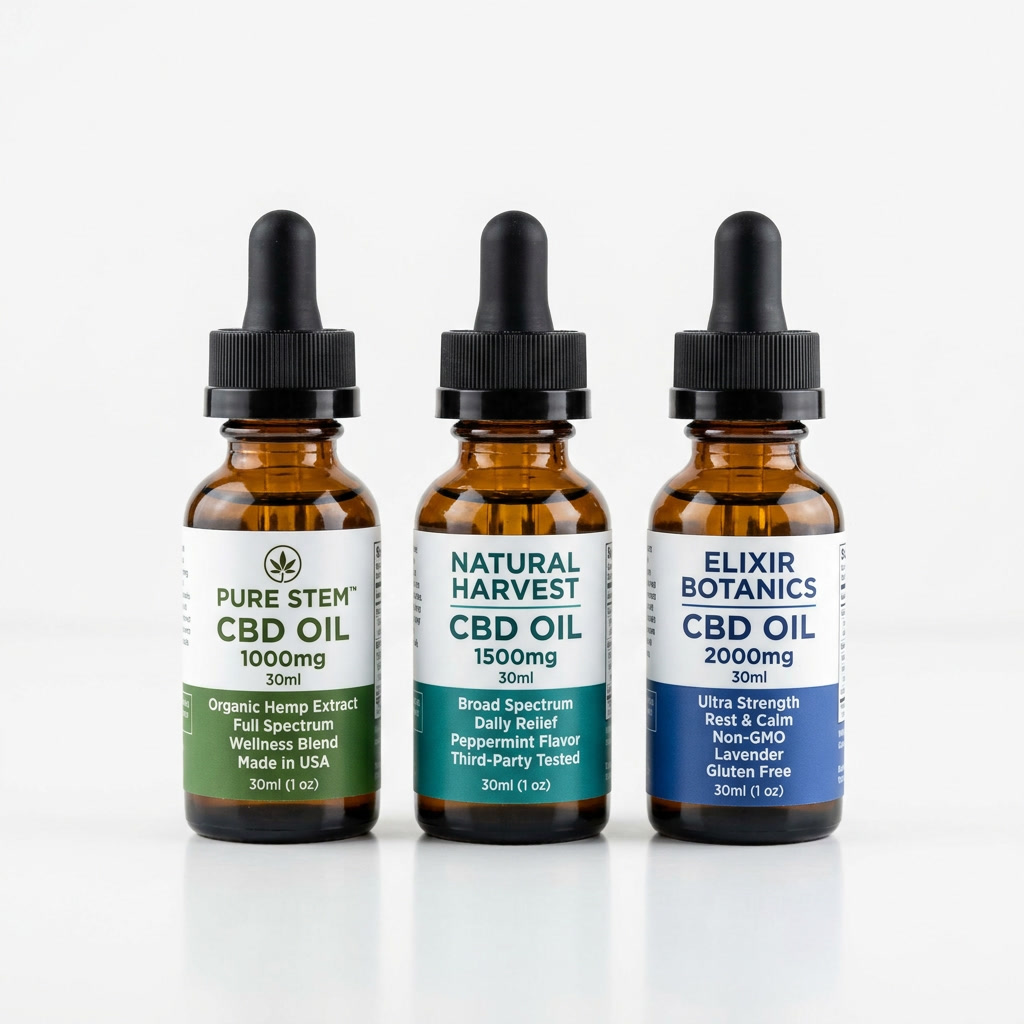
For nausea specifically, sublingual oils and tinctures are your best bet. Here's why:
- Sublingual absorption gets CBD into your bloodstream faster than a gummy you have to swallow and digest
- When you're nauseated, swallowing a big edible can be its own challenge
- Drops under the tongue give you precise, adjustable dosing
Browse our top-rated CBD oils and tinctures if you want options that fit this strategy. Gummies work too, but they're slower and require more forethought — see our CBD gummies collection if you prefer that route.
Dosing Guidance
- Start low: 10–25mg taken sublingually, about 30–60 minutes before a meal or trigger
- Be patient: It can take a week or two of consistent use to gauge effects
- Adjust gradually: Increase by 5–10mg at a time, only if needed
- Keep a journal: Track dose, timing, nausea level, and side effects
Remember, the doses in promising trials (150mg and up) are far higher than typical store products. Start conservative, and don't chase a high dose without medical guidance.
Safety, Side Effects, and Interactions
CBD has a good overall safety record, but it's not risk-free. The most important cautions:
- Liver enzymes — CBD can interfere with the CYP450 system, affecting how your body processes many medications (including blood thinners and some antidepressants)
- Drowsiness and fatigue — especially at higher doses
- GI upset — ironically, some people get nausea or diarrhea from CBD oil itself
- Pregnancy — avoid due to the emerging animal safety concerns noted above
A 2026 review in JAMA highlights the general need for caution with high-potency cannabis products. If you take prescription medications — particularly any that mention grapefruit warnings — have the drug-interaction conversation with your pharmacist before starting CBD.
Realistic Expectations
Let's be direct about what CBD can and can't do for nausea:
What the evidence supports: A plausible mechanism, strong pre-clinical promise, and solid clinical evidence for cannabinoid combinations (especially for chemo-related nausea).
What the evidence is weaker on: Pure CBD-only products for nausea, low-dose over-the-counter products, and specific applications like motion sickness and GI nausea.
The most defensible use is as a gentle, complementary aid — often for the anxiety and discomfort that surround nausea — not as a first-line standalone treatment. If your nausea is severe, persistent, or linked to a medical condition, see a doctor first.
Your Action Plan for Trying CBD for Nausea
Ready to explore CBD for nausea the smart way? Here's a step-by-step plan:
1. Talk to your doctor or pharmacist first — especially if you take other medications, are pregnant, or are undergoing chemotherapy.
2. Choose a sublingual oil or tincture from a brand that publishes third-party lab tests (COAs).
3. Start low — around 10–25mg, taken 30–60 minutes before a trigger moment or meal.
4. Track everything for two weeks — dose, timing, nausea severity, and side effects — in a simple journal.
5. Adjust slowly, by 5–10mg at a time, only if your current dose isn't helping.
6. Reassess honestly — if there's no meaningful improvement after a few weeks, CBD may not be the right tool for your type of nausea.
Bottom Line
CBD is a promising but not-yet-proven option for nausea. The strongest evidence points to THC:CBD combinations for chemotherapy-induced nausea, with pure CBD showing more limited support. The mechanism — through the endocannabinoid system, 5-HT1A receptors, and the gut-brain axis — is compelling, but high-quality human trials of CBD alone are still limited. If you do try it, choose a sublingual oil for faster absorption, start low, and always clear it with your doctor first. For pregnancy-related nausea, the emerging safety data argues strongly against CBD. Used wisely and realistically, CBD can be a helpful complementary tool — but it's not a replacement for proven medical care.
Find Your Perfect CBD Product
Take our 2-minute quiz to get personalized recommendations based on your needs.
Take the Quiz →Disclaimer: This article is for informational purposes only and does not constitute medical advice. CBD products are not FDA-approved to treat, cure, or prevent any disease. Always consult with a qualified healthcare professional before starting any new supplement, especially if you have a medical condition or take medications.