CBD and Autoimmune Disease: What the Latest Research Says About Lupus, Rheumatoid Arthritis, and Immune Modulation

You know that morning better than most people do. The alarm rings, and before your feet even hit the floor, your joints announce themselves, stiff and swollen. Or maybe it's the fatigue that settles over you like a weighted blanket, or the flare that turns a normal Tuesday into a fog of pain. If you live with an autoimmune condition like lupus or rheumatoid arthritis, your immune system has essentially become an unreliable employee, turning its power inward and attacking your own healthy tissue. You've likely tried the standard options, and you're now asking a quieter question: could CBD help my immune system calm down?
It's a fair question. Across social media, CBD is marketed as a cure-all, but the honest answer is more nuanced. The emerging science on CBD and the immune system is genuinely interesting, but it's also early. Recent studies suggest CBD may help modulate inflammation and calm certain immune responses, which could be relevant for conditions like lupus and rheumatoid arthritis. But CBD is not a replacement for the medication your doctor prescribed.
Let's dig into what the research actually says, what it means for people living with autoimmune disease, and how to approach CBD thoughtfully.
The Endocannabinoid System and Your Immune System
To understand why anyone even thinks CBD could matter for autoimmunity, you need to meet your endocannabinoid system (ECS). It's a widespread signaling network made up of receptors, enzymes, and molecules your body makes naturally. Most people first hear about it in the context of mood, sleep, and pain, but the ECS is deeply woven into immune function.
One receptor in particular matters here: the CB2 receptor, which is expressed heavily by immune cells. When something triggers inflammation, your body's natural endocannabinoids can step in to help keep the response in check. CBD doesn't bind to these receptors the way THC does, but it influences the system in complex, indirect ways — which is exactly why researchers have become so curious about its potential for conditions where the immune system is out of balance.
If you're new to this, our explainer on the endocannabinoid system walks through the whole mechanism in plain language.
What Autoimmune Disease Actually Is
At its core, an autoimmune disease happens when the immune system loses its ability to distinguish self from foreign. Instead of defending you against invaders, it starts targeting your own cells and tissues.
- Rheumatoid arthritis (RA): The immune system attacks the lining of the joints, causing pain, swelling, and eventually joint damage.
- Lupus (SLE): A systemic condition where the immune system can affect the joints, skin, kidneys, blood cells, and more.
- Other conditions: Many others (type 1 diabetes, multiple sclerosis, thyroid conditions) share the same underlying theme of misfired immune activity.
In most cases, inflammation is the common thread — and inflammation is precisely where CBD has attracted the most scientific interest.
CBD as an Immune Modulator: The Core Idea
One of the most useful concepts to understand is immunomodulation — the idea of adjusting or balancing an immune response rather than simply switching it off. That's an important distinction, because you don't want your immune system disabled entirely. You want it to stop attacking your own tissue while still protecting you from real threats.
A comprehensive 2025 review in the Saudi Pharmaceutical Journal framed exactly this possibility, examining "cannabidiol as an immune modulator." The review laid out how CBD appears to influence a range of immune cells and inflammatory pathways, reinforcing the idea that it's not a simple on/off switch but a complex balancing act.
> The emerging picture is that CBD isn't a blunt hammer on immunity — it's more like a dimmer switch that can help turn down exaggerated inflammatory and immune responses.
The idea isn't new in the broadest sense, but the recent quality and scope of reviews have sharpened the picture considerably.
Recent Evidence: Rheumatoid Arthritis
Rheumatoid arthritis is where the CBD research is arguably most concentrated. Several high-quality studies published in 2023–2025 point in a promising direction.
High-CBD Extract Targets Joint Inflammation
In 2025, a study in Frontiers in Immunology looked at a high-CBD extract (referred to as CBD-X) and how it modulated inflammation and immune cell activity in rheumatoid arthritis. The work suggests that concentrated CBD may influence immune cell behavior in a way that could be relevant to joint inflammation.
A Specialized Emulsion for Better Absorption
Not all CBD is absorbed equally — and that matters. A 2024 paper in Cannabis and Cannabinoid Research explored an oil-in-water CBD emulsion designed to improve absorption, specifically for rheumatoid arthritis. Formulation and delivery matter: a product that absorbs well may behave differently in the body than one that doesn't.
Cannabigerol (CBG) Gets Involved Too
CBD isn't the only non-psychoactive cannabinoid with promise. A 2023 study in the International Journal of Molecular Sciences looked at the anti-inflammatory effects of cannabigerol (CBG) in rheumatoid arthritis synovial fibroblasts — the cells lining the joint. It adds to the growing picture that multiple cannabinoids may offer anti-inflammatory value, not just CBD alone.
A Common Thread: Autophagy
There's also intriguing mechanistic research connecting the dots between inflammation, cellular health, and autoimmunity. A 2024 study in the Journal of Autoimmunity found that PPARG-mediated autophagy — a cellular "cleanup" process — helped alleviate inflammation in rheumatoid arthritis. This matters because it points to the kind of biological pathway researchers are now trying to influence with therapeutic tools, including CBD.
The Evidence Base for Lupus
Lupus is a harder case than RA when it comes to CBD research. Unlike rheumatoid arthritis, which has a handful of focused studies, direct CBD-lupus clinical data is still thin. That's an honest limitation worth naming.
But the broader picture is still relevant. A 2026 clinical literature review in Revue de Médecine Interne examined the clinical immunomodulatory effects of cannabinoids in autoimmune diseases, and it explicitly mentions systemic lupus erythematosus as one of the conditions of interest. The review noted that while preliminary data are promising, studies on the clinical effects in autoimmune diseases remain limited — and it called for more research.
> The available data point to meaningful effects on immune activity, but the clinical evidence in most autoimmune diseases is still emerging — more human studies are needed before we can draw strong conclusions.
So for lupus specifically, the honest framing is: the mechanisms that could help — balancing inflammation and immune responses — are the same ones being studied, but the direct evidence for lupus in humans is not yet there. Manage expectations accordingly.
The Gut-Immune Connection: A New Frontier
One of the most interesting recent developments goes through your gut. A 2025 study in Phytomedicine found that cannabidiol regulates L-carnitine and butyric acid metabolism by modulating the gut microbiota.
Why should you care? Because your gut microbiome and your immune system are deeply connected. Butyric acid, in particular, is a short-chain fatty acid with known anti-inflammatory properties. The idea that CBD could shape inflammation partly through the gut opens up a whole layer of the story — and suggests that supporting digestive and microbial health might be part of how CBD could help.
How CBD Actually Interacts With Autoimmunity
Let's be concrete about the main biological mechanisms researchers believe CBD may be acting through:
- Reducing pro-inflammatory cytokine signaling: Cytokines are the immune system's chemical messengers. When the immune system goes into overdrive, it floods the body with pro-inflammatory cytokines. CBD may help dampen that signaling.
- Calming activated immune cells: Recent work suggests CBD may influence the activity of immune cells in ways that reduce damage to healthy tissue.
- Influencing the ECS: By interacting with endocannabinoid signaling, CBD may help the body regulate its own immune tone.
- Gut modulation: Through effects on the gut microbiome, CBD might influence the immune system more broadly, given the strong gut-immune axis.
Again, these are the plausible mechanisms being researched — not proven cures. They do, however, explain why so many people with autoimmune conditions are curious about CBD.
What the Evidence Does (and Doesn't) Support
Let me be direct about the current state of the science, because it deserves honesty:
What recent research supports:
- CBD (and some other cannabinoids) shows anti-inflammatory activity in preclinical and some clinical contexts.
- CBD acts as an immune modulator, not a simple immunosuppressant.
- Early RA research is the most promising, with several 2023–2025 studies exploring immune and joint-related outcomes.
- The gut–immune link offers a plausible additional pathway.
What it does NOT yet support:
- The claim that CBD is a cure for any autoimmune disease — that's not supported by any research.
- CBD replacing prescription medication — no evidence base supports this.
- Strong human data specifically for lupus — the direct evidence is still thin.
This is why you'll notice I've been careful with words like "may," "appear," and "research suggests." That's not wishy-washy — it's accurate.
How to Think About It If You Have an Autoimmune Condition
If you're considering CBD alongside your existing treatment, the most important thing is to get the mindset right.
- It's complementary, not a replacement. Nothing in the recent research suggests CBD is a substitute for disease-modifying or immunosuppressive medications. Those drugs have clinical evidence — much more so than CBD.
- Check for interactions. CBD can interact with certain medications, including some that people with autoimmune conditions commonly take. This is a real consideration, not a formality.
- Start low and go slow. As with any supplement, dosing matters. If your doctor signs off, starting with a modest amount and tracking carefully is the sensible approach.
- Watch for your specific triggers. Every autoimmune condition has its own quirks — a dose or timing that helps one person may differ for another.
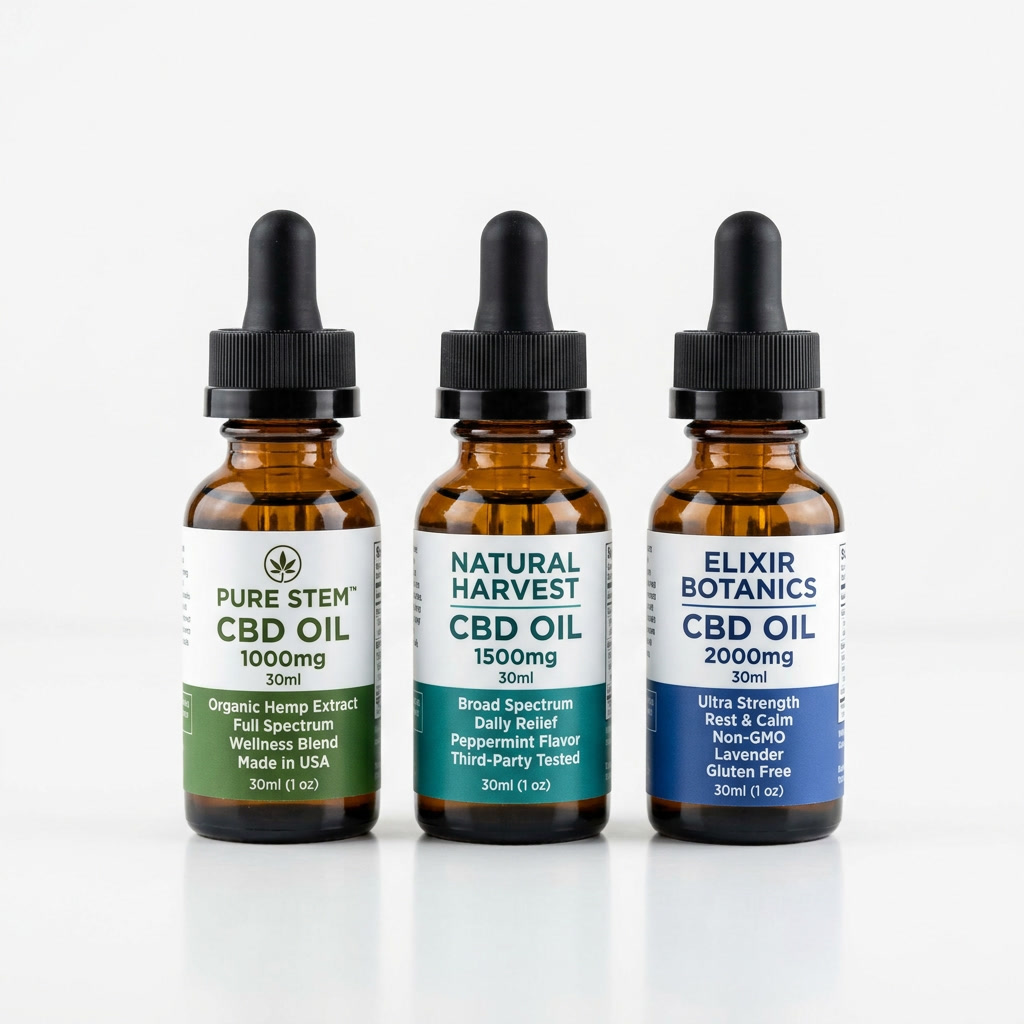
If you're weighing which format might suit you, both CBD oils and tinctures and CBD capsules and softgels are popular options — one lets you fine-tune dosing drops by drop, the other is pre-measured and easy to integrate into a routine. And if your main goal is addressing inflammation more broadly, our guide to CBD for inflammation goes deeper into that angle.
If you decide to try it, our CBD dosage guide is a practical starting point for finding a sensible place to begin.
Action Steps
1. Talk to your care team first. This is non-negotiable — especially if you're on medications, because of potential interactions.
2. Research the product you're considering. Choose a CBD oil or capsule with third-party lab tests. Quality and accurate labeling matter a lot in this industry.
3. Start low. Begin with a modest dose and give it time. CBD builds up, so don't expect overnight.
4. Track your symptoms. Keep a simple journal of dose, timing, pain, energy, and flare symptoms for a few weeks so you can see real patterns.
5. Consider inflammation broadly. If your interest is really about inflammation (not a specific diagnosis), understanding CBD for inflammation can help you set realistic expectations.
6. Reassess with your doctor. Check back in after a few weeks — adjust dose or stop based on what you actually experienced.
Bottom Line
CBD is genuinely fascinating territory for autoimmune disease, and the 2023–2026 research has sharpened our understanding of how it may modulate the immune system and calm inflammation. The evidence is most encouraging for inflammation, the gut-immune connection, and some of the mechanisms behind conditions like rheumatoid arthritis. But the honest truth is that CBD is a complementary tool, not a replacement for the medication you're already on — and for lupus specifically, the direct evidence is still thin.
If CBD is something you're curious about, that's reasonable. Just approach it with your doctor, with realistic expectations, and with your existing treatment firmly intact. That's the path that keeps you both informed and safe — and the CBD that's worth exploring, the CBD you can pursue without giving up what's already working.
Find Your Perfect CBD Product
Take our 2-minute quiz to get personalized recommendations based on your needs.
Take the Quiz →Disclaimer: This article is for informational purposes only and does not constitute medical advice. CBD products are not FDA-approved to treat, cure, or prevent any disease. Always consult with a qualified healthcare professional before starting any new supplement, especially if you have a medical condition or take medications.