Can CBD Help With Tension Headaches? What the 2026 Research Says

It starts the same way every time. The day has been long, your shoulders are knotted, and by late afternoon there it is — that dull, band-like pressure wrapping around your forehead and the back of your neck. You reach for the ibuprofen, again, and wonder if there's a gentler option that actually works. If you've been curious about CBD for tension headaches, you're not alone. Tension-type headaches are the most common headache disorder in the world, and millions of people now ask whether a daily oil or a targeted topical could take the edge off without the side effects of conventional painkillers.
Here's the honest picture: the science is genuinely promising, but more nuanced than the marketing suggests. A 2026 review in Cells highlights the endocannabinoid system as a key regulator of the neural, vascular, and immune processes behind headache disorders, including tension-type headache. Yet most of the direct evidence so far comes from animal models and migraine studies cluster headache research, not large human trials on tension headaches specifically.
This guide breaks down what tension headaches are, how CBD interacts with your body's pain pathways, what the latest research says, how to dose it, and which product types are worth trying.
What Is a Tension Headache, Exactly?
Tension-type headache is the most common form of headache, affecting an estimated 40% of people at some point in their lives. Unlike migraines, which typically involve throbbing pain on one side, nausea, and sensitivity to light and sound, tension headaches feel different.
The classic description is a pressing or tightening sensation, often described as a band squeezing around the head. The pain is usually mild to moderate, bilateral (both sides), and doesn't worsen with routine physical activity. It can last anywhere from 30 minutes to several days.
There are two main types:
- Episodic tension-type headache: Occurs fewer than 15 days per month, often triggered by stress, poor posture, eye strain, or lack of sleep
- Chronic tension-type headache: Occurs 15 or more days per month for at least three months, frequently linked to ongoing muscle tension in the neck, shoulders, and jaw
The exact cause isn't fully understood, but researchers believe it involves muscle tension in the head and neck combined with heightened pain sensitivity in the central nervous system. That's where the endocannabinoid system becomes interesting.
The Endocannabinoid System: Your Body's Built-In Pain Regulator
To understand how CBD might help, you first need to know about the endocannabinoid system (ECS). Discovered in the early 1990s, the ECS is a widespread signaling network involved in regulating pain, mood, sleep, appetite, and immune function.
The ECS works through two main receptor types:
- CB1 receptors: Found mainly in the brain and central nervous system, involved in pain signaling and mood
- CB2 receptors: Found mainly on immune cells, involved in inflammation and immune response
A 2026 review in Cells describes how the ECS modulates trigeminovascular activity, descending pain control, and neuroimmune sensitization — all processes central to headache pathophysiology. The review notes that ECS activation can suppress trigeminal nerve firing, reduce the release of calcitonin gene-related peptide (CGRP), and attenuate neurogenic inflammation.
> "The endocannabinoid system (ECS) has emerged as a key regulator of neural, vascular, and immune processes central to headache pathophysiology."
This matters because tension headaches involve sensitized pain pathways. If CBD can help calm that overactive signaling, it may offer a mechanism for relief that's different from simply blocking pain like an NSAID does.
How CBD Interacts With Pain Pathways
CBD (cannabidiol) is one of over 100 cannabinoids found in the cannabis plant. Unlike THC, it's non-intoxicating — it won't get you high. But it does interact with the ECS in complex ways.
Here's what researchers believe CBD does:
- Modulates CB1 and CB2 receptors indirectly, rather than binding strongly like THC does
- Inhibits the breakdown of endocannabinoids like anandamide, letting your body's own "bliss molecule" stick around longer
- Reduces inflammation through effects on immune cells and inflammatory signaling
- Interacts with serotonin and other receptors involved in pain perception
The Cells review highlights that pharmacological strategies targeting endocannabinoid degradation — such as inhibiting the enzymes FAAH and MAGL — consistently reduce headache-like behaviors across diverse models. This suggests that boosting your body's natural endocannabinoid tone could be a promising approach for headache relief.
The key takeaway: CBD doesn't just mask pain. It appears to work at the level of the signaling systems that generate and amplify pain in the first place.
What the Research Actually Says
Here's where we need to be honest. The direct evidence for CBD and tension headaches specifically is still thin. Most of the strongest recent research focuses on migraine models and general pain. But that research is still highly relevant to understanding how CBD might help — and if you're dealing with migraines specifically, our CBD for migraines guide and our deep dive on CBD and migraine research cover that evidence in detail.
Preclinical Evidence (Animal Studies)
A 2025 study in Cephalalgia found that a combination of CBD and THC at a 100:1 ratio rescued light aversion and spontaneous pain caused by centrally administered CGRP in mice — a key migraine trigger pathway. Another 2025 Cephalalgia study found that combined CBD and Δ9-THC alleviated migraine-like symptoms in mice.
These are animal studies, so we can't directly translate the results to humans. But they demonstrate that cannabinoids can influence the CGRP pathway, which is also implicated in tension-type headache pathophysiology.
Human Evidence
The human data is more limited but growing. A 2026 randomized, double-blind, placebo-controlled crossover trial in Headache examined vaporized cannabis versus placebo for acute migraine. While this is migraine-specific, it's one of the most rigorous recent human trials on cannabis and headache.
For tension headaches specifically, we don't yet have large randomized controlled trials. That's an important caveat. Some research suggests CBD may help with pain and tension, but the evidence base for tension-type headache is still emerging.
What This Means for You
The honest summary is this:
- The mechanism is plausible — CBD targets pain and inflammation pathways relevant to tension headaches
- The animal evidence is encouraging — cannabinoids reduce headache-like behaviors in models
- The human evidence is limited — we need more trials specifically on tension-type headache
So CBD for tension headaches is a reasonable thing to try, but it's not a proven, guaranteed treatment. Approach it as a complementary tool, not a replacement for medical care.
Dosing: Where to Start
There's no one-size-fits-all CBD dose for tension headaches. The right amount depends on your body weight, metabolism, the product's potency, and your individual sensitivity. But there are sensible starting points — and our CBD dosage guide walks through the full process of finding your effective dose.
General Dosing Guidelines
- Beginners: 10-20mg once daily
- Moderate users: 25-50mg daily
- Experienced users: 50-100mg daily
For tension headaches, many people find that a moderate dose taken at the first sign of tension works better than a tiny daily dose. But consistency matters too — some users report that regular daily use helps prevent headaches from building up in the first place.
How to Find Your Dose
1. Start with 10-20mg once daily
2. Track your response for 2-3 weeks
3. Increase by 5-10mg if needed
4. Find your minimum effective dose
> Pro Tip: Keep a simple CBD journal. Note the dose, time, product, and how your headache feels an hour later. Within two weeks, you'll spot patterns that help you dial in the right amount.
Product Types: Oils vs. Topicals
When it comes to tension headaches, you have two main product categories to consider — and they work differently.
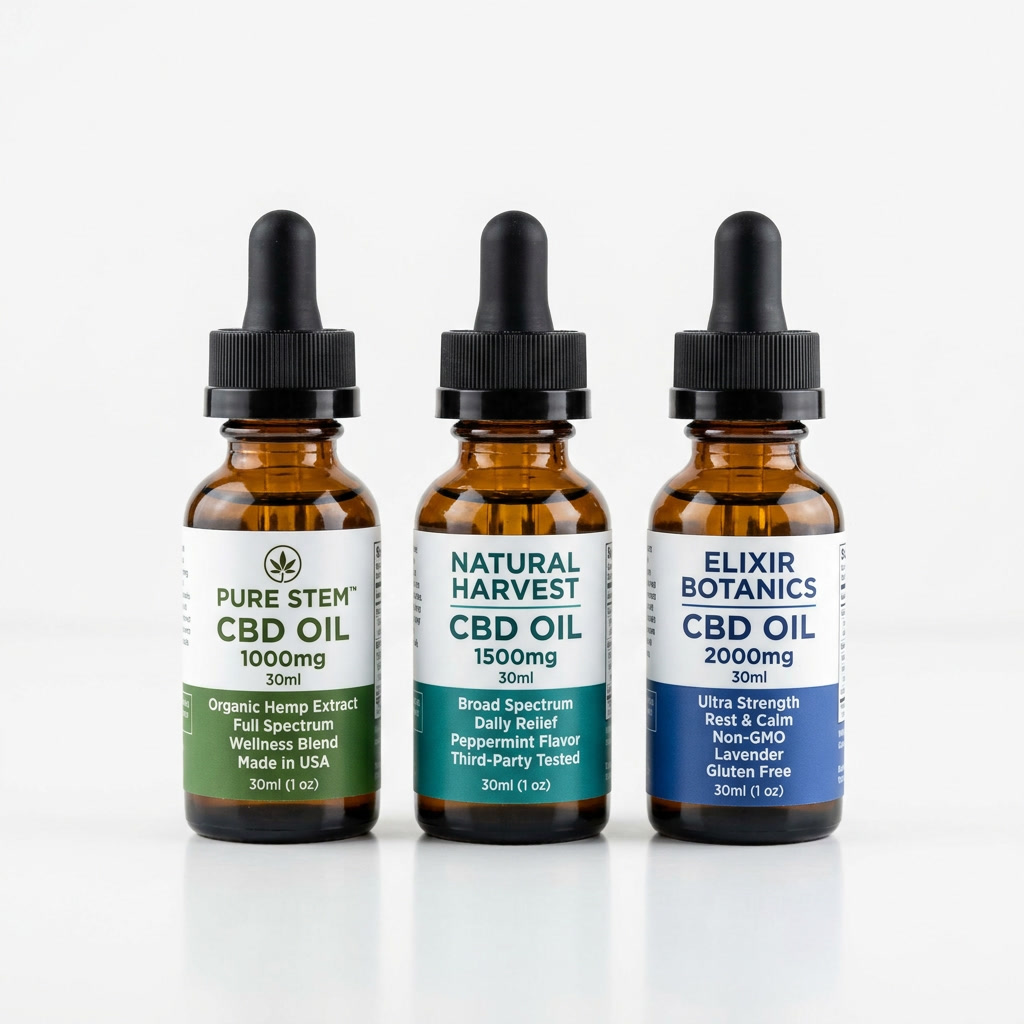
CBD Oils and Tinctures
Oils are the most popular choice for headaches because they deliver CBD systemically. You place a few drops under your tongue, hold for 60-90 seconds, and the CBD absorbs into your bloodstream.
Why oils work for tension headaches:
- Full-body effect — addresses both the pain and the underlying tension
- Fast absorption — sublingual delivery gets CBD into your system quickly
- Flexible dosing — easy to adjust your dose drop by drop
If you're looking for a systemic option, browse our CBD oils and tinctures to see what's available.
CBD Topicals
Topicals are applied directly to the skin and work locally. For tension headaches, that means rubbing a balm or cream into your neck, shoulders, and temples.
Why topicals work for tension headaches:
- Targeted relief — applied exactly where the tension lives
- No systemic effects — CBD stays mostly in the skin and underlying tissue
- Fast onset — relief can begin within minutes
A 2026 pilot study in Cannabis and Cannabinoid Research tested a CBD-containing topical for localized pain in 30 women with fibromyalgia. Participants applied it to a painful area every 8 hours for 12 weeks. The results were encouraging: 60% achieved a clinically meaningful reduction in localized pain, with no adverse events reported.
> "Localized pain showed a significant and clinically meaningful reduction at 4 weeks, sustained at 12 weeks (60% achieving MCID)."
While fibromyalgia isn't the same as tension headache, this study supports the idea that CBD topicals can meaningfully reduce localized muscle and nerve pain — which is exactly the kind of pain involved in tension headaches.
For a targeted option, check out our CBD topicals collection.
Which Should You Choose?
- Choose an oil if your tension headaches are frequent, stress-related, or you want a systemic approach
- Choose a topical if your headaches are tied to neck and shoulder tension, or you want fast, localized relief
- Consider both — many people use a daily oil for prevention and a topical for acute flare-ups
Safety and Side Effects
CBD has a generally favorable safety profile, but it's not completely without side effects. A 2026 systematic review and meta-analysis in Annals of Medicine and Surgery examined the safety of CBD versus placebo in healthy adults, pooling data from four randomized controlled trials involving 269 participants.
The findings were reassuring but worth noting:
- Diarrhea was significantly more common with CBD (relative risk of 5.85)
- There was a trend toward increased abdominal pain and headache, though not statistically significant
- Fatigue, dizziness, and upper respiratory infections showed no significant differences
> "While CBD appears safe for short-term use in healthy adults, gastrointestinal side effects, particularly diarrhea, should be monitored."
Who Should Be Cautious
CBD can interact with certain medications because it affects liver enzymes that metabolize drugs. Talk to your doctor before using CBD if you take:
- Blood thinners (like warfarin)
- Antidepressants or anti-anxiety medications
- Seizure medications
- Certain blood pressure medications
Also, if you're pregnant, nursing, or considering CBD for a child, consult a healthcare provider first. And always choose products with third-party lab testing to verify potency and purity — the CBD market is still loosely regulated.
The Bottom Line
CBD shows genuine promise for tension headaches, but the evidence is still evolving. The mechanism is sound — CBD targets the pain and inflammation pathways involved in tension-type headache, and recent research supports its role in modulating headache-related signaling. The animal data is encouraging, and early human studies on CBD topicals for localized pain are positive.
But here's the reality: we don't yet have large, definitive human trials on CBD specifically for tension headaches. So treat it as a complementary tool — something worth trying alongside good sleep, stress management, hydration, and proper posture, not a magic cure.
If you decide to try it, start with a moderate dose of a high-quality oil, or apply a topical to your neck and shoulders at the first sign of tension. Track your results, adjust slowly, and give it a few weeks before judging. And if your headaches are severe, frequent, or worsening, see a doctor — persistent headaches can sometimes signal something more serious.
Ready to explore your options? Start with a CBD oil for a systemic approach, or a CBD topical for targeted relief. Your head — and your shoulders — will thank you.
Find Your Perfect CBD Product
Take our 2-minute quiz to get personalized recommendations based on your needs.
Take the Quiz →Disclaimer: This article is for informational purposes only and does not constitute medical advice. CBD products are not FDA-approved to treat, cure, or prevent any disease. Always consult with a qualified healthcare professional before starting any new supplement, especially if you have a medical condition or take medications.