CBD for Pets: What Dog and Cat Owners Need to Know in 2026
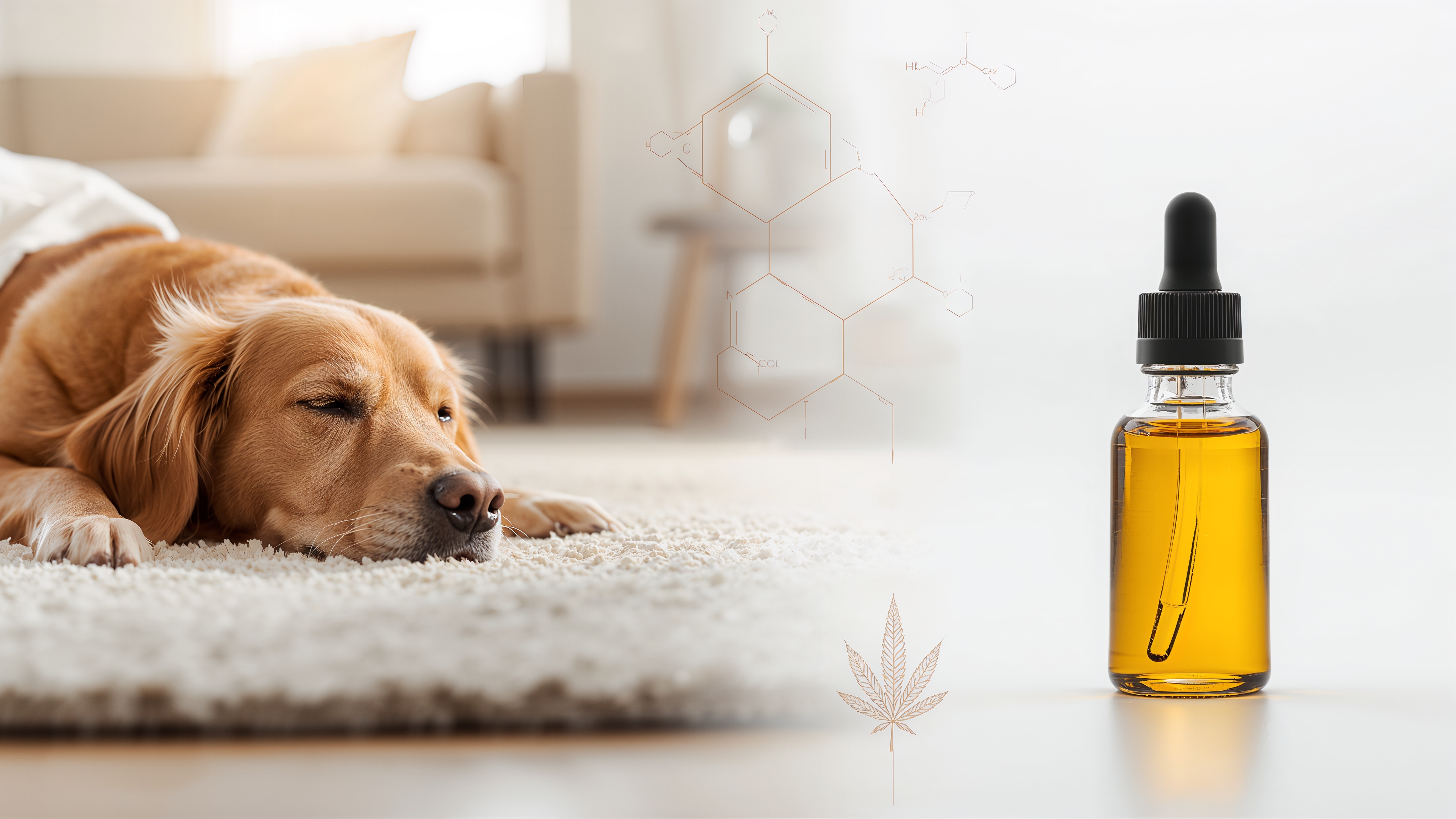
Your dog is pacing during the thunderstorm again. Your cat won't stop grooming that one paw raw. Your aging lab struggles to climb the stairs, and it breaks your heart every time.
You've seen the products everywhere — CBD oils, treats, even pet-specific tinctures at your local pet store. The claims are bold: calms anxiety, reduces pain, helps with sleep, even supports cancer treatment.
But here's what most pet CBD companies won't tell you upfront: the science is still catching up to the marketing.
If you're considering CBD for your pet — whether it's for separation anxiety, arthritis, seizures, or general wellness — you deserve honest information about what actually works, what's still uncertain, and how to keep your furry family member safe.
Let's separate the research from the hype.
---
How CBD Works in Dogs and Cats
Your pet has an endocannabinoid system (ECS) — just like humans do. This biological network helps regulate mood, pain, appetite, sleep, and immune function. The ECS uses endocannabinoids (compounds your body naturally produces) to send signals through cannabinoid receptors.
There are two main receptor types:
- CB1 receptors — Mostly in the brain and nervous system
- CB2 receptors — Primarily in immune cells and peripheral tissues
CBD doesn't directly bind to these receptors the way THC does. Instead, it modulates them — influencing how your pet's body responds to its own endocannabinoids and can reduce inflammatory signaling.
What the Research Shows
A 2024 Cornell University study examined CBD's effects on dogs with osteoarthritis. Researchers found that dogs receiving CBD showed significant improvements in pain scores and mobility compared to placebo, with no serious side effects reported.
A 2026 review published in Frontiers in Veterinary Science analyzed 29 studies on CBD for pets and found promising evidence for:
- Pain management (especially arthritis and neuropathic pain)
- Anxiety reduction (separation anxiety, noise phobias)
- Seizure control (adjunct treatment for epilepsy)
- Anti-inflammatory effects (skin conditions, digestive issues)
However, the review also noted significant limitations: small sample sizes, varying doses, short study durations, and industry funding in many trials.
---
What Conditions Does CBD Actually Help?
Not all pet health issues respond equally to CBD. Here's what the evidence says about specific conditions.
✅ Separation Anxiety and Noise Phobias
Evidence Strength: Moderate
Anxiety is one of the most common reasons pet owners try CBD. A 2025 Cornell study gave dogs CBD chews before a stressful event (car ride or thunderstorm simulation). 83% showed decreased stress-related behaviors — less pacing, whining, and destructive behavior.
How it works: CBD influences serotonin receptors and reduces cortisol (stress hormone) production. For pets with separation anxiety, noise phobias (fireworks, thunderstorms), or travel stress, CBD may take the edge off without sedating them.
What to expect: Effects typically begin within 30-60 minutes and last 4-8 hours. Best used proactively (before the stressful event) rather than reactively.
✅ Arthritis and Joint Pain
Evidence Strength: Moderate-Strong
This is where CBD shines brightest for pets. Multiple studies show CBD's anti-inflammatory properties can reduce joint pain and improve mobility in dogs with osteoarthritis.
The 2024 Cornell osteoarthritis study found that dogs receiving 2mg CBD per kg of body weight twice daily showed:
- Significant pain reduction (owner-reported)
- Improved activity levels (objectively measured via activity monitors)
- No adverse effects after 6 weeks of treatment
How it works: CBD reduces inflammatory cytokines that sensitize pain receptors in joints. It also modulates pain signaling in the spinal cord and brain.
What to expect: Unlike NSAIDs (like carprofen or meloxicam), CBD doesn't work immediately. Most owners report noticeable improvements after 2-4 weeks of consistent dosing. Best for chronic, daily use rather than "as needed."
✅ Seizures and Epilepsy
Evidence Strength: Limited but Promising
This is the most studied use of CBD in humans (FDA-approved Epidiolex for epilepsy). For dogs, research is earlier-stage but encouraging.
A 2019 Colorado State University study examined dogs with drug-resistant epilepsy. Dogs receiving CBD in addition to their regular seizure medication had significantly fewer seizures than the placebo group. However, response was variable — some dogs improved dramatically, others not at all.
Important: CBD should never replace prescription anti-seizure medication without veterinary supervision. It's used as an adjunct (add-on) therapy, not a replacement.
⚠️ Cancer Support
Evidence Strength: Very Limited (Mostly Preclinical)
Some pet owners use CBD for pets undergoing cancer treatment. The theory: CBD has anti-inflammatory properties, may reduce pain, and some lab studies suggest it could have anti-tumor effects.
The reality: No clinical trials in pets with cancer exist yet. Lab studies (in cells and mice) show CBD can induce apoptosis (cell death) in some cancer cell lines, but this doesn't necessarily translate to live animals.
What CBD may help with during cancer treatment:
- Pain management
- Nausea and appetite stimulation
- Anxiety reduction
- Inflammation
What CBD won't do: Cure cancer or replace conventional treatment. If a company claims CBD "treats" or "cures" cancer in pets, that's a red flag.
❓ Skin Conditions and Allergies
Evidence Strength: Anecdotal
Many pet owners use CBD topicals (balms, sprays) for hot spots, allergic reactions, or lick granulomas. The theory: CBD's anti-inflammatory properties could reduce itching and promote healing.
The problem: No peer-reviewed studies specifically examine CBD topicals for pet skin conditions. Anecdotal reports are positive, but placebo effect (or concurrent treatments) could explain improvements.
Consider trying if: Your pet has localized skin issues and conventional treatments haven't worked. Topicals are low-risk if the product is pet-safe.
---
CBD vs. Traditional Pet Medications
How does CBD compare to what vets typically prescribe?
Comparison based on veterinary clinical guidelines and peer-reviewed studies
The advantage of CBD: Better safety profile than pharmaceuticals, particularly for long-term use. The disadvantage: Less predictable effectiveness, slower onset, and limited dosing standardization.
For many pet owners, CBD isn't a replacement for conventional medication — it's a complementary therapy that allows lower doses of pharmaceuticals or provides support between doses.
---
Dosing CBD for Pets: What Actually Works
This is where things get complicated. There's no universally agreed-upon CBD dose for pets. Studies use wildly different amounts, and product concentrations vary dramatically.
General Dosing Guidelines
Based on veterinary studies and clinical experience:
For General Wellness:
- Start: 0.1-0.2 mg CBD per kg of body weight, once daily
- Example: 10kg dog = 1-2mg CBD daily
For Anxiety:
- Start: 0.2-0.5 mg CBD per kg, 30 minutes before stressful event
- Example: 10kg dog = 2-5mg CBD before thunderstorm
For Pain/Arthritis:
- Start: 0.5-1 mg CBD per kg, twice daily
- Example: 10kg dog = 5-10mg CBD morning and evening
- Studies showing pain relief often use 2mg per kg twice daily
For Seizures:
- Start: 2-5 mg CBD per kg, twice daily (under veterinary supervision)
- Example: 10kg dog = 20-50mg CBD twice daily
- Requires much higher doses than other conditions
The Titration Method (Recommended)
1. Start low — Begin at the lowest dose for your pet's condition
2. Wait 5-7 days — Give CBD time to build up in their system
3. Observe carefully — Track behavior, pain levels, sleep, appetite
4. Increase slowly — Raise dose by 25-50% if no improvement
5. Find the sweet spot — Stop increasing once you see benefits
Every pet metabolizes CBD differently. A dose that works for one dog might underdose or overdose another. The goal is the minimum effective dose — the lowest amount that produces noticeable benefits.
Delivery Methods Matter
How you give CBD to your pet affects absorption and effectiveness:
Oils/Tinctures (Sublingual or with food):
- Onset: 30-60 minutes
- Duration: 6-8 hours
- Best for: Consistent daily dosing, adjustable amounts
- Most studied method in veterinary research
Treats/Chews:
- Onset: 45-90 minutes (slower due to digestion)
- Duration: 6-8 hours
- Best for: Anxious pets who resist liquid, convenient dosing
- Watch for: Added ingredients (some treats have low CBD content)
Topicals (Balms, Sprays):
- Onset: 15-30 minutes
- Duration: 2-4 hours
- Best for: Localized pain, skin conditions
- Limitation: Not effective for systemic issues (anxiety, seizures)
Capsules:
- Onset: 60-90 minutes
- Duration: 8-10 hours
- Best for: Precise dosing, long-lasting effects
- Limitation: Hard to give to some pets
For most conditions, oils/tinctures offer the best balance of absorption, dosing flexibility, and research backing.
---
Safety and Side Effects
CBD is generally well-tolerated by pets, but it's not risk-free.
Common Side Effects (Usually Mild)
Based on veterinary studies and owner reports:
- Sleepiness/Drowsiness — Most common, especially at higher doses
- Increased thirst — Pets may drink more water
- Dry mouth — Decreased saliva production
- Lowered blood pressure — Can cause temporary lightheadedness
- Diarrhea or soft stools — Usually resolves within a few days
These side effects are typically dose-dependent — they improve when you reduce the dose.
Drug Interactions (Important!)
CBD is metabolized by the cytochrome P450 enzyme system in the liver — the same system that processes many prescription medications. CBD can inhibit these enzymes, potentially increasing blood levels of other drugs.
Medications that may interact with CBD:
- NSAIDs (carprofen, meloxicam) — Increased risk of GI side effects
- Anti-seizure meds (phenobarbital, potassium bromide) — May require dose adjustment
- Steroids (prednisone) — Potential for increased side effects
- Sedatives (trazodone, gabapentin) — Additive sedation
- Heart medications — Potential for altered blood levels
This doesn't mean your pet can't use CBD with these medications — it means you should talk to your vet first. They may recommend starting with lower doses, monitoring blood work, or adjusting timing to minimize interactions.
When NOT to Use CBD
Avoid CBD or use extreme caution if your pet:
- Is pregnant or nursing (no safety data)
- Has liver disease (CBD is metabolized by the liver)
- Takes multiple medications (higher interaction risk)
- Is under 1 year old (limited safety data for puppies/kittens)
---
How to Choose a Quality Pet CBD Product
The pet CBD market is poorly regulated. A 2025 FDA study found that only 31% of pet CBD products were accurately labeled — some contained far less CBD than advertised, others contained unexpected THC.
Third-Party Testing (Non-Negotiable)
Reputable brands provide Certificates of Analysis (COA) from independent labs. These COAs should show:
- CBD content — Does it match the label?
- THC content — Should be non-detectable or <0.3% (THC is more toxic to pets)
- Contaminants — Pesticides, heavy metals, mold, bacteria should all be below detection limits
If a brand doesn't provide COAs, don't buy from them. Period.
Type of CBD
- Full-Spectrum — Contains CBD plus other cannabinoids and terpenes (including trace THC <0.3%). May produce an "entourage effect" but carries minimal drug-test risk.
- Broad-Spectrum — Contains multiple cannabinoids but THC is removed. Good middle ground for most pets.
- CBD Isolate — Pure CBD only. Safest option but may be less effective due to lack of supporting compounds.
For pets, broad-spectrum is often recommended — you get the benefits of multiple cannabinoids without THC exposure.
Pet-Specific Formulations
Avoid using human CBD products for pets unless:
- The product contains no xylitol (artificial sweetener toxic to dogs)
- The product contains no essential oils harmful to pets (tea tree, peppermint, eucalyptus)
- You can accurately calculate doses for your pet's weight
Pet-formulated products are safer because they're designed with species-specific safety in mind.
Extraction Method
CO2 extraction is the gold standard — it's clean, efficient, and doesn't leave solvent residues. Avoid products extracted with potentially toxic solvents like butane or propane.
Sourcing
U.S.-grown hemp is generally preferred because it's subject to agricultural regulations. Some states (Colorado, Oregon, Kentucky) have particularly strong hemp farming standards.
---
Red Flags: Signs of a Low-Quality CBD Product
Avoid products that:
❌ Make disease treatment claims — "Cures cancer," "Treats epilepsy" (illegal and false)
❌ Don't provide COAs — Or provide outdated/unverifiable lab reports
❌ Have unrealistic CBD concentrations — "10,000mg CBD" (usually inflated)
❌ Contain xylitol, chocolate, or essential oils — Toxic to pets
❌ Are significantly cheaper than competitors — Quality CBD is expensive to produce
❌ Don't list CBD content per serving — Only total bottle content (math may not add up)
---
How to Start CBD with Your Pet: A Step-by-Step Guide
Step 1: Talk to Your Veterinarian
This is critical — especially if your pet:
- Takes prescription medications
- Has underlying health conditions (liver disease, heart disease)
- Is very young or very old
- Has a history of seizures
Your vet can help you:
- Assess whether CBD is appropriate for your pet's condition
- Identify potential drug interactions
- Establish a monitoring plan
- Adjust conventional medications if needed
If your vet is dismissive or uninformed about CBD, consider seeking a second opinion from a holistic or integrative veterinarian. They're typically more knowledgeable about cannabinoid therapies.
Step 2: Choose a Quality Product
Use the checklist above:
- Third-party tested (COA available)
- Broad-spectrum or THC-free
- Pet-formulated (no toxic ingredients)
- CO2 extraction
- U.S.-grown hemp
- Clear dosing instructions
Recommended starting products (based on research and veterinary recommendations):
- ElleVet Mobility Chews — Vet-formulated, used in Cornell studies
- Honest Paws Wellness Oil — NASC-certified, third-party tested
- Canna-Pet — Long track record, veterinary partnerships
- Lazarus Naturals Pet Tincture — Affordable, COA available
Note: This is not an endorsement — always research products yourself.
Step 3: Start with a Low Dose
Begin at the lowest end of the dosing range for your pet's condition:
- General wellness: 0.1mg CBD per kg once daily
- Anxiety: 0.2mg CBD per kg 30 minutes before stressor
- Pain: 0.5mg CBD per kg twice daily
Give CBD with food to improve absorption and reduce stomach upset.
Step 4: Track Your Pet's Response
Keep a simple journal:
- Date and time of each dose
- Amount given
- Behavioral changes (more active, calmer, sleepier)
- Symptom changes (pain levels, anxiety episodes, seizure frequency)
- Side effects (thirst, appetite changes, stool quality)
Take notes daily for the first 2 weeks, then weekly thereafter.
Step 5: Adjust Based on Response
After 5-7 days:
- No improvement? Increase dose by 25-50%
- Mild improvement? Continue same dose for another week
- Side effects? Reduce dose or discontinue
Continue adjusting every 5-7 days until you find the minimum effective dose.
Step 6: Give It Time
CBD is not an instant fix (except for acute anxiety). For chronic conditions like arthritis:
- Week 1-2: Subtle changes (slightly more active, marginally less stiff)
- Week 3-4: Noticeable improvements (easier to stand, more willing to walk)
- Week 6-8: Full effects apparent (sustained improvement in mobility and comfort)
If you don't see any improvement after 4-6 weeks at an appropriate dose, CBD may not be effective for your pet's specific condition.
---
The Bottom Line: Should You Try CBD for Your Pet?
CBD isn't a miracle cure. But for some pets — particularly those dealing with chronic pain, anxiety, or seizures — it may offer meaningful support with fewer risks than long-term pharmaceutical use.
The science is promising but incomplete. More rigorous, large-scale studies are needed to establish optimal dosing, long-term safety, and effectiveness for specific conditions.
What we know with confidence:
- CBD is generally safe and well-tolerated by pets at appropriate doses
- Research supports CBD's effectiveness for arthritis pain and anxiety
- Quality varies dramatically — third-party testing is essential
- Drug interactions are possible — veterinary consultation is critical
What remains uncertain:
- Optimal dosing for different conditions and species
- Long-term effects of daily CBD use (years, not weeks)
- Which pets are most likely to benefit
- How CBD compares to or combines with conventional treatments
If your pet is struggling with a condition that CBD might help, and conventional treatments haven't been fully effective or have caused side effects, CBD is worth discussing with your veterinarian.
Start with a quality product, begin with a low dose, track your pet's response carefully, and give it time to work. And remember: if something sounds too good to be true ("CBD cures everything!"), it probably is.
Your pet deserves honest, science-backed care — not marketing hype.
Find Your Perfect CBD Product
Take our 2-minute quiz to get personalized recommendations based on your needs.
Take the Quiz →Disclaimer: This article is for informational purposes only and does not constitute medical advice. CBD products are not FDA-approved to treat, cure, or prevent any disease. Always consult with a qualified healthcare professional before starting any new supplement, especially if you have a medical condition or take medications.