CBD for Dog Anxiety: What the Research Really Says About Cannabidiol and Canine Stress
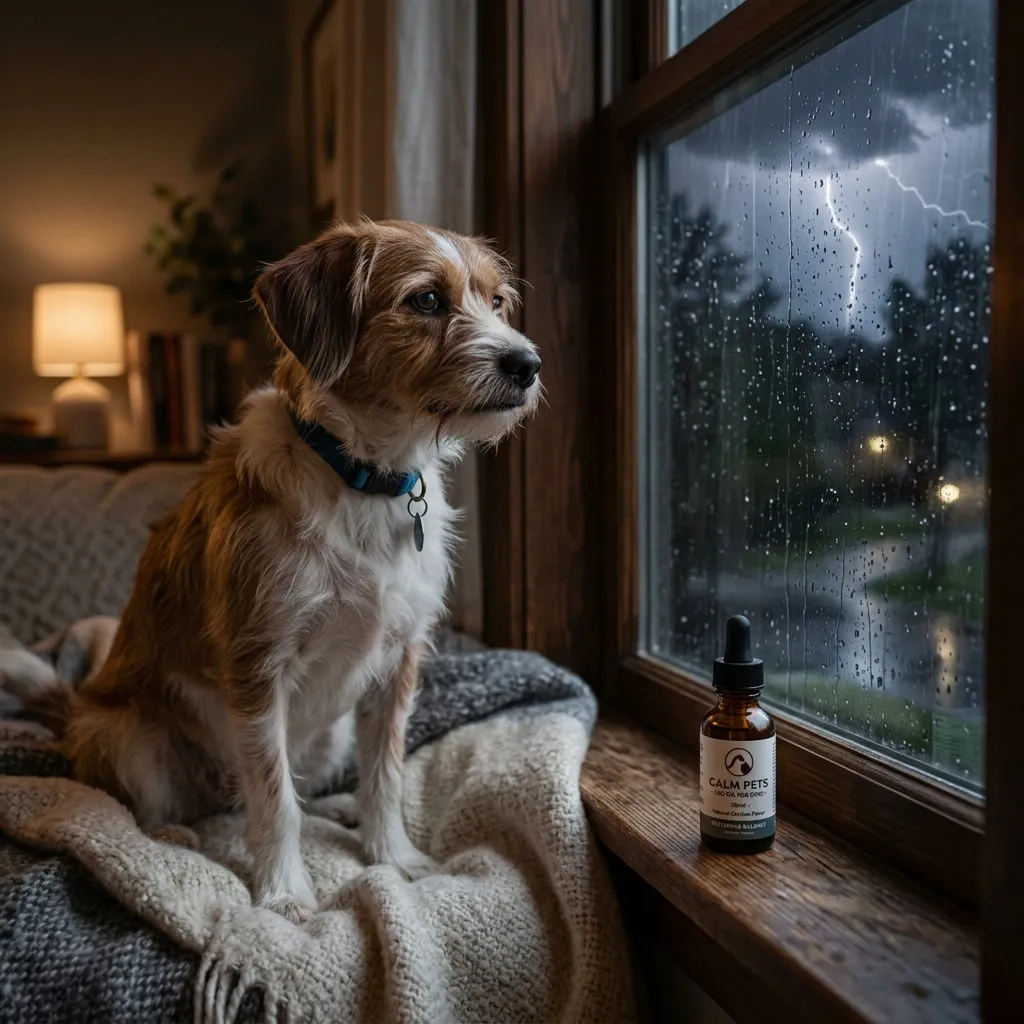
Your dog hears the thunder before you do. If fireworks and storms are the specific trigger, we cover CBD for noise-anxious dogs in depth. The pacing starts first — back and forth, back and forth, nails clicking on the hardwood. Then the whining. The panting. The wide, whites-of-the-eyes stare that says everything words can't. By the time the first crack of thunder shakes the windows, your dog is under the bed, trembling, and there's nothing you can do to reach them.
Or maybe it's the door. You grab your keys, put on your shoes, and your dog's entire body language shifts. The tail drops. The ears flatten. They know you're leaving, and the panic is already building before you've even turned the handle.
Anxiety is one of the most common behavioral issues in dogs. The American Kennel Club estimates that up to 70% of dogs show some sign of anxiety, and separation-related problems alone account for up to 50% of behavioral referrals to veterinary behaviorists. Since the COVID-19 pandemic, as people returned to offices and dogs lost their constant companionship, separation anxiety cases have surged.
You've seen the CBD products. They're everywhere — at pet stores, online, in your veterinarian's waiting room. "Calming chews," "anxiety relief tinctures," "stress support treats." The marketing is aggressive and the claims are bold. But what does the actual science say?
Let's look at the research — not the marketing.
---
How CBD Works for Anxiety in Dogs
Your dog has an endocannabinoid system (ECS) — the same biological network found in humans and all mammals. The ECS helps regulate mood, stress responses, pain, appetite, and immune function through cannabinoid receptors throughout the body and brain.
CBD (cannabidiol) doesn't directly bind to these receptors the way THC does. Instead, it acts as an allosteric modulator — it changes how receptors respond to your dog's naturally occurring endocannabinoids. It also interacts with serotonin receptors (5-HT1A) and GABA pathways, which are directly involved in anxiety regulation.
The theory is straightforward: by modulating these systems, CBD may reduce the physiological stress response — lowering cortisol, reducing hyperarousal, and helping dogs stay calmer in situations that would normally trigger anxiety.
But theory and proof are different things. Let's look at what clinical trials actually show.
---
What the Research Shows
The field of canine CBD research for anxiety is still developing. The studies that exist are encouraging but limited — small sample sizes, varying doses, and different study designs make it hard to draw firm conclusions. Here's what the best available research tells us.
Separation Anxiety and Car Travel: The Waltham Studies
The most rigorous studies on CBD for canine anxiety come from the Waltham Petcare Science Institute in the UK, published in Frontiers in Veterinary Science.
A 2023 blinded, parallel-design study by Hunt et al. examined the effect of a single 4 mg/kg dose of THC-free broad-spectrum CBD distillate on dogs exposed to two stress paradigms: separation from their handler in a familiar room (45 minutes alone) and car travel (a short journey in a vehicle).
The researchers measured multiple physiological and behavioral indicators of stress: serum cortisol, heart rate, heart rate variability, ear temperature (a proxy for stress-induced blood flow changes), whining frequency, and qualitative behavioral assessments.
The results were significant but nuanced. During car travel, dogs given CBD showed measurable reductions in stress compared to the placebo group. Specifically, CBD-treated dogs had a smaller increase in serum cortisol from baseline, were scored as significantly less "sad" on qualitative behavioral assessments, spent less time sitting and whining, and traveled a greater distance during the separation test (indicating more exploratory behavior and less frozen anxiety).
Importantly, the car travel paradigm elicited a stronger stress response overall than separation, and CBD's mitigating effect was more pronounced during car travel. The separation test produced milder stress, which may have made CBD's effect harder to detect.
A 2024 follow-up study by Flint et al. in the Journal of Animal Science examined the effect of daily CBD dosing at 4 mg/kg over 24 weeks, with dogs repeatedly exposed to car travel. The findings showed that while CBD continued to have a mild anxiolytic effect, dogs in the placebo group also showed reduced stress over time — they were habituating to car travel. This habituation made the treatment effect harder to detect at later time points.
The takeaway: a single dose of CBD at 4 mg/kg may reduce acute stress responses in dogs during car travel, and this effect is measurable across multiple physiological and behavioral indicators. However, repeated exposure to the stressor itself reduces anxiety over time, and CBD's incremental benefit may diminish as dogs learn to cope.
CBD Combined with L-Tryptophan and α-Casozepine: The 2025 Blend Study
A 2025 study by Flint et al., also published in Frontiers in Veterinary Science, explored whether combining CBD with other known calming compounds could enhance its anxiolytic effects. The researchers tested a treat product containing CBD at two doses (2 mg/kg and 4 mg/kg) plus a blend of CBD (2 mg/kg) combined with L-tryptophan (a serotonin precursor) and α-casozepine (a milk protein with GABA-A receptor activity).
The study used a blinded crossover design with 54 dogs exposed to 10 minutes of car travel. The results showed that the combination treatment (CBD + L-tryptophan + α-casozepine) resulted in a significantly smaller increase in cortisol from baseline to post-stress compared to placebo. However, no other significant treatment effects were observed on behavioral measures.
Notably, CBD plasma levels varied widely between individual dogs, which may have affected results. The study concluded that the blend had a "mild stress-reducing effect" — real but modest.
Cortisol and Behavior in Kennelled Dogs: The Marliani Study
A 2024 study by Marliani et al., published in Heliyon, examined the effects of CBD oil supplementation on dogs housed in a kennel environment. The study assessed behavioral changes and cortisol levels in dogs given CBD oil.
The researchers found that CBD supplementation was associated with changes in cortisol levels and behavioral measures in the kenneled dogs, though the specifics of the findings were mixed and the study's design (open-label, no placebo control) limits the strength of conclusions.
The Dog Aging Project: The Largest Observational Study
In 2025, the Dog Aging Project — a multi-year community science project with data from 47,444 dogs across the United States — published findings in Frontiers in Veterinary Science on CBD use in companion dogs.
While this was an observational study (not a clinical trial), the scale is unprecedented. Among the findings:
- 5.5% of dogs (2,592 out of 47,355) were reported to use CBD
- Dogs given CBD were significantly older on average (10.2 years vs. 7.6 years for non-users)
- Dogs with dementia had the highest CBD use prevalence at 18.2%
- Dogs receiving consistent CBD for at least 2 years showed a statistically significant decline in aggressive behavior intensity over time compared to non-users
The aggression finding is particularly relevant to anxiety. Aggression in dogs is frequently rooted in fear and anxiety — a dog that lashes out is often a dog that feels cornered, threatened, or overwhelmed. The fact that long-term CBD use was associated with reduced aggression intensity, even after controlling for age and other covariates, suggests a potential anxiolytic effect that accumulates over time.
However, the researchers were careful to note the limitations: this is owner-reported observational data, not a controlled trial. Dogs on CBD may have been receiving other interventions simultaneously (training, medication, environmental changes).
---
Noise Phobias: What About Fireworks and Thunderstorms?
Noise phobias — fear of fireworks, thunderstorms, gunshots, and other loud sounds — are extremely common in dogs. A 2024 study by Ramos et al. in Animals examined behavioral and physiological effects of calming supplements on dogs exposed to fireworks.
Notably, an earlier study by Morris et al. found no significant difference in cortisol levels when dogs were given 1.4 mg/kg CBD before a simulated fireworks paradigm. However, the CBD was administered 4-6 hours before testing — well past the peak blood concentration window of 1.5-2 hours reported in pharmacokinetic studies. This timing issue likely explains the negative result.
The lesson here is important: timing matters enormously with CBD. If you give it too early, blood levels have already peaked and declined before the stressful event occurs. If you give it too late, the event has already triggered the stress cascade.
For noise phobias, the evidence suggests:
- Dose: 2-4 mg/kg based on the Waltham studies
- Timing: 1.5-2 hours before the expected stressor (to align with peak blood levels)
- Consistency: For predictable events like fireworks or thunderstorms, proactive dosing is essential
- Expectation: CBD may reduce the stress response, not eliminate it entirely
---
CBD vs. Traditional Anxiety Medications for Dogs
How does CBD compare to what veterinarians typically prescribe for canine anxiety?
The standard pharmaceutical options include:
Fluoxetine (Prozac/Reconcile): The only FDA-approved medication for separation anxiety in dogs. Requires 4-6 weeks of daily administration to reach full effect. Side effects include lethargy, decreased appetite, and in some cases, paradoxical increased anxiety during the first few weeks.
Clomipramine (Clomicalm): FDA-approved for separation anxiety. Reduces destructive behavior and inappropriate urination/defecation but not vocalizations. Side effects include vomiting, sedation, and dry mouth. Requires daily administration for several weeks.
Trazodone: Often used for situational anxiety (vet visits, travel, fireworks). Given as needed 1-2 hours before the stressful event. Generally well-tolerated but can cause sedation and gastrointestinal upset.
Gabapentin: Sometimes used for situational anxiety, particularly when pain is a contributing factor. Can cause sedation and ataxia (wobbly gait).
Benzodiazepines (diazepam, alprazolam): Fast-acting but carry risks of dependence, paradoxical excitement, and interactions with other medications. Generally avoided for long-term use.
CBD occupies a different niche. It doesn't require weeks of build-up like fluoxetine or clomipramine. It can be given situationally like trazodone. And it has a better safety profile than benzodiazepines for long-term use. The disadvantage: the evidence base is smaller, dosing is less standardized, and effectiveness is more variable between individuals.
For many dogs, the best approach may be combining CBD with behavioral modification training rather than relying on CBD alone.
---
Dosing CBD for Dog Anxiety: What the Studies Use
There is no FDA-approved dosing standard for CBD in dogs. The doses below come from published clinical trials and should be discussed with your veterinarian.
For situational anxiety (car travel, fireworks, vet visits):
- 4 mg/kg body weight, given 1.5-2 hours before the stressor
- Example: 15 kg dog = 60 mg CBD, 2 hours before the car ride
- This is the dose used in the Waltham/Hunt studies that showed positive results
For mild situational anxiety:
- 2 mg/kg body weight, given 1.5-2 hours before the stressor
- Example: 15 kg dog = 30 mg CBD
- This dose showed some effect in the 2025 Flint blend study
For daily/chronic anxiety:
- 4 mg/kg body weight daily, divided into two doses
- Example: 15 kg dog = 30 mg morning, 30 mg evening
- Based on the 6-month safety study that confirmed long-term tolerability
Important dosing notes:
- Give with food to improve absorption (CBD is fat-soluble)
- Start at the lower end and increase if needed after 5-7 days
- Every dog metabolizes CBD differently — watch your dog's individual response
- Consistent daily dosing builds stable blood levels, which may be more effective than sporadic use for chronic anxiety
---
Safety and Side Effects
CBD is generally well-tolerated in dogs. The 6-month safety study at 4 mg/kg daily found no significant adverse effects over 24 weeks. Single doses up to 62 mg/kg have been given to healthy dogs without serious adverse effects.
Common side effects (usually mild and dose-dependent):
- Drowsiness or sleepiness — the most common, especially at higher doses
- Soft stools or mild digestive upset — usually resolves within a few days
- Increased thirst — dogs may drink more water
- Slightly lowered blood pressure — can cause temporary lethargy
Drug interactions (critical):
CBD is metabolized by the cytochrome P450 enzyme system in the liver. It can inhibit these enzymes, potentially increasing blood levels of other medications. If your dog takes any of the following, consult your veterinarian before starting CBD:
- Anti-anxiety medications (fluoxetine, clomipramine, trazodone)
- Anti-seizure medications (phenobarbital, potassium bromide)
- NSAIDs (carprofen, meloxicam)
- Steroids (prednisone)
- Heart medications
This doesn't mean your dog can't use CBD with these medications — but your vet should monitor for interactions and adjust doses if needed.
When to avoid CBD:
- Pregnant or nursing dogs (no safety data)
- Puppies under 1 year (limited safety data)
- Dogs with liver disease (CBD is liver-metabolized)
- Dogs on multiple medications (higher interaction risk)
---
How to Choose a Quality CBD Product for Dog Anxiety
The pet CBD market remains poorly regulated. A 2025 FDA study found that only 31% of pet CBD products were accurately labeled. Here's what to look for:
Third-party testing (non-negotiable):
Reputable brands provide Certificates of Analysis (COA) from independent labs showing:
- CBD content matches the label
- THC is non-detectable or <0.3% (THC is more toxic to dogs than humans)
- No pesticides, heavy metals, mold, or bacteria
If a brand doesn't provide a COA, don't buy from them.
Product type:
- Oils/tinctures: Best for adjustable dosing and absorption. Most studied in clinical trials. Give directly in the mouth or with food.
- Chews/treats: More convenient but slower absorption (45-90 minutes vs. 30-60 for oil). Check CBD content per treat carefully.
- Capsules: Precise dosing but slower onset. Good for daily use.
Spectrum type:
- Broad-spectrum: Contains multiple cannabinoids without THC. Often recommended for dogs — you get the entourage effect without THC exposure.
- CBD isolate: Pure CBD only. Safest but may be less effective.
- Full-spectrum: Contains trace THC (<0.3%). May provide entourage effect but carries minimal THC exposure risk.
Toxic ingredients to avoid:
Never use human CBD products on dogs if they contain:
- Xylitol (artificial sweetener — highly toxic to dogs)
- Essential oils (tea tree, peppermint, eucalyptus — toxic to dogs)
- Chocolate or raisins
- Grapeseed oil (can cause kidney issues in some dogs)
---
A Practical Approach: Using CBD for Dog Anxiety
If you've talked to your vet and decided to try CBD for your dog's anxiety, here's an evidence-based approach:
Step 1: Identify the trigger
Is your dog's anxiety situational (fireworks, car rides, vet visits) or chronic (separation anxiety, generalized anxiety)? This determines whether you use CBD as-needed or daily.
Step 2: Choose a quality product
Broad-spectrum oil tincture, third-party tested, pet-formulated, CO2-extracted. Start with a moderate concentration so you can deliver 30-60 mg without filling your dog's mouth with a tablespoon of oil.
Step 3: Calculate the dose
For situational anxiety: 4 mg/kg, given 1.5-2 hours before the stressor.
For chronic anxiety: 2-4 mg/kg daily, split into two doses.
Step 4: Time it right
This is the most common mistake pet owners make. CBD blood levels peak 1.5-2 hours after oral dosing. If you give CBD 30 minutes before a fireworks show, it won't be fully absorbed yet. If you give it 4 hours before, blood levels will have already declined.
Step 5: Track your dog's response
Keep a simple log:
- Date, time, and dose given
- The trigger (thunderstorm, car ride, being left alone)
- Behavior before, during, and after (pacing, whining, panting, hiding, destructive behavior)
- Side effects (drowsiness, soft stools, appetite changes)
Step 6: Adjust based on response
After 1-2 weeks:
- No improvement? Increase dose by 25-50%
- Mild improvement? Continue same dose
- Side effects? Reduce dose
Step 7: Combine with behavioral training
CBD is not a substitute for training. For separation anxiety, gradual desensitization and counterconditioning protocols remain the gold standard. For noise phobias, systematic desensitization using recorded sounds at increasing volumes can help. CBD may make your dog more receptive to training by reducing the acute stress that makes learning impossible.
---
The Bottom Line
The research on CBD for dog anxiety is promising but still in its early stages. Here's what we can say with confidence:
- CBD is safe and well-tolerated in dogs at the doses used in clinical trials (up to 4 mg/kg daily for 6 months)
- A single 4 mg/kg dose has been shown to reduce multiple physiological and behavioral measures of stress during car travel in a controlled, blinded study
- The effect is mild to moderate — not a complete elimination of anxiety
- Timing matters: CBD should be given 1.5-2 hours before a stressful event for peak blood levels
- Long-term use is associated with reduced aggression intensity in the largest observational study of CBD in pet dogs (47,444 dogs)
What we don't yet know:
- Optimal dosing for different anxiety subtypes (separation vs. noise vs. generalized)
- Whether CBD works better combined with other compounds (L-tryptophan, α-casozepine showed promise)
- How individual variability in CBD metabolism affects response
- Long-term effects beyond 6 months of daily use
If your dog struggles with anxiety and conventional approaches haven't been sufficient — or if you want to avoid the side effects of pharmaceutical options — CBD is worth discussing with your veterinarian. Start with a quality product, dose based on the research, time it correctly, and track your dog's response.
Just remember: if a product claims toFor a broader, science-based look at CBD for both dogs and cats, read our guide to CBD for pets "cure" anxiety or any other condition, that's a red flag. CBD is a tool, not a miracle. Used wisely, it may help your dog feel calmer. But it works best as part of a broader approach that includes training, environmental management, and veterinary guidance.
Your dog deserves honest, science-backed care. Not marketing.
Find Your Perfect CBD Product
Take our 2-minute quiz to get personalized recommendations based on your needs.
Take the Quiz →Disclaimer: This article is for informational purposes only and does not constitute medical advice. CBD products are not FDA-approved to treat, cure, or prevent any disease. Always consult with a qualified healthcare professional before starting any new supplement, especially if you have a medical condition or take medications.