Microplastics in Your Food: What the Evidence Shows and Where It Stops

Open a kitchen cupboard and count how much of what you eat arrives in plastic. Bottled water. Yoghurt tubs. Tinned tomatoes with a plastic liner. Herb sachets. A tub of coconut oil. Nobody is claiming your pantry is poisoning you, but the honest answer to "how much plastic am I actually eating" is: an unknown amount, and more than most people assume.
Microplastics have now been reported in table salt, honey, sugar and drinking water. A 2026 UK survey of processed foods found them in every sample tested. The source is usually not the food itself. It is the packaging it touched, the processing equipment it passed through, and the fibres shed into it along the way.
Here is where the science actually stands, and it is messier than either the alarmist headlines or the dismissive ones. There is real human tissue evidence that plastic fragments reach human organs. There is strong cell and animal evidence for mechanisms that could matter. There is very little human evidence that any of it causes disease.
This post walks through both halves of that sentence.
The Salt Shaker Problem
If you want a single everyday object that makes the scale of this tangible, pick up the salt cellar.
Microplastic particles have been detected in commercial salt, in honey, in sugar and in treated drinking water. The honey result is the one that usually surprises people. Bees forage over wide areas, and textile and synthetic fibres in the environment can end up in the hive along with nectar. The salt result comes from processing and packaging. Sugar and drinking water follow similar routes.
Two things about these findings deserve equal weight.
First, the detection methods are sensitive and the reported amounts vary widely between laboratories, samples and sampling seasons. There is no single global surveillance programme that measures microplastics across the food system the way regulators measure pesticide residues, so headline numbers for a given product are usually point-in-time snapshots rather than a settled average.
Second, and more importantly, "we found particles" and "this harms you" are different statements. Almost every public discussion of microplastics in food collapses them into one, and the evidence base for the second is much thinner than the evidence base for the first.
Packaging Is the Dominant Route
Ask where the plastic in food comes from and the answers cluster around a small number of routes.
- Packaging wear. Films, coatings, bottle caps and multilayer trays shed microplastic fibres during filling, sealing and transport.
- Processing equipment. Conveyor belts, hoses, brushes and sealing surfaces abrade and release fibres.
- Textiles. Synthetic clothing lint and microfibres from laundry cycles enter wastewater and can reach the food chain.
- Deliberate additions. Historically, microbeads were added to scrubs and toothpaste. Many jurisdictions have banned them, but they are not the main story, and the focus has moved to unintentional shedding.
- Recycled content. Recycled plastic feedstock can carry higher levels of legacy contamination, which is a reason recyclers and regulators keep working through the chain.
The practical consequence is that the exposure question is not really about "how much plastic is in nature". It is about contact time, temperature, friction and how much of what we eat is stored in a plastic container before we eat it.
That last point matters for anything you use daily, which is why we get to CBD products later in this post.
What the Human Tissue Evidence Shows
This is the strongest category of evidence so far, and it is still weaker than headlines imply.
A 2026 systematic review in Reproductive Toxicology (PMID 42887827) surveyed the detection, characterisation and fertility-related effects of plastics in human reproductive tissues. Its value is that it pulls together detection studies in human tissue samples rather than isolated laboratory findings. Its limit is equally clear. Demonstrating that plastic particles are present in tissue is not the same as demonstrating that their presence causes reduced fertility, and the review is careful about the difference between detection and effect.
The same pattern holds across human tissue research generally. A study can show that particles are in the sample, and it can show that the sample came from people with a disease, and those two facts together still do not establish direction. Particles might contribute to disease. Disease and its treatment might make particles easier to find. Shared causes such as diet, occupation or overall exposure could drive both. Only well-designed longitudinal work can start to separate those.
The honest summary: human tissue exposure to microplastics is now documented. The health consequence of that exposure in people is still largely unquantified.
The Lung Findings, and How to Read Them
The most striking human study in this area is a 2026 prospective bronchoscopy study in Ecotoxicology and Environmental Safety (PMID 42892293), which reported a higher respiratory microplastic burden in patients with lung malignancy than in comparison patients.
That finding is worth taking seriously and reading carefully.
A bronchoscopy study samples material directly from the airway. It measures burden in the lungs of real people with a real diagnosis. That is far better than inferring lung exposure from diet studies. It is also still an observational comparison, not a trial. A cross-sectional measurement in people who already have lung cancer cannot establish that the particles caused the cancer, and there are well-known alternative explanations, including differences in smoking history, occupational exposure, airway geometry and disease-driven changes in mucus clearance.
What the study supports is a hypothesis worth testing, and a reason to keep funding better measurements. What it does not support is the sentence "microplastics cause lung cancer". Treat anyone who says that as overstating the data.
The Clotting Question
A 2026 review in Research and Practice in Thrombosis and Haemostasis (PMID 42894845) looked at microplastics, nanoplastics and thrombogenesis, that is, the process by which blood clots form.
The pathway is plausible on basic biology. Particles that circulate in blood can interact with platelets and with the endothelial lining of vessels, and both platelet activation and endothelial dysfunction are established drivers of clotting. The review assembles the mechanistic and animal evidence supporting that link.
What it cannot do is tell you what this means for your risk of a heart attack or a stroke. Human epidemiology connecting measured microplastic exposure to clotting outcomes is still early, and much of the work in this area is in vitro, where blood cells are exposed to particle concentrations far above what anyone is believed to encounter in daily life. A plausible mechanism plus a real association is the beginning of a research programme, not a clinical conclusion.
The Gut, the Microbiome and Metabolism
The gut is where most ingested microplastics are thought to end up, and where the most interesting mechanism work is happening.
A 2026 review in Toxicology Mechanisms and Methods (PMID 42894949) examined microplastics as microbiota modulators, describing how they can rewire the gut metabolism and immune axis. The idea is that particles sitting in the gut alter the resident microbial community, and that a shifted community changes how nutrients are processed and how the immune system responds. Animal models have repeatedly shown shifts in both microbial composition and metabolic markers following exposure.
A second 2026 review in the Journal of Nutrition (PMID 42887872) looked at dietary components as promising candidates for mitigating micro- and nanoplastic-associated metabolic dysfunction. That is a useful framing because it puts the burden of mitigation on food choice rather than on waiting for regulation.
Both reviews deal with animal and in vitro data. Neither establishes that microplastics in the human gut are driving metabolic disease in people. That said, the gut is where this line of research is most mature and most likely to produce human data soon, and the interaction with diet and with the microbiome is exactly the territory we have covered in detail on how CBD interacts with the gut microbiome.
The Mechanism Studies, and Why They Are Not Human Evidence
Most of the strongest-sounding microplastics science comes from laboratories. That work matters, because it tells us what particles are capable of doing. It also needs clear labelling, because a cell line and a person are not the same thing.
A 2026 study in Frontiers in Toxicology (PMID 42898481) found that polystyrene nanoplastics impair mitochondrial function, quality control and endoplasmic reticulum to mitochondria crosstalk in HeLa cells. HeLa is a human cervical cancer cell line. It is a legitimate model, and it is not a person. The concentrations used in such experiments are often considerably higher than what someone would ingest from food, and cancer cell lines have abnormal mitochondrial and stress response biology. This is a mechanism paper, and it should be read as one.
A 2026 mechanistic study in the Journal of Hazardous Materials (PMID 42896322) looked at how chlorination modifies microplastic toxicity, linking material-specific changes to endoplasmic reticulum stress. The practical point is that not all plastic particles behave the same, and the water they pass through changes them. That is a good reason to be cautious about treating "microplastics" as a single substance.
A 2026 animal study in Ecotoxicology and Environmental Safety (PMID 42887089) found that combined exposure to microplastics and the plasticiser DEHP worsened behavioural and cognitive impairments, through neuronal apoptotic damage and suppression of the KLF2, IRF4 and SRF pathway. Combined exposures matter, because people are not exposed to plastic in isolation, but this is a mouse study with a chemical dosing regime that does not mirror a human diet.
A 2026 study in Environmental Science & Technology (PMID 42899647) reported that inhaled environmentally simulated PET nanoplastics induced demyelinating disorders via the CXCL12 and CXCR4 axis in an animal model. Airborne exposure is a real route that most consumer discussion ignores, and myelination is a serious target. It is also an animal model at experimental doses.
Read together, these four papers say something useful. They say that plastic particles are biologically active, that the effects are material specific, that co-exposures can be worse than single exposures, and that there are plausible routes through mitochondria, the endoplasmic reticulum, the immune system, neurons and blood. They do not say that people are being damaged at the dose they are receiving.
What You Can Actually Do
The list of things under your control is shorter than the internet suggests, but it is not empty.
- Store food in glass, stainless steel or cardboard where you can, especially for hot, fatty or acidic foods, which are the worst cases for leaching and for fibre shedding.
- Do not microwave food in plastic containers. Heat raises migration and abrasion. Move it to a ceramic bowl first.
- Let tap or bottled water run for a minute after a period of sitting in plastic tubing, and consider a filter rated for particles rather than one rated only for chlorine.
- Buy loose produce and refill formats where practical. The single biggest reduction in your personal plastic load is packaging you never buy.
- Let go of the panic. Replacing every plastic item overnight will not change your health, and reusing a plastic container that is intact and clean is a reasonable practice.
- For any CBD product you use, look for glass or aluminium packaging, check the storage guidance for heat and light, and read the batch information before you buy. Our CBD safety guide covers the label and testing questions worth asking.
Where CBD Fits Into This Picture
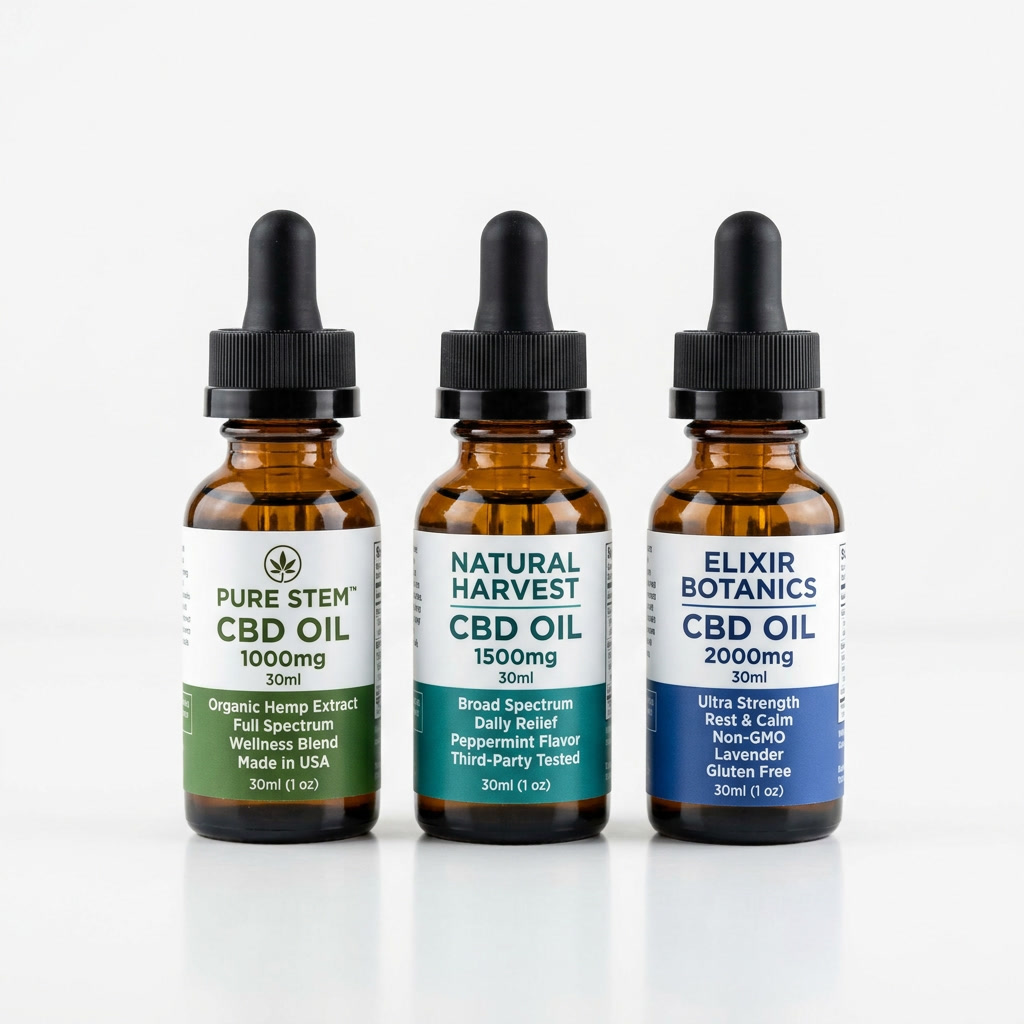
Most of what we ingest arrives in a plastic container, and CBD products are no exception. Oils and tinctures sit in dropper bottles that are frequently plastic. Gummies sit in sealed trays. Capsules come in plastic bottles. Topicals sit in tubs and jars.
That makes two things worth separating.
The first is what you can check. Packaging material, light protection, storage temperature, batch testing and a certificate of analysis are all visible or requestable. Our guide on how to store CBD oil covers the practical details, and if you want to compare formats, the CBD oils and tinctures category is a reasonable place to look at what packaging brands actually use.
The second is what nobody can claim yet. There is no published evidence that CBD neutralises microplastics, that CBD binds plastic particles, or that CBD protects tissue from plastic exposure. We are not aware of any study, and we will not imply one exists. If you have seen such a claim, treat it as marketing until a peer-reviewed study appears.
What can reasonably be said is narrower and still useful. CBD products are consumed, so the container matters. If you use a tincture daily, moving to a glass bottle with a properly sized dropper and storing it away from a warm windowsill is a cheap, sensible step. And for anyone using CBD for an existing inflammatory condition, our guide on CBD and inflammation stays focused on what the human evidence for CBD itself supports.
Bottom Line
Microplastics are in the food supply. They are in salt, honey, sugar, water and processed food, and human tissue studies confirm that plastic fragments reach human organs, including reproductive tissue and the airway. That much is documented.
What is not documented is a clear answer to the question readers actually care about: at what dose, through which route, over how many years, does this cause measurable harm in people? The human evidence for harm remains thin, and the mechanism work is still largely cells and animals.
So the useful position is neither panic nor dismissal. Packaging is the dominant source, which means contact time, heat and material choice are real levers. Reduce what you can, store food better, check what your supplements and oils come in, and keep watching the research. The studies that matter are being done now. When they land, we will read them properly.
Find Your Perfect CBD Product
Take our 2-minute quiz to get personalized recommendations based on your needs.
Take the Quiz →Disclaimer: This article is for informational purposes only and does not constitute medical advice. CBD products are not FDA-approved to treat, cure, or prevent any disease. Always consult with a qualified healthcare professional before starting any new supplement, especially if you have a medical condition or take medications.