CBD for Tinnitus: What Current Research Says (2026 Update)
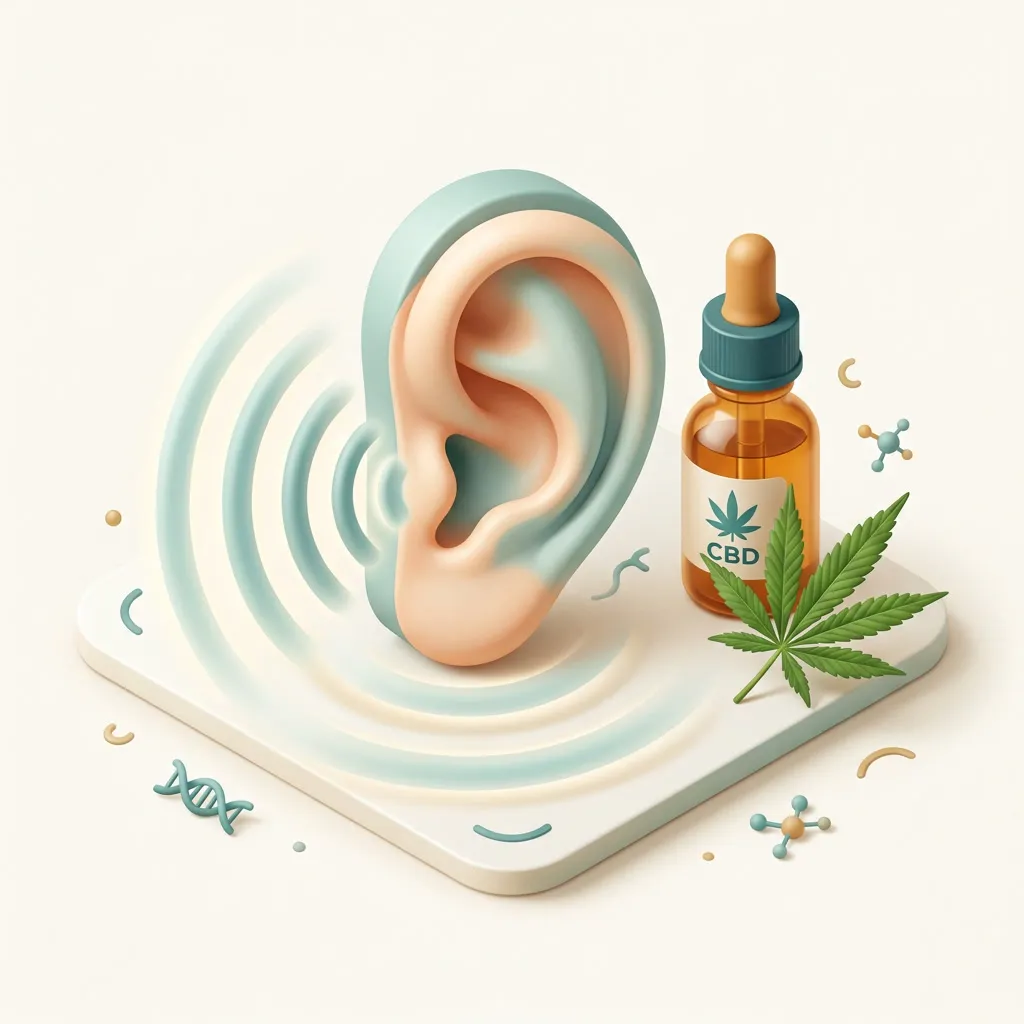
You're lying in bed, the room silent, and yet there it is again — a high-pitched ring that never quite goes away. Maybe it's a hiss, a buzz, or a tone that shifts with your mood and your stress. For the estimated 10–15% of adults who live with tinnitus, the sound isn't a passing nuisance; it follows you into quiet rooms, disturbs sleep, and can feed anxiety in a loop that feels impossible to break. If you've Googled your symptoms, you've likely seen the promise that CBD — the non-psychoactive compound in hemp — might "silence the ringing." It's a compelling idea, and understandably tempting to try. But before you spend money on a product promising relief, there's a hard truth you deserve to hear clearly: the clinical evidence specifically linking CBD to tinnitus relief in 2026 is essentially nonexistent. That doesn't mean CBD is worthless for everyone with tinnitus — it just means the honest picture is far more nuanced than the marketing suggests. Here's what the current research actually shows, what it doesn't, and how to think about CBD rationally if tinnitus is keeping you up at night.
The Honest Starting Point: What We Don't Know
Let's state the most important finding up front, because it shapes everything else: a systematic search of PubMed for studies on "CBD + tinnitus" published from 2023 through 2026 returns zero clinical trials. Not one peer-reviewed human study has directly tested whether CBD reduces the phantom ringing of tinnitus. That's not a criticism of CBD's broader safety profile — it's simply the reality of where the evidence stands.
Most of what circulates online as "proof" falls into two categories: personal anecdotes on forums and social media, and mechanistic theory about how the body's endocannabinoid system might interact with the auditory system. Anecdotes are valuable signals, but they are not clinical evidence. They tell you what people experienced, not what a controlled study would show across a larger, more varied population. The gap between "people say it helps" and "research demonstrates it helps" is exactly where marketing fills in the blanks.
So the honest framing for 2026 is this: CBD for tinnitus is a plausible-but-unproven idea, not an established treatment. Any claim that a specific product "cures" or "eliminates" tinnitus should be treated with serious skepticism, regardless of how polished the website looks.
The Anecdotal Appeal vs. Clinical Evidence
Why does CBD feel so promising to so many people with tinnitus? Because tinnitus is rarely just a sound. For most, it's a cluster of experiences — the ringing itself, plus disrupted sleep, rising anxiety, difficulty concentrating, and sometimes physical tension or pain. CBD is widely reported to influence sleep, anxiety, and pain perception, which means even if it does nothing to the "sound" itself, it might help someone feel calmer about the sound.
That's a meaningful distinction. A person who sleeps better and feels less anxious may perceive their tinnitus as less bothersome, even if the underlying phantom tone hasn't changed a decibel. This is sometimes called the "reaction to the symptom" rather than the symptom itself. Some researchers believe the distress of tinnitus is driven less by loudness and more by how much the brain's emotional and attention systems fixate on the sound. Helping those systems is a legitimate angle — but it's a very different claim from "CBD eliminates the ringing."
What the 2023+ Research Actually Shows
Here's the good news: while direct CBD-for-tinnitus trials don't exist, a handful of studies published from 2023 onward do examine cannabis, the endocannabinoid system, and tinnitus. Reading them carefully reveals a picture that is more complicated — and in some ways more cautionary — than the wellness industry suggests.
The Epidemiological Catch: Cannabis Use Is Linked to More Tinnitus
The most important recent finding is a warning. In 2023, a nationally representative analysis of U.S. adults (NHANES data) published in Otology & Neurotology found that people who used cannabis heavily reported bothersome tinnitus more often than non-users:
- High-volume cannabis users: ~20.5% reported bothersome tinnitus
- Low-volume users: ~17.0%
- Non-users: ~12.0%
After adjusting for demographics, hearing loss, noise exposure, and depression, high-volume cannabis use was independently associated with tinnitus (odds ratio ≈ 2.05). This is a cross-sectional study, so it can't prove causation, and it looked at cannabis (which contains THC, the intoxicating compound), not CBD. But it directly undercuts the simple story that "cannabis calms the ears." Heavy use, at least, correlates with more tinnitus, not less.
A second study in 2026 in OTO Open — a large propensity-matched cohort of over 92,000 patients in each group — reached a similar note of caution. People diagnosed with a cannabis-related disorder had a significantly higher one-year risk of developing tinnitus (hazard ratio ≈ 1.30), with the risk rising to ~1.55 among those with cannabis dependence. Notably, that increased risk did not persist out to five and ten years, and the authors called for more research into a possible dose-dependent relationship.
The Patient Perspective: What Tinnitus Patients Actually Report
The most humanizing data comes from a *2023 survey in the Journal of Otolaryngology – Head & Neck Surgery*** of patients seen at a tertiary neuro-otology clinic. Among 45 tinnitus patients surveyed:
- 96% said they would consider using cannabis for their tinnitus
- 80% of those actively using it said it helped with related symptoms like dizziness, anxiety, bodily pain, and sleep
- Patients most preferred edibles (62%), tablets (58%), and creams (47%)
This is powerful context: the demand is real, and the self-reported experience is often positive — but "people say it helps their sleep and anxiety" is not the same as "it objectively reduces tinnitus." It also highlights that many users are drawn to CBD-adjacent products precisely because of the associated symptoms, not necessarily the phantom tone itself.
The Animal Lab Evidence: A Mixed Mechanistic Signal
In the lab, the picture is genuinely preliminary. A 2023 animal study in the Journal of Psychopharmacology exposed mice to noise to induce tinnitus-like behavior, then tested whether cannabis extract and nicotine could improve "auditory sensory gating" — the brain's ability to filter out repetitive sounds. The authors reported that the combination improved gating in noise-exposed mice without permanent hearing-threshold shifts. That's intriguing, but it's a mouse model, and it involved nicotine alongside cannabis extract — not isolated CBD.
Why CBD Could (In Theory) Affect Tinnitus
Even without direct trials, there's a legitimate scientific rationale for investigating CBD in the auditory system. The inner ear and auditory brainstem contain components of the endocannabinoid system, including cannabinoid receptors. A *2023 perspective paper in Frontiers in Neurology*** argued that this system deserves attention as a potential therapeutic target in tinnitus, particularly the newer CB2 receptor pathways and their role in neuroimmune signaling within the ear.
There's also interest in how CBD interacts with a receptor called GPR55. A *2026 study in Scientific Reports*** found that activating GPR55 protected cochlear hair cells — the sensory cells of the inner ear — against drug-induced damage in the lab. CBD is known to influence GPR55 signaling, which has fueled cautious speculation that it could have an ear-protective role. This is promising basic science, but protecting hair cells against a specific toxin in a dish is a long way from treating a phantom sound that has already established itself in the brain.
Here's the mechanism most often cited by advocates: CBD is thought to dampen neuronal hyperactivity and modulate anxiety and stress circuits. Since tinnitus is widely believed to involve abnormal neural activity and is heavily worsened by stress, the theory goes that CBD could reduce the distress — and possibly the perceived loudness — of the ringing. It's a coherent hypothesis. What it is not, yet, is a proven treatment.
The THC Problem: Why "Cannabis" Isn't "CBD"
This is the most important distinction to keep straight, and it's one the marketing often blurs. The epidemiological studies that linked cannabis use to higher tinnitus prevalence were almost certainly capturing THC-containing cannabis — smoked or vaped flower, edibles, and concentrates. THC is psychoactive and has a different receptor profile than CBD.
In fact, the *2023 Frontiers in Neurology perspective specifically noted that earlier studies of CB1 receptor ligands (the pathway THC primarily acts on) found no benefit and suggested they might even worsen tinnitus.* The authors pointed toward CB2 receptor signaling as the more promising avenue — a pathway more associated with CBD and with anti-inflammatory/neuroimmune effects.
What this means practically: the cautionary data on cannabis and tinnitus should not be casually applied to CBD, because they involve different compounds acting on different receptors. But it also means we can't assume CBD inherits the "relief" anecdotes that often come from people using full-spectrum products that contain trace THC — or, in some cases, products with more THC than the label suggests. If you're going to try CBD, understanding what's actually in your bottle matters.
What This Means for Choosing a CBD Product
If, after reading all of this, you still want to explore CBD — and there are legitimate reasons someone might, especially for the sleep and anxiety that often accompany tinnitus — choose your product thoughtfully and honestly. Because there's no tinnitus-specific clinical evidence, the most rational approach is to choose products designed for the symptoms that are well-supported, like sleep and anxiety:
- [CBD oils and tinctures](/products?category=cbd-oils-and-tinctures) are the most flexible and are the most common format for people experimenting with dose and timing, since you can adjust drop by drop
- [CBD gummies and edibles](/products?category=cbd-gummies-and-edibles) were the preferred format among tinnitus patients in the 2023 survey, and offer consistent, pre-measured doses that are easy to take before bed
- [CBD capsules and softgels](/products?category=cbd-capsules-and-softgels) provide the same dosing convenience in an unflavored format
- [CBD for sleep](/products?category=cbd-for-sleep) and [CBD for anxiety](/products?category=cbd-for-anxiety) product lines are specifically formulated and positioned for the two issues that most often make tinnitus feel unbearable
What to avoid: any product that promises to "cure," "silence," or "eliminate" tinnitus, and any influencer-style claim that a specific dropper dose ended someone's ringing. Those claims outpace the evidence and should be a red flag rather than a selling point.
A Smarter, Evidence-Based Approach to Tinnitus
Here's the reality check that matters most: while you explore complementary options, don't neglect the interventions that actually have research behind them. If sleep disruption is a big part of how tinnitus affects you, our guide to CBD and sleep quality may help, and our CBD dosage by weight guide explains how to find a sensible starting dose. Tinnitus management typically combines several strategies, and the strongest evidence supports:
- Sound therapy and masking — using background noise to make the phantom tone less noticeable
- Cognitive behavioral therapy (CBT) — reducing the emotional distress and fixation on the sound, which research consistently shows improves quality of life
- Hearing aids — if hearing loss is present, addressing it often reduces tinnitus perception
- Sleep hygiene and stress management — since sleep deprivation and stress reliably worsen tinnitus perception
If you add CBD to this picture, treat it as a potential support for the sleep and anxiety pieces — not as a substitute for strategies that have actual clinical backing. For a closer look at the broader evidence, see our research roundup on CBD for anxiety. And always run it past your doctor, especially if you take medications, because CBD can interact with several common drugs.
Your Action Steps
If you decide to trial CBD for the sleep or anxiety side of your tinnitus, here's a practical, honest plan:
- Check with your doctor first, particularly if you take blood thinners, antidepressants, or anti-seizure medications
- Start low — a modest daily dose, taken at the same time each evening
- Track everything for at least two to three weeks: dose, timing, sleep quality, anxiety level, and how bothersome your tinnitus feels each day
- Expect to measure the wrong things — judge success by whether your sleep and stress improve, not whether the ringing vanishes
- Buy from a brand that shows third-party lab results so you know the actual CBD and THC content of what you're consuming
> Quick Take: If after three weeks you notice genuinely better sleep and less anxiety — and therefore find the tinnitus less consuming — that's a real, valuable outcome, even if the tone itself hasn't changed.
The Bottom Line
The 2026 research landscape on CBD and tinnitus can be summarized in one honest sentence: there is no direct clinical evidence that CBD reduces tinnitus, and some epidemiological data actually link heavy cannabis use to a higher prevalence of tinnitus. What does exist is promising basic science on the endocannabinoid system's role in hearing, encouraging patient surveys showing that many people find symptom relief, and a plausible mechanism for how CBD might ease the anxiety and sleep disruption that make tinnitus miserable. None of that is proof, and it's crucial you see it that way. CBD is not a tinnitus treatment — but if you manage expectations, choose a clean, lab-tested product, and use it as a support for the sleep and stress side of the condition while leaning on sound therapy and CBT, it's a reasonable thing to discuss with your doctor. Let the marketing claim "cure," but let the evidence set your expectations. The most honest thing anyone can say about CBD and tinnitus in 2026 is: we're still listening.
Find Your Perfect CBD Product
Take our 2-minute quiz to get personalized recommendations based on your needs.
Take the Quiz →Disclaimer: This article is for informational purposes only and does not constitute medical advice. CBD products are not FDA-approved to treat, cure, or prevent any disease. Always consult with a qualified healthcare professional before starting any new supplement, especially if you have a medical condition or take medications.