CBD and Testosterone: What the Science Really Says About Libido and Sexual Health
You wake up exhausted after another night of restless sleep. The to-do list is endless, work is relentless, and the last thing on your mind is sex. Maybe you've noticed your desire fading, or you've been scrolling through forums wondering if your testosterone levels are dropping. It's a scenario millions of men and women recognize, and it's exactly the moment CBD marketing swoops in with bold promises about boosting your sex drive and rebalancing your hormones.
Here's the honest truth: the evidence on CBD and testosterone is thin and genuinely mixed. Much of the research is animal-based and contradictory. Some studies suggest heavy cannabis use is linked to lower testosterone, while others find no effect at all. The good news is that the picture becomes clearer when we look at how CBD might help indirectly, by addressing the anxiety, stress, and poor sleep that are the real killers of libido for most people.
In this guide, we'll sort through what the research actually says, separate the solid science from the hype, and give you a realistic action plan if you're curious about trying CBD for sexual health. We'll look at the endocannabinoid system's role in reproduction, what human studies reveal about testosterone, the honest caveats about THC, and how to approach dosing safely. By the end, you'll know exactly where CBD fits, and where it doesn't.
What Is the Endocannabinoid System and Why Does It Matter for Sex?
Before we talk about CBD, it helps to understand the system it interacts with. Your body produces its own cannabinoids, and it's dotted with receptors called CB1 and CB2 that help regulate a remarkable range of functions, including mood, stress, appetite, sleep, and, notably, reproduction.
A 2023 study in BMC Medicine examined the endocannabinoid system in the human fetal testis and found that the components of this system are actively expressed there, meaning the machinery for cannabinoid signaling is present in reproductive tissues from early development. A 2026 review in the journal Plants pulled together the broader picture, describing how CB1 and CB2 receptors are expressed in the testes, epididymis, and spermatozoa, where they help modulate testosterone synthesis, sperm motility, and capacitation.
The key takeaway is straightforward: the endocannabinoid system is woven into reproductive and sexual function. That means exogenous cannabinoids like CBD and THC can plausibly influence it. What's far less clear, and where the research gets messy, is whether that influence helps, harms, or does nothing at all in the real world.
CBD and Testosterone: What the Research Actually Says
This is where you need to brace for mixed results, because the evidence genuinely cuts both ways. Let's walk through what recent studies have found, starting with the most directly relevant human data.
Human Studies Show Mostly No Effect, Sometimes a Positive One
One of the most reassuring findings comes from a 2023 study in the World Journal of Men's Health. Researchers took human adult testis tissue and exposed it directly to CBD, THC, and a combination of both for up to nine days. The result was striking: none of the cannabinoids changed testosterone production, Leydig cell distribution, or germ cell lineage compared with controls. In plain terms, acute exposure to these compounds had no direct impact on the testis's ability to make testosterone.
A large observational study published in Medical Cannabis and Cannabinoids in 2023 looked at over a thousand adults who self-dosed CBD for at least a month. The researchers found that long-term CBD use was not associated with an increased prevalence of low testosterone in men, and interestingly, men over 40 who used CBD actually had a lower prevalence of low testosterone than age-adjusted population norms. That's a correlation, not proof of causation, but it's a useful counterweight to the fear-based marketing.
An exploratory 2026 study in Medical Cannabis and Cannabinoids even reported that short-term, high-dose oral CBD was associated with significantly raised testosterone levels in male subjects, though cortisol and corticosterone also rose, and the authors stressed the findings were preliminary. All measured hormones stayed within physiological ranges.
The Animal and Laboratory Data Is More Concerning
This is where the picture gets complicated. A 2023 study in Environmental Science and Pollution Research examined short-term CBD exposure in zebrafish and flagged reproductive toxicity concerns, though translating that to humans is far from straightforward.
More relevantly, a 2026 study in Biochemical and Biophysical Research Communications found that both THC and CBD inhibited androgen biosynthesis in H295R cells, a laboratory cell line. The same group's earlier work in Andrology (2024) had observed that young male cannabis users in Switzerland actually had higher blood androgens than non-users. The authors were careful to note that these laboratory findings don't necessarily explain what happens in living humans.
Here's the bottom line on testosterone: in human tissue and human observational studies, CBD appears to have little to no negative effect on testosterone, and there's even a hint it could be associated with healthy levels. The concerning data comes mostly from animals and cell cultures, which don't always translate to people. That's not a license to overstate the positives, but it is a reason not to panic.
CBD and Libido: Mostly Indirect Evidence
If you're looking for a study that definitively shows CBD boosts libido, you'll be searching for a long time. That study doesn't exist yet. What the research does support is a more nuanced story about how CBD might influence the things that drive sexual desire.
A 2024 review in Psychopharmacology took a careful look at cannabis and human sexuality. The authors found a complex, dose-dependent relationship: lower doses of cannabis were linked to heightened sexual desire and enjoyment, while higher doses were associated with decreased desire and performance. They also noted a meaningful gender difference in how cannabis affects sexuality.
The important nuance here is that most of this research involves cannabis containing THC, the psychoactive compound, not isolated CBD. CBD alone doesn't produce the same acute "relaxed and aroused" effects that THC users describe. So while the review is useful context, it doesn't give us a clean verdict on CBD specifically.
The Anxiety and Stress Connection
Where the evidence for CBD gets more interesting is its documented effect on anxiety, stress, and sleep, which are among the most common libido killers. If you're chronically stressed and exhausted, desire often simply switches off, regardless of your hormone levels.
A 2026 systematic review and meta-analysis in the Lancet Psychiatry examined the efficacy of cannabinoids for mental health conditions, including anxiety, and found evidence supporting their use in certain contexts, while emphasizing the need for high-quality trials. A 2025 randomized crossover pilot trial in Health Science Reports looked at a cannabinoid supplement in adults with subthreshold insomnia and found improvements in both sleep and mood compared with placebo.
Here's the practical logic that the science supports: CBD doesn't act like a pharmaceutical libido pill. Instead, it may help lower the background anxiety and improve the sleep quality that, when disrupted, crush your sex drive. If your low libido is rooted in stress and exhaustion, that indirect pathway could be meaningful. If it's rooted in an underlying hormone imbalance or a medical condition, CBD won't be your answer.
The Honest Caveat: THC Is Not CBD
One of the most important distinctions to understand is that CBD and THC are very different molecules with very different effects. This matters enormously for sexual health, because much of the negative reproductive data in the cannabis literature is tied to THC, the psychoactive compound, especially with heavy use.
A 2026 review in Plants specifically flagged that THC disrupts the hypothalamic-pituitary-gonadal axis, leading to reduced luteinizing hormone and testosterone levels, impaired mitochondrial activity, and abnormal sperm morphology. The same review noted that while CBD has anti-inflammatory and antioxidant properties, its long-term impact on reproduction remains uncertain.
The practical implication is straightforward. If you're a heavy THC user concerned about your testosterone and fertility, that's a very different conversation than a moderate CBD user asking about libido. CBD products sold as supplements typically contain little to no THC, so the concerning THC-associated findings don't directly apply. But it's a critical reminder that "cannabis" and "CBD" are not interchangeable in the research or in your shopping cart.
How Anxiety, Stress, and Sleep Shape Sexual Function
It's worth pausing on this point because it's the most actionable insight in this entire topic. Sexual desire doesn't exist in a vacuum. It's tightly linked to your stress response, your sleep, and your overall nervous system state.
When your body is in a chronic state of high stress, it prioritizes survival over reproduction. Cortisol levels climb, which can suppress the very pathways that drive libido. Poor sleep compounds this, leaving you depleted and uninterested. This is why so many people report that their sex drive returns once a major stressor resolves, without any intervention at all.
This is also where CBD's strongest, most consistent evidence lives. The 2025 Health Science Reports trial found meaningful improvements in sleep and mood. The 2026 Lancet Psychiatry meta-analysis supported CBD's potential role in anxiety, though it called for more rigorous trials. If CBD helps you sleep better and feel less anxious, the improvement in your sexual desire may come as a side effect, not because CBD is a direct aphrodisiac.
What About Women's Sexual Health?
Most of the testosterone research focuses on men, but women also produce testosterone and experience the same anxiety, stress, and sleep disruptions that dampen desire. The endocannabinoid system is equally relevant to female reproductive and sexual function.
The research here is even thinner than for men. We know that stress and anxiety significantly affect female sexual desire, arousal, and satisfaction, and to the extent that CBD may help with those underlying factors, it could plausibly support female sexual health. But there's a real gap in high-quality studies examining CBD's direct effects on female libido and sexual function. Any brand claiming otherwise is likely overstating what the evidence supports.
Does CBD Affect Erectile Function?
Erectile dysfunction is one of the most common reasons men search for CBD, and it's worth addressing honestly. Most erectile dysfunction is driven by cardiovascular health, blood flow, anxiety, and stress, not directly by cannabinoid receptors.
There's some historical suggestion that cannabis might affect erectile function, but the modern evidence is thin. A 2024 review in the journal Andrology examining young Swiss men found no significant negative impact of cannabis consumption on erectile or hormonal function in that population. The more reliable takeaway is the indirect one: if performance anxiety is contributing to erectile difficulties, and CBD helps reduce that anxiety, it could help in that specific way. It is not a substitute for proper evaluation or treatment of underlying vascular or hormonal issues.
Dosing and Safety: What You Need to Know
If you decide to try CBD for stress, sleep, or general wellbeing, approach it like you would any supplement: start low, go slow, and observe. Here's a practical framework.
A Reasonable Starting Approach
Start with 10 to 20 mg once daily, taken consistently. Give it two to three weeks before judging results. If you're not noticing anything, you can increase by 5 to 10 mg at a time. Many people find their effective dose somewhere in the 25 to 50 mg daily range. The large 2023 Medical Cannabis and Cannabinoids study found the average self-dosed amount was around 55 mg daily.
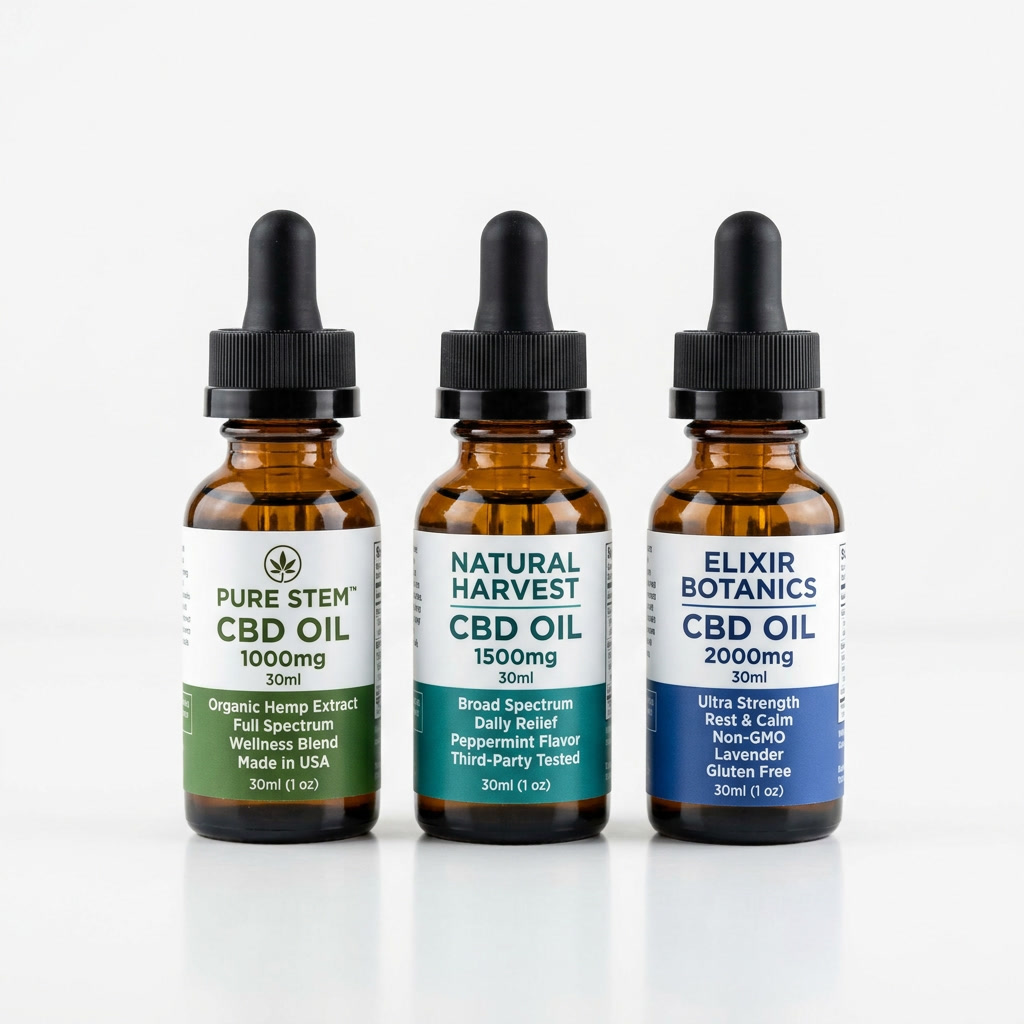
Choose your format based on your preference. CBD oils offer flexible dosing and are easy to adjust, which is why many people start with a full-spectrum oil. CBD capsules and CBD gummies are convenient and pre-dosed, though they take longer to kick in and effects are less adjustable. A full-spectrum oil is generally considered more effective than an isolate because of the entourage effect, though you should verify the THC content if you want to keep it minimal.
Safety Considerations
The safety profile of CBD is generally favorable, but it's not risk-free. A 2025 randomized clinical trial in JAMA Internal Medicine found that high doses of CBD were associated with elevations in liver enzymes in healthy adults, a finding that reinforces the need to avoid excessive doses and to be cautious if you have liver conditions.
A 2023 review in Food and Chemical Toxicology similarly emphasized that while CBD's oral toxicity is low, it's not entirely benign, particularly at high doses and with certain medications. CBD interacts with liver enzymes that process many common drugs, including blood thinners and some antidepressants. If you take any prescription medication, talk to your doctor before adding CBD.
A Practical Action Plan for Sexual Health
If you're curious about whether CBD could help with stress-related low libido, here's a sensible way to approach it without falling for hype.
Start by ruling out the basics. If your libido has dropped noticeably, get your hormone levels, thyroid, and general health checked by a professional before assuming CBD is the answer. Low testosterone and other medical conditions need proper diagnosis.
Address the obvious lifestyle levers first. Sleep, exercise, stress management, and alcohol use have outsized effects on sexual function. Improving these alone can dramatically improve libido.
If you want to try CBD, pick a quality product from a brand with third-party lab testing. Start low with a full-spectrum oil, around 10 to 20 mg daily. Keep a simple journal tracking your dose, sleep quality, stress levels, and mood for two to three weeks. Be honest with yourself about what you observe.
Know the difference between CBD and THC. If you're a heavy THC user worried about testosterone or fertility, the conversation is different, and reducing THC intake may be more relevant than adding CBD.
Consider pairing CBD with a consistent routine. Use it to support the sleep and calm that underpin a healthy sex life, not as a quick fix on its own. And always loop in your doctor if you're on medication or have an underlying condition.
Frequently Asked Questions
Does CBD increase testosterone?
The research doesn't support a reliable claim that CBD boosts testosterone. Human tissue studies show no direct effect on testosterone production, and observational data finds no increase in low testosterone among CBD users. A preliminary 2026 study even hinted at raised testosterone in men, but it's exploratory and shouldn't be over-interpreted. The honest answer is that CBD probably doesn't meaningfully change your testosterone.
Can CBD help with erectile dysfunction?
Only indirectly. Most ED is driven by blood flow, cardiovascular health, and anxiety. If performance anxiety is a contributing factor, CBD may help reduce that anxiety. It's not a treatment for underlying vascular or hormonal causes, and it shouldn't replace proper medical evaluation.
Is CBD safe to use daily?
For most healthy adults, moderate daily doses are generally well tolerated. However, a 2025 JAMA Internal Medicine trial found high doses were linked to liver enzyme elevations. Keep doses reasonable, and check with your doctor if you have liver issues or take medications that CBD might interact with.
What's the difference between CBD and THC for sexual health?
THC is psychoactive and heavy use is associated in some research with lower testosterone and negative reproductive effects. CBD is non-psychoactive and the limited human evidence shows little to no negative effect on testosterone. Products labeled as CBD supplements typically contain minimal THC.
How long does it take to notice effects?
It depends on what you're measuring. Anxiety and sleep benefits may appear within a few weeks, but they vary by person and dose. Give any CBD routine two to three weeks at a consistent dose before judging whether it's working for you.
Bottom Line
The honest answer to whether CBD boosts testosterone or libido is that the evidence is thin and mixed, and anyone telling you otherwise is overstating it. What the science does support is that CBD is generally safe at moderate doses, appears to have little to no negative effect on human testosterone levels, and may help indirectly by easing the anxiety and improving the sleep that are among the most common libido killers. The concerning findings about testosterone and reproduction are mostly tied to THC and heavy cannabis use, not to CBD supplements. If you're stressed, exhausted, and your sex drive has suffered as a result, a thoughtful CBD routine with real attention to sleep and stress could be a reasonable part of your toolkit. Just keep your expectations honest, start low, track what you observe, and let your doctor weigh in if you have underlying health concerns. If you're exploring options, quality full-spectrum oils, capsules, and gummies are the formats most people find easiest to dose consistently.
Find Your Perfect CBD Product
Take our 2-minute quiz to get personalized recommendations based on your needs.
Take the Quiz →Disclaimer: This article is for informational purposes only and does not constitute medical advice. CBD products are not FDA-approved to treat, cure, or prevent any disease. Always consult with a qualified healthcare professional before starting any new supplement, especially if you have a medical condition or take medications.