Can CBD Support Recovery After a Traumatic Brain Injury? What the 2023–2026 Research Actually Says

If you've ever taken a hard hit to the head — a bad fall, a sports collision, a car accident — you know the days that follow are a fog. You're tired, irritable, slow to find words, and quietly anxious that something's "off" upstairs. Traumatic brain injury (TBI) and concussion are among the most common neurological injuries worldwide, yet there is no drug approved to actually protect the brain in the hours and weeks after impact. That gap is why so many people recovering from a head injury end up searching for anything that might help their brain heal — and CBD, with its reputation for calming inflammation and anxiety, is increasingly on the list. For a broader look at what the research says about CBD and cognition, see our CBD and memory guide. This guide looks at what the most recent science (2023 through 2026) actually says about CBD and traumatic brain injury, separates animal-model promise from human reality, and helps you weigh whether a CBD oil belongs in your recovery plan.
What a Traumatic Brain Injury Does to the Brain
A TBI isn't one event — it's a cascade. The initial impact (the primary injury) is mechanical damage: bruised tissue, torn vessels, damaged cells. But much of the long-term harm comes in the hours and days afterward, in what researchers call the secondary injury. Within that window, inflammation ramps up, immune cells called microglia get over-activated, and oxygen-starved neurons accumulate damage and die.
The core problem is inflammation and cell death that continue long after the blow itself. In a 2025 animal study, researchers found that CBD given after TBI reduced the brain's inflammatory response by acting through a specific signaling pathway (PGE2–EP2–cAMP–PKA) that governs how aggressively brain tissue mounts an inflammatory response (PMID 39921353). In plain terms, CBD appeared to put a brake on the runaway inflammation that drives secondary brain damage.
Researchers describe this secondary phase as a window of opportunity — a period where the right intervention might limit permanent damage. That's precisely where interest in neuroprotective compounds like CBD has focused.
CBD's Neuroprotective Toolbox
CBD is unusual among cannabinoids because it doesn't produce a "high." Unlike THC, it has little affinity for the CB1 receptor responsible for psychoactivity. Instead, it's a broad, multi-target compound that interacts with pain receptors (TRPV1), inflammatory signaling, and cellular stress pathways.
This wide, "dirty" pharmacology is exactly why researchers are interested in it for the brain. A 2023 review in Frontiers in Neurology framed CBD as a promising candidate for treating TBI precisely because it touches so many of the mechanisms involved in secondary injury — inflammation, calcium overload, and oxidative stress (PMID 36816569). A broader 2026 review of CBD in neurology came to a similar conclusion, describing CBD as having "translational potential" across neurological conditions including traumatic brain injury, while emphasizing that clinical evidence in humans remains in its early stages (PMID 41754870).
What 2023–2026 Studies Actually Found
The most recent work is encouraging, but it's important to be precise about where that evidence sits. Almost all of it comes from animal models, not humans. Here's what the recent lab data shows:
- Cognitive recovery: A 2026 study in Phytomedicine found CBD improved cognitive impairment after TBI by reducing oxidative stress and neuronal death, pointing to the SET/PP2A/Akt signaling axis as the mechanism (PMID 41512358).
- Reduced cell death (ferroptosis): Two 2026 papers reported CBD inhibited ferroptosis — a specific, iron-driven form of cell death — after TBI, protecting neurons and easing cognitive deficits (PMIDs 42365227 and 42421562).
- Better lymphatic drainage: A 2024 study in Journal of Neurotrauma showed CBD eased neurological deficits after TBI in part by improving the brain's lymphatic drainage, helping clear waste from injured tissue (PMID 38553903).
- Multiple concussions: A 2025 study in the Journal of Southern Medical University found CBD inhibited ER stress and neuron cell death in rats exposed to repeated concussions (PMID 40579137).
> "Cannabidiol has shown neuroprotective properties in animal models of traumatic brain injury, largely through its anti-inflammatory and anti-apoptotic (cell-death-reducing) effects." — framing consistent with the 2023 Frontiers in Neurology review
Taken together, recent research repeatedly lands on the same theme: CBD reduces inflammation and cell death after brain injury, and multiple molecular pathways appear to be involved.
The Concussion Connection
For people worried about repeated hits — athletes, soldiers, people with physically demanding jobs — the concussion-specific data is relevant. Traumatic brain injury encompasses everything from mild concussions to severe injuries, and mild injuries are both the most common and the ones people live with long-term.
The 2025 repeated-concussion study is one of the clearest recent examples: in rats given multiple concussions, CBD reduced both the ER-stress response and the resulting cell death in brain tissue (PMID 40579137). That's directly in line with the "secondary injury" idea — the repeated injuries created cumulative stress, and CBD attenuated the cellular damage that can turn short-term blows into long-term problems.
There's also relevant work on post-traumatic epilepsy, a serious long-term complication of severe brain injury. A 2025 study in Journal of Ethnopharmacology reported that CBD reduced seizures and neuronal damage in an animal model of post-traumatic epilepsy, again via TRPV1 channel modulation (PMID 40449694). It's early, but it suggests the same anti-inflammatory, channel-targeting properties may matter for some of the most serious downstream consequences.
Inflammation: The Story Behind the Stories
Nearly every recent CBD–TBI study orbits the same actor: neuroinflammation. When brain tissue is injured, immune cells flood the area and release inflammatory molecules that can make "normal healing" turn destructive. This is where CBD seems to be doing the most consistent work.
It's not just theoretical. Beyond the TBI-specific studies above, broader 2023–2024 research on CBD and brain inflammation consistently describes CBD as dampening microglial overactivity and reducing inflammatory signal cascades. The specific signaling pathways flagged in the 2025 rat TBI study — the PGE2–EP2–cAMP–PKA axis — are inflammatory pathways that are well established in other tissues, which increases confidence that the findings represent a real biological effect rather than a statistical blip (PMID 39921353).
What About Humans? The State of Clinical Evidence
This is the honest part: we still lack large, randomized, placebo-controlled trials of CBD for traumatic brain injury in humans. That's not unusual — drug development for acute brain injury is notoriously difficult — but it does mean the current evidence base is anchored in lab and animal models.
There are encouraging signs that human studies are being designed. A 2024 clinical trial protocol published in BMC Neurology lays out a placebo-controlled, dose-escalation design to study CBD's pharmacological and physiological effects in humans — a sign researchers are beginning to move toward the clinical-grade evidence that's needed (PMID 39266961). But a protocol is not a result; until those human data are published, "CBD helps TBIs" is an extrapolation, not a fact.
Some clinical data do exist for related symptoms, especially anxiety. A 2024 systematic review and meta-analysis in Psychiatry Research found CBD showed therapeutic promise for anxiety disorders in humans (PMID 38924898). Since anxiety and mood disturbance are among the most common complaints after mild TBI, this is relevant — but it's evidence about anxiety, not about brain repair.
How People Are Actually Using CBD for Brain Injury Recovery
Among the people using CBD during recovery, the typical patterns mirror how it's used for other neurological issues: daily oral oil dosing, sometimes paired with sleep and mood management. There's no standardized "brain-injury dose" that's been established by trials, so choices are largely driven by individual experience and general CBD dosing guidelines.
A few common considerations people weigh:
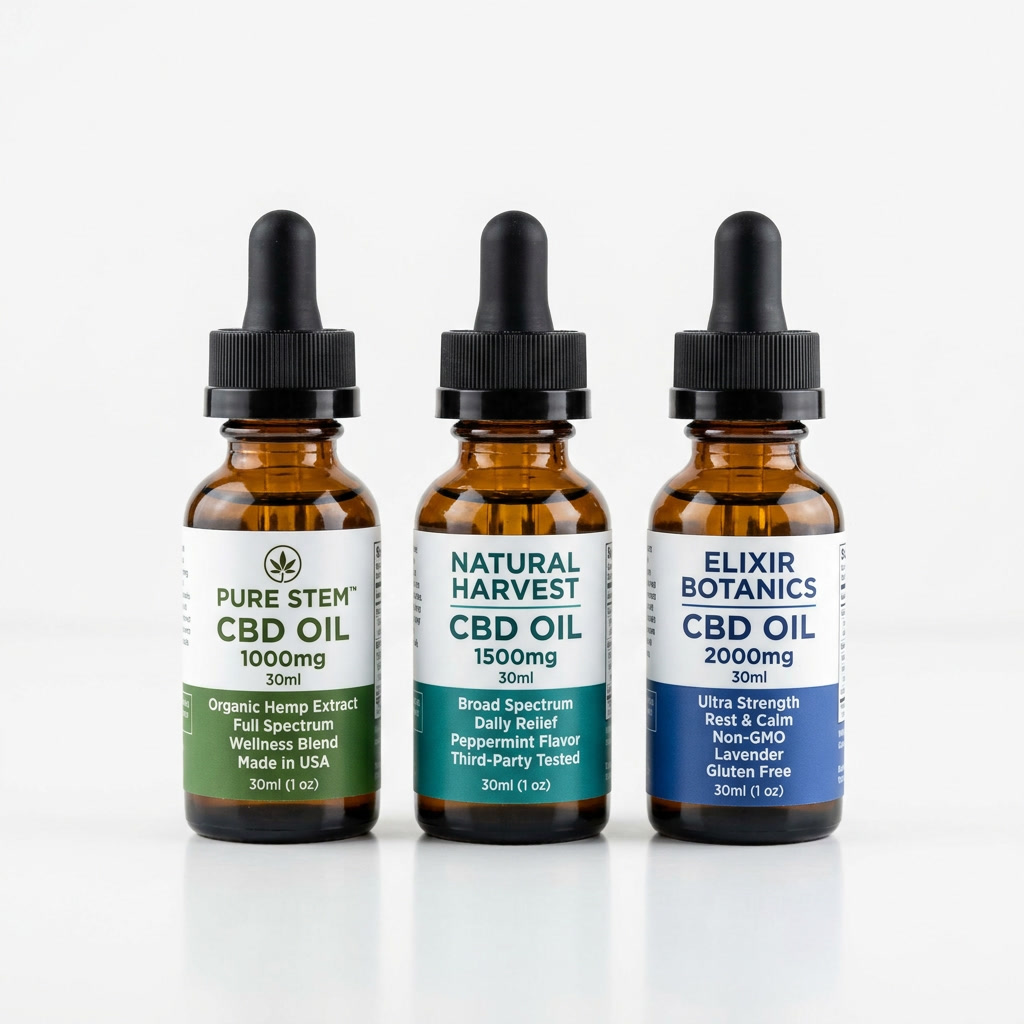
- Dosage: CBD oils are commonly taken as a few drops to a full dropper under the tongue, 1–3 times daily. Full-spectrum vs. broad-spectrum matters — full-spectrum contains trace THC, which some people prefer to avoid entirely.
- Therapeutic focus: Many people chose full-spectrum blends for the "entourage effect" during longer recoveries, while others prefer CBD isolate to keep things THC-free.
- Form: CBD oil tinctures remain the most popular because dosing is flexible and can be adjusted as recovery progresses.
If you're considering it, we have a full range of lab-tested CBD oils, CBD gummies, and CBD capsules — but never treat CBD as a substitute for medical care after a head injury.
The Gaps: What the Research Can't Tell You Yet
It would be misleading to present the recent data as settled. Let's be clear about the limits:
- Animal data ≠ human data. Most strong evidence comes from rodents. Rodent brains are a useful model, but not a substitute for human trials.
- No standard TBI dose exists. No clinical study has established an effective dose for TBI, so any amount you choose is an educated guess.
- Drug interactions are real. CBD affects liver enzymes (including CYP3A4 and CYP2D6) that metabolize many prescription drugs. After a brain injury, people often take several medications — always run CBD by a doctor or pharmacist first.
- Timing is unstudied. We don't know whether CBD is best started immediately after injury, days later, or during long-term recovery.
Who Should Be Careful With CBD After a Head Injury
Not everyone is a good candidate for CBD during a TBI recovery. It's worth being conservative in specific situations:
- People on multiple prescription medications (seizure drugs, anticoagulants, mood stabilizers) — CBD can interact with these.
- Anyone who just had major surgery or brain surgery.
- People with severe liver conditions.
- Pregnant or breastfeeding individuals (evidence on safety here is limited).
- Anyone still under an active medical treatment protocol for their injury — discuss CBD with your neurologist or care team first.
The safest approach, always: disclose your CBD use to your medical team. They can flag interactions you wouldn't anticipate.
A Note on legality and Quality
CBD products vary enormously in quality, and not all are what they claim to be. Third-party lab testing is the single most important factor — it confirms the amount of CBD actually in the product and verifies that it's free of contaminants and excessive THC. Only buy products with a certificate of analysis (CoA) you can actually read.
For an independent look at how to choose and verify a product, our CBD buying guide covers what to check in a lab report and how to compare brand transparency across retailers.
Bottom Line
The most recent research (2023–2026) provides a genuinely promising, biologically consistent picture: CBD reduces brain inflammation and cellular death in animal models of traumatic brain injury and repeated concussion, and it appears to act through several well-established pathways. That's real progress. But it is not yet proof of the human "recovery supplement" promise — there are no large human trials for TBI, no established dose, and no guarantee that lab findings translate. If you're recovering from a head injury, CBD is best viewed as a potential adjunct to professional care — one you should bring up with your neurologist — not a stand-in for it. Combined with good sleep, controlled activity, and medical supervision, a high-quality lab-tested CBD oil may deserve a place in your recovery plan. For everything else, we'll keep tracking the science as it evolves.
---
Find Your Perfect CBD Product
Take our 2-minute quiz to get personalized recommendations based on your needs.
Take the Quiz →Disclaimer: This article is for informational purposes only and does not constitute medical advice. CBD products are not FDA-approved to treat, cure, or prevent any disease. Always consult with a qualified healthcare professional before starting any new supplement, especially if you have a medical condition or take medications.