Can CBD Help With PMS and Menstrual Cramps? What the 2026 Research Says
It's that time of the month again. The dull ache low in your belly, the sharp cramps that make you curl into a ball, the fatigue, the irritability, the bloating. For millions of women, premenstrual syndrome (PMS) and menstrual cramps — the medical term is dysmenorrhea — are a monthly ritual of discomfort that can derail work, sleep, and mood. If you've ever wondered whether CBD could take the edge off, you're not alone. Interest in CBD for period pain has surged, and a growing body of research is finally starting to look at how cannabinoids interact with the female reproductive system.
But here's the honest part: the science is still young, and the evidence is more nuanced than the marketing suggests. Some studies point to real promise, while others caution that low doses may do very little. This guide breaks down what PMS and menstrual cramps actually are, how the endocannabinoid system fits in, what the latest research says, how to dose, which product types make sense, and the safety considerations every woman should weigh before trying CBD for her cycle.
What Are PMS and Menstrual Cramps?
Premenstrual syndrome is a collection of physical and emotional symptoms that appear in the days or weeks before your period and ease once bleeding starts. Common symptoms include bloating, breast tenderness, headaches, fatigue, food cravings, irritability, anxiety, and low mood. For most women the symptoms are manageable, but for some they're severe enough to interfere with daily life.
Menstrual cramps, or dysmenorrhea, are the throbbing or cramping pain in the lower abdomen that occurs just before and during menstruation. The pain happens because the uterus contracts to shed its lining, and those contractions are driven by hormone-like substances called prostaglandins. Higher prostaglandin levels mean stronger contractions and more pain. Primary dysmenorrhea has no underlying disease; secondary dysmenorrhea is linked to conditions like endometriosis or fibroids.
The two often overlap — many women experience both PMS symptoms and cramps in the same cycle. That's why CBD, which is being studied for both pain and mood, has become such a popular topic in women's health circles.
The Role of Inflammation
Inflammation sits at the center of the menstrual pain story. Prostaglandins don't just trigger uterine contractions — they also promote inflammation in the pelvic region. This inflammatory response is part of why cramps can feel so intense and why anti-inflammatory drugs like ibuprofen are a first-line treatment (compare CBD vs ibuprofen).
CBD is widely described as having anti-inflammatory properties, and this is one of the main reasons researchers are interested in it for period pain. If you want the full picture on how CBD interacts with inflammation, our CBD for inflammation guide breaks down the mechanisms and evidence. A 2026 literature review in JBRA Assisted Reproduction on CBD and THC in endometriosis highlighted the anti-inflammatory, antioxidant, and antiangiogenic effects of CBD seen in experimental models. The authors noted that these mechanisms could be relevant to the pain and inflammation that characterize gynecological conditions.
That said, most of the anti-inflammatory evidence comes from laboratory and animal studies, not large human trials. So while the mechanism is biologically plausible, it's important to treat "CBD reduces period inflammation" as a promising hypothesis rather than a proven fact.
The Endocannabinoid System and the Menstrual Cycle
The endocannabinoid system (ECS) is a signaling network that helps regulate pain, mood, appetite, sleep, and immune function. It's made up of cannabinoid receptors, endocannabinoids your body produces naturally, and enzymes that break them down. CBD interacts with this system, though not by binding to receptors the way THC does.
Here's what makes the ECS relevant to your cycle: cannabinoid receptors are present throughout the female reproductive tract, including the uterus and ovaries. Some researchers believe the ECS helps modulate uterine contractions and pain signaling during menstruation. When the system is out of balance, the theory goes, pain and inflammation may be amplified.
This is a compelling framework, but the direct evidence linking ECS function to PMS and cramps in humans is still limited. Most of what we know comes from animal models and mechanistic studies. It's reasonable to say the ECS is involved in menstrual pain regulation, but researchers are still working out exactly how CBD fits into that picture.
What the Research Actually Says
Let's be direct: there is no large, definitive clinical trial proving CBD cures menstrual cramps. The evidence is emerging, and it's mixed. Here's what the recent studies show.
A 2026 observational cohort study in BMC Complementary Medicine and Therapies followed women with endometriosis who used medicinal cannabis, including CBD oil, over 12 weeks. Overall pelvic pain dropped from 5.46 to 3.77 on a 10-point scale, worst pain fell from 7.62 to 5.38, and quality-of-life scores improved significantly. The authors concluded that medicinal cannabis was associated with reduced pain and better quality of life in some participants, while calling for larger controlled trials.
A 2024 survey in Archives of Gynecology and Obstetrics asked women with endometriosis in German-speaking countries about their cannabis use. The findings echoed what many patients report anecdotally: a substantial number said cannabis helped with their pain and other symptoms, even as they navigated access and stigma.
But the picture isn't all positive. A 2026 review in the British Journal of Clinical Pharmacology looked specifically at low-dose CBD — the kind found in most over-the-counter oils and gummies. The authors found very little evidence that low doses produced meaningful biological or therapeutic effects, and noted that randomized trials showed no benefit for pain, fibromyalgia, or stress at low doses. This is a crucial caveat: the dose matters enormously.
> "Low doses of CBD show very little evidence of any biological effect or therapeutic value." — British Journal of Clinical Pharmacology, 2026
So the honest summary is this: higher, more carefully studied doses of CBD show promise for pelvic pain, but the low doses in most consumer products may not do much. That's a gap you need to understand before you spend money.
Dosing: How Much CBD for Period Pain?
Dosing is where most people go wrong, and the research backs this up. The 2026 low-dose review noted that typical non-prescription recommendations range from about 10 to 70 mg per day — and found little evidence those doses work. Meanwhile, the studies showing benefit for pelvic pain generally used higher, more consistent dosing. For a step-by-step walkthrough, our CBD dosage guide covers how to find your effective dose.
A practical starting framework:
- Beginners: 10–20 mg daily, taken consistently
- Moderate users: 25–50 mg daily
- Higher-dose approach: 50–100 mg daily, closer to what research suggests may be needed
A few dosing principles worth keeping in mind:
- Start low and go slow — track your response for at least 2–3 weeks
- Take it consistently, not just on the worst day; CBD builds up in your system
- Consider starting a few days before your period is due
- Keep a simple journal of dose, timing, and symptom changes
- If you're not noticing anything at low doses, that's expected — not a failure
The takeaway: if you're going to try CBD for cramps, don't expect a 10 mg gummy to be a miracle. The research suggests you may need a more substantial dose, taken consistently, to see any effect.
CBD Oils and Tinctures
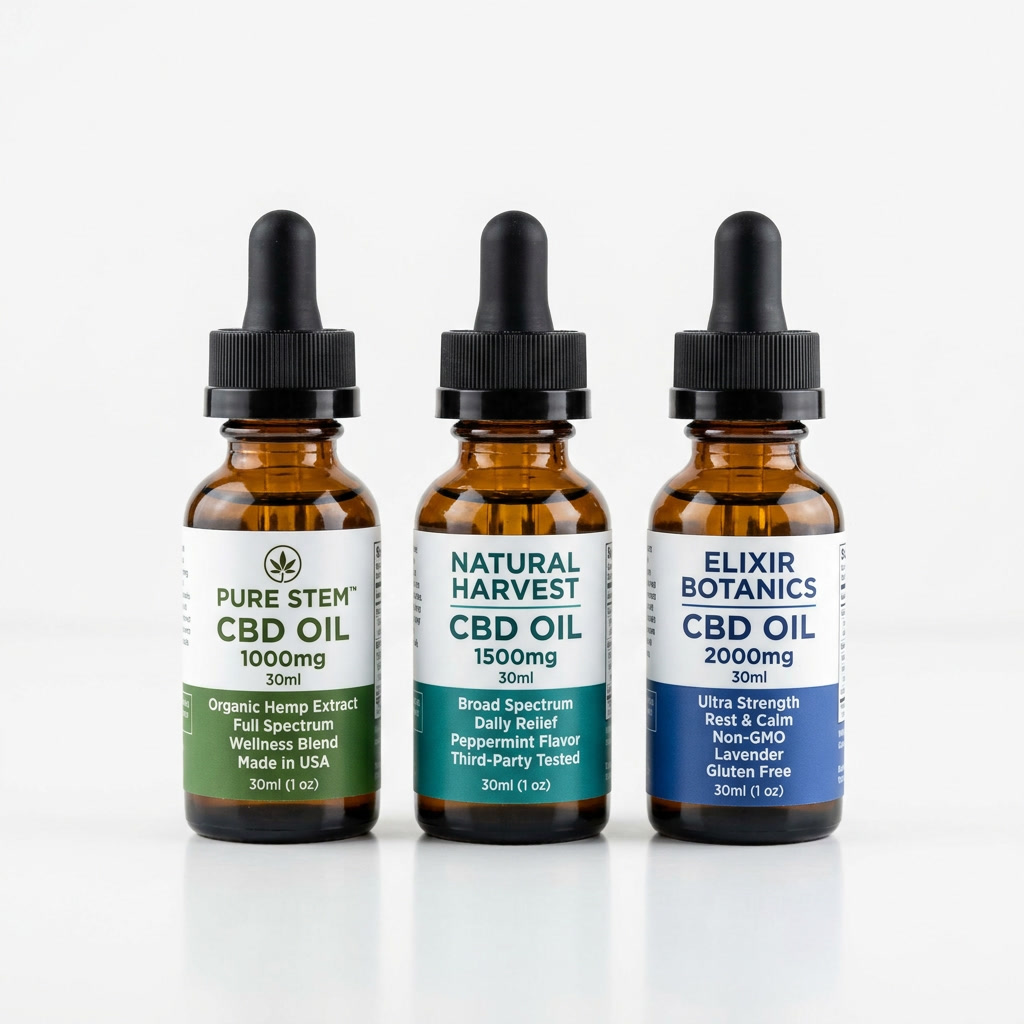
Oils and tinctures are the most flexible option and the easiest to dose precisely. You place drops under your tongue, hold for 30–60 seconds, and swallow. Sublingual absorption gets CBD into your bloodstream faster than swallowing a capsule, which can be useful when you want relief relatively quickly.
Oils are also the format used in most of the research on pelvic pain. The 2026 endometriosis cohort study used CBD oil as part of the treatment, and it's the delivery method researchers most often reach for when they want controlled, measurable dosing.
If you're considering an oil, look for a product with clear milligram labeling per drop, third-party lab testing, and a carrier oil like MCT or hemp seed oil. You can browse CBD oils and tinctures to compare options.
CBD Gummies
Gummies are the most convenient and discreet option, and they're hugely popular — but they come with a trade-off. Because they're swallowed and digested, the CBD is absorbed more slowly and less predictably than an oil taken sublingually. You also have less control over exact dosing, since each gummy is a fixed amount.
That said, gummies are a great choice if you want something easy to take consistently, which is exactly what the research suggests matters. A gummy you actually remember to take every day beats a precise oil you skip. Just be aware that the dose per gummy is often on the lower end, so you may need to take more than one to reach a meaningful amount.
For a convenient daily option, check out CBD gummies.
CBD Topicals for Cramps
Topicals — creams, balms, and salves applied directly to the skin — are a different animal. They don't enter your bloodstream in meaningful amounts, so they won't affect your mood or systemic symptoms. But they can target localized pain right where you apply them.
A 2026 pilot study in Cannabis and Cannabinoid Research tested a CBD-containing topical on 30 women with fibromyalgia and localized pain. After 12 weeks, localized pain improved significantly, with 60% of participants achieving a clinically meaningful reduction, and no adverse events were reported.
For menstrual cramps, a topical applied to the lower abdomen or lower back could offer localized relief without any psychoactive effects. The evidence is preliminary, but topicals have a strong safety profile and are a low-risk place to start if you're nervous about ingesting CBD.
Safety Considerations for Women
CBD is generally well tolerated, but it's not risk-free, and there are specific considerations for women. Here's what to keep in mind.
Drug interactions. The 2026 low-dose review flagged that CBD can interact with other medications even at low doses, including amitriptyline and hydromorphone. If you take any prescription medication — especially antidepressants, blood thinners, or seizure drugs — talk to your doctor before adding CBD.
Liver health. High doses of CBD have been associated with liver enzyme elevations in some studies. If you're using higher doses for period pain, it's worth being aware of this and discussing it with a healthcare provider.
Product quality. A 2025 evaluation in Nutrients reviewed CBD in foods and supplements and found that many products on the market are not authorized and may not be accurately labeled. This is a real concern — you want a product with third-party lab testing and clear labeling.
Pregnancy and breastfeeding. If you're pregnant, trying to conceive, or breastfeeding, most experts advise avoiding CBD. The evidence on safety in pregnancy is too limited to justify the risk.
Start conservatively. Because the research on low doses is underwhelming, some people are tempted to jump straight to high doses. A better approach is to start low, monitor how you feel, and increase gradually under guidance.
The Bottom Line
CBD for PMS and menstrual cramps is a genuinely promising area, but the honest truth is that the evidence is still emerging and the results are mixed. Studies on pelvic pain — particularly in endometriosis — show real reductions in pain and improvements in quality of life, and topicals appear safe and potentially helpful for localized discomfort. But a 2026 review cautions that the low doses found in most consumer products may not produce meaningful effects.
If you want to try it, the smartest approach is to choose a high-quality, third-party-tested product, use a dose on the higher end of what research suggests, take it consistently across your cycle, and track your results. Start with a CBD oil for flexible dosing or a CBD gummy for convenience, and consider a topical for localized cramp relief. And always check with your doctor first, especially if you take other medications.
CBD isn't a magic cure for your period. But for some women, it may be a useful tool in the monthly toolkit — one worth exploring carefully, with realistic expectations and a clear eye on the evidence.
Find Your Perfect CBD Product
Take our 2-minute quiz to get personalized recommendations based on your needs.
Take the Quiz →Disclaimer: This article is for informational purposes only and does not constitute medical advice. CBD products are not FDA-approved to treat, cure, or prevent any disease. Always consult with a qualified healthcare professional before starting any new supplement, especially if you have a medical condition or take medications.