CBD Market Trends 2026: What's Selling, What's Fading, and Where the Industry Is Going
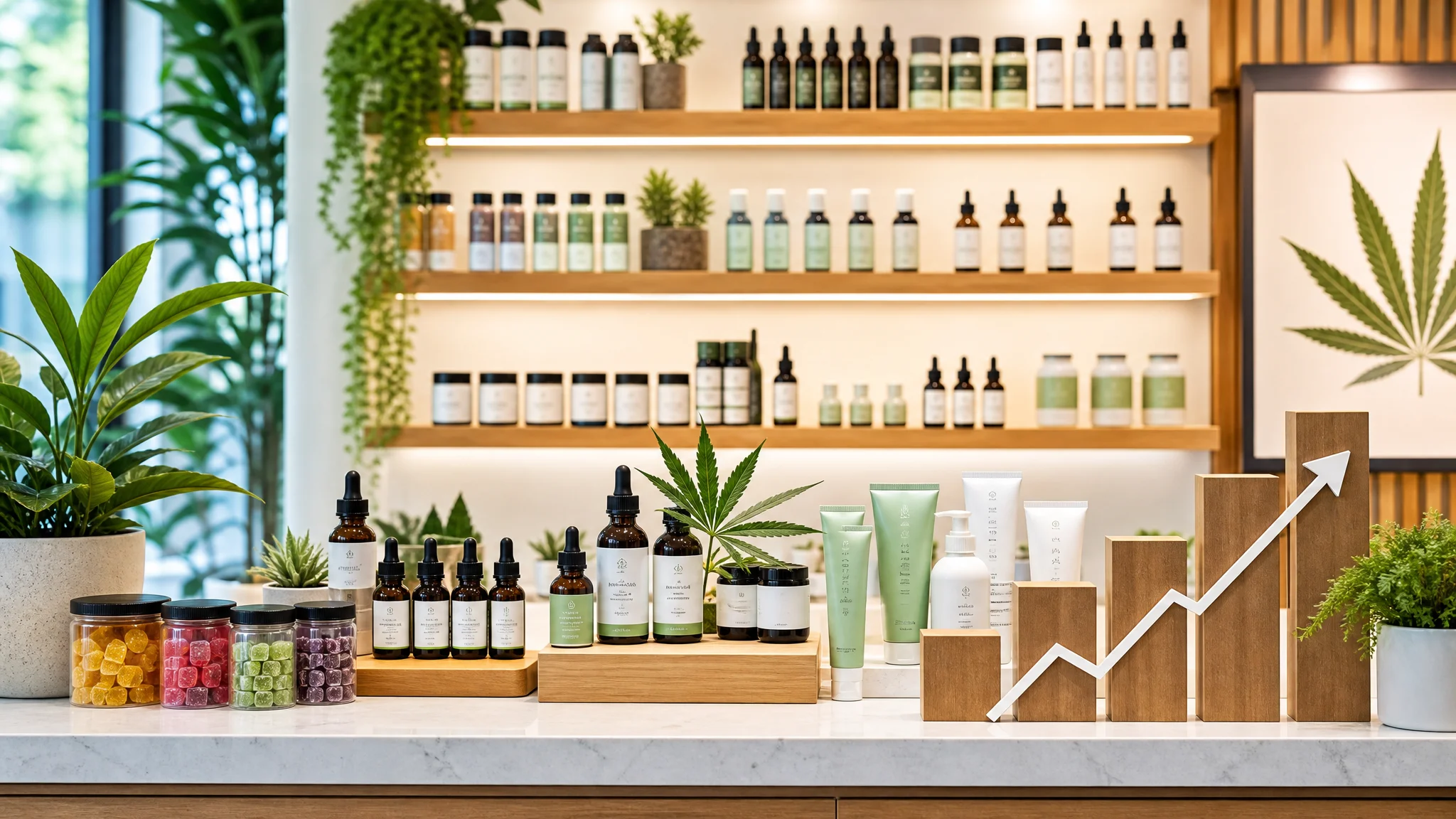
Walk into any wellness store in 2026 and you'll see it: an entire wall of CBD products that wasn't there three years ago. Gummies in flavors you've never heard of. Beverages promising calm energy. Topicals for everything from sore muscles to pet anxiety. Your neighbor swears by her CBD sleep routine. Your gym buddy takes CBD for recovery. Even your skeptical uncle keeps a tincture in his medicine cabinet.
This isn't gradual adoption anymore. CBD has gone mainstream.
But here's what nobody talks about: the market is changing fast. What sold in 2024 doesn't move in 2026. Consumers are smarter, more demanding, and far less tolerant of marketing hype. Some product categories are exploding. Others are quietly disappearing. And the brands winning today look nothing like the CBD pioneers of five years ago.
We analyzed market data, industry reports, and consumer trends to map where the CBD market actually stands in 2026 — what's working, what's failing, and where smart money is heading next.
---
The Market Is Bigger Than Ever (But Growth Has Shifted)
Market Size Reality Check
The global CBD market has reached a scale that would have seemed impossible a decade ago. Industry analyses from firms like Grand View Research and ResearchAndMarkets have projected the market at approximately $15-16 billion in 2025, with 2026 projections ranging from $19-21 billion depending on methodology and geographic scope.
But here's the critical insight: growth rates are moderating. The explosive 40-50% year-over-year increases of 2020-2023 have given way to more sustainable 25-35% annual growth. This isn't a warning sign — it's a maturation signal.
What the numbers mean:
- Early adopter phase is over
- Mainstream consumers are now the majority
- Quality and consistency matter more than novelty
- Regulatory clarity is slowly improving
A Grand View Research report noted that North America continues to dominate the global CBD market, accounting for the largest revenue share. Europe follows as the fastest-growing region, driven by regulatory harmonization across EU member states.
> "The CBD industry is transitioning from a gold rush mentality to a sustainable consumer packaged goods category. Winners will be brands that operate like CPG companies, not cannabis startups."
---
What's Hot: Product Categories Exploding in 2026
CBD Beverages Are Finally Having Their Moment
Remember when CBD drinks were everywhere in 2019, then vanished by 2021? They're back — but different.
2026 beverage trends:
- Functional waters — CBD + electrolytes + nootropics for hydration and focus
- Ready-to-drink teas — CBD paired with adaptogens like ashwagandha and L-theanine
- Sparkling beverages — Lower sugar, cleaner ingredients, 10-25mg CBD per can
- Coffee shop partnerships — Major chains testing CBD-infused cold brew options
Why beverages work now:
- Better water-soluble CBD technology (nanoemulsion)
- Faster onset (15-30 minutes vs. 60+ for traditional edibles)
- Consistent dosing (every sip delivers predictable CBD)
- Social acceptability (looks like any other beverage)
[Explore CBD beverages →](/products?category=cbd-beverages)
---
Gummies Remain King (But Premiumization Is Real)
Gummies overtook oils as the top CBD product format in 2024, and they're not relinquishing the crown. But the gummy market has split into two distinct tiers:
Budget tier ($0.02-0.05 per mg CBD):
- Basic full-spectrum or isolate
- Standard flavors (berry, citrus, tropical)
- 10-25mg per gummy
- Sold online and in mass retail
Premium tier ($0.08-0.15 per mg CBD):
- Nano-enhanced for faster absorption
- Added functional ingredients (CBN for sleep, CBG for focus)
- Clean label (organic, vegan, no artificial colors)
- 25-50mg per gummy
- Specialty retailers and DTC subscriptions
What's fading: Generic white-label gummies with no differentiation. If your gummy looks identical to 50 others on Amazon, you're competing on price alone — and losing.
[Shop CBD gummies →](/products?category=cbd-gummies-and-edibles)
---
Topicals Are the Sleeper Success Story
While oils and gummies get the attention, topicals have quietly become the most loyal customer segment. Why? They work for specific use cases without systemic effects.
Top-performing topical formats:
- Roll-on applicators — Mess-free application for athletes and active users
- High-potency creams (3000-7500mg per container) — For chronic pain and inflammation
- Targeted formulations — Arthritis blends, muscle recovery, skincare-specific
- Transdermal patches — Extended release over 8-12 hours
A key driver: topicals avoid the first-pass metabolism issue of oral CBD. The CBD stays localized, which means lower doses can be effective for joint and muscle pain.
[Browse CBD topicals →](/products?category=cbd-topicals-and-creams)
---
Pet CBD Has Gone Mainstream
The pet CBD market has grown alongside human products, and veterinarians are increasingly open to discussing CBD with pet owners. Key trends:
Pet product winners:
- Species-specific formulations — Dog oils, cat tinctures, horse pellets
- Clear dosing guides — Weight-based recommendations on every bottle
- Third-party testing — Pet owners demand the same transparency as human products
- THC-free guarantees — Broad spectrum or isolate only (never full spectrum for pets)
Price points:
- Small dogs/cats: $15-25 for 90-250mg bottles
- Medium/large dogs: $25-45 for 250-750mg bottles
- Horses/livestock: $50-100+ for bulk formulations
[View CBD for pets →](/products?category=cbd-for-pets)
---
What's Fading: Categories Losing Momentum
Delta-8 THC Products Face Reckoning
Delta-8 THC exploded in 2021-2023 as a legal loophole alternative to delta-9 THC. In 2026, the party's over.
Why Delta-8 is declining:
- FDA warnings — Multiple safety alerts about contamination and accidental ingestion
- State bans — Over 20 states have restricted or banned Delta-8
- Quality concerns — Unregulated synthesis processes, inconsistent potency
- Consumer confusion — Users don't understand the difference between Delta-8, Delta-9, and CBD
Smart brands are pivoting away from Delta-8 toward compliant alternatives: hemp-derived Delta-9 (where legal), minor cannabinoids like CBN and CBG, or pure CBD formulations.
---
Gas Station CBD Is Dead (Good Riddance)
In 2020-2022, you could find CBD anywhere: gas stations, convenience stores, vape shops. Much of it was low-quality, mislabeled, or contaminated.
What changed:
- Consumer education — Buyers now know to check for COAs
- Retail consolidation — Quality-focused retailers displaced discount channels
- Brand reputation matters — Unknown brands struggle against established names
- Lab testing is table stakes — No COA = no sale
The lesson: distribution breadth doesn't matter if the product damages your brand.
---
Single-CBD Products Are Being Replaced
Pure CBD isolate had its moment. Now consumers want cannabinoid stacks:
Winning combinations:
- CBD + CBN — Sleep support (the most proven combo)
- CBD + CBG — Focus and mood (early but promising data)
- CBD + CBC — Inflammation and pain (niche but growing)
- Full-spectrum blends — All cannabinoids at natural ratios
Why this matters: The entourage effect isn't just marketing anymore. Multiple studies suggest cannabinoids work better together than in isolation. Brands selling single-ingredient products are leaving value on the table.
---
The Technology Shift: Nano, Liposomal, and bioavailability Wars
Nano-Enhanced CBD Is No Longer Optional
Nanoemulsion technology breaks CBD into microscopic particles (typically 20-100 nanometers) that mix with water and absorb faster. In 2026, this has moved from premium differentiator to baseline expectation.
Benefits of nano CBD:
- Faster onset — 15-30 minutes vs. 60-90 minutes for traditional oils
- Higher bioavailability — More CBD reaches your bloodstream (less wasted)
- Better mixing — Works in beverages without separation
- Lower effective dose — 10mg nano may equal 25mg traditional
The catch: Nano processing adds cost. Budget brands skip it. Premium brands lead with it.
---
Liposomal Delivery Gains Traction
Liposomal CBD encapsulates molecules in fat bubbles (liposomes) that protect CBD from digestion and improve absorption. It's more expensive than nano, but some studies suggest even better bioavailability.
Current state:
- Primarily in premium products ($80+ price points)
- Most common in tinctures and softgels
- Limited independent verification of claims
- Early adopter phase (not yet mainstream)
Bottom line: Nano is proven and widespread. Liposomal is promising but still emerging. Both represent the industry's focus on solving CBD's biggest weakness: poor oral bioavailability.
---
Price Wars: Race to the Bottom or Value Opportunity?
Commodity CBD Is Here
Bulk CBD isolate prices have dropped dramatically since 2020. What cost $20-30 per gram wholesale now costs $3-8 per gram depending on quantity and quality.
Impact on retail pricing:
What this means for buyers:
- Quality CBD is more affordable than ever
- Price no longer indicates quality reliably
- Brand premiums are harder to justify
- Private label competition is fierce
[Compare CBD oil prices →](/products?category=cbd-oils-and-tinctures)
---
The Premium Paradox
Despite commodity pricing, premium CBD products ($80-150+) continue to sell well. How?
Premium differentiators:
- Organic certification — USDA Organic commands 30-50% premiums
- Proprietary formulations — Unique cannabinoid ratios, added botanicals
- Brand trust — Established names with years of consistent quality
- Subscription models — Auto-ship discounts lock in customers
- Clinical backing — Products tied to research or medical endorsements
The middle is collapsing. Brands must choose: compete on price (volume game) or differentiate on quality (margin game). Straddling both rarely works.
---
Regulatory Landscape: Progress and Persistent Gaps
FDA Still Hasn't Approved CBD as a Supplement
As of 2026, the FDA maintains that existing dietary supplement and food frameworks are "not appropriate for cannabidiol." The agency has cited concerns about:
- Liver toxicity at high doses
- Drug interaction potential (CYP450 enzyme inhibition)
- Reproductive health risks
- Lack of long-term safety data
Practical impact:
- CBD remains in a regulatory gray zone
- Interstate commerce complications persist
- Banking and payment processing remain challenging
- Major retailers hesitate to expand CBD assortments
---
State-by-State Patchwork Continues
Federal inaction has pushed regulation to state level, creating a complex compliance landscape:
Permissive states (clear CBD rules, minimal restrictions):
- Colorado, Oregon, California, Florida, Texas
Restrictive states (tight controls or de facto bans):
- Idaho, Nebraska, South Dakota (historically strict, slowly evolving)
Key compliance requirements:
- THC content ≤0.3% (federal hemp definition)
- Third-party lab testing (required in most states)
- Age restrictions (18+ or 21+, varies by state)
- Labeling rules (specific disclaimers, ingredient lists)
For brands: Compliance teams have become essential. One-state violations can trigger nationwide distribution problems.
---
International Markets Open (Slowly)
Europe leads international expansion:
- UK — CBD widely available as consumer product (FSA novel food process)
- Switzerland — Progressive cannabis laws, CBD-friendly
- Germany — Medical cannabis framework expanding to CBD
- EU-wide — Novel Food authorization process ongoing
Challenges:
- Each country has unique rules
- Import/export documentation burdensome
- THC limits vary (0.2% in EU, 0.3% in US, 0.0% in some Asian countries)
- Cultural acceptance differs significantly
---
Consumer Behavior: Who's Buying CBD in 2026?
Demographics Have Broadened
Early CBD buyers were predominantly:
- Ages 25-45
- College-educated
- Urban/suburban
- Wellness-oriented
- Willing to experiment
2026 CBD consumers include:
- Seniors (65+) — Fastest-growing demographic, focused on pain and sleep
- Gen Z (18-24) — Anxiety and stress management, prefers gummies/beverages
- Parents — Seeking alternatives to OTC medications for kids (with pediatrician approval)
- Athletes — Recovery and inflammation (post-CBD ban removal in sports)
- Pet owners — Treating animal anxiety, pain, age-related conditions
---
Purchase Drivers Have Evolved
2020 purchase drivers:
- Curiosity and experimentation
- General wellness interest
- Influencer recommendations
- Broad claims ("helps everything!")
2026 purchase drivers:
- Specific symptom relief — "Helps me sleep," "Reduces my back pain"
- Trust and transparency — COAs, brand reputation, third-party certifications
- Value — Cost per mg comparisons, subscription discounts
- Format preference — "I hate pills, give me gummies" or "I want precise dosing, give me oil"
Key insight: CBD has shifted from aspirational wellness to practical problem-solving. Marketing that acknowledges this performs better.
---
Loyalty Is Hard to Earn (But Valuable)
CBD brands face brutal retention challenges:
- Trial is easy — Low-cost entry products ($10-20 gummies)
- Repeat is hard — Users don't feel dramatic effects immediately
- Churn is high — 60-70% of first-time buyers don't return within 90 days
- Winners focus on onboarding — Email sequences, dosing guides, check-in reminders
Successful retention tactics:
- Educational content (how to use, what to expect)
- Dosing tracking tools (apps, journals)
- Community building (user groups, testimonials)
- Subscription incentives (15-20% discounts, free shipping)
---
Where the Industry Is Heading: 2027-2030 Predictions
Consolidation Is Coming
The CBD market currently has hundreds of brands. Most won't survive the next 3-5 years.
Consolidation drivers:
- Margin pressure — Commodity pricing squeezes small players
- Compliance costs — Testing, legal, regulatory expertise expensive
- Retail gatekeepers — Limited shelf space favors established brands
- Acquisition targets — Large CPG companies waiting for regulatory clarity
Prediction: By 2030, the top 10 brands will control 60-70% of the market (vs. ~30% today).
---
Pharmaceutical CBD Will Expand
Epidiolex (FDA-approved CBD medication) proved pharmaceutical-grade CBD works for specific conditions. Expect more pharma investment:
Likely developments:
- Additional FDA approvals for specific indications (anxiety, PTSD, certain pain types)
- Prescription CBD products with standardized dosing
- Insurance coverage for medically-indicated CBD use
- Clinical trial data validating (or refuting) consumer CBD claims
Tension point: Pharma CBD will coexist uneasily with consumer CBD. One is regulated, tested, and prescribed. The other remains largely unregulated.
---
Minor Cannabinoids Will Drive Innovation
CBD opened the door. Now other cannabinoids are walking through:
Cannabinoids to watch:
- CBN (Cannabinol) — Sleep support, already mainstream
- CBG (Cannabigerol) — Focus, mood, early-stage research
- CBC (Cannabichromene) — Inflammation, pain, niche but promising
- THCV (Tetrahydrocannabivarin) — Appetite suppression, metabolic support
Market implication: "CBD brands" will become "cannabinoid brands." Product lines will expand beyond CBD-dominant formulations.
---
Retail Experience Will Mature
Current CBD retail ranges from sketchy vape shops to upscale wellness boutiques. Expect standardization:
Future retail models:
- Specialty CBD stores — Knowledgeable staff, wide selection, testing transparency
- Pharmacy integration — CVS, Walgreens expand CBD sections (state-dependent)
- Grocery/natural foods — Whole Foods, Sprouts normalize CBD alongside supplements
- Medical dispensaries — Cannabis retailers add CBD-only options for non-medical users
Online remains dominant: 60-70% of CBD sales happen via DTC or Amazon-style marketplaces. But physical retail provides discovery and trust-building that pure digital can't match.
---
The Bottom Line
The CBD market in 2026 looks nothing like the CBD market of 2020. The gold rush is over. The shakeout has begun. And the brands winning aren't the ones with the flashiest marketing — they're the ones treating CBD like what it's become: a mainstream consumer product with real benefits, real limitations, and real competition.
What's working:
- Beverages with functional benefits
- Premium gummies with clean labels
- Topicals for targeted relief
- Pet-specific formulations
- Nano-enhanced delivery
- Transparent lab testing
What's fading:
- Delta-8 loophole products
- Gas station CBD
- Single-ingredient isolates
- Unverified health claims
- White-label commoditization
Where it's going:
- Consolidation (fewer, bigger brands)
- Pharmaceutical validation (more clinical data)
- Cannabinoid diversification (beyond just CBD)
- Retail maturation (professional, knowledgeable, trustworthy)
For consumers: This is the best time to buy CBD. Quality is higher, prices are lower, and options are broader than ever. Just do your homework — check COAs, start low, and track your results.
For brands: The easy money is gone. The next wave belongs to operators who combine cannabis knowledge with CPG discipline. Build for the long term, or don't build at all.
[Explore our full CBD catalog →](/products)
---
Last Updated: July 31, 2026
Author: Echo 🌀
Category: Trends
Find Your Perfect CBD Product
Take our 2-minute quiz to get personalized recommendations based on your needs.
Take the Quiz →Disclaimer: This article is for informational purposes only and does not constitute medical advice. CBD products are not FDA-approved to treat, cure, or prevent any disease. Always consult with a qualified healthcare professional before starting any new supplement, especially if you have a medical condition or take medications.