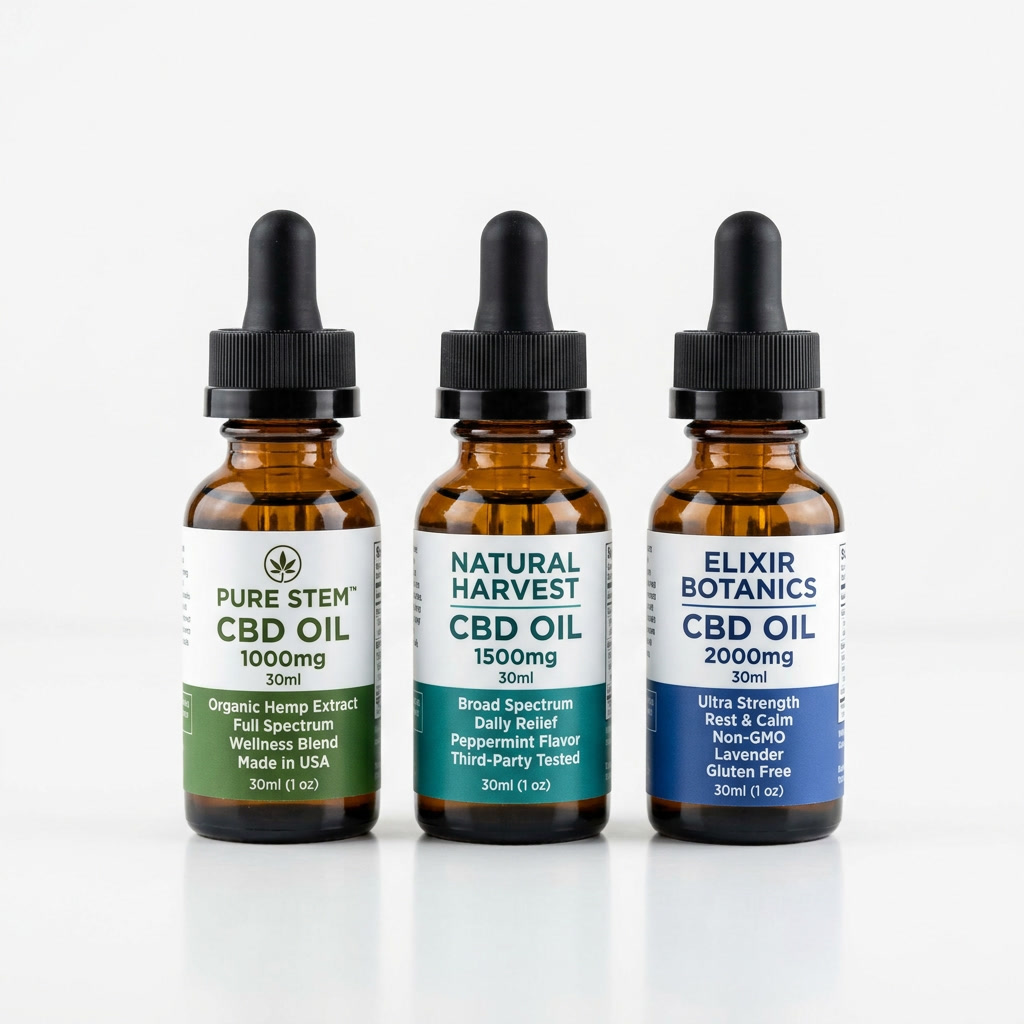
CBD for Generalized Anxiety Disorder (GAD): What the 2023–2026 Research Says

Picture this: your mind is replaying the same worry on a loop at 11 p.m., your shoulders are tight, and tomorrow's to-do list already feels impossible. That gnawing, hard-to-switch-off anxiety is the everyday reality of generalized anxiety disorder CBD for anxiety, or GAD — one of the most common mental health conditions in the world, affecting roughly 301 million people globally in 2019. For years, treatment has leaned on therapy and a handful of medications like SSRIs, but many people find these options slow, incomplete, or burdened by side effects. That gap is exactly why so many are turning to CBD.
CBD, or cannabidiol, is one of the fastest-rising wellness ingredients on the market. Around 10.5% of the U.S. population now reports using it for therapeutic purposes, and anxiety is the single most-cited reason. But here's the critical question: does the science actually back it up? Between 2023 and 2026, a wave of new systematic reviews, meta-analyses, and randomized trials has started to give a much clearer — and more honest — answer.
This guide breaks down what the newest research really says about CBD and GAD: where the evidence is strong, where it's still thin, how dosing matters, what the safety data shows, and how CBD fits (or doesn't) alongside therapy and medication. No hype, no fabrication — just a straight read of the current science.
What Is Generalized Anxiety Disorder, Exactly?
Generalized anxiety disorder isn't the occasional worry everyone feels before a big event. It's excessive, hard-to-control anxiety about everyday things — work, money, health, family — that persists most days for at least six months, even when there's little to trigger it. Alongside the mental tension, GAD often shows up physically: muscle tightness, fatigue, trouble sleeping, restlessness, and difficulty concentrating.
Diagnosis relies on tools like the GAD-7 questionnaire and the Hamilton Anxiety Rating Scale (HAM-A), which you'll see referenced throughout the CBD research. These standardized scales are what let researchers measure whether a treatment actually moves the needle.
GAD also frequently travels with depression and sleep disturbances, which means any treatment worth its salt has to consider those too. This "comorbidity" is a big reason the CBD trials worth paying attention to report on depression and sleep as well as anxiety.
What the Newer Research Actually Shows
Let's be direct: the evidence for CBD and anxiety has matured a lot since 2023, and the picture is genuinely more nuanced than either the hype or the skeptics suggest.
A Large 2024 Meta-Analysis Found a Substantial Effect
One of the most frequently cited recent analyses is a 2024 systematic review and meta-analysis in Psychiatry Research. Pooling data from eight eligible studies with 316 participants, the researchers calculated a large, significant effect of CBD on anxiety, with a Hedges' g of -0.92 (95% CI -1.80 to -0.04).
> "This meta-analysis revealed a substantial significant impact of CBD on anxiety with a considerable effect size."
That's an impressive number — but the authors themselves add an important caveat, warning that the findings should be interpreted with "caution due to the limited size of the clinical sample." In other words: promising signal, small sample.
A 2025 Review Was More Guarded
A second major review, published in Cannabis and Cannabinoid Research in late 2025, cast a wider net. It analyzed 21 placebo-controlled randomized trials across social anxiety CBD for social anxiety disorder, GAD, PTSD, and other conditions. For GAD specifically, the evidence base was strikingly thin — just one RCT — and the authors concluded that:
> "Low-quality evidence suggests that pharmaceutical-grade CBD may have limited efficacy for SAD and GAD."
Importantly, this review also found that pharmaceutical-grade CBD showed a moderate, statistically significant effect when analyzed on its own (SMD -0.61), even if results across all CBD formulations didn't always reach significance. The takeaway? Product purity and formulation matter enormously — a point we'll return to under dosing.
Phase 3 Trial Data Is a Bright Spot
Perhaps the most encouraging single data point comes from a 2024 phase 3 randomized controlled trial in the Asian Journal of Psychiatry. Researchers tested a nanodispersible CBD oral solution against placebo in 178 adults with mild to moderate anxiety over 15 weeks.
The results were striking:
- GAD-7 score improvement of -7.02 points versus placebo (p<0.0001)
- HAM-A score improvement of -11.9 points versus placebo (p<0.0001)
- Improvements also seen in depression (PHQ-9) and sleep quality (PSQI)
- No serious adverse events reported
That's the kind of signal — a statistically significant, meaningful shift on both primary anxiety scales, with no serious safety issues — that has researchers cautiously optimistic about purified CBD formulations.
What the Systematic Reviews Conclude (and Warn)
When you step back and look at the 2023–2026 review landscape, a consistent theme emerges. Let's separate what's solid from what's still up in the air.
The Consistent Findings Across Reviews
- CBD shows genuine anxiolytic potential in meta-analyses, with effect sizes ranging from moderate to large depending on the review.
- Pure, pharmaceutical-grade CBD performs better than mixed or low-quality products in head-to-head comparisons.
- High doses of CBD were the most consistent predictor of acute anxiety relief in a 2025 systematic review in Clinical Psychology Review.
- No study has demonstrated long-lasting, curative effects — the benefits are best described as short-term symptom relief.
The Clinical Psychology Review paper put it plainly: medicinal cannabis may offer short-term relief for certain symptoms, "but is not a cure or without mental health risks."
The Honest Limitations
Here's where honesty matters. A 2026 meta-analysis in The Lancet Psychiatry — generally regarded as one of the most rigorous recent summaries — found that the evidence for cannabinoids across mental disorders is still insufficient to support broad clinical use. The JAMA 2026 review reached a similar conclusion: evidence is insufficient for most medical indications, and guidance from clinicians is essential.
So the fair summary is this: the 2023–2026 research supports CBD as a promising, generally well-tolerated option for anxiety symptoms — not as an established, FDA-approved treatment for GAD itself. That distinction matters, and you deserve to hear both sides.
Dosing: Finding the Amount That Works
Dosing is where CBD gets genuinely difficult, because there's no universal answer. Here's what the recent data points to.
What the Trials Actually Used
- The 2024 phase 3 trial used a high-concentration nanodispersible oral solution taken daily over 15 weeks.
- The meta-analyses that found positive effects tended to involve higher daily doses and consistent daily use.
- The 2025 Clinical Psychology Review found that high doses of CBD were most consistently associated with acute anxiety relief.
A Practical Starting Framework
- Beginners: 10–20 mg once daily
- Moderate users: 25–50 mg daily, often split into two doses
- Experienced/higher-need users: 50–100+ mg daily
A sensible approach for anyone with GAD:
1. Start low, around 10–20 mg daily
2. Keep a journal of dose, timing, anxiety level, and side effects
3. Hold at a dose for 5–7 days before changing
4. Increase gradually by 5–10 mg only if needed
5. Find your minimum effective dose and stay there
A caveat: because the published trials used specific purified formulations, your over-the-counter product may not deliver identical results. Quality and potency vary widely, and that's not something any label can fully guarantee.
Safety, Side Effects, and Drug Interactions
The safety profile of CBD is one of its biggest advantages — and also one of the areas where you need the most caution.
The Good News
CBD is generally well tolerated. In the 2024 phase 3 trial, there were no serious adverse events. Unlike THC, CBD does not produce a "high," which is one of the reasons it's so appealing to people who want anxiety relief without intoxication. Common, usually mild side effects include:
- Fatigue or drowsiness
- Dry mouth
- Changes in appetite
- Diarrhea at higher doses
The Warnings You Must Heed
- Drug interactions are real. CBD is metabolized by liver enzymes and can interact with blood thinners, antidepressants, and seizure medications. Always talk to your doctor first.
- The THC problem. The 2026 JAMA review highlighted that high-potency THC cannabis is associated with increased rates of GAD — one analysis cited by the review found GAD in 19.1% of high-potency users versus 11.6% of low-potency users. If you choose a full-spectrum product, THC content matters.
- Product quality. CBD is unregulated as a supplement, and label accuracy is inconsistent. Choose products with third-party lab testing you can actually see.
- Avoid combining CBD with alcohol or benzodiazepines without medical supervision.
How CBD Fits Beside Therapy and Medication
Where should CBD sit in your treatment plan? Here's an evidence-based perspective.
The Standard-of-Care Baseline
First-line treatment for GAD remains therapy (especially cognitive-behavioral therapy) and SSRIs like sertraline or escitalopram. A 2025 treatment algorithm in the Journal of Geriatric Psychiatry and Neurology reaffirmed SSRIs as first-line, with options like SNRIs, pregabalin, and even lavender oil as later trials. Notably, that same algorithm assigned cannabidiol low-priority status but acknowledged it has "some supportive evidence" — a fair one-line summary of where CBD stands.
Where CBD Could Add Value
The most realistic role for CBD right now is as a complementary tool, not a replacement:
- For people who want additional support while starting or adjusting therapy
- For those who can't tolerate or don't respond to first-line medications
- For short-term symptom relief during high-stress periods
- For people who specifically want to avoid THC's psychoactive effects
Where It Should Not Sit
- Not a substitute for evidence-based treatment in moderate-to-severe GAD
- Not an acute rescue medication — effects tend to build with consistent daily use rather than providing immediate relief
- Not a cure — current research points to short-term relief, not lasting resolution
The responsible framing: talk to a clinician, keep any prescribed treatment on track, and treat CBD as one more input worth trying under supervision.
Action Steps: If You Want to Try CBD for GAD
If you're considering CBD, here's a practical, safety-first sequence:
1. Talk to your doctor or psychiatrist first — especially if you take any daily medication. Check for drug interactions before you buy anything.
2. Choose a quality product with third-party lab results and minimal THC. A CBD isolate or broad-spectrum product is the lowest-risk starting point (see our CBD oils and tinctures for tincture options that make dosing easy to control).
3. Start low and go slow — 10–20 mg daily for a week before any increase.
4. Journal everything — dose, time of day, anxiety level, sleep, side effects. Patterns emerge within 2 weeks.
5. Be consistent — the positive trial data comes from daily use over multiple weeks, not occasional use.
6. Reassess at 3–4 weeks — if you feel no benefit or any worsening, stop and talk to your clinician.
7. Keep therapy on track — CBD is a complement, not a replacement, for professional treatment.
For a more convenient format, many people prefer CBD gummies and edibles for consistent, portioned dosing — just be aware that edibles take longer to kick in and have a milder peak.
The Bottom Line
The 2023–2026 research genuinely moves the conversation forward. Meta-analyses show CBD has a real, measurable effect on anxiety symptoms, and a phase 3 trial reported significant improvements in GAD-7 and HAM-A scores with no serious adverse events. At the same time, the most rigorous reviews are honest that the evidence is still limited for GAD specifically, that effects look short-term rather than curative, and that product quality and dosing shape outcomes enormously.
The fair summary: CBD is a promising, generally well-tolerated complementary option for GAD symptoms — not yet an established treatment in its own right.
Anxiety symptoms also overlap heavily with obsessive-compulsive disorder, which has a different evidence base entirely. We covered that separately in CBD for OCD. The safest path is to pair it with professional care, choose a high-quality, low-THC product, dose consistently and gradually, and track your results honestly. If a clinician signs off and your data shows improvement, CBD may earn a real place in your anxiety toolkit.
Note: This article is for general information and is not medical advice. Always consult a qualified healthcare provider before starting CBD, particularly if you take other medications or have an existing condition.
For more on this, see our guide on talking to your doctor about CBD.
Find Your Perfect CBD Product
Take our 2-minute quiz to get personalized recommendations based on your needs.
Take the Quiz →Disclaimer: This article is for informational purposes only and does not constitute medical advice. CBD products are not FDA-approved to treat, cure, or prevent any disease. Always consult with a qualified healthcare professional before starting any new supplement, especially if you have a medical condition or take medications.