Can CBD Help Broken Bones Heal? Separating Lab Promise From Real Life

A broken bone sounds like a straightforward problem. The bone cracks, a doctor sets it, you wait a while, and the body handles the rest. Anyone who has actually lived through a fracture knows the truth is messier. Healing takes weeks or months. Some people heal slowly. A few fractures refuse to knit together at all. So it makes sense that people start searching for anything that might give the body a nudge, and CBD often ends up on that list. This article walks through what recent laboratory research actually says about CBD and bone healing, and just as importantly, what it does not say. The short version is that the science is genuinely interesting and genuinely early, which are two different things.
Why Bone Healing Is Harder Than It Looks
Bone looks like a solid, inert thing, like a piece of chalk. It is closer to a busy construction site that never fully closes. Your skeleton is constantly being torn down and rebuilt by two teams of cells. Osteoblasts build new bone. Osteoclasts break old bone down. When you fracture a bone, both teams get pulled into an emergency project. There is bleeding, then a clot, then a soft callus, then a hard callus, then a long remodeling phase where the messy repair is slowly reshaped into normal bone.
None of that works without a blood supply. Healing bone needs oxygen and nutrients delivered by new blood vessels, a process called angiogenesis. It also needs controlled inflammation, because inflammation is not the enemy here. The right amount of inflammation at the right time signals repair cells to arrive. Too little and the repair stalls. Too much and the tissue gets damaged instead of rebuilt. So any substance that claims to help bone healing has to plug into a system that is already delicate and highly regulated. That context matters when you read headlines about CBD and bones.
Where CBD Enters the Conversation
CBD is one of the many compounds found in the cannabis plant. Unlike THC, it does not get you high. Interest in CBD for pain and inflammation has grown a lot, and you can read a plain-English primer in our guide to what CBD is if you are new to it.
The reason scientists look at CBD for bones is the endocannabinoid system. That is a signalling network in your body that helps regulate pain, immune activity, and inflammation. Bone tissue contains receptors that this system talks to, including receptors called CB1 and CB2. Because CBD interacts with this network, researchers want to know whether it can influence how bone cells behave. That is a reasonable question to ask. Answering it is another matter.
The Four Recent Studies Worth Knowing About
To keep this grounded, this article looks at four studies published in 2026, all of them already checked against PubMed. Two are reviews that summarize the wider body of research. Two are laboratory experiments done in dishes rather than in people. That mix tells you a lot about where the science actually sits right now. Reviews collect what is known. Lab experiments test an idea under controlled conditions. Neither one, on its own, proves that a supplement will heal a human fracture.
Study One, Phytocannabinoids And Bone Health
The first is a 2026 review in Current Osteoporosis Reports titled "Phytocannabinoids and bone health" (PMID 42709344). A review like this gathers existing studies on plant-derived cannabinoids and bone and tries to see the whole picture. The broad takeaway from this area of research is that cannabinoid signalling does appear to interact with bone biology, affecting the balance between bone building and bone breakdown in laboratory and animal models. That is a real finding worth following. It is also a general theme rather than a specific recipe. A review can tell you a direction of travel. It cannot tell you that taking a certain amount of CBD for a certain number of weeks will help a specific fracture in a specific person.
Study Two, CBD For Wound Healing And Bone Regeneration
The second is a 2026 review in ACS Omega titled "Pharmacological Insights into Cannabidiol for Wound Healing and Bone Regeneration" (PMID 42077915). This one is broader, looking at how CBD might fit into the body's repair processes for both soft tissue wounds and bone. Papers like this usually dig into mechanisms, meaning the cellular machinery CBD might influence, such as inflammation signalling, cell migration, and the activity of bone-forming cells. Again, the honest framing is that this is an overview of mechanisms and possibilities, not a treatment protocol. It is the kind of paper that gives researchers hypotheses to test rather than giving patients something to act on today.
Study Three, CBD, HIF-1alpha, And Blood Vessel Signalling
The third study is a mechanistic, in-vitro paper published in 2026 in Phytomedicine, titled "Ubiquitin-proteasome-dependent degradation of HIF-1alpha by cannabidiol disrupts pro-angiogenic synoviocyte-endothelial crosstalk in rheumatoid arthritis" (PMID 42542056). That title is dense, so let us unpack it.
HIF-1alpha is a protein that helps cells respond to low oxygen by promoting the growth of new blood vessels. In this experiment, CBD appeared to promote the breakdown of HIF-1alpha through a cellular disposal system called the ubiquitin-proteasome pathway. That in turn disrupted signalling between two types of cells that encourage blood vessel growth, in the context of rheumatoid arthritis. This is a study about arthritis and blood vessel signalling in a dish, not about fracture healing. It is relevant to the wider conversation only because new blood vessels matter for bone repair, and because it shows that CBD can act on very specific molecular pathways in ways that are not always simple or uniformly helpful. A compound that changes angiogenesis is something to study carefully, not something to assume is automatically good for healing bone.
Study Four, A CBD Hydrogel And Dental Pulp Stem Cells
The fourth study is a 2026 in-vitro experiment in Gels, titled "Osteogenic Response of Dental Pulp Stem Cells (DPSCs) to an Alginate/Chitosan/Cannabidiol Hydrogel" (PMID 42794392). Here researchers built a gel material that included CBD and then grew dental pulp stem cells on it. Osteogenic response means the cells showed signs of turning into bone-forming cells. This is a tissue engineering study. It is testing whether a CBD-containing scaffold might support the kind of cell activity you would want in bone regeneration. It is genuinely a neat piece of work, and it is about cells in a gel in a laboratory. It is not a study of broken bones in living humans.
What These Studies Do Not Show
This is the part that gets lost in headlines, so it deserves its own section.
None of these four studies shows that CBD heals fractures in people. Not one of them tested CBD as a treatment for a human broken bone. The reviews gather evidence and point to mechanisms. The experiments happened in dishes, using cells and lab materials. None of them establishes a dose for humans. None of them shows how much CBD, taken how often, for how long, would do anything useful in a person. None of them proves that CBD is safe to combine with other medications during fracture recovery.
If you read a social post claiming CBD "heals bones," that post is jumping far ahead of the evidence. The fair statement is that CBD is being studied for its effects on bone-related cell activity, and the early laboratory results are interesting enough to keep studying. That is all.
Why Lab Results Often Do Not Translate
It is worth understanding why an exciting dish result so often fades by the time it reaches humans. A lab experiment gives cells a clean, controlled environment. A human body is anything but clean and controlled. A compound swallowed as a capsule gets digested, processed by the liver, and diluted throughout the whole body. Only a small fraction may reach the tissue you care about. Cells in a gel get a steady, direct dose. Your bones do not.
Living tissue also pushes back. Healing involves thousands of genes switching on and off, immune cells arriving and leaving, and hormones shifting day to day. A single molecule that nudges one pathway in a dish may be overruled, cancelled out, or rerouted in a living body. This is not a reason to dismiss laboratory work. It is the reason laboratory work is the start of the journey, not the end of it. The path from an interesting dish result to a proven human therapy runs through many years and many kinds of studies, and most candidates do not make it all the way.
CBD And Inflammation, The Honest Overlap
One place where CBD research is more mature is inflammation and pain, though even there the human evidence is mixed and does not amount to a cure. Since inflammation is a normal part of bone healing, people naturally wonder whether calming inflammation would help. The honest answer is that the relationship is not simple. Some inflammation helps healing, and blocking it at the wrong moment could do more harm than good. You can read more about where CBD fits in this area in our guide to CBD for inflammation. The key point is that inflammation is not a villain to be eliminated. It is a signal to be managed carefully, ideally with a clinician guiding the plan.
How People Actually Use CBD In Real Life
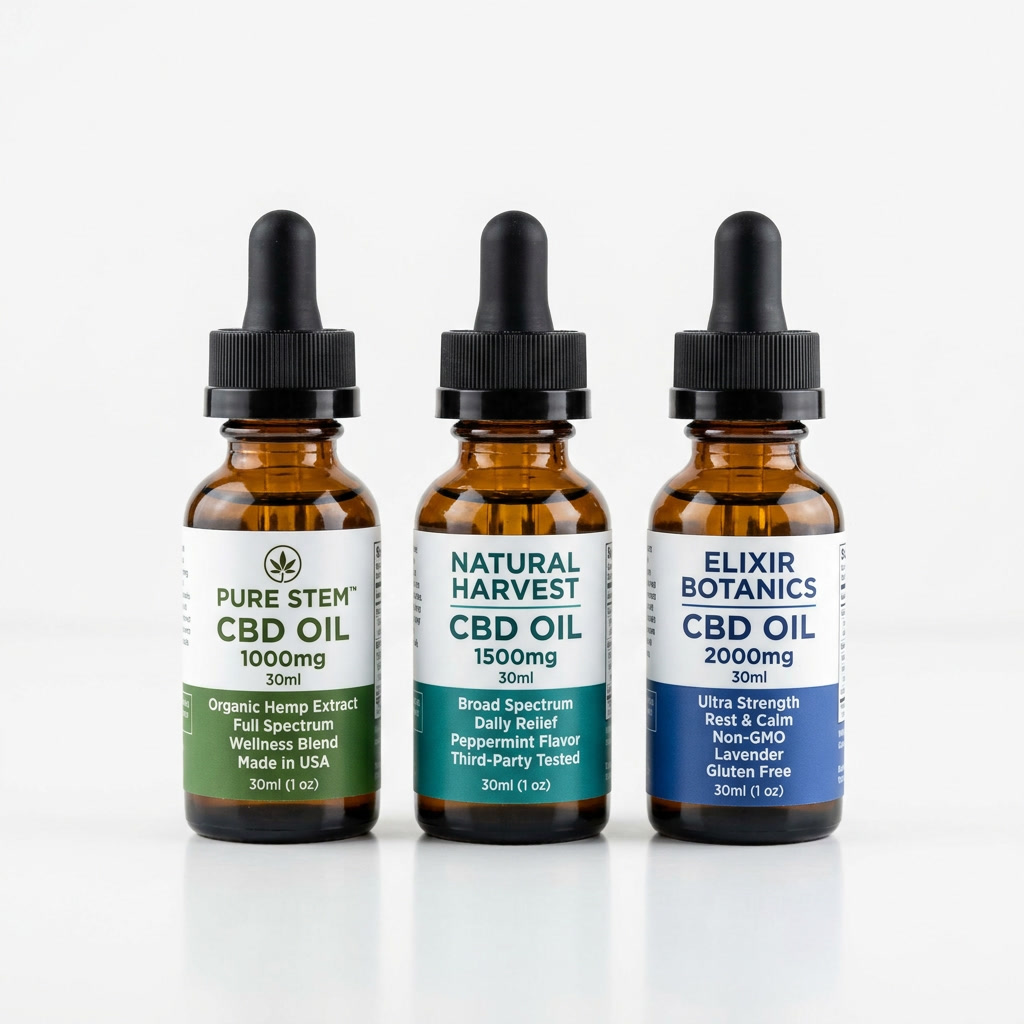
If you are curious about CBD for general wellness, here is how it usually shows up. Oils and tinctures are taken under the tongue, and you can find options in our CBD oils and tinctures range. Topicals, meaning creams and balms, are rubbed into the skin, and the same logic applies to the CBD topicals and creams we carry. People often use topicals for localized aches and oils for broader, whole-body effects. Both are popular with active people doing physical recovery, which is why we also wrote a separate piece on CBD for athletes.
A practical note on starting out. If you have never used CBD, the sensible approach is to start with a small amount and see how your body responds, and a clinician or pharmacist can help you think through interactions with any medication you take. We cover this in more detail in our CBD dosage guide. And if you want to go deeper on this specific topic, we previously explored the wider research picture in our post on CBD and bone health, which pairs well with this one.
If You Are Recovering From A Fracture Right Now
Let us be very clear about priorities. If you have a broken bone, the things that actually drive healing are the unglamorous ones. Follow your doctor's guidance on immobilization and weight bearing. Eat enough protein, calcium, and vitamin D. Do not smoke. Get enough sleep. Attend your follow-up appointments and any imaging your clinician orders. Those steps have strong evidence behind them. CBD does not.
If you are considering CBD to help you feel more comfortable while you recover, treat it as a conversation to have with your doctor, not a decision to make in isolation. Tell them what you are taking, including any supplements. Some products can interact with medications, and your clinician knows your full situation in a way no article can.
Action Steps
If you want to engage with this topic sensibly, here is a short list.
- Treat the four 2026 studies as early signs of interest, not as instructions. They are reviews and laboratory experiments, and none of them tested CBD on human fractures.
- Keep expectations realistic. There is currently no evidence that CBD heals broken bones in people.
- Put the proven basics first. Immobilization, nutrition, sleep, and medical follow-up drive fracture healing.
- If you try CBD for comfort, start low and go slow, and note how you feel over time rather than expecting a dramatic change.
- Tell your doctor about every supplement and CBD product you use, especially if you take prescription medication.
- Choose products from sources that publish clear ingredient information and third-party testing, which is a basic quality signal in a loosely regulated market.
- Be skeptical of dramatic claims online. If a post promises that CBD regrows bone, it has left the evidence far behind.
Bottom Line
CBD and bone health is a real area of scientific interest, and 2026 brought four genuinely relevant papers. One review looked at plant cannabinoids and bone in general. Another reviewed CBD's role in wound healing and bone regeneration. A third showed CBD acting on a specific blood vessel signalling pathway in a dish, in an arthritis context. A fourth grew stem cells on a CBD-containing gel and watched for bone-forming activity. Together they sketch a promising research direction. None of them shows that CBD helps a broken bone heal in a human being, and none of them hands you a dose or a guarantee.
The fairest way to hold all of this is simple. The laboratory work is interesting, and it is early. Real bone healing still runs on time, blood supply, nutrition, and good medical care. If CBD helps you feel more comfortable during recovery, that is worth discussing with your doctor, but it is not a substitute for the care that actually mends fractures. Curiosity is welcome here. Overclaiming is not. We will keep watching the research, and when human studies arrive, we will tell you exactly what they found, including the parts that are less exciting than the headlines.
Find Your Perfect CBD Product
Take our 2-minute quiz to get personalized recommendations based on your needs.
Take the Quiz →Disclaimer: This article is for informational purposes only and does not constitute medical advice. CBD products are not FDA-approved to treat, cure, or prevent any disease. Always consult with a qualified healthcare professional before starting any new supplement, especially if you have a medical condition or take medications.