CBD and Prostate Cancer: What the Lab Studies Do and Don't Show
You typed "CBD and prostate cancer" into a search engine at 11pm. Maybe you got a diagnosis this month. Maybe someone you love did, and you are looking for anything that might help. The results are a mess of miracle claims, forum posts, and headlines that make CBD sound like a cure. It is not. So let's slow down and look at what the actual laboratory research shows, what it does not show, and how to think about all of it without losing your footing.
Here is the honest starting point. Every study mentioned in this article was done in cells in a dish, in a lab dish or on cell cultures. Some are reviews that summarize many lab studies and many animal studies. None of them is a human prostate cancer trial. That single fact should shape everything you read next. CBD is being studied. It has not been proven to treat prostate cancer in people.
That does not make the research worthless. It makes it early. Let's walk through it together, calmly, with clear eyes.
The Gap Between a Petri Dish and a Person
Science moves in stages. First come cells in a dish. Then animals. Then small safety studies in people. Then large trials. Most substances that kill cancer cells in a dish never become a cancer treatment, because a human body is not a petri dish. It has a liver, a bloodstream, a set of checks and balances, and a tumor that is often nothing like the cell line in the lab.
So when you read that a cannabinoid "reduced prostate cancer cell growth," understand the setting. The cells were grown in a dish. They were fed CBD directly. The result tells us something about biology, not about a person swallowing an oil.
> A 2024 review in the Journal of Cannabis Research looked across breast, colorectal, and prostate cancer research and concluded that cannabinoids show anticancer potential in preclinical work, while stressing that human evidence remains limited.
That word, preclinical, means before human testing. It is where almost everything on this topic currently lives.
What the Lab Studies Actually Look At
Researchers are not simply pouring CBD on cells and hoping. They are asking specific questions about specific mechanisms. Four show up again and again.
- How CBD might change the way a prostate cancer cell reads its own DNA
- Whether CBD makes a chemotherapy drug work better or worse
- How cannabinoids interact with the cell's energy machinery, the mitochondria
- Whether cannabinoids affect the body's immune response in ways that matter for spread
Each of these is a door into a complicated room. Let's open them one at a time.
Epigenetics: How CBD Might Change a Cancer Cell's Instructions
Your DNA is not a fixed script. Cells can switch genes on and off through a set of chemical tags, and that layer of control is called the epigenome. A *2026 study in Biomedicine and Pharmacotherapy*** examined how cannabidiol alters the epigenome of hormone-dependent prostate cancer cells.
Hormone-dependent means the cancer cells grow partly in response to hormones like testosterone. In the lab, CBD changed chemical marks on the DNA of those cells. Some genes that had been active became quieter. The study suggests CBD can nudge the epigenetic machinery inside a prostate cancer cell.
Read that carefully. It says the cells responded to CBD in a lab setting by changing how they express certain genes. It does not say tumors in men shrank. It does not say the change is good in every case. Epigenetic changes can go in either direction, and the study authors themselves treat this as an early signal worth pursuing.
> The 2026 Biomedicine and Pharmacotherapy study reported that cannabidiol alters the epigenome of hormone-dependent prostate cancer cells, framing the finding as a mechanistic clue rather than a clinical result.
If epigenetics is new to you, think of it this way. The genome is the hardware. The epigenome is the software that decides which programs run. CBD appears to touch the software in these lab cells. What that means for a whole human being is unknown.
CBD and Chemotherapy: A Complicated Partnership
One of the most important questions in this field is not "does CBD kill cancer cells" but "does CBD change how chemotherapy behaves." That is a drug-interaction question, and the answer matters enormously.
A *2025 study in Cannabis and Cannabinoid Research*** tested cannabidiol alongside etoposide, a chemotherapy drug used in some cancers, on prostate cancer cells. In the dish, CBD enhanced the anticancer activity of etoposide. The combination did more than the drug alone.
That sounds encouraging, and it is a legitimate reason to study the pairing. But there is a second, darker possibility that the same science forces us to consider. A *2026 systematic review in Pharmaceuticals*** examined the antitumor activity of cannabinoids and how they interact with chemotherapy across many studies. It found that cannabinoid effects are real in preclinical models but highly variable, and that interactions with chemotherapy can cut both ways.
So the honest summary is this. In lab models, CBD sometimes makes chemo more effective and sometimes muddies the picture. In people, we simply do not know yet. If you are on chemotherapy and considering CBD, that is exactly the conversation to have with your oncologist before you buy anything, because the same liver enzymes that process drugs also process cannabinoids. We go deeper on that topic in our guide to CBD and drug interactions.
Mitochondria: The Cell's Power Plants
Every cell runs on tiny structures called mitochondria, which generate energy. Cancer cells tend to be hungry, and they often rewire their energy production to grow fast. If you can disrupt that wiring, you might slow a cancer down. This is where CBD has drawn real interest.
A *2026 mini-review in Biology*** explored the therapeutic crossroad between mitochondria and cannabidiol. The authors describe how CBD can influence mitochondrial function, including how cells manage energy and how stressed cells decide whether to survive or self-destruct.
This is one of the more interesting threads in the science. It also comes with a warning the authors are clear about. Mitochondria exist in healthy cells too, all over your body, not just in cancer. A molecule that tinkers with mitochondrial function does not discriminate perfectly. That is a good reason for caution, not for hype.
> The 2026 Biology mini-review notes that cannabidiol can affect mitochondrial behavior, a mechanism that could matter for cancer research while raising questions about effects on healthy tissue.
In plain terms, this is a promising laboratory lead, not a treatment plan.
The Immune System and Cancer Spread
Cancer becomes deadly mainly when it spreads, a process called metastasis. Recent research has looked at whether cannabinoids influence the immune cells that help or hinder that spread.
A *2025 review in Frontiers in Oncology*** examined neutrophil extracellular traps and cannabinoids, asking whether these immune structures play a role in cancer metastasis and how cannabinoids might interact with them. Neutrophils are a type of white blood cell. Under some conditions they release web-like structures that can, in animal models, help tumor cells travel.
The review is exploratory. It proposes that cannabinoids might influence this process, and it calls for more research. It does not show that CBD stops metastasis in people. It points at a mechanism worth investigating.
Meanwhile, inflammation sits underneath much of this biology, and CBD's relationship with inflammation is itself an active area of study. You can read more in our overview of CBD and inflammation.
What Animal and Veterinary Studies Add
Human trials are scarce, so some researchers look to dogs. Prostate cancer in dogs is not the same as in men, and dogs get different cancers, but veterinary oncology studies can offer early signals about safety and dosing.
A *2026 systematic review in Frontiers in Veterinary Science*** examined the potential antitumor effect of cannabidiol in canine oncology. It gathered the available evidence, which again is mostly small and preclinical, and concluded that CBD shows potential in dogs while noting that rigorous controlled trials are still lacking.
Why mention dogs at all? Because it shows how the research pipeline works. Scientists test in models, gather signals, and gradually build toward human studies. A veterinary review does not tell us anything definitive about a man with prostate cancer. It tells us the field is genuinely investigating CBD, carefully and incrementally.
The Big Picture Review: Green Ally or Overreach?
Step back and look at the whole field. A *2024 review in the Journal of Cannabis Research*** surveyed cannabinoids across breast, colorectal, and prostate cancer. Its tone is measured. It highlights real preclinical activity and real gaps. It does not promise a cure. It describes a "green ally" that might one day play a supporting role, if the evidence holds up.
That is the correct posture for this entire topic. Interest, yes. Openness, yes. Certainty, no.
If you want to understand the broader landscape of cannabinoids and cancer research, our page on CBD and cancer walks through the general evidence base.
What This Means If You or a Loved One Has Prostate Cancer
This is the part that matters most, so let's be direct.
- No study in this article shows CBD curing, treating, or shrinking prostate cancer in people.
- Every cited study is in-vitro, meaning cells in a lab, or review-level, meaning a summary of existing lab and animal work.
- CBD is not a substitute for surgery, radiation, hormone therapy, chemotherapy, or any treatment your oncology team recommends.
- Do not delay or stop standard treatment to try CBD. That is the one mistake that can cost real time.
- If you want to explore CBD alongside treatment, bring it to your oncologist first, in plain language, with the product in hand if you can.
Your oncologist is not your adversary here. They are the person who knows your specific cancer, your specific drugs, and your specific labs. A five-minute conversation can prevent a serious interaction or a dangerous delay.
Talking to Your Oncologist: A Practical Script
Many people freeze in the exam room. A short script helps.
"I have been reading about CBD and prostate cancer. I understand the human evidence is not there yet, and I am not asking to replace my treatment. I want to know if adding CBD is safe with my current medications, and whether it could interfere with anything you are giving me."
That framing does three things. It shows you are informed. It shows you respect the treatment plan. It opens a real conversation instead of a standoff. Ask specifically about liver enzymes, because many drugs and cannabinoids share the same metabolic pathways.
Safety and Quality: The Part People Skip
Even setting cancer aside, CBD is not risk-free. It can interact with medications, affect liver enzymes, and cause side effects like drowsiness or digestive upset. If you decide to use it at all, do it with the same care you would give any supplement.
Start with our CBD safety guide for the fundamentals. Then learn to verify what you are actually buying, because the CBD market is famously uneven. A real third-party lab report, called a certificate of analysis, tells you the actual cannabinoid content and checks for contaminants. Our walkthrough on how to read a CBD COA shows you exactly what to look for.
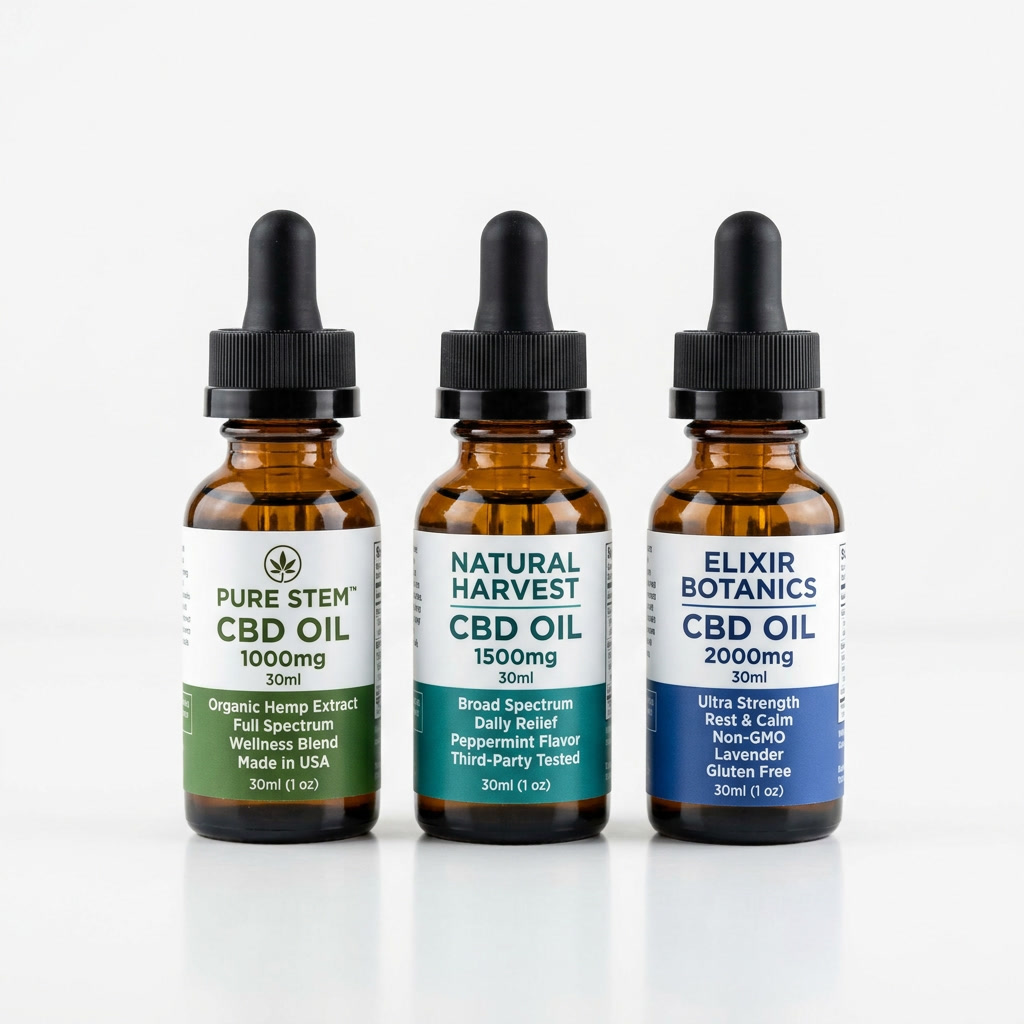
If you are simply curious about product formats while you research, our CBD oil and tincture products page shows what is available, with the reminder that nothing here is a cancer treatment.
> Important: If you take blood thinners, seizure medications, or chemotherapy, talk to your doctor before using CBD. Interactions are real and can be serious.
Action Steps
Here is what to do with everything above.
1. Write down your questions before your next oncology appointment, including any CBD product you have seen.
2. Tell your oncologist everything you are taking, including supplements, honestly and completely.
3. Do not stop, delay, or reduce any prescribed cancer treatment to try CBD.
4. If your doctor clears CBD for symptom support, start low and go slow, and keep a simple log of dose and effects.
5. Verify any product with a current certificate of analysis before you buy it.
6. Treat every headline promising a cancer cure as a reason to check the source, not a reason to act.
Bottom Line
The laboratory research on CBD and prostate cancer is genuinely interesting. It touches epigenetics, chemotherapy interactions, mitochondria, immune signaling, and even veterinary oncology. But it is early, and every study cited here was done in cells or is a review of preclinical work. None of it proves that CBD treats prostate cancer in people.
So hold two truths at once. CBD deserves careful scientific study. And right now it is not a cancer treatment. If you or someone you love is facing prostate cancer, put your energy into the proven care your oncology team offers, and bring CBD into the conversation as a question, not a plan. Curiosity is fine. Certainty, at this stage, is not honest.
Find Your Perfect CBD Product
Take our 2-minute quiz to get personalized recommendations based on your needs.
Take the Quiz →Disclaimer: This article is for informational purposes only and does not constitute medical advice. CBD products are not FDA-approved to treat, cure, or prevent any disease. Always consult with a qualified healthcare professional before starting any new supplement, especially if you have a medical condition or take medications.