CBD and Appetite: What the 2025–2026 Research Actually Shows (and the THC Confusion)

You've heard the stories: someone takes a CBD gummy and suddenly can't stop snacking, or the opposite — someone swears CBD killed their cravings and helped them drop weight. Both claims float around the internet, and both are usually wrong about the same thing. The "munchies" you've heard about are real, but they're almost entirely a THC effect, not a CBD effect. And the idea that CBD reliably suppresses appetite? The evidence for that is thin and early. So what does the 2025–2026 research actually show? In this guide, we'll untangle the THC-vs-CBD confusion, explain how the endocannabinoid system (ECS) really regulates hunger, walk through the newest studies on CBD and appetite in cancer care and metabolic health, and give you an honest, practical take on what CBD can and can't do for your appetite and weight. No hype, no fear-mongering — just the data.
The "Munchies" Myth: Why People Assume CBD Increases Appetite
Here's the root of the confusion. Cannabis as a whole is famous for stimulating appetite — the "munchies" are one of the most widely recognized effects of using marijuana. But cannabis contains dozens of cannabinoids, and the one responsible for that hunger spike is THC (delta-9-tetrahydrocannabinol), the psychoactive compound. CBD (cannabidiol) is a different molecule with a different mechanism, and it does not produce the same high or the same appetite surge.
A 2025 study in the Proceedings of the National Academy of Sciences (PNAS) gave the munchies a precise scientific explanation. The researchers showed that cannabis produces acute hyperphagia — a fancy term for "eating more" — in both humans and rodents by increasing the reward value of food and the motivation to go get it. In other words, THC doesn't just make you hungry; it makes food more appealing and makes you more willing to work for it. That's a THC-driven effect on the brain's reward circuitry, not something CBD replicates.
So when you see a product marketed as "CBD gummies for appetite" or hear someone blame CBD for their snack cravings, the science says that's likely a misattribution. If a product genuinely gives you the munchies, it probably contains meaningful amounts of THC — or you're responding to something else entirely.
What CBD Actually Is (and Isn't)
Before we go further, a quick definition. CBD is a non-psychoactive cannabinoid derived from hemp or cannabis. Unlike THC, it doesn't bind strongly to the CB1 receptors in the brain that drive the high and the hunger response. Instead, CBD works indirectly — it influences the enzymes that break down the body's own endocannabinoids, interacts with serotonin and other receptors, and modulates inflammation. That indirect profile is why CBD is studied for anxiety, pain, sleep, and inflammation, and why it's generally considered to have a mild side-effect profile.
The practical takeaway: CBD and THC are not interchangeable when it comes to appetite. If you're choosing a product specifically to avoid appetite changes, you want a CBD-dominant product with negligible THC. If you're choosing one for appetite stimulation (say, to help with poor appetite during illness), THC is the ingredient that does that — and that's a conversation to have with a doctor, not a decision to make from a label.
The Endocannabinoid System: Appetite's Overlooked Regulator
To understand why anyone thought CBD might affect appetite at all, you need to meet the endocannabinoid system (ECS). The ECS is a signaling network made up of receptors (CB1 and CB2), endogenous cannabinoids like anandamide and 2-AG, and the enzymes that build and break them down. It's not niche — it's a central hub for energy balance, feeding, mood, sleep, stress, and inflammation.
The key player for appetite is the CB1 receptor. When CB1 is activated in the brain, it tends to drive hunger, food reward, and fat storage. That's why the ECS is sometimes described as a "pro-obesity" system when it's overactive, and why CB1 has been a target for weight-loss drugs for two decades. The history is a cautionary tale: the first-generation CB1 blocker rimonabant produced real weight loss in the 2000s but was withdrawn over severe psychiatric side effects like depression and suicidality.
Where does CBD fit? Because CBD acts as a low-affinity blocker at CB1, researchers hypothesized it might blunt some of that appetite- and fat-promoting signaling. But — and this is the crucial word — hypothesized. The mechanism is plausible in the lab, but it has not translated into reliable, reproducible appetite suppression in humans. That gap between theory and evidence is the whole story of CBD and appetite.
What the 2025–2026 Research Actually Shows
Let's get specific. Here's what the recent peer-reviewed literature says, study by study.
Appetite in Cancer and Chemotherapy Supportive Care
The most clinically meaningful appetite research on cannabinoids comes from cancer care, where poor appetite, nausea, and cachexia (wasting) are serious problems. A 2025 protocol in BMJ Open describes the CANCAN trial — a phase II, randomized, double-blind, placebo-controlled study testing medicinal cannabis (CBD/THC) to prevent the symptoms and side effects of chemotherapy in people with advanced cancer. Notably, this trial uses a combination of CBD and THC, not CBD alone, because the appetite and anti-nausea effects in this setting are thought to come largely from THC. The trial is still recruiting and results aren't in yet, but it's a good example of how carefully appetite claims are being tested.
A 2026 narrative review in In Vivo examined medical cannabis for best supportive care in head and neck cancer patients, including appetite support. The authors note that cannabis may help with appetite and symptom burden, but they emphasize the evidence is mixed and that THC-containing products are the ones most associated with appetite improvement. Again, the appetite signal tracks with THC, not isolated CBD.
A 2024 narrative review in Proceedings (Baylor University Medical Center) on cannabinoids for cancer-related symptoms reached a similar conclusion: cannabinoids, particularly those containing THC, may help with appetite and nausea, but the data are inconsistent and more rigorous trials are needed. The consistent thread across all three: when appetite improves, it's usually the THC component doing the work.
Muscle, Metabolism, and the ECS
A 2026 review in Molecular Metabolism took a different angle, examining the endocannabinoid system and skeletal muscle health through the lens of CBD. The authors explore how ECS signaling influences muscle mass, metabolism, and energy balance, and discuss CBD's potential role. This is important context because muscle and metabolism are tightly linked to appetite and weight regulation. But the review is careful: it frames CBD's role as an area of emerging interest, not an established treatment. The mechanisms are being mapped, but clinical proof in humans is still limited.
Relatedly, a 2024 study in the American Journal of Physiology – Cell Physiology found that CBD protected muscle cells (C2C12 myotubes) against cisplatin-induced atrophy by regulating oxidative stress. That's a cell-level finding, not a human appetite study, but it hints at why researchers are interested in CBD for preserving muscle during illness — which matters for overall metabolic health even if it doesn't directly change hunger.
The One Direct Appetite Trial: Sativex in Older Adults
The most direct recent evidence on cannabinoids and appetite in humans comes from a 2026 study in Nutrients. Researchers ran a protocolized secondary analysis of a double-blind, randomized, placebo-controlled crossover trial testing Sativex (a 1:1 CBD/THC oromucosal spray) versus placebo in older adults with poor appetite. They measured glucagon-like peptide-1 (GLP-1), total ghrelin, and subjective appetite. The results were nuanced: the combination product's effects on these appetite hormones and subjective hunger were modest and not a clean, dramatic appetite boost. This matters because it shows that even a THC-containing product doesn't reliably flip a switch on appetite in every population — and it certainly doesn't support the idea that CBD alone does.
The Honest Limitations: What CBD Does NOT Reliably Do
Let's be direct about the limits of the evidence, because this is where most marketing goes off the rails.
CBD does not reliably suppress appetite. Despite the "CBD for weight loss" claims, there is no strong, consistent human evidence that CBD alone reduces hunger or drives weight loss. The plausible-sounding CB1 mechanism hasn't translated into reproducible appetite suppression in people.
CBD does not reliably boost appetite either. The munchies are a THC effect. Isolated CBD has not been shown to consistently increase appetite in humans, and the appetite improvements seen in cancer care are generally tied to THC-containing products.
The evidence is early and mixed. Most of the mechanistic work is in cells and animals. Human trials are small, few, and often use CBD/THC combinations rather than CBD alone. That's not a reason to dismiss CBD — it's a reason to be honest about what we know and don't know.
Dose and product matter enormously. CBD research uses a wide range of doses, and over-the-counter products vary wildly in potency and purity. A finding at 300mg of pharmaceutical-grade CBD tells you little about a 10mg gummy from a convenience store.
What This Means for Weight Management
If your goal is weight management, here's the honest bottom line: CBD is not a weight-loss drug, and it is not an appetite suppressant. The 2025–2026 research does not support using CBD to shrink your appetite or melt fat. If you're considering CBD for weight-related reasons, the more defensible framing is indirect: CBD is studied for stress, sleep, and inflammation, and those factors absolutely influence eating behavior and weight. If CBD helps you sleep better or manage stress, that could plausibly support healthier eating habits — but that's a downstream, individual effect, not a direct appetite mechanism.
For a deeper look at the weight-loss claims specifically, our guide on CBD and weight management separates the genuinely interesting science from the marketing hype, and our breakdown of CBD vs. GLP-1 weight-loss drugs explains why CBD is nowhere near a replacement for medications like semaglutide. If you're comparing CBD and THC more broadly, our CBD vs. THC guide covers the key differences.
Practical Takeaways: If You Want to Try CBD
If you're still interested in trying CBD — for stress, sleep, or general wellness — here's a sensible, evidence-aware approach:
- Choose a CBD-dominant product with negligible THC. If you want to avoid appetite changes, the last thing you need is a product with meaningful THC content. Check the label and third-party lab results.
- Start low and go slow. A common starting point is 10–20mg once daily. Track your response for 2–3 weeks before adjusting.
- Keep a simple journal. Note dose, timing, sleep, stress, and any appetite changes. You'll spot patterns within two weeks.
- Buy from brands that test. Look for third-party certificates of analysis confirming potency and purity. The market is unevenly regulated.
- Don't expect appetite effects. If your goal is appetite change, CBD is likely the wrong tool — that's a conversation for a doctor, and THC is the ingredient that actually drives hunger.
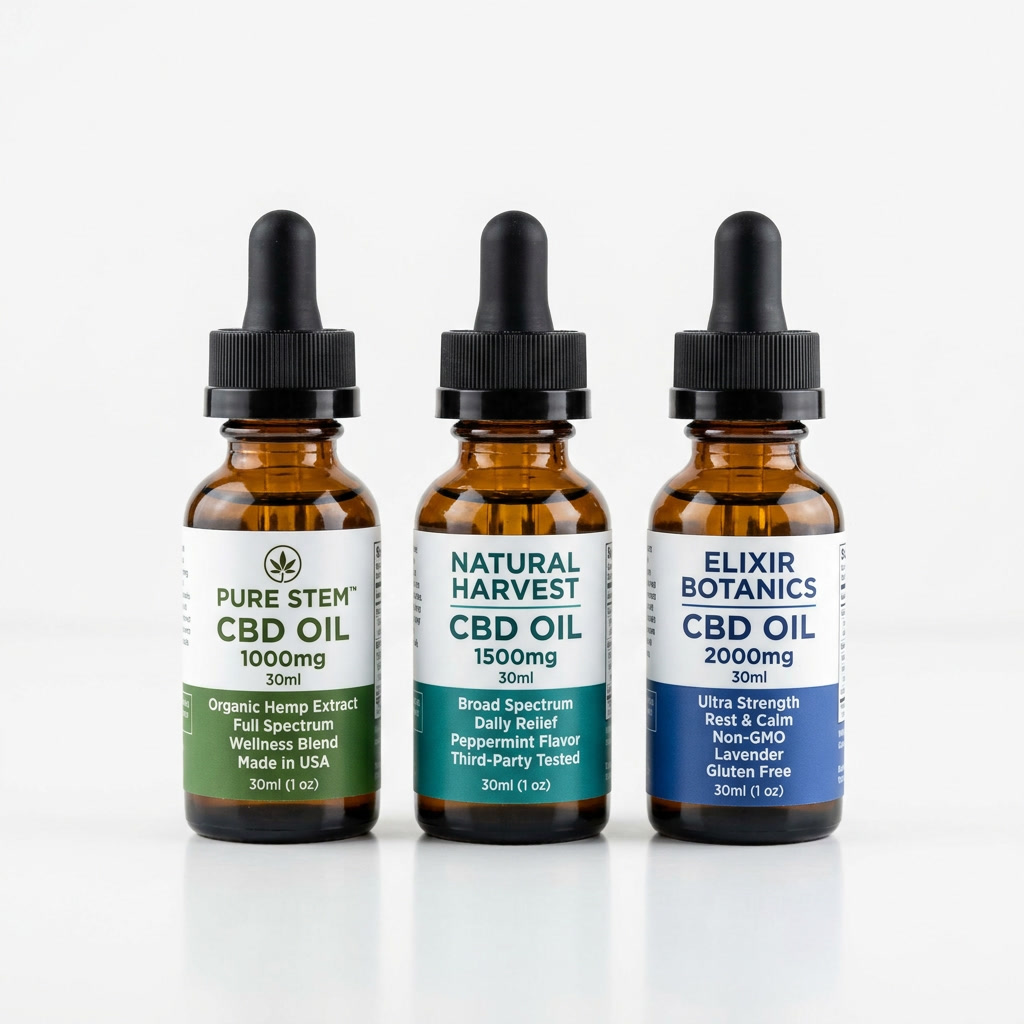
If you're exploring CBD oils and tinctures, our CBD oils and tinctures collection is a good place to start comparing products.
When to See a Doctor
Appetite changes are worth taking seriously, especially when they're persistent, unexplained, or accompanied by weight loss or other symptoms. See a doctor if you're experiencing:
- Significant, unintentional weight loss
- Loss of appetite lasting more than a couple of weeks
- Appetite changes alongside nausea, pain, fatigue, or other symptoms
- Poor appetite during cancer treatment or another serious illness
In these situations, don't self-treat with CBD. Appetite loss can signal an underlying medical issue, and if a doctor does recommend a cannabinoid for appetite support, it will almost certainly be a THC-containing product under medical supervision — not an over-the-counter CBD gummy.
Frequently Asked Questions
Does CBD give you the munchies?
No. The munchies are a THC effect, driven by THC's action on the brain's reward circuitry. A 2025 PNAS study showed cannabis increases appetite by raising the reward value of food — an effect tied to THC, not CBD. Isolated CBD does not reliably increase appetite.
Can CBD suppress my appetite and help me lose weight?
There's no strong, consistent human evidence that CBD alone suppresses appetite or drives weight loss. The CB1-related mechanism is plausible in theory but hasn't translated into reliable results in people. Treat "CBD for weight loss" claims with real skepticism.
Is CBD or THC better for appetite?
If the goal is appetite stimulation, THC is the ingredient that does that — which is why cancer-care studies use CBD/THC combinations. CBD alone has not been shown to reliably boost appetite. For appetite support, this is a medical decision, not a label decision.
Will CBD affect my appetite at all?
For most people, CBD at typical doses has little to no direct effect on appetite. Some people report indirect effects through better sleep or lower stress, but that's individual and downstream, not a direct hunger mechanism.
Is it safe to take CBD with other medications?
CBD can interact with certain medications, including blood thinners and some seizure and antidepressant drugs, because it affects liver enzymes that process many drugs. Talk to your doctor or pharmacist before combining CBD with prescription medication.
The Bottom Line
The 2025–2026 research on CBD and appetite tells a clear, honest story: the munchies are a THC phenomenon, not a CBD one, and CBD does not reliably boost or suppress appetite in humans. The most clinically meaningful appetite research involves THC-containing products in cancer supportive care, and even there the results are mixed and early. CBD remains a genuinely interesting compound for stress, sleep, and inflammation — and those factors can indirectly support healthier eating. But if your goal is appetite change or weight loss, CBD is likely the wrong tool. Choose CBD-dominant products if you want to avoid appetite effects, keep expectations realistic, and talk to a doctor about any persistent appetite or weight concerns.
Last updated: September 4, 2026
Citations
PMID | Journal | Year | Title
42264146 | Molecular Metabolism | 2026 | Endocannabinoid system and skeletal muscle health: Insights from cannabidiol
40032389 | BMJ Open | 2025 | Medicinal CANnabis (CBD/THC) to prevent the symptoms and side effects of chemotherapy in people with advanced CANcer (CANCAN): protocol for a phase II, randomised, double-blind, placebo-controlled trial
41482365 | In Vivo | 2026 | Medical Cannabis for Best Supportive Care of Patients Affected by Cancers of the Head and Neck: A Narrative Review
42514343 | Nutrients | 2026 | Effects of Sativex Versus Placebo on Glucagon-like Peptide-1, Total Ghrelin, and Subjective Appetite in Older Adults with Poor Appetite: A Protocolized Secondary Analysis of a Double-Blind, Randomized, Placebo-Controlled Crossover Trial
41439716 | Proceedings of the National Academy of Sciences | 2025 | Cannabis produces acute hyperphagia in humans and rodents via increased reward valuation for, and motivation to, acquire food
38406827 | American Journal of Physiology – Cell Physiology | 2024 | Cannabidiol protects C2C12 myotubes against cisplatin-induced atrophy by regulating oxidative stress
38343467 | Proceedings (Baylor University Medical Center) | 2024 | The use of cannabinoids in palliating cancer-related symptoms: a narrative review
Find Your Perfect CBD Product
Take our 2-minute quiz to get personalized recommendations based on your needs.
Take the Quiz →Disclaimer: This article is for informational purposes only and does not constitute medical advice. CBD products are not FDA-approved to treat, cure, or prevent any disease. Always consult with a qualified healthcare professional before starting any new supplement, especially if you have a medical condition or take medications.