CBD and the GLP-1 Weight-Loss Era: Where Cannabinoids Actually Fit (and Where They Don't)

Semaglutide. Ozempic. Wegovy. By 2026, glucagon-like peptide-1 (GLP-1) receptor agonists have rewritten what's possible in weight management, delivering double-digit weight loss that once required bariatric surgery. Unsurprisingly, a quieter counter-narrative has followed: that CBD, CBG, or THCV can somehow do the same — suppress appetite, melt fat, or "naturally" replace the drug. The internet is full of it. The research is not.
Here's the honest picture, drawn from peer-reviewed literature published since 2023: CBD itself has almost no credible appetite-suppressing effect in humans — in fact, one new trial found it increased food intake. THCV shows a more interesting mechanism but rests on small, early, sometimes industry-funded studies that are nowhere near "an alternative to Ozempic." CBG has essentially no direct weight-loss data at all. What the evidence does support is more nuanced: the endocannabinoid system (ECS) genuinely sits at the center of appetite and metabolism, and peripheral CB1-modulating compounds are being studied alongside incretin drugs, not instead of them. This guide separates hype from data, explains how the ECS and GLP-1 systems interact, and offers practical, honest takeaways.
The Endocannabinoid System: Appetite's Overlooked Regulator
Before judging any specific cannabinoid, you need the context: why would CBD or THCV plausibly affect weight at all? The answer runs through the ECS, a signaling network (receptors, endogenous ligands like anandamide and 2-AG, and enzymes) mapped out after its receptors were discovered in the early 1990s. The ECS is not niche — it's a central hub for energy balance, feeding, stress, and sleep.
The key player is the cannabinoid type 1 receptor (CB1). When activated in the brain and periphery, CB1 tends to drive hunger, food reward, and fat storage. A 2026 integrative review in Neuroscience & Biobehavioral Reviews frames CB1 as a "convergence hub" linking stress, sleep, and appetite regulation, noting sleep deprivation raises endocannabinoid tone and is tied to increased hunger and cravings for palatable foods. That's why the ECS has long been a target for obesity drugs — and why the history matters.
That history is a cautionary tale. In the 2000s, the first-generation CB1 antagonist rimonabant worked impressively for weight loss but was withdrawn over severe psychiatric side effects like depression and suicidality. A 2026 review in Expert Opinion on Investigational Drugs recounts that the class is now being re-engineered to act only in the periphery, hoping to keep the metabolic benefit while dodging brain toxicity. Every modern cannabinoid "appetite suppression" claim is a distant cousin of this failed drug class.
The CBD Weight-Loss Myth, Confronted With Data
Let's start with the most overhyped claim of all: "CBD helps you lose weight." The 2023-2026 human data points the other way, and the evidence is refreshingly direct.
A 2025 review in Current Obesity Reports — from the Cleveland Clinic Bariatric & Metabolic Institute — took a hard look at the cannabis-and-weight literature. It found THC is reliably associated with increased appetite, food cravings, overconsumption, and reduced physical activity. CBD, by contrast, "appears to be associated with decreased appetite" in observational terms. But the review is blunt about the quality problem: most studies don't separate cannabinoid profiles, routes, or problematic use, and despite the unhealthy eating patterns linked to THC, most still don't show net weight gain — some even suggest loss. It's a messy, contradictory literature.
Then came a study that cuts through it. In a 2026 randomized, double-blind, crossover trial in Appetite, fifteen healthy adults took a single 298 mg dose of CBD isolate or placebo before breakfast, then an unlimited lunch. Result: participants ate roughly 193 kcal more after CBD (about 979 kcal vs 786 kcal on placebo), even though CBD lowered their ghrelin. GLP-1, glucose, insulin, and lipids were unchanged. The authors' conclusion:
> "Healthy adults ate more at lunch following CBD ingestion, providing the first evidence that CBD isolate can increase energy intake in humans."
That single finding should recalibrate any "CBD for weight loss" expectations. It's one small crossover trial, and acute effects may not reflect chronic use — but it's the most direct human data we have, and it contradicts the marketing. If you use CBD for pain, sleep, or anxiety — reasonable use cases — fine. But do not expect it to suppress your appetite.
Why CBD's Appetite Signal Is Complicated
If CBD isn't a reliable appetite suppressant, why do so many people say it helps? Partly because CBD is not a simple molecule. Unlike THC, it does not meaningfully activate CB1; instead it's thought to act as a negative allosteric modulator of CB1 and to influence a web of other receptors and enzymes. Its effects on eating are dose-, context-, and person-dependent.
A 2026 review in Molecular Metabolism on CBD and skeletal muscle health notes the ECS influences insulin sensitivity, mitochondrial metabolism, and protein homeostasis — meaning CBD's metabolic effects skew toward body composition and tissue function, not directly killing hunger. And a 2025 fMRI study in the European Archives of Psychiatry and Clinical Neuroscience found 800 mg of CBD modulated precuneus activity during appetitive cue exposure in people with alcohol use disorder — without changing craving, mood, or cognition. CBD clearly does something in the brain around cue processing, but in humans that has not translated into eating less. "Something happening in the brain" is not "weight loss."
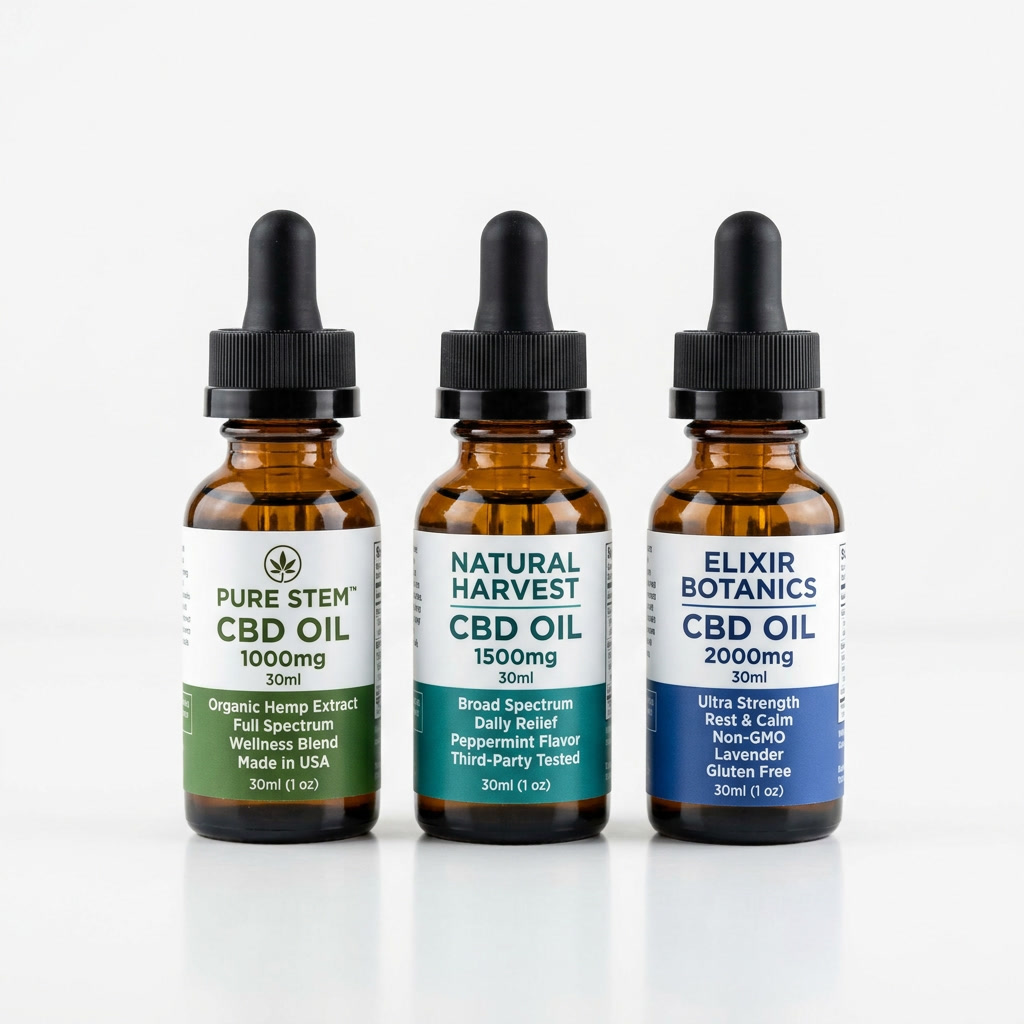
What product you take also matters. Isolates, full-spectrum, and broad-spectrum oils differ in whether they contain THC, and as the Current Obesity Reports review stresses, THC pushes appetite up. A "CBD" oil that's actually full-spectrum with meaningful THC could nudge you the wrong direction. Read labels — and see our guide to CBD isolate vs full-spectrum before assuming what's in your bottle.
THCV: The Cannabinoid With the Most Plausible (But Still Early) Case
If any cannabis compound deserves attention in the GLP-1 era, it's tetrahydrocannabivarin (THCV) — and it's worth understanding why it's different. THCV is non-psychoactive and, at moderate doses, acts as a CB1 neutral antagonist (and a CB2 partial agonist). That's mechanistically the opposite of THC: instead of turning on the hunger-driving CB1 receptor, it blocks it — making THCV the closest phytocannabinoid analog to the CB1-blocking strategy behind the old rimonabant, minus the psychoactivity.
A 2025 review in AIMS Neuroscience lays out the preclinical case: THCV has shown appetite suppression, improved glucose regulation, increased energy expenditure, better insulin sensitivity, and reduced lipid accumulation in cell and animal models — while stressing that human data is preliminary.
The human trial that gets the most attention was published in 2025 in Cannabis (the journal of the American Psychological Association). It was a placebo-controlled study of 44 adults using once-daily THCV/CBD mucoadhesive strips for 90 days. The higher dose (16 mg THCV + 20 mg CBD) beat the lower dose, and both produced statistically significant weight loss, reduced abdominal girth, lower systolic blood pressure, and lower total and LDL cholesterol versus placebo. That sounds great — until you read the caveats: small sample sizes, especially in the placebo and high-dose groups, and authors affiliated with the product's developer (NeX Therapeutics). It's a promising signal, not proof.
The preclinical pipeline is active too. A 2026 study in the International Journal of Molecular Sciences tested SKNY-1, a THCV analog engineered for "pathway-biased" CB1 signaling, in a zebrafish model of MC4R-linked obesity. Six days of dosing produced weight loss, normalized cholesterol and LDL, cut hepatic triglycerides, and reduced reward-driven feeding. Again: an analog, in fish, designed to avoid the psychiatric toxicity that killed its drug class. Interesting mechanism, not a consumer product.
The honest summary: THCV is the most biologically credible weight-related cannabinoid, but it's a research candidate, not a proven supplement. We've covered its profile in depth in our post on THCV and metabolic health.
CBG: The Gap in the Evidence
What about CBG (cannabigerol)? It's the third name in weight-loss chatter, and the honest answer is that there is essentially no direct human evidence linking CBG to weight loss or appetite suppression. The 2026 Neuroscience & Biobehavioral Reviews model mentions CBG as one of several CB1-modulating ligands that may influence food intake depending on dose and context — but that's a hypothesis-generating conceptual review, not a clinical finding. And a toxicology study in Cannabis and Cannabinoid Research (the 2023 supplement) assessed several minor cannabinoids, including THCV and CBG, for safety after 14-day oral dosing in rats and found them generally well tolerated. That's useful safety context, but tolerance is not efficacy. If a brand sells CBG specifically as a weight-loss aid, they're selling a compound with a mechanism but no human weight-loss data. Treat that as a red flag, not a benefit.
The Interaction Question: CBD + GLP-1 Drugs
If you're on semaglutide and considering adding CBD, the natural question is whether they interact. The short, evidence-based answer: we don't have strong data on direct CBD-plus-GLP-1 drug interactions, but the limited human research on cannabinoids and GLP-1 signaling is reassuring in its lack of dramatic effects. The most relevant study is a 2026 secondary analysis in Nutrients (from Copenhagen's Hvidovre Hospital and the Novo Nordisk Foundation Center for Basic Metabolic Research). Older adults with poor appetite received a single dose of Sativex — a pharmaceutical oromucosal spray containing 8.1 mg THC and 7.5 mg CBD — or placebo, with postprandial GLP-1 and ghrelin measured. Result: no statistically significant differences in GLP-1, total ghrelin, or subjective appetite between Sativex and placebo, and no significant dose-response associations. The authors call for cautious interpretation, but the direction is that an acute combined THC/CBD dose did not meaningfully perturb GLP-1 or ghrelin dynamics.
That dovetails with the 2026 Appetite study, where CBD alone also left GLP-1, glucose, and insulin unchanged. In other words, the human data doesn't suggest CBD dramatically amplifies or blocks the incretin signaling GLP-1 drugs rely on. Good news on paper — but it's a small base, and absence of evidence isn't evidence of safety. Two cautions: CBD and THC can affect appetite in opposing directions (THC up, CBD possibly neutral or up), so a psychoactive product could partly counteract an appetite-suppressing drug; and CBD inhibits certain liver cytochrome P450 enzymes that metabolize many medications, so anyone on multiple drugs should review combinations with a clinician.
Beyond GLP-1: The Real Frontier Is Peripheral CB1 Modulation
The genuinely exciting — and honest — story of the GLP-1 era isn't that a cannabinoid replaces the drug. It's that the drug class is leaving gaps that the ECS might help fill, and researchers are building CB1-based compounds specifically to work alongside incretin therapies.
A 2026 review in the British Journal of Pharmacology makes this case directly. Titled "Fatty acid amide hydrolase (FAAH) and the endocannabinoid system in obesity," it argues that while GLP-1 receptor agonists have transformed care, persistent problems remain: gastrointestinal intolerance, weight-loss plateaus, and post-treatment regain. It positions FAAH inhibition — which prolongs the body's own endocannabinoid and related lipid signals, including the appetite-suppressing oleoylethanolamide (OEA) that can amplify nutrient-dependent GLP-1 secretion — as a possible complement to incretin drugs rather than a standalone therapy, explicitly distinguishing it from the failed central CB1 antagonists.
The development pipeline reflects the same framing. A 2026 review in Expert Opinion on Investigational Drugs notes that phase 2 data for the peripherally restricted CB1 antagonist monlunabant still produced dose-dependent psychiatric adverse events and high discontinuation rates, while the antibody nimacimab showed only marginal efficacy. The class's future, it concludes, depends on rigorous safety data, biased CB1 pharmacology, and combinations with incretin-based therapies. A 2026 review in Current Opinion in Pharmacology adds that CB1 and incretin signaling converge on cyclic AMP pathways, "suggesting that combined therapeutic strategies could improve metabolic and cognitive outcomes."
The weight of the 2023-2026 literature is not "CBD cures obesity." It's "peripheral, biased CB1 modulation is a promising adjunct to GLP-1 drugs." That's a fundamentally different — and far more honest — claim than anything the supplement aisle is selling.
Muscle, Inflammation, and the Body-Composition Angle
One underappreciated reason the ECS matters in the GLP-1 era is body composition — a documented criticism of GLP-1 weight loss is that it isn't only fat; it can include lean mass. The 2026 Molecular Metabolism review on CBD and skeletal muscle health describes how the ECS influences muscle development, mitochondrial metabolism, and protein homeostasis, and outlines emerging interest in CBD in muscle-related conditions. This is preclinical, but it gestures at a more defensible supportive role for CBD: metabolic and inflammatory support rather than appetite control. For a related mechanism, see our write-up on CBD for inflammation, since chronic low-grade inflammation drives the metabolic dysfunction that accompanies obesity.
Practical Takeaways: What Actually Makes Sense
Here's what a thoughtful person can actually act on in 2026.
For weight loss specifically, don't count on CBD. The one controlled human trial we have shows CBD isolate increased energy intake. "CBD for weight loss" is a myth on current evidence. If you use CBD for another reason — sleep, anxiety, pain — that's legitimate, and you can read our CBD 101 to get your bearings. But expect nothing from it on the scale.
If you're curious about THCV, treat it as experimental. The mechanism is real and the small human trial is suggestive, but it's a 44-person, partly industry-affiliated study with thin placebo arms. THCV is not a proven weight-loss agent, let alone an Ozempic alternative. If a product promises "THCV for fat loss," hold it to the standard you'd hold any supplement: it's early.
Never substitute a cannabinoid for prescribed GLP-1 therapy. Nothing in the 2023-2026 literature supports replacing semaglutide or any incretin drug with CBD, CBG, or THCV. If anything, the research points the other way — peripheral CB1 compounds being developed to add to incretin drugs under medical supervision. Stopping a prescribed medication to self-treat with an unregulated botanical is a decision only a clinician should guide.
Mind the THC. Because THC raises appetite and cravings, a "CBD" product with meaningful THC could work against you during a weight-loss phase. If weight control is your goal, choose isolates or broad-spectrum formulas and check certificates of analysis. If you're new to choosing, our CBD dosage guide and the product pages for CBD oils and tinctures, CBD capsules and softgels, and CBD gummies and edibles help you match format to how much dosing control you want.
Talk to your doctor before combining. The acute human data suggests CBD doesn't dramatically alter GLP-1 or ghrelin, but that's a small base, and CBD's effects on liver drug metabolism mean combinations deserve a professional review. Our posts on CBD and weight management and CBD, blood sugar, and metabolic health cover the broader metabolic picture.
The GLP-1 era has changed the weight conversation for the better, by legitimizing obesity as a treatable medical condition. The most honest thing any CBD resource can do is not pretend a cannabinoid competes with that revolution, but tell you precisely where the evidence is strong, where it's early, and where it isn't.
Find Your Perfect CBD Product
Take our 2-minute quiz to get personalized recommendations based on your needs.
Take the Quiz →Disclaimer: This article is for informational purposes only and does not constitute medical advice. CBD products are not FDA-approved to treat, cure, or prevent any disease. Always consult with a qualified healthcare professional before starting any new supplement, especially if you have a medical condition or take medications.