CBD for TMJ and Jaw Pain: What the 2026 Research Actually Shows
You wake up and your jaw feels tight, like you've been clenching all night. By mid-afternoon there's a dull ache near your ear, and when you bite down you hear a faint click. Maybe you've caught yourself grinding your teeth during a stressful meeting, or your dentist mentioned "TMJ" at your last checkup. If you've been wondering whether CBD could help, you're not alone. Temporomandibular joint (TMJ) disorders are among the most common causes of facial pain, and millions of people now ask whether a daily oil or a targeted topical could take the edge off the tension, clicking, and myofascial pain.
Here's the honest picture: the science is genuinely moving, and 2026 brought the first placebo-controlled randomized trial of oral CBD specifically for TMJ-related myofascial pain. But CBD is not a proven cure for TMJ disorders, and the evidence is still early. This guide breaks down what TMJ pain actually is, why people try CBD, what the newest research shows, how to use it responsibly, and what's still unknown.
What Is TMJ Disorder, Exactly?
The temporomandibular joint is the hinge that connects your jawbone to your skull, just in front of your ears. It's one of the most used joints in your body — you engage it every time you talk, chew, yawn, or swallow. When something goes wrong with the joint or the muscles that control it, you get what's broadly called a temporomandibular disorder (TMD).
TMD isn't one single condition. It's an umbrella term covering several related problems:
- Myofascial pain: Pain and tenderness in the muscles that move the jaw, often with trigger points
- Internal joint derangement: A displaced disc, clicking, popping, or locking of the joint
- Degenerative joint disease: Arthritis or wear-and-tear in the joint itself
The most common form is myofascial pain, which is why so much of the recent CBD research focuses on muscle tension rather than the joint structure itself. Symptoms can include jaw pain, facial ache, headaches, ear pain, difficulty chewing, and a jaw that locks or clicks. It's estimated that TMD affects roughly 5% to 12% of adults, and it's more common in women than in men.
Why People Try CBD for Jaw Pain
Most people don't start with CBD. They usually start with a problem: jaw tension that builds through the workday, teeth grinding at night, or a dentist who suggests a night guard. When conventional options feel limited, or when you want something gentler alongside your normal care, CBD starts to look interesting.
The appeal is understandable. CBD is widely available, generally well tolerated, and has a reputation for helping with inflammation and discomfort in other parts of the body. Because TMJ pain is so often tied to stress, clenching, and muscle tension, the idea of a compound that might calm both the physical tension and the underlying anxiety is genuinely appealing. That instinct isn't crazy — but it needs to be grounded in what the evidence actually supports, which is more modest than the marketing suggests.
The Endocannabinoid System and the Jaw
To understand why researchers are studying CBD for TMJ pain, it helps to know a little about the endocannabinoid system (ECS). This is a widespread signaling network that helps regulate pain, inflammation, mood, sleep, and muscle activity. It works through two main receptor types:
- CB1 receptors: Found mainly in the brain and central nervous system, involved in pain signaling and mood
- CB2 receptors: Found mainly on immune cells, involved in inflammation and immune response
The ECS is active throughout the orofacial region, including the muscles and nerves around the jaw. A 2026 review in Cells describes the ECS as a key regulator of the neural and immune processes behind headache and facial pain disorders, and reviews the mechanisms and translational therapies targeting it. When CBD interacts with this system, it appears to influence pain signaling and inflammatory responses without producing the "high" associated with THC. That's the theoretical foundation for why CBD might help with jaw tension — but theory and clinical proof are different things.
The 2026 RCT: The Centerpiece Study
The most important development came in 2026, when researchers published the first placebo-controlled randomized clinical trial of oral CBD specifically for myofascial pain disorder of the temporomandibular region. Published in Medical Cannabis and Cannabinoids, the trial gave participants either oral CBD or a placebo and measured changes in jaw pain and muscle tenderness.
The trial is significant because it's a randomized, placebo-controlled design — the gold standard for testing whether a treatment actually works. Earlier studies were mostly small, open-label, or observational, which makes it hard to separate a real effect from the placebo response. Placebo effects are notoriously strong in pain studies, so a controlled trial matters.
The findings were cautiously encouraging but not dramatic. The study suggested that oral CBD was associated with improvements in pain and muscle tenderness in some participants, with a favorable safety profile. But the authors were careful to frame CBD as a potential adjunctive option rather than a standalone cure, and they called for larger trials with standardized dosing. In other words: promising signal, not proof.
What the Other 2023+ Research Shows
The 2026 RCT isn't the only recent evidence. A growing body of 2023-2026 research has examined CBD for TMJ and orofacial pain from several angles.
THC and CBD Together
A 2026 prospective crossover study in Clinics (Sao Paulo) looked at the effect of Δ9-tetrahydrocannabinol (THC) and CBD on myofascial pain modulation in patients with temporomandibular disorder. The study examined how these cannabinoids influenced pain processing in people with TMD, adding to the picture of how combined cannabinoids might affect jaw pain. Because it involved THC, this is a different product category than the CBD-only products most people buy over the counter.
Topical CBD for Bruxism
A 2025 study in Pharmaceuticals examined topical CBD in patients with bruxism-associated muscle pain — the clenching and grinding that often drives TMJ discomfort. The researchers looked at whether topical CBD affected not just muscle pain but also sleep quality and migraine disability. This is relevant because bruxism is one of the most common contributors to jaw pain, and a topical product applied directly to the masseter muscle is an appealing, low-risk option.
CBD for Orofacial and Upper-Quarter Pain
A 2025 systematic evaluation in the Journal of Clinical Medicine assessed the therapeutic potential of CBD for orofacial and upper-quarter pain, which includes the jaw, face, neck, and shoulders. The review found reason for cautious optimism but emphasized that the evidence base is still limited by small studies and inconsistent dosing.
Delivery Systems and Formulation
A 2025 pilot study in the Journal of Clinical Medicine tested a novel delivery system — halloysite-assisted delivery of CBD — for managing temporomandibular pain. This is early-stage work on how CBD is formulated and delivered, which matters because how well a product absorbs can affect how well it works. A 2025 systematic review in Biomedicines also examined percutaneous (through-the-skin) drug delivery to the masticatory system, the muscles involved in chewing.
The Broader Chronic Pain Evidence
Beyond TMJ specifically, a 2024 update of the AHRQ Living Systematic Review on cannabis and other plant-based treatments for chronic pain found that evidence for cannabinoids in chronic pain remains limited and mixed, with modest effects and a need for more rigorous trials. This is an important reality check: even where CBD shows promise, the overall chronic pain evidence is not strong enough to call it a proven treatment.
Topical vs. Oral: Which Makes Sense for the Jaw?
One of the most practical questions is whether to use a topical or an oral product for jaw pain. Both have a rationale, and the choice depends on your symptoms.
Topical CBD is applied directly to the skin over the masseter muscle or the side of the face. The idea is local delivery — the CBD is absorbed through the skin and may act on the underlying muscle and tissue. A 2025 study in Pharmaceuticals specifically looked at topical CBD for bruxism-associated muscle pain, which makes this a directly relevant option for jaw tension. Topicals are low-risk, easy to use, and don't require swallowing anything. The main limitation is that absorption through the skin can be variable, and it's unclear how deeply the CBD penetrates to reach the joint itself.
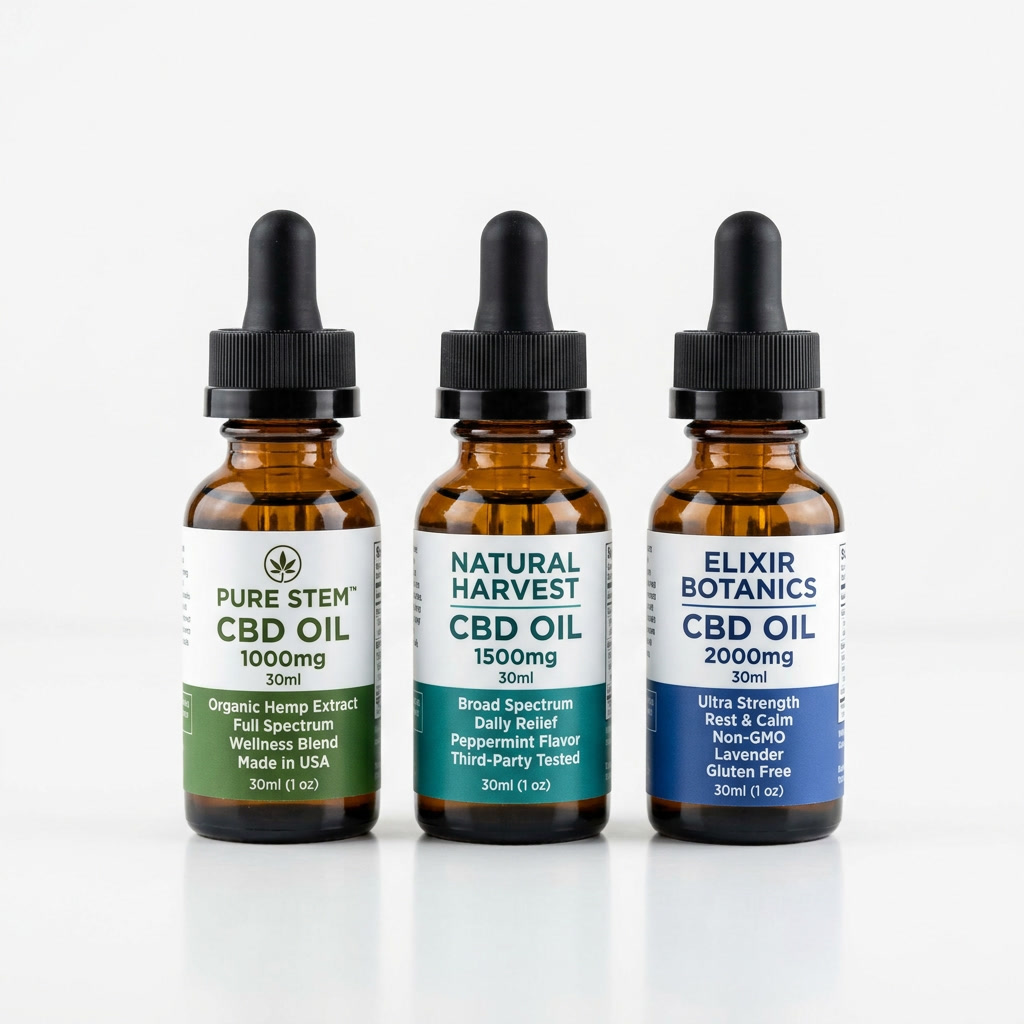
Oral CBD (oils, tinctures, capsules) is absorbed through the digestive system and acts systemically. This makes sense if your jaw pain is part of a broader pattern of stress, clenching, and muscle tension throughout the body. The 2026 RCT used oral CBD, so there's direct clinical evidence for this route. The trade-off is that oral CBD takes longer to kick in, and dosing is more variable from person to person.
For many people, a combination makes sense: a topical cream for the immediate area and an oil or tincture for overall tension and stress. But start with one approach and track your response before layering products.
How to Use CBD for Jaw Pain: A Practical Guide
If you're considering CBD for TMJ pain, here's a sensible, conservative approach. This is not medical advice — it's a framework for experimenting responsibly.
1. Start low and go slow. Begin with 10-20mg of CBD once daily. Give it time to build up in your system.
2. Track your response for 2-3 weeks. Keep a simple journal of your jaw pain, clicking, clenching, and sleep. Note the dose, timing, and any side effects.
3. Increase gradually if needed. If you see no effect after a couple of weeks, you can increase by 5-10mg at a time. Find your minimum effective dose rather than jumping to a high dose.
4. Consider a topical for the jaw area. If your pain is localized to the masseter muscle, a topical applied directly to the area may be worth trying alongside or instead of an oral product.
5. Be consistent. CBD tends to work best with regular use rather than occasional, as-needed dosing for pain.
6. Pair it with the basics. CBD is not a substitute for a night guard, stress management, jaw exercises, or physical therapy. It works best as part of a broader approach.
> Quick Take: Start low, track your response, and treat CBD as a complementary tool — not a replacement for your dentist's recommendations.
What's Still Unknown
It's important to be honest about the limits of the evidence. Here's what researchers still don't know:
- Optimal dosing: There's no established, standardized dose of CBD for TMJ pain. Studies use very different doses, and what works for one person may not work for another.
- Long-term effects: Most studies are short-term. We don't yet know how CBD affects jaw pain over months or years of use.
- Which patients benefit most: It's unclear whether CBD helps more with myofascial (muscle) pain than with joint-related problems like disc displacement or arthritis.
- Product quality: The CBD market is unevenly regulated, and product quality varies widely. A 2024 review in Biomedicine & Pharmacotherapy on CBD in oral diseases noted that formulation and route of administration matter a great deal.
- Interactions: CBD can interact with certain medications, including blood thinners and some antidepressants. This is a real consideration, not a theoretical one.
The honest bottom line on the science: the 2026 RCT and the surrounding 2023-2026 research suggest CBD may help some people with TMJ-related pain, but the evidence is not strong enough to call it a proven treatment. It's a promising, generally well-tolerated option worth discussing with your care team — not a miracle cure.
When to See a Dentist or Doctor
CBD is not a substitute for professional care, and some jaw symptoms need attention. You should see a dentist or doctor if you experience:
- Severe or worsening jaw pain that interferes with eating or daily life
- A jaw that locks open or closed
- Clicking or popping that's painful or getting worse
- New headaches, ear pain, or facial swelling
- Difficulty opening your mouth fully
- Signs of tooth damage from grinding
A dentist can assess whether you need a night guard, physical therapy, or other treatment. If you take blood thinners, antidepressants, or seizure medications, talk to your doctor before using CBD, since it can interact with these drugs.
Frequently Asked Questions
Is CBD proven to cure TMJ disorder?
No. CBD is not a proven cure for TMJ disorder. The 2026 randomized trial and other recent studies suggest it may help some people with jaw pain and muscle tension, but the evidence is early and modest. Treat it as a complementary option, not a treatment on its own.
Should I use a topical or an oral CBD product for jaw pain?
It depends on your symptoms. A topical cream applied to the masseter muscle makes sense for localized tension, and a 2025 study specifically examined topical CBD for bruxism-associated muscle pain. An oil or tincture acts systemically and may help if your jaw pain is tied to overall stress and clenching. Many people try one first and track their response.
How much CBD should I take for jaw pain?
There's no standardized dose. A conservative starting point is 10-20mg once daily, tracked for 2-3 weeks, then increased gradually by 5-10mg if needed. The 2026 RCT used oral CBD, but dosing varies widely across studies and from person to person.
Can CBD help with teeth grinding (bruxism)?
Possibly, but the evidence is early. A 2025 study in Pharmaceuticals examined topical CBD in patients with bruxism-associated muscle pain and looked at effects on sleep quality and migraine disability. A 2024 randomized trial in the Journal of Clinical Medicine also examined CBD for muscular tension, pain, and sleep bruxism intensity. Results are promising but not conclusive, and a night guard remains the standard first-line approach.
Is CBD safe to use for jaw pain?
CBD is generally well tolerated, and the 2026 RCT reported a favorable safety profile. Common side effects can include dry mouth, drowsiness, and digestive upset. However, CBD can interact with certain medications, so talk to your doctor if you take blood thinners, antidepressants, or seizure medications.
How long does it take for CBD to work for jaw pain?
It varies. Oral CBD can take 30 minutes to a couple of hours to take effect, and consistent daily use over 1-3 weeks is often needed to notice a meaningful difference in pain and tension. Topicals act more locally and may feel faster, but absorption through the skin is variable.
The Bottom Line
TMJ disorders are common, and the pain, clicking, and clenching can be genuinely disruptive. The 2026 placebo-controlled randomized trial of oral CBD for myofascial pain of the temporomandibular region is a meaningful step forward, and the surrounding 2023-2026 research on topical CBD, bruxism, and orofacial pain adds cautious support. But the honest takeaway is that CBD is a promising, generally well-tolerated complementary option — not a proven cure. If you're curious, start low, track your response, pair it with the basics like a night guard and stress management, and talk to your dentist or doctor, especially if you take other medications. For more on how CBD fits into your broader routine, our guides on CBD for oral health and CBD for tension headaches are good places to continue.
Citations
PMID | Journal | Year | Title
41744774 | Cells | 2026 | Endocannabinoid Modulation in Headache: Mechanisms, Models, and Translational Therapies
42016900 | Medical Cannabis and Cannabinoids | 2026 | Oral Cannabidiol in the Treatment of Myofascial Pain Disorder of the Temporomandibular Region: A Placebo-Controlled Randomized Clinical Trial
41740529 | Clinics (Sao Paulo) | 2026 | Effect of Δ9-tetrahydrocannabinol and cannabidiol on myofascial pain modulation in patients with temporomandibular disorder: a prospective crossover study
41517391 | Journal of Clinical Medicine | 2025 | Halloysite-Assisted Delivery of Cannabidiol for the Management of Temporomandibular Pain: A Pilot Study
40732351 | Pharmaceuticals (Basel) | 2025 | Expanding the Therapeutic Profile of Topical Cannabidiol in Temporomandibular Disorders: Effects on Sleep Quality and Migraine Disability in Patients with Bruxism-Associated Muscle Pain
40565932 | Journal of Clinical Medicine | 2025 | Cannabidiol for Orofacial and Upper-Quarter Pain: A Systematic Evaluation of Therapeutic Potential
40142992 | Pharmaceutics | 2025 | The Therapeutic Potential of Cannabidiol in the Management of Temporomandibular Disorders and Orofacial Pain
41463118 | Biomedicines | 2025 | Percutaneous Drug Delivery to the Masticatory System: A Systematic Review and Analysis of Randomized Clinical Trials
38788594 | Biomedicine & Pharmacotherapy | 2024 | Cannabidiol and its application in the treatment of oral diseases: therapeutic potentials, routes of administration and prospects
38592260 | Journal of Clinical Medicine | 2024 | Cannabidiol Intervention for Muscular Tension, Pain, and Sleep Bruxism Intensity — A Randomized, Double-Blind Clinical Trial
40238954 | AHRQ Comparative Effectiveness Reviews | 2024 | Living Systematic Review on Cannabis and Other Plant-Based Treatments for Chronic Pain: 2024 Update
Find Your Perfect CBD Product
Take our 2-minute quiz to get personalized recommendations based on your needs.
Take the Quiz →Disclaimer: This article is for informational purposes only and does not constitute medical advice. CBD products are not FDA-approved to treat, cure, or prevent any disease. Always consult with a qualified healthcare professional before starting any new supplement, especially if you have a medical condition or take medications.