CBD and Stroke Recovery: What 2025-2026 Research Says About Neuroprotection
When a stroke happens, the clock starts immediately. Every minute without blood flow to the brain means roughly two million neurons lost, and the treatments that exist today — clot-dissolving drugs and mechanical thrombectomy — work only within a narrow window and only for certain patients. For the millions of people who survive a stroke each year, the harder question arrives afterward: what actually helps the brain rebuild?
That question is one reason cannabidiol (CBD) keeps surfacing in stroke research. Over the past three years, laboratories in Spain, Brazil, China, Poland and the United States have published a steady stream of preclinical studies describing how CBD interacts with the cascade of damage that follows an ischemic stroke. The findings are genuinely interesting — and genuinely incomplete.
Here is the honest version of what 2025-2026 research says, what it does not say, and why the gap between the two matters so much for anyone affected by stroke.
Why Stroke Research Is So Hard
The Damage Doesn't Stop When Blood Returns
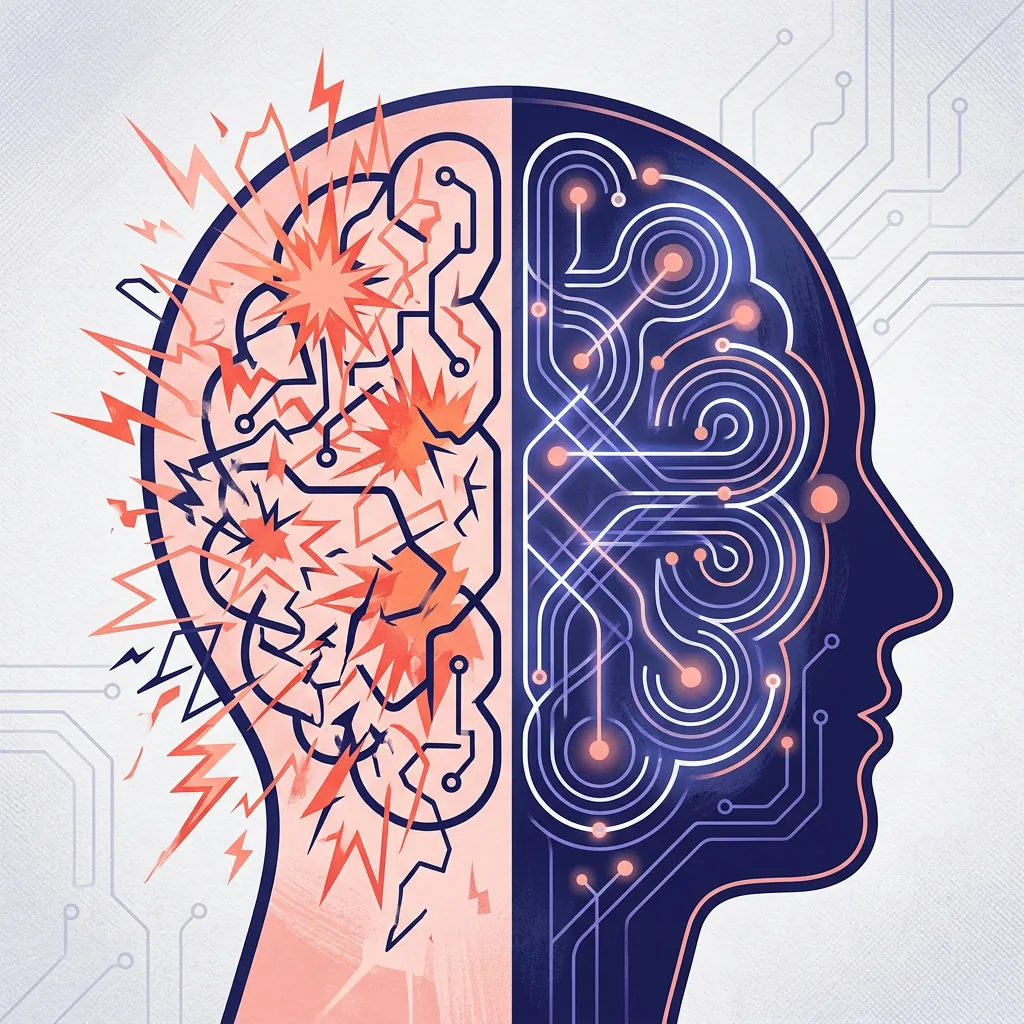
An ischemic stroke cuts off blood supply to part of the brain. But the injury rarely ends when flow is restored. Reperfusion triggers its own wave of harm: excitotoxicity from a flood of glutamate, oxidative stress, runaway neuroinflammation, blood-brain barrier breakdown, and programmed cell death.
Researchers call this the ischemic cascade. It is precisely why single-target drugs have struggled in stroke trials — blocking one pathway leaves several others untouched. A 2025 review in Translational Stroke Research mapped how the stroke cascade intersects with four therapeutic receptor systems, including cannabinoid receptors CB1R and CB2R, and concluded that multi-target modulation may be the more realistic route forward. That framing is important context for everything that follows.
Glial Cells Moved to Center Stage
For decades, stroke research focused on neurons. The newer work looks at the support cells. A 2026 review in Neural Regeneration Research, "Beyond neurons: Impact of cannabidiol on glial cells in ischemic stroke," argues that astrocytes, microglia and oligodendrocytes drive much of the post-stroke inflammatory response — and that they are therefore attractive targets for modulation.
The same review describes preclinical evidence that CBD attenuates glial reactivity, reduces pro-inflammatory signaling, and preserves blood-brain and intestinal barrier integrity in stroke models. Its authors are explicit about the ceiling: clinical translation is still hindered by a lack of standardized formulations, dosing regimens, and human trials.
If you are new to how CBD interacts with the body's own signalling systems, our complete beginner's guide to what CBD is covers the endocannabinoid system, receptor targets, and why formulation matters so much.
What the Preclinical Evidence Actually Shows
A Meta-Analysis With Real Numbers
The strongest single piece of evidence published recently is not one experiment — it is a synthesis. A 2026 systematic meta-analysis in Frontiers in Neuroscience pooled 26 animal studies of medical cannabinoids in ischemic stroke.
The pooled results showed significant neuroprotection across a striking range of measures:
- Cerebral infarct volume
- Neurological function scores
- Cerebral blood flow
- Blood-brain barrier permeability
- Brain water content (edema)
- Apoptosis markers
- Oxidative stress markers
- Inflammatory cytokines TNF-α and IL-1β
- Excitotoxicity markers
Subgroup analysis found that intraperitoneal administration and a full course of cannabidiol treatment were associated with lower heterogeneity and greater benefit. The authors also identified isoflurane as a potentially suitable anesthetic for these models.
Read that last sentence again, because it is the most important caveat in the paper: they were optimizing for animal experiments. Their own conclusion calls for high-quality clinical trials to validate the findings before anyone translates them into practice.
The Molecular Mechanisms Being Mapped
The 2025-2026 literature is unusually specific about mechanism. Several threads stand out.
A 2025 study in Neurobiology of Disease examined adenosine A2A and cannabinoid CB1 receptors, which can pair up into heteromers. In hypoxic-ischemic models, CBD partially blocked A2A receptor signaling while restoring CB1 receptor signaling — essentially releasing the neuroprotective CB1 receptor from repression. CBG (cannabigerol) showed overlapping effects, and CBD reduced heteromer expression in brain sections from a hypoxia/ischemia model.
A separate 2026 study in Neuropharmacology went deeper into CB1 biology using cell-type-specific knockout mice. Deleting CB1R in glutamatergic neurons reproduced the full ischemic injury seen in global knockouts; deleting it in GABAergic neurons produced no significant effect. The glutamatergic CB1 receptor appeared to act as a brake on excitotoxicity. This is receptor biology, not a CBD trial — but it clarifies which pathways CBD may be influencing.
In 2024, a study in Experimental Neurology identified CKS1B as a new regulator of neuroinflammation, and showed that CBD's anti-inflammatory effects in oxygen-glucose deprivation models and in middle cerebral artery occlusion rats depended in part on it. CBD suppressed IL-1β and TNF-α, reduced microglial activation and decreased NF-κB phosphorylation.
This is the same broad anti-inflammatory mechanism that researchers study in other conditions — we cover that body of work in our overview of CBD and inflammation.
Barriers, Ferroptosis, and Delivery
Two 2026 papers push into less familiar territory. A study in Phytomedicine found that CBD mitigated ferroptosis — iron-dependent cell death — in differentiated human neuroblastoma cells after oxygen-glucose deprivation, modulating redox balance, antioxidant defense and iron metabolism, and upregulating VEGF under hypoxic conditions.
Meanwhile a 2026 paper in Molecular Pharmaceutics engineered macrophage-membrane-coated nanoparticles carrying CBD, apigenin and a polysaccharide. In a rat middle cerebral artery occlusion model, the formulation reduced brain tissue damage, neuroinflammation and neuronal apoptosis, with effects linked to inhibition of NLRP3/NF-κB signaling.
That paper matters for a practical reason: CBD is highly lipophilic, with poor solubility and unpredictable absorption. Much of the recent drug-delivery work exists because giving CBD effectively is itself an unsolved problem.
From Cells to Whole Animals: What Recovery Looks Like
Behavior, Mood, and the Gut
A 2025 study in Inflammopharmacology tested a full-spectrum Cannabis sativa extract in rats after 60-minute middle cerebral artery occlusion. Treated animals showed improved neurological deficits, reduced intestinal permeability, lower corticosterone levels, and protection against oxidative stress and post-stroke lung inflammation. The authors framed the gut-peripheral organ protection as a new entry point for clinical research — an entry point, not an answer.
A 2024 study in Pediatric Research looked at something survivors and families recognize as a major unmet need: post-stroke mood disorders. In neonatal rats after middle cerebral artery occlusion, CBD reduced brain damage and improved motor performance. It did not prevent depressive-like behavior in the medium term, but it reduced long-term hyperactivity and normalized dopamine D2 receptor function. The result is nuanced in a way that reflects reality: partial benefit, on specific endpoints, in an animal model of a specific stroke subtype.
The Endocannabinoid System Beyond CBD
Some of the most interesting 2025 work does not involve CBD at all, which is instructive about where the field may be heading. A 2025 study in Cell Communication and Signaling showed that after stroke, an enzyme called NAAA ramps up in activated microglia and depletes the endogenous lipid PEA. Knocking out NAAA or boosting PEA levels improved stroke recovery and reduced anxiety-like behavior in mice.
This suggests that the body's own endocannabinoid-like signaling is disrupted after stroke, and that restoring it may be one route to recovery. CBD is one way to interact with that system. It is unlikely to be the only one.
What Human Evidence Actually Exists
The Honest Answer: Very Little, For Stroke
Here is where the enthusiasm needs a hard brake.
There are no completed, published randomized controlled trials demonstrating that CBD improves outcomes after ischemic stroke in humans. The 2026 Neural Regeneration Research review says so directly. The 2025 systematic review of cannabinoid clinical trials in neurological conditions in Frontiers in Pharmacology identified 47 trials — concentrated in multiple sclerosis, fibromyalgia and Parkinson's disease. Stroke was not among the most-studied conditions. The review also flagged the lack of standardized protocols, dosing and outcome measures as a barrier to clinical implementation.
A 2025 review in Cannabis and Cannabinoid Research, focused specifically on the endocannabinoid system as a stroke therapy target, concluded that comparing studies is difficult because compounds, routes of administration, dosages and timing vary so widely — and noted the particular scarcity of studies in stroke patients specifically.
> The pattern across the 2025-2026 literature is consistent: strong mechanistic plausibility, reproducible animal-model effects, and a near-total absence of human stroke data.
What Human Trials Do Tell Us — About Other Conditions
Human CBD data exists, just not for stroke. The ARCHER study, published in ESC Heart Failure in 2026, randomized 109 patients with acute myocarditis to 12 weeks of pharmaceutical-grade oral CBD or placebo, titrated to 10 mg/kg twice daily. It was a rigorous, international, double-blind phase 2 design, and it demonstrated that CBD trials of this caliber are feasible in acute inflammatory disease.
Epilepsy remains the only neurological area with solid regulatory footing. A 2026 Pharmaceuticals review on CBD in neurology notes that purified CBD (Epidiolex) is approved for severe epilepsies including Dravet and Lennox-Gastaut syndromes, and that a CBD-plus-THC medication is approved for spasticity in multiple sclerosis.
The Safety Picture Is Not a Blank Check
Two 2026 papers complicate any assumption that CBD is risk-free.
A 2026 review in the British Journal of Clinical Pharmacology examined low-dose CBD and found very little evidence of biological or therapeutic effect at doses commonly sold over the counter — and, critically, observed drug-drug interactions at low doses with THC, amitriptyline and hydromorphone.
That interaction finding matters enormously for anyone on stroke medication, since most stroke survivors take anticoagulants, antihypertensives or statins. Before combining anything with a prescription, read our breakdown of CBD and drug interactions.
A major 2026 JAMA review of therapeutic cannabis and cannabinoids reported that daily inhaled cannabis use was associated with increased risk of stroke (2.6% versus 1.0% for nondaily use), alongside coronary heart disease and myocardial infarction. That finding concerns inhaled high-THC cannabis, not oral CBD — but anyone with cerebrovascular risk factors should know it exists. The same review noted that evidence does not support cannabis or cannabinoids for most promoted conditions, and advised clinicians to assess drug interactions and contraindications such as ischemic heart disease.
For stroke survivors on anticoagulants, antihypertensives or anticonvulsants, the interaction question is not hypothetical.
Practical Steps If You Are Curious About CBD
If you or someone you care for has had a stroke, these steps are the responsible sequence.
1. Treat CBD as a research subject, not a treatment. Nothing here replaces clot-dissolving therapy, thrombectomy, rehabilitation or prescribed secondary prevention.
2. Talk to the treating neurologist or pharmacist before using any cannabinoid, and bring your full medication list — anticoagulants and anticonvulsants especially.
3. Do not stop or reduce any prescribed medication to try CBD. This is the single most dangerous mistake in this space.
4. Understand that over-the-counter CBD doses are often far below those studied, and product labeling varies. A 2026 pharmacokinetics review found little biological effect at typical low doses.
5. Be skeptical of clinics marketing CBD for stroke recovery. No human trial supports that claim.
6. If you participate in research, look for registered trials with defined dosing, oversight and safety monitoring.
7. Track what you actually experience — dose, timing, side effects — so any conversation with your clinician is based on data rather than impressions.
For the practical mechanics of that tracking, our dosage guide and safety guide lay out how dosing works and which red flags warrant stopping.
> Important: Stroke is a medical emergency and a serious chronic condition. CBD is not an approved treatment for stroke, has not been shown to improve stroke outcomes in humans, and must never delay or replace emergency care or rehabilitation.
The Bottom Line
The 2025-2026 research on CBD and stroke is real, mechanistically detailed and consistent in animal models. The meta-analysis of 26 studies found genuine neuroprotection across infarct volume, edema, inflammation, oxidative stress and neurological function. The receptor work is elegantly specific. The delivery science is advancing.
What is missing is the part that matters most to patients: human data. There is no completed randomized trial showing CBD improves stroke recovery in people, and the leading reviews in this field say exactly that. Meanwhile, the JAMA review associates daily inhaled cannabis use with increased stroke risk, and low-dose CBD studies show interactions even at doses sold freely.
That combination — promising mechanism, absent human evidence, non-trivial safety considerations — describes a compound worth watching and not worth betting your recovery on. The research is a reason for careful scientific optimism. It is not a reason to change anything about your medical care.
If the next few years deliver the clinical trials this field keeps calling for, the conversation will change. Until then, the honest answer to "does CBD help stroke recovery?" is: we do not know, and anyone telling you otherwise is ahead of the evidence.
For readers exploring CBD more broadly, the same principle applies across every condition: start with evidence, involve your clinician, and treat marketing claims with the skepticism they have earned.
Frequently Asked Questions About CBD and Stroke
Does CBD help you recover from a stroke?
There is no completed randomized controlled trial showing that CBD improves stroke outcomes in humans. The preclinical signal is genuinely strong — a 2026 meta-analysis of 26 animal studies found significant neuroprotection on measures including infarct volume, brain edema, inflammation and neurological function — but animal models and human recovery are not the same thing. The leading reviews in this field say directly that clinical translation is limited by the absence of human trials.
Can CBD prevent a stroke?
No evidence supports this, and some evidence points the other way. A 2026 JAMA review of cannabis and cannabinoids associated daily inhaled cannabis use with increased stroke risk. CBD is not a preventive intervention, and treating it as one would mean ignoring the actual risk factors — blood pressure, smoking, atrial fibrillation, diabetes and cholesterol — that genuinely change stroke risk.
Should I take CBD instead of my stroke medication?
No. Never. Anticoagulants, antiplatelets, antihypertensives and statins have outcome data behind them that CBD does not come close to. A 2026 pharmacokinetics review found drug-drug interactions at low CBD doses with THC, amitriptyline and hydromorphone, and many stroke patients take medications that share the same metabolic pathways. Any change to a post-stroke regimen is a decision for your prescriber, not a supplement label.
Can I take CBD alongside blood thinners?
That question needs a clinician's answer, not a general one. CBD is metabolized through CYP enzymes that overlap with those handling several cardiovascular and anticoagulant drugs, and the interaction potential is not well characterized. Our guide to CBD and drug interactions covers the mechanism, but a pharmacist or prescriber who knows your specific medications is the only safe source of an answer here.
When should I expect to feel anything if I try CBD?
This framing does not apply to stroke recovery, because there is no established therapeutic effect to expect. CBD's pharmacokinetics vary substantially by route — oral absorption is slow and erratic, while inhaled forms peak far faster — which is one reason the field lacks standardized dosing. If a clinician does support a trial, expect it to be framed as symptom support, not recovery, and expect monitoring rather than a fixed protocol.
Is CBD safe after a stroke?
Generally well tolerated at the doses studied, but "well tolerated" is not "no risk." Reported effects include drowsiness, gastrointestinal upset, appetite changes and liver enzyme elevations, and the interaction concerns above apply. A 2026 review of low-dose CBD found little biological effect at typical over-the-counter doses while still observing interactions — meaning you can get the risk without the benefit. Our CBD safety guide covers the full picture, and your care team covers your specific case.
Where can I find a clinical trial for CBD and stroke?
Registered trials are listed on ClinicalTrials.gov, and the reviews cited throughout this article repeatedly call for better-designed human research with standardized formulations, dosing and outcome measures. If you want to participate in that science, look for registered protocols with defined endpoints, oversight and safety monitoring — and discuss participation with your stroke care team before committing.
This post reflects 2025-2026 published research available as of September 2026 and is for educational purposes; it is not a substitute for professional medical advice. Stroke is a medical emergency — call emergency services immediately for sudden weakness, facial drooping, or difficulty speaking.
Find Your Perfect CBD Product
Take our 2-minute quiz to get personalized recommendations based on your needs.
Take the Quiz →Disclaimer: This article is for informational purposes only and does not constitute medical advice. CBD products are not FDA-approved to treat, cure, or prevent any disease. Always consult with a qualified healthcare professional before starting any new supplement, especially if you have a medical condition or take medications.