CBD for Restless Legs Syndrome: What the 2026 Research Shows
It's 11:40 p.m. You're exhausted, finally in bed, and then it starts — that creeping, crawling, can't-keep-still feeling deep in your legs. The urge to move is so strong it overrides everything else. You shift, you stretch, you get up and pace the hallway, and the moment you lie back down, it returns. If this sounds familiar, you're not imagining it, and you're far from alone. Restless legs syndrome (RLS) is one of the most common — and most under-discussed — sleep disruptors there is.
For years, the standard answers have been prescription dopamine agents, iron supplementation, and lifestyle tweaks. But a growing number of people are asking a different question: can CBD help? The short answer is that the research is early but genuinely interesting, and 2026 brought us the most comprehensive review of the topic to date. This guide walks through what RLS actually is, what the newest studies show about CBD and cannabinoids, and how to approach it honestly — without the hype.
What Is Restless Legs Syndrome, Really?
RLS is a neurological condition defined by an overwhelming, often irresistible urge to move the legs, usually accompanied by uncomfortable sensations described as crawling, creeping, pulling, throbbing, or aching. The key features are that it's worse at rest, worse in the evening and at night, and temporarily relieved by movement. That's why it wrecks sleep — the urge peaks exactly when you're trying to wind down.
The condition is far more common than most people realize. A 2026 systematic review and meta-analysis in BMC Neurology examining prevalence across diverse populations found that RLS affects a substantial share of adults, with rates varying widely by region and study design. Estimates in the broader literature commonly place RLS in the range of 5% to 10% of adults, with higher rates in older adults and in people with iron deficiency, kidney disease, pregnancy, and certain neurological conditions. Despite this, many people never mention it to a doctor — either because they don't know it has a name or because they assume it's just "restlessness."
Why RLS Disrupts Sleep
The problem isn't just the sensation — it's the timing. RLS symptoms follow a circadian rhythm, peaking in the late evening and first half of the night. This directly collides with sleep onset, so people with RLS often spend hours trying to fall asleep, wake repeatedly, and feel unrefreshed the next day. Over time, this can spiral into chronic insomnia, daytime fatigue, and mood changes. In fact, RLS is one of the most common secondary causes of insomnia — which is why it shows up in sleep-focused discussions of CBD.
Why People Turn to CBD for RLS
Conventional RLS treatments work for many people, but they're not perfect. Dopamine agonists can lose effectiveness over time and, in some cases, cause a worsening of symptoms called augmentation. Gabapentinoids help some but come with side effects. Iron therapy only helps if deficiency is the driver. This leaves a meaningful gap — and into that gap steps CBD.
CBD (cannabidiol) is the non-intoxicating compound in hemp that interacts with the body's endocannabinoid system. People try it for RLS for a few practical reasons: it's widely available, generally well-tolerated, and it targets several things that overlap with RLS — sleep disruption, anxiety, and sensory discomfort. The logic is reasonable, even if the direct evidence is still thin. The question is what the research actually supports.
The 2026 Scoping Review: The Centerpiece
The most important development came in 2026, when researchers published a scoping review in the Annals of Indian Academy of Neurology titled "Effect of Cannabinoids use on Symptoms of Restless Leg Syndrome among Adults." A scoping review maps the existing evidence on a topic — it tells you what's been studied, how, and where the gaps are. This one is the clearest picture we have of the cannabinoid-RLS landscape to date.
The review examined the available studies on cannabinoid use for RLS symptoms in adults. Its central finding is honest and important: the evidence base is small, early, and largely anecdotal, but the signals are consistent enough to justify more rigorous research. The authors noted that while some patients report meaningful symptom improvement with cannabis and CBD products, the current literature is dominated by case reports, small series, and surveys rather than randomized controlled trials. In other words, there's a real signal — but it hasn't been confirmed in the kind of large, placebo-controlled studies that would settle the question.
> "The evidence base for cannabinoids in RLS remains limited, with most data derived from case reports and small observational studies rather than randomized trials."
That's the honest takeaway: promising, but not proven. Anyone who tells you CBD is a proven RLS treatment is overstating the science.
The THC/CBD Study: A Closer Look
Alongside the scoping review, a *2026 report in the Journal of Neurology*** examined the use of a tetrahydrocannabinol/cannabidiol (THC/CBD) combination in the treatment of restless legs syndrome. This is notable because it moves beyond pure CBD into the combined-cannabinoid space — the same territory where products like nabiximols (a standardized THC/CBD oromucosal spray) operate.
The report describes clinical experience with a THC/CBD combination for RLS, adding to the case-level evidence that cannabinoids may help some patients. But it's important to read this carefully. THC is the intoxicating component of cannabis, and it brings a different risk profile than CBD alone — including psychoactive effects, potential for dependence, and daytime sedation. A THC-containing product is a very different decision than a CBD-only oil, and it's not something to self-prescribe casually.
The practical takeaway: the most encouraging clinical reports in RLS often involve THC-containing products, while the most accessible, lowest-risk option — CBD alone — has the least direct evidence. That's a tension worth understanding before you buy anything.
How CBD Might Help: The Mechanisms
Even without large trials, there are plausible biological reasons CBD could influence RLS. These mechanisms are theoretical — grounded in how the body works, but not yet confirmed in RLS specifically.
The Dopamine Connection
RLS is closely tied to dopamine signaling in the brain. The most effective conventional drugs for RLS are dopamine agonists, and dopamine dysfunction is central to the condition's pathophysiology. Cannabinoids interact with the endocannabinoid system, which in turn modulates dopamine pathways in several brain regions. The idea is that CBD and other cannabinoids might influence the same dopamine circuits involved in RLS — though the direction and clinical relevance of that interaction in RLS is not yet established.
Sleep and the Endocannabinoid System
RLS disrupts sleep, and CBD is most studied for sleep. A 2026 systematic review and meta-analysis in the Journal of the American Association of Nurse Practitioners examined medical cannabis for insomnia in adults and found that cannabinoid formulations, particularly those combining multiple cannabinoids, showed sleep-improving effects — with CBD doses in the 50 to 200 mg range appearing safe and effective for sleep in many adults. A *2024 review in Current Psychiatry Reports*** on using cannabis and CBD to sleep reached a similar conclusion: CBD shows promise for sleep, especially when anxiety or pain is the underlying driver, though the evidence is still evolving and THC-containing products affect sleep architecture differently.
For someone with RLS, the sleep connection matters twice over — CBD might help you fall asleep despite the leg sensations, and it might reduce the anxiety that often builds around bedtime.
Sensory Symptoms and Pain
Many people describe RLS sensations as uncomfortable or even painful. CBD is widely studied for pain and sensory discomfort, and it's plausible that some of the reported benefit in RLS comes from dampening the unpleasant sensations rather than the urge to move itself. This is speculative, but it fits with how people describe their experience.
What the Research Doesn't Tell Us Yet
It's just as important to be clear about the limits. The honest list of what we don't know is long:
- No large randomized controlled trials of CBD specifically for RLS have been published. The scoping review is explicit that the field lacks this gold-standard evidence.
- Most data is anecdotal — case reports and small surveys, which are prone to placebo effects and selection bias.
- Dosing is unestablished. There's no agreed-upon CBD dose for RLS, unlike the clearer ranges emerging for sleep.
- CBD vs. THC is unresolved. The most encouraging clinical reports often involve THC, which muddies the picture for people who want a non-intoxicating option.
- Long-term safety and efficacy in RLS specifically haven't been studied.
This isn't a reason to dismiss CBD — it's a reason to approach it with informed expectations rather than expecting a cure. It's also worth noting that the search for alternatives isn't limited to CBD. A *2026 case report in Neurological Sciences* explored palmitoylethanolamide (PEA), a related endocannabinoid-system compound, for RLS, and a 2023 narrative review in Tremor and Other Hyperkinetic Movements** surveyed the lesser-known medications used for RLS and their pathogenetic rationale. Both point to the same conclusion: the field is actively looking beyond the standard dopamine-based options, and cannabinoid-adjacent compounds are part of that exploration.
How to Use CBD for RLS: A Practical Guide
If you're considering CBD for RLS, here's a sensible, evidence-informed approach. Remember that this is general guidance, not medical advice — and if you have a diagnosed condition or take medication, talk to a clinician first.
Choose the Right Product
For most people, a CBD-only product is the sensible starting point because it avoids THC's intoxicating and dependence risks. Two formats are most practical for RLS:
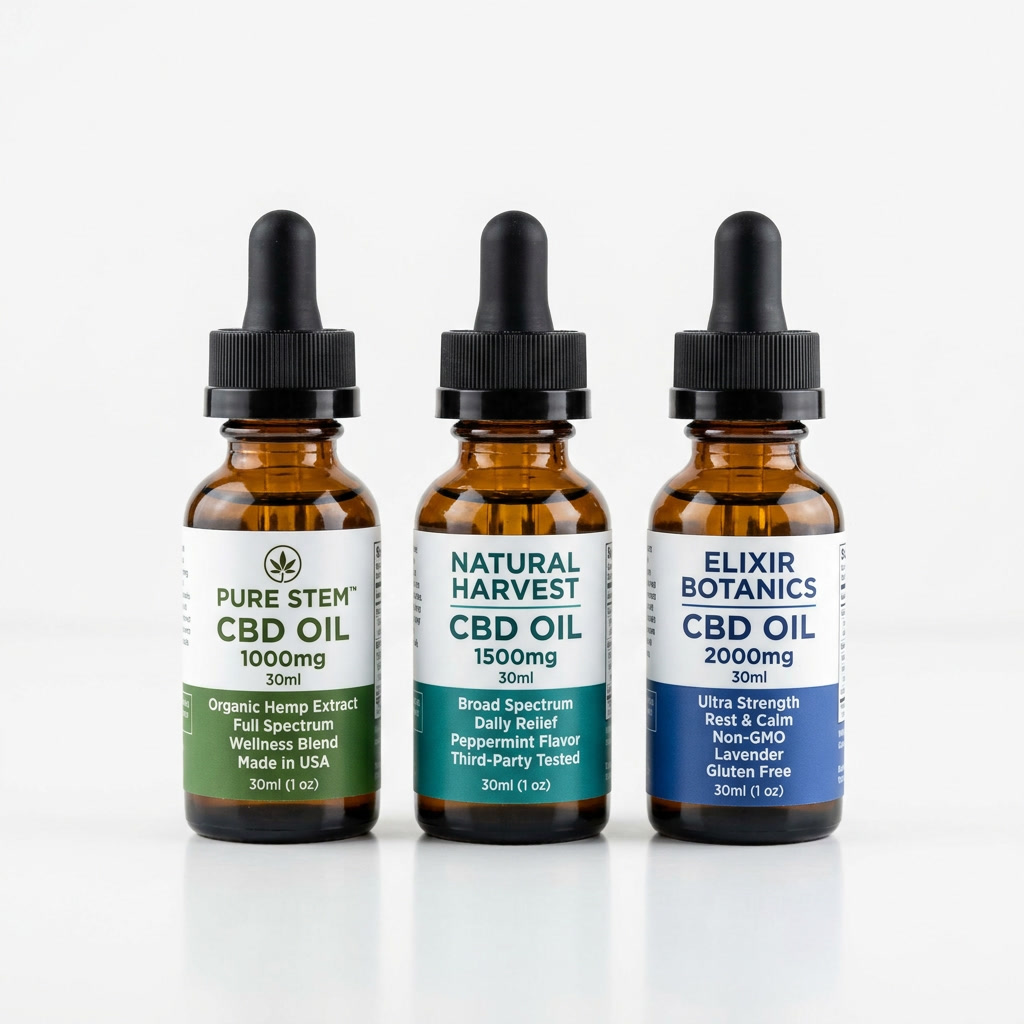
- CBD oil or tincture — taken sublingually, it absorbs quickly and is easy to dose precisely. This is the most flexible option for evening use. See our CBD oils and tinctures.
- CBD gummies or edibles — convenient and pre-dosed, with a slower onset and longer duration, which can be useful for overnight coverage. See our CBD gummies and edibles.
Start Low and Go Slow
There's no RLS-specific dosing protocol, so borrow from the sleep literature. A reasonable starting point is 10 to 25 mg of CBD taken about 30 to 60 minutes before bed. Track your response for one to two weeks, then adjust by 5 to 10 mg at a time. The sleep meta-analysis found benefits in the 50 to 200 mg range for many adults, but that's a target to work toward gradually, not a starting dose.
Time It for the Evening
Because RLS peaks at night, timing matters. Take your dose in the evening so it's active when symptoms are worst. For oils, hold under the tongue for 60 to 90 seconds before swallowing. For gummies, plan for a slower onset — take them a bit earlier.
Keep a Simple Journal
Track your dose, timing, how bad the leg sensations are, how long it takes to fall asleep, and any side effects. Within two to three weeks, you'll have a much clearer picture of whether CBD is helping you specifically — which is more useful than any general claim.
Safety, Side Effects, and Interactions
CBD is generally well-tolerated, but it's not risk-free. Common side effects include dry mouth, drowsiness, diarrhea, and changes in appetite. At higher doses, daytime sleepiness and fatigue are more likely — which can be a problem if you need to be alert the next morning.
The bigger concern is drug interactions. CBD inhibits certain liver enzymes (the CYP450 family) that process many medications, which can raise or lower drug levels in your blood. This matters if you take blood thinners, antidepressants, seizure medications, or certain blood pressure drugs. A *2024 review in Frontiers in Pharmacology*** cataloged adverse events from interactions between cannabinoids and psychotropic drugs, underscoring that CBD is not inert when combined with other medications.
Talk to your doctor before using CBD if you:
- Take any prescription medication, especially blood thinners, antidepressants, or seizure drugs
- Are pregnant, planning to become pregnant, or breastfeeding
- Have liver disease or a history of substance use
- Are considering a THC-containing product
When to See a Doctor
CBD is not a substitute for a proper evaluation. You should see a doctor if:
- Your leg symptoms are severe, frequent, or getting worse
- They're causing significant sleep loss or daytime impairment
- You have symptoms of iron deficiency, kidney disease, or diabetes
- You're considering stopping or changing prescription RLS medication
- You notice symptoms spreading to your arms or worsening after treatment
A clinician can check for treatable causes — iron deficiency is a common and fixable driver — and can guide you on whether CBD is appropriate alongside your current care. RLS is a real medical condition, and it deserves a real medical workup.
Frequently Asked Questions
Is CBD proven to treat restless legs syndrome?
No. The 2026 scoping review found the evidence base is small and largely anecdotal. There are encouraging signals, but no large randomized controlled trials of CBD specifically for RLS. Treat it as a possible complementary option, not a proven treatment.
Does CBD help with the urge to move, or just the sleep?
Unclear. Some people report reduced leg sensations, while others find CBD helps mainly by making it easier to fall asleep despite the symptoms. The research hasn't separated these effects.
Is CBD or THC better for RLS?
The most encouraging clinical reports often involve THC-containing products, but THC carries intoxicating and dependence risks. CBD alone is lower-risk but has less direct evidence. For most people, starting with CBD-only is the safer choice.
How much CBD should I take for RLS?
There's no RLS-specific dose. A reasonable start is 10 to 25 mg in the evening, adjusted gradually. The sleep literature supports 50 to 200 mg for many adults, but work up slowly and track your response.
Can CBD make RLS worse?
It's possible, though not well documented. Some people find high doses cause daytime sleepiness or don't help. If symptoms worsen or you feel worse, stop and talk to a doctor.
Is it safe to take CBD with my RLS medication?
Not automatically. CBD interacts with liver enzymes that process many drugs, including some RLS and psychiatric medications. Always run it past your doctor or pharmacist first.
The Bottom Line
RLS is a common, under-discussed sleep disruptor, and the search for better options is completely understandable. The 2026 scoping review in the Annals of Indian Academy of Neurology gives us the most honest picture yet: the evidence for cannabinoids in RLS is early, mostly anecdotal, and not yet confirmed by large trials — but the signals are consistent enough to warrant serious research. A *2026 report in the Journal of Neurology*** adds clinical experience with a THC/CBD combination, and the broader sleep literature supports CBD as a generally safe, well-tolerated option for the sleep disruption that RLS causes.
What this means in practice: CBD is a reasonable, low-risk thing to try for RLS-related sleep trouble — approached with realistic expectations, a sensible starting dose, and a doctor in the loop. It is not a proven cure, and anyone claiming otherwise is overselling. If you're struggling with RLS, start with a proper medical evaluation, address treatable causes like iron deficiency, and consider CBD as one tool in a broader sleep strategy. For more on the sleep side of things, see our guide to CBD for insomnia and how CBD compares to magnesium for sleep.
Citations
- PMID 42617004 | Annals of Indian Academy of Neurology | 2026 | Effect of Cannabinoids use on Symptoms of Restless Leg Syndrome among Adults: A Scoping Review
- PMID 42387200 | Journal of Neurology | 2026 | Tetrahydrocannabinol/cannabidiol in the treatment of restless legs syndrome
- PMID 39612156 | Current Psychiatry Reports | 2024 | Using Cannabis and CBD to Sleep: An Updated Review
- PMID 42207928 | Journal of the American Association of Nurse Practitioners | 2026 | Medical cannabis for treatment of insomnia in adults: A systematic review and meta-analysis
- PMID 42298475 | BMC Neurology | 2026 | Prevalence of restless legs syndrome in Pakistan: a systematic review and meta-analysis across diverse study populations
- PMID 41504926 | Neurological Sciences | 2026 | Palmitoylethanolamide (PEA) in the treatment of restless legs syndrome: Rationale and case report
- PMID 36873914 | Tremor and Other Hyperkinetic Movements | 2023 | A Narrative Review of the Lesser Known Medications for Treatment of Restless Legs Syndrome and Pathogenetic Implications for Their Use
- PMID 39502532 | Frontiers in Pharmacology | 2024 | Green rush and red warnings: Retrospective chart review of adverse events of interactions between cannabinoids and psychotropic drugs
Find Your Perfect CBD Product
Take our 2-minute quiz to get personalized recommendations based on your needs.
Take the Quiz →Disclaimer: This article is for informational purposes only and does not constitute medical advice. CBD products are not FDA-approved to treat, cure, or prevent any disease. Always consult with a qualified healthcare professional before starting any new supplement, especially if you have a medical condition or take medications.