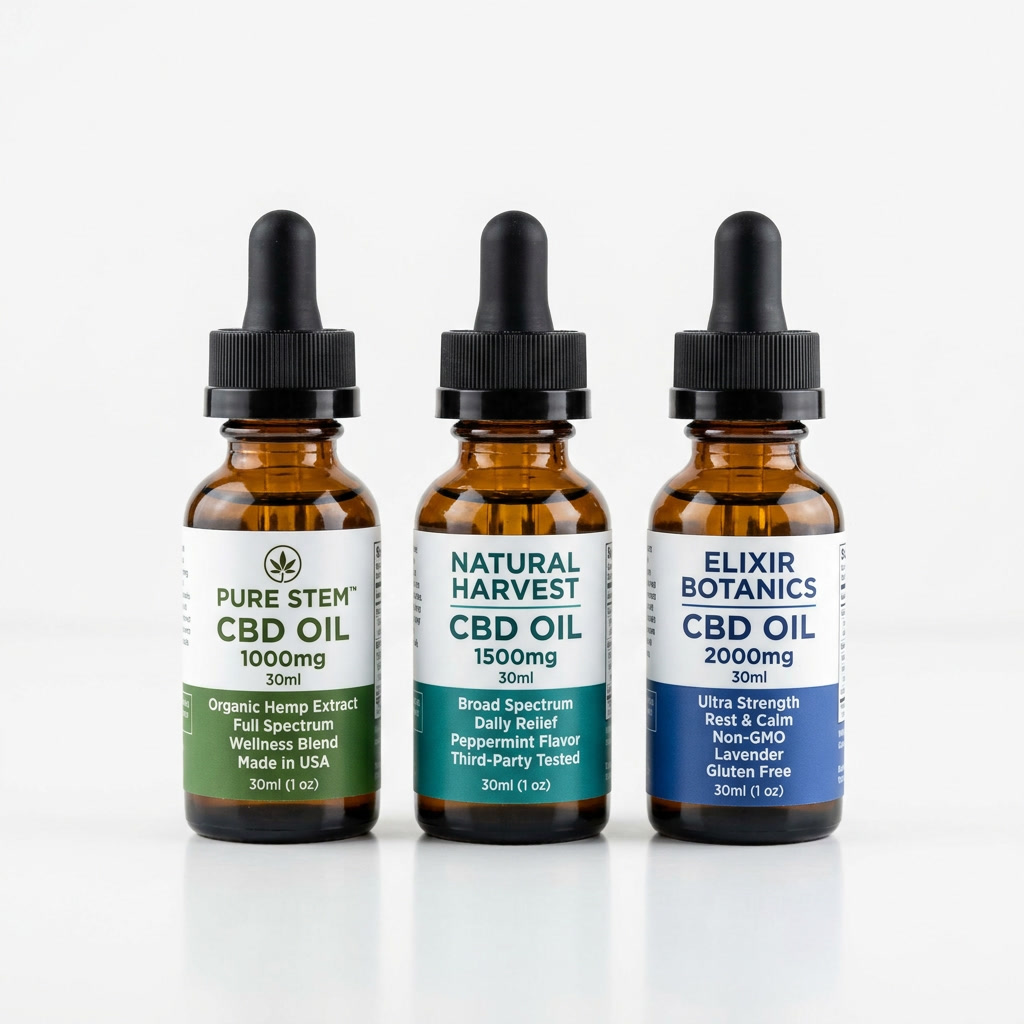
CBD and Postpartum Recovery: What the 2023–2026 Research Shows About Anxiety, Sleep and Wellbeing After Birth

The first weeks after birth are a blur: milk feeds, broken sleep, hormones recalibrating, and a new identity you're still learning to wear. For many new mothers CBD oils and tinctures, that blur turns into something heavier — relentless worry, nights that never feel restful, and a mood CBD for mood that feels out of their own hands. Postpartum anxiety and sleep deprivation are among the most common struggles of early motherhood, and it's no surprise that growing numbers of new parents are wondering whether CBD could help them steady their nerves and finally rest.
It's a fair question. CBD is widely marketed for anxiety, sleep, and stress stress management with CBD relief, and the postpartum postpartum anxiety support period is precisely when those needs spike. But the postpartum body is doing something extraordinary — and what's safe for a healthy adult isn't automatically safe when you're breastfeeding. So what does the actual research from 2023 onward say? Here's the honest picture, including where the evidence is genuinely promising, where it's still thin, and the one conversation you should have before trying it.
The Postpartum Recovery Reality: Anxiety, Sleep and Mood
Let's name the experience first. Postpartum recovery isn't just physical healing — it's a neurological and emotional transition. Sleep is fragmented by nature of caring for a newborn, estrogen and progesterone drop sharply after delivery, and the brain is rewiring around a new set of priorities.
Up to 1 in 5 new mothers experiences a perinatal or postpartum mood or anxiety disorder, and sleep disruption is one of the strongest and most consistent predictors of postpartum depression. When you're already running on a few hours of broken sleep, the added weight of anxiety creates a vicious loop: worry keeps you awake, and being awake makes worry worse.
This is why so many new mothers reach for something — anything — that promises calm and rest. A 2026 study in Addictive Behaviors interviewed new mothers about cannabis use and found that managing stress, mood, and sleep were central motives reported by participants. Another 2026 daily-diary study in the journal Cannabis found the same pattern: mothers described using cannabis postpartum to cope with stress, anxiety, and fatigue, often planning their use around feeding.
The motivation is understandable. The question is whether CBD — the non-intoxicating compound in hemp — fits safely into that picture.
What the 2023–2026 Research Actually Shows
Here's the most important thing to know, stated plainly: there are no large human clinical trials from 2023 onward testing CBD specifically for postpartum anxiety, sleep, or mood. When you search the published literature for "cannabidiol postpartum anxiety," the results are dominated by animal studies and by research on cannabis (which contains THC) rather than CBD in isolation.
That's a gap, not a coincidence. Pregnant and postpartum people are routinely excluded from research, and while that's changing slowly, it means the evidence base for CBD in this exact population is genuinely limited. Anyone who tells you "the studies prove CBD cures postpartum anxiety" is not reading the actual literature.
What the research does cover, in detail, is safety — and especially what happens to CBD and other cannabinoids when a breastfeeding mother uses them. That's where the real 2023–2026 evidence lives.
The Hardest-Won Data: What Passes Into Breast Milk and Your Baby
The most clinically relevant findings since 2023 are about transfer during lactation — and they're sobering.
A 2025 study in the Journal of Analytical Toxicology analyzed authentic human breast milk samples using liquid chromatography-tandem mass spectrometry and confirmed that cannabinoids, including CBD, do appear in the breast milk of real nursing mothers. This isn't a laboratory simulation or an animal extrapolation — it's direct measurement from mothers who used these products.
A parallel line of Lactation and Cannabis (LAC) cohort studies has reinforced the point. A 2026 paper in the International Journal of Environmental Research and Public Health found volatile organic compound metabolites from cannabis in the urine of breastfed infants whose mothers used cannabis — meaning compounds were actively passing through to the infant. A companion 2026 study in Breastfeeding Medicine examined the short-term effects of maternal cannabis use on the macronutrient composition of human milk, and a 2026 report in Frontiers in Psychiatry measured the transfer of THC from breast milk into maternal samples during early lactation.
The consistent message across all of this research: what a breastfeeding mother consumes in cannabinoids does not stay with her — some of it reaches her infant.
This is the single most important fact for a postpartum mother weighing CBD. Because CBD is a fat-soluble compound that can pass into breast milk, and because we have no long-term human safety data on infant exposure, the cautious, research-aligned position is to treat CBD as a substance of concern during breastfeeding until proven otherwise.
Breastfeeding: The Most Important Conversation You'll Have
Because of that transfer data, this is a topic you must raise with a clinician before making any decision — this is not a suggestion, it's the responsible baseline.
Talk to your doctor or midwife before using CBD postpartum, especially if you are breastfeeding. CBD can pass into breast milk, and the effects on a developing infant are not well understood. A midwife, obstetrician, or lactation consultant can help you weigh any potential benefit against the unknowns — and they may be able to offer postpartum-specific alternatives that carry clearer safety records.
This caution isn't moralizing, and it isn't a blanket "never." It's a reflection of what the 2023–2026 data actually shows: real transfer to breast milk, and no long-term human safety studies to lean on. A 2025 clinical review in NeoReviews framed cannabis and cannabinoid use in pregnancy and lactation as "high stakes," precisely because the stakes are a developing infant.
The Animal Research: Promise in One Direction, Caution in Another
Where researchers have studied CBD and cannabinoids in the perinatal period, the findings cut both ways — and that nuance matters.
On the cautionary side, a 2025 study in Pharmacology, Biochemistry, and Behavior found that maternal ingestion of CBD in mice led to sex-dependent changes in memory, anxiety, and metabolism in adult offspring, along with a decrease in survival to weaning age. A separate 2025 study in Cannabis and Cannabinoid Research reported that neonatal CBD exposure impaired spatial memory and disrupted neuronal dendritic morphology in young adult rats. Both are animal models, and results don't translate directly to humans — but when the animal data is this mixed, it's reason for genuine caution rather than reassurance.
On the other hand, a 2024 study in Brain, Behavior, and Immunity found that CBD improved maternal obesity-induced behavioral, neuroinflammatory, and neurochemical dysfunctions in juvenile offspring. That suggests CBD isn't simply "toxic" or "beneficial" — its effects appear to depend heavily on the context, timing, and condition being studied.
The honest takeaway: the preclinical picture is too contradictory to justify confidence, and no responsible clinician is going to point to a mouse study as a green light for a breastfeeding mother.
Postpartum Anxiety and Sleep: Why CBD's Evidence Is Thin Here
Now let's be fair about what the wider CBD research says, because it's relevant context even if it isn't postpartum-specific.
In the general adult population, CBD has shown promise for anxiety and sleep across a range of studies and reviews, and many people report genuine relief. The 2023–2026 literature on CBD for stress, generalized anxiety, and sleep disruption in the general population is more encouraging than the postpartum-specific evidence. But the postpartum body is a different system — hormones, sleep architecture, and neurochemistry are all in flux — so it's not safe to assume general-population results apply.
Compounding that, several of the recent perinatal studies focus on cannabis as a whole, which contains THC — the intoxicating compound with its own, mostly concerning, safety signals around pregnancy and postpartum. Isolating CBD's effect from cannabis's effect is a key distinction, and it's one the research hasn't cleanly made for this population. A 2026 study in Annals of Epidemiology, for example, linked prenatal cannabis use disorder with postpartum psychiatric emergency department visits — important context, but about disordered cannabis use, not low-dose CBD.
Realistic Expectations: What CBD Could and Couldn't Do
If you're not breastfeeding and your doctor has given the go-ahead, here's what the evidence realistically supports you expecting from CBD — and what it doesn't.
What it might support: modest help with stress-related tension, easing sleep-onset difficulty, and reducing some of the physical and mental restlessness that keeps anxious new mothers wired at night. These are the outcomes where CBD has the strongest general-population track record.
What it can't do: cure postpartum depression, replace treatment for a serious mood or anxiety disorder, or act as a substitute for sleep. And crucially, postpartum depression and severe anxiety are medical conditions that deserve real treatment — therapy, in many cases medication, and support from a qualified clinician. If you're having thoughts of harming yourself or your baby, that's an emergency: contact your doctor, midwife, or a crisis line immediately. CBD is not the answer to a treatable, serious condition — it's at most a possible adjunct for mild symptoms, under medical supervision.
Safe-Use Guidance for Postpartum CBD
If you and your clinician decide CBD is appropriate for you, these are the guardrails that align with current research and responsible practice.
- Do not use CBD while breastfeeding unless a doctor or midwife has explicitly cleared it. The transfer-to-breast-milk data is real, and the unknowns are significant.
- Start with a low dose. Begin around 10–20 mg once daily and track your response for a week or two before adjusting.
- Pick a full-spectrum or broad-spectrum product from a source with third-party lab testing. Many products are mislabeled, so choose a brand that publishes potency and contaminant testing.
- Avoid any product that combines CBD with THC (or with alcohol, sedatives, or other substances) in this period. THC has its own cautionary postpartum profile.
- Time it deliberately. Some people find a small dose earlier in the evening helps sleep-onset; others do better splitting a low dose. Keep a simple journal of dose, timing, and how you feel.
- Layer it with non-pharmaceutical support: sunlight during the day, short walks, hydration, asking for help with night feeds so you get one continuous stretch of sleep, and talking openly about how you're feeling.
That last point matters more than it sounds — one of the few robust findings in the postpartum mental health research is that sleep continuity and social support are genuinely protective. CBD can't do that work for you.
Action Steps
Ready to think this through? Here's your practical, doctor-first roadmap.
1. Book a conversation with your doctor, midwife, or lactation consultant before using any CBD product postpartum — especially if breastfeeding. Bring the breast-milk transfer data with you if you want a fuller discussion.
2. Screen your own mood honestly. If you're experiencing persistent low mood, intrusive worry, or difficulty bonding, ask your clinician about postpartum depression and anxiety screening — it's routine and it's not your fault.
3. If cleared, start low and slow. 10–20 mg once daily, ideally full-spectrum or broad-spectrum, with third-party lab results, and keep a two-week journal.
4. Protect your sleep first. A continuous stretch of sleep, even four hours, with real support from a partner or family member is one of the highest-value interventions available.
5. Revisit the decision at each checkpoint — after weaning, after your hormone levels stabilize, and as your pediatrician clears different stages. What's right at week three may not be right at month six, or vice versa.
Bottom Line
The 2023–2026 research gives us a clear and somewhat uncomfortable answer: CBD shows genuine promise for anxiety and sleep in the general population, but there is no strong, direct human evidence yet for CBD specifically treating postpartum anxiety or insomnia, and there is real, measured evidence that CBD passes into breast milk. That combination — thin benefit data, meaningful safety unknowns for a nursing infant — is exactly why the responsible answer is to involve your doctor or midwife before you try it. Postpartum recovery is a marathon, and the safest, most evidence-backed path starts with a conversation, a good night's sleep supported by real help, and gentle, well-informed self-care. If CBD fits into that picture for you, great — let a clinician help you decide, and let the data, not the marketing, guide you.
Find Your Perfect CBD Product
Take our 2-minute quiz to get personalized recommendations based on your needs.
Take the Quiz →Disclaimer: This article is for informational purposes only and does not constitute medical advice. CBD products are not FDA-approved to treat, cure, or prevent any disease. Always consult with a qualified healthcare professional before starting any new supplement, especially if you have a medical condition or take medications.