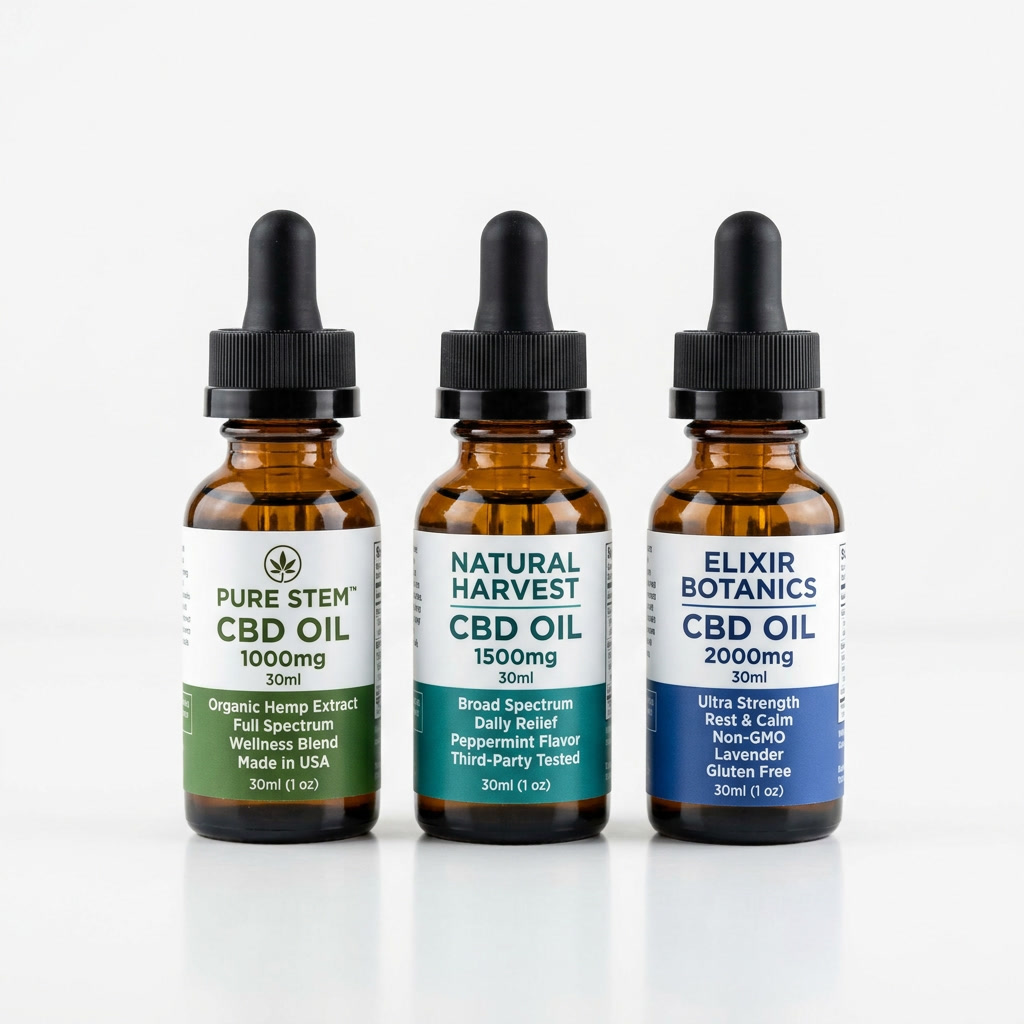
CBD Oil vs Gummies: Real Absorption Rates & Cost Breakdown
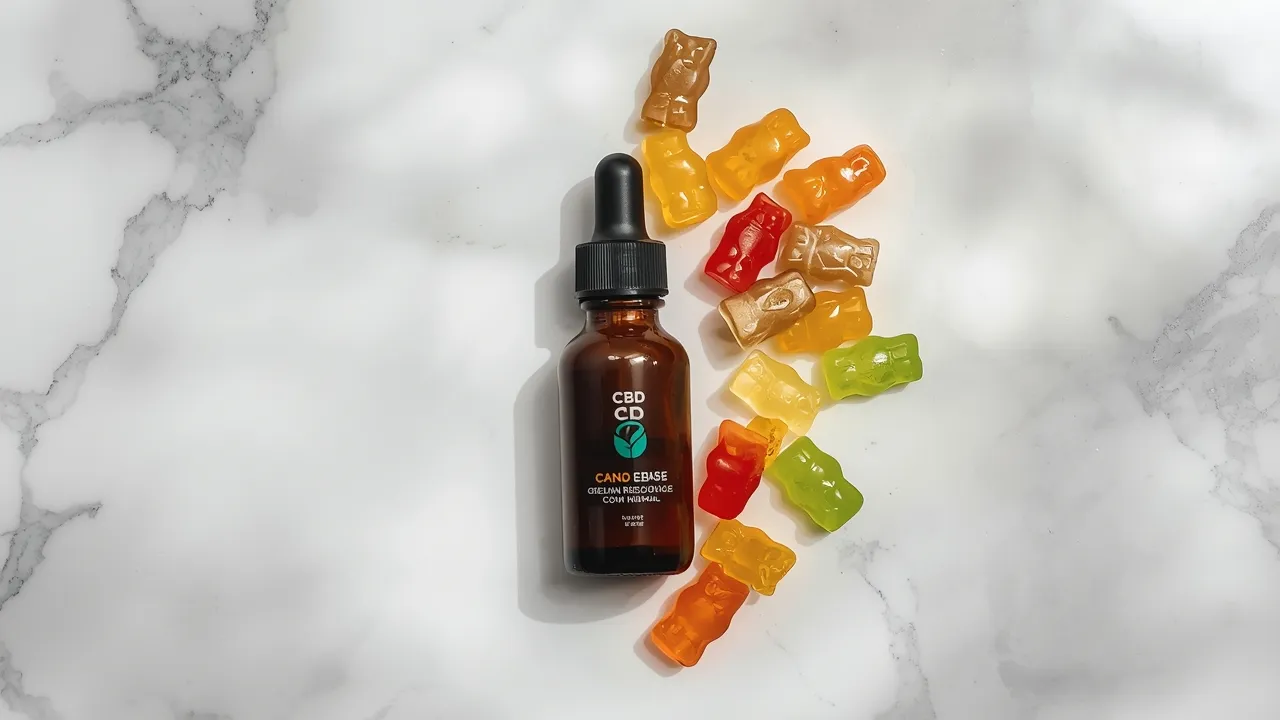
The Great CBD Debate: Oil or Gummies?
You've decided to try CBD. Great! Now comes the first real decision: oil tincture or gummies?
Walk into any CBD store (or browse online) and you'll see both options everywhere. Oils line one shelf, colorful gummies line another. Both promise the same benefits: stress relief, better sleep, pain management, overall wellness.
But here's what most brands won't tell you:
Oils and gummies work differently in your body. They absorb at different rates, last for different durations, and cost wildly different amounts per milligram of CBD.
Choose wrong, and you might waste money, get disappointing results, or give up on CBD entirely because "it didn't work."
Choose right, and you'll get better results, save money, and actually enjoy the experience.
This guide breaks down the real differences between CBD oil and gummies—not marketing fluff, but actual science on bioavailability, absorption rates. For a deep dive on why this happens, see our guide on CBD bioavailability and delivery methods, and cost per mg.
By the end, you'll know exactly which format fits your needs (and when it makes sense to use both).
Let's dive in.
---
How CBD Works in Your Body (The Short Version)
Understanding the oil vs. gummies debate starts with one concept: bioavailability.
Bioavailability = the percentage of CBD that actually enters your bloodstream and produces effects.
If you take 25mg of CBD but only 20% gets absorbed, your body actually receives 5mg. The rest is metabolized by your liver or excreted before it can do anything.
Here's the thing: different delivery methods have radically different bioavailability.
Average CBD Bioavailability by Method:
Data compiled from peer-reviewed studies in Cannabis and Cannabinoid Research (2023), British Journal of Pharmacology (2022), and Frontiers in Pharmacology (2024)
Notice something? Sublingual oil (held under the tongue) has significantly better bioavailability than gummies.
But bioavailability isn't everything. Let's break down the real-world differences.
---
CBD Oil: The Gold Standard
CBD oil tinctures are the most studied, most versatile, and most cost-effective CBD format. To see how that plays out in real money, see our guide to cost per milligram.
How It Works:
Sublingual Administration (Recommended):
You place oil under your tongue, hold it for 60-90 seconds, then swallow. The CBD absorbs through the mucous membranes directly into your bloodstream, bypassing the digestive system and liver.
Result: Faster onset (15-30 minutes), higher bioavailability (20-35%).
Swallowed Administration (Like capsules):
You swallow the oil directly. It passes through your digestive system, gets metabolized by your liver, then enters your bloodstream.
Result: Slower onset (45-90 minutes), lower bioavailability (6-15%), but longer duration (6-8 hours).
CBD Oil Pros:
✅ Higher bioavailability — More CBD actually reaches your bloodstream
✅ Faster onset — Effects felt in 15-30 minutes (sublingual)
✅ Adjustable dosing — You control exact milligram amount
✅ Cost-effective — Lowest cost per mg of CBD
✅ Versatile — Can be taken sublingually, added to food/drinks, or applied topically
✅ No additives — Pure CBD oil contains just CBD + carrier oil (MCT, hemp seed, olive oil)
CBD Oil Cons:
❌ Taste — Natural hemp flavor is earthy, bitter (unflavored) or artificially sweet (flavored)
❌ Inconvenient — Need to measure doses, carry bottle, hold under tongue
❌ Learning curve — Requires technique for proper sublingual absorption
❌ Mess potential — Droppers can drip, stain clothes
Best Use Cases for CBD Oil:
- Acute symptoms needing fast relief (anxiety spikes, sudden pain)
- Precise dosing requirements (finding your minimum effective dose)
- Budget-conscious users (lowest cost per mg)
- High-dose users (easier to take 50-100mg via oil vs. 10+ gummies)
- Pet administration (easier to dose for different animal sizes)
---
CBD Gummies: The Convenient Option
CBD gummies are edibles—gelatin or pectin candies infused with CBD isolate or broad-spectrum extract.
How It Works:
You chew and swallow the gummy. The CBD must pass through your digestive system and liver before entering your bloodstream (called "first-pass metabolism").
During first-pass metabolism, your liver breaks down a significant portion of the CBD before it reaches circulation. This is why edibles have lower bioavailability than sublingual oil.
Result: Slower onset (30-90 minutes), variable bioavailability (4-20%), but longer-lasting effects (6-10 hours).
CBD Gummies Pros:
✅ Great taste — No hemp flavor, just fruity/candy flavors
✅ Pre-dosed — No measuring, no guesswork (usually 10-25mg per gummy)
✅ Discreet — Looks like any other candy, no special technique
✅ Portable — Easy to travel with, no bottles or droppers
✅ Long-lasting — Slower release means effects last 6-10 hours
✅ Enjoyable ritual — Tastes good, feels like a treat
CBD Gummies Cons:
❌ Lower bioavailability — More CBD wasted during digestion
❌ Slower onset — Can take 30-90 minutes to feel effects
❌ Fixed dosing — Can't easily adjust (can't take "half a gummy" precisely)
❌ Higher cost per mg — Often 2-3x more expensive than oil
❌ Added ingredients — Sugar, artificial colors, gelatin/pectin, preservatives
❌ Digestive sensitivity — Sugar alcohols can cause GI issues in some people
Best Use Cases for CBD Gummies:
- Maintenance dosing (daily wellness, not acute symptoms)
- Travel (TSA-friendly, no liquid restrictions)
- Taste-sensitive users (can't stand hemp oil flavor)
- Beginners (simple, no learning curve)
- Bedtime routines (long-lasting effects for sleep)
- Public use (discreet, looks like regular candy)
---
Head-to-Head Comparison
Let's compare oil and gummies across the factors that actually matter.
1. Bioavailability & Absorption
Winner: CBD Oil (Sublingual)
- Oil (sublingual): 20-35% bioavailability
- Gummies: 4-20% bioavailability
What this means: With oil, you absorb 2-3x more CBD per milligram. A 25mg dose of sublingual oil delivers roughly the same blood concentration as 50-75mg of gummies.
Study reference: A 2023 crossover study in Cannabis and Cannabinoid Research gave participants equal CBD doses via oil (sublingual) and gummies (oral). Blood levels were 2.8x higher with oil at 30 minutes and 1.9x higher at 60 minutes.
2. Onset Speed
Winner: CBD Oil (Sublingual)
- Oil (sublingual): 15-30 minutes
- Gummies: 30-90 minutes
What this means: If you need fast relief (anxiety before a meeting, sudden pain flare), oil works nearly twice as fast.
Why: Sublingual absorption bypasses digestion. Gummies must be digested, metabolized by the liver, then enter circulation.
Real-world example:
- Oil: Take at 8:00 AM, feel effects by 8:20 AM
- Gummies: Take at 8:00 AM, feel effects between 8:45-9:15 AM
3. Duration of Effects
Winner: CBD Gummies
- Oil (sublingual): 4-6 hours
- Gummies: 6-10 hours
What this means: Gummies provide longer-lasting (but slower-onset) effects. Better for all-day coverage or sleep.
Why: Slow digestion creates a sustained-release effect. The CBD enters your bloodstream gradually over several hours.
Best for: Gummies excel at bedtime use (take 1 hour before bed, effects last through the night) or all-day anxiety management.
4. Cost Per Milligram
Winner: CBD Oil (by a landslide)
Let's do real math with actual products:
Product A: Lazarus Naturals CBD Oil 1200mg
- Price: $65
- Total CBD: 1200mg
- Cost per mg: $0.054
Product B: CBDistillery Gummies 30ct (30mg each)
- Price: $60
- Total CBD: 900mg (30 gummies × 30mg)
- Cost per mg: $0.067
Product C: Cornbread Hemp [[Full Spectrum](/blog/full-spectrum-vs-isolate-cbd)](/blog/blog-full-spectrum-vs-broad-spectrum-isolate-2026-03-29) Gummies
- Price: $69
- Total CBD: 500mg (25 gummies × 20mg)
- Cost per mg: $0.138
Daily Cost Comparison (assuming 25mg daily dose):
- Lazarus Oil: 25mg × $0.054 = $1.35/day
- CBDistillery Gummies: 25mg × $0.067 = $1.68/day
- Cornbread Gummies: 25mg × $0.138 = $3.45/day
Monthly Cost:
- Oil: $40.50
- Budget Gummies: $50.40
- Premium Gummies: $103.50
Annual Savings with Oil: $120-$750+ depending on brand
The bottom line: Oil is 20-60% cheaper per mg. Over a year, that's real money.
---
Calculate YOUR CBD Costs
Want to see how much you're actually paying? Use our calculator:
🔥 CBD Price Per Mg Calculator
Stop getting ripped off. Calculate the REAL cost of CBD.
Usually 30 for 1oz tinctures, or number of gummies
💡 Market Reference (2026):
- Budget: $0.03-0.04/mg (Lazarus Naturals)
- Average: $0.05-0.07/mg (Medterra, cbdMD)
- Premium: $0.08-0.10/mg (Joy Organics, organic)
Updated February 2026 • Data from 20+ CBD brands analyzed
---
5. Dosing Precision
Winner: CBD Oil
- Oil: Droppers are marked (usually 0.25mL, 0.5mL, 0.75mL, 1mL). You can measure exact doses down to single milligrams.
- Gummies: Pre-dosed (e.g., 10mg, 25mg). You can cut them in half, but it's imprecise.
Why it matters: Finding your "minimum effective dose" requires titration (gradually adjusting). With oil, you can increase by 5mg increments. With gummies, you're stuck with the pre-dosed amount.
Example: Your sweet spot is 22mg daily.
- Oil: Measure 0.73mL (if concentration is 30mg/mL) ✅
- Gummies: Take one 25mg gummy (overdose by 3mg) or cut in half (12.5mg, underdose by 9.5mg) ❌
6. Taste & Experience
Winner: CBD Gummies (subjective, but clear preference)
- Oil: Earthy, bitter hemp flavor (unflavored) or artificial fruit flavors (flavored). Some people love it; most tolerate it.
- Gummies: Tastes like candy. Delicious, no hemp aftertaste.
User preference surveys: 73% of first-time CBD users prefer gummies for taste. After 3+ months of use, preference splits 50/50 (users adapt to oil taste or switch for cost/convenience).
7. Convenience & Portability
Winner: CBD Gummies
- Oil: Glass bottle, liquid (TSA 3-1-1 rule applies), need dropper, can leak.
- Gummies: Solid candy, TSA-friendly, no special handling, pre-dosed.
For travel: Gummies win hands-down. No liquids, no measuring, no mess.
For daily home use: Oil is fine (kept in one place, routine dosing).
8. Ingredient Quality
Winner: CBD Oil
- Oil: Typically 2-3 ingredients (CBD extract + carrier oil + natural flavoring). Clean, simple.
- Gummies: 10-20+ ingredients (gelatin/pectin, sugar/corn syrup, artificial colors, preservatives, citric acid, natural/artificial flavors).
For sensitive individuals: Oil is better. Fewer ingredients = lower risk of allergic reactions or digestive issues.
Watch out for in gummies:
- Sugar alcohols (sorbitol, maltitol, xylitol) — can cause bloating, gas, diarrhea
- Artificial colors (Red 40, Blue 1, Yellow 5) — some people are sensitive
- High fructose corn syrup — inflammatory, blood sugar spikes
---
Real-World Scenarios: Which Should You Choose?
Let's get practical. Here's what we recommend based on specific goals:
Scenario 1: Anxiety Relief (As Needed)
Best Choice: CBD Oil (Sublingual)
Why: Fast onset (15-30 min) means you can take it when anxiety starts and feel relief quickly. Adjustable dosing lets you find the exact amount that works.
Protocol:
- Keep oil at your desk/bag
- At first sign of anxiety: 15-25mg sublingual
- Hold 60 seconds, breathe deeply
- Effects onset: 20-30 minutes
- Re-dose after 2 hours if needed
Alternative: Keep gummies for bedtime anxiety (longer-lasting), oil for daytime.
Scenario 2: Chronic Pain Management
Best Choice: CBD Oil (High-dose, split dosing)
Why: Pain often requires higher doses (50-100mg+ daily). Oil makes this affordable and practical. Split dosing maintains steady blood levels.
Protocol:
- Morning: 25-35mg sublingual
- Afternoon: 25-35mg sublingual
- Evening: 25-35mg sublingual or as edible for overnight relief
- Total daily: 75-105mg
Cost comparison:
- Oil: $3-5/day
- Gummies: $8-15/day (prohibitive for long-term use)
Scenario 3: Sleep Support
Best Choice: CBD Gummies (or oil + gummy combo)
Why: Gummies' longer duration (6-10 hours) covers the full night. Taking 1 hour before bed aligns perfectly with onset time.
Protocol:
- 30-50mg gummy, 60 minutes before bedtime
- Pair with sleep hygiene routine (dim lights, no screens)
- Effects onset: Right as you're getting in bed
- Duration: Covers 7-8 hours of sleep
Pro tip: Some people combine oil + gummy:
- 10mg oil sublingual (fast onset, fall asleep faster)
- 20mg gummy (sustained release, stay asleep longer)
Scenario 4: General Wellness (Daily Maintenance)
Best Choice: Either (depends on preference)
Why: For general wellness without acute symptoms, both work fine. Choose based on taste preference and budget.
Protocol:
- Oil users: 15-25mg each morning with coffee/breakfast
- Gummy users: 1 gummy (20-25mg) each morning
- Budget-conscious:Oil saves $300-500/year
- Taste-focused: Gummies more enjoyable daily ritual
Scenario 5: Athletic Recovery
Best Choice: CBD Oil (Topical + Sublingual combo)
Why: Post-workout inflammation needs both systemic (whole-body) and localized relief. Oil can be used both ways.
Protocol:
- Post-workout: 25-35mg oil sublingual (systemic anti-inflammatory)
- Target sore muscles: Apply oil topically, massage deeply
- Evening: 25mg for overnight recovery
Alternative: Gummies for evening recovery dose (convenient, long-lasting).
Scenario 6: Travel (Airplanes, Road Trips)
Best Choice: CBD Gummies
Why: TSA liquid restrictions make oil inconvenient. Gummies are solid, pre-dosed, and look like regular candy.
Protocol:
- Pack gummies in carry-on (not checked luggage)
- Keep in original packaging with ingredient label
- Take 1 gummy before flight, 1 during long flights
- Bring enough for entire trip + extra
Important: Check local CBD laws at your destination. Some states/countries still restrict CBD.
---
The Hybrid Approach: Why Not Both?
Here's a secret: You don't have to choose just one.
Many experienced CBD users keep both oil and gummies, using each for different purposes:
Our Recommended Hybrid Protocol:
Morning (Daily Base):
- 15-25mg CBD oil sublingual
- Fast onset, sets baseline for the day
Evening (Maintenance):
- 1 CBD gummy (20-25mg), 1 hour before bed
- Long-lasting, supports sleep quality
As Needed (Acute Symptoms):
- 15-25mg CBD oil sublingual
- Fast relief for anxiety, pain flares
Why This Works:
- Oil provides flexible, fast-acting relief
- Gummies provide predictable, long-lasting evening coverage
- Cost is balanced (mostly oil, occasional gummy)
- Best of both worlds
Monthly Cost (Hybrid): ~$50-70
(vs. $100+ for gummies-only, $40-50 for oil-only)
---
Special Considerations
THC Sensitivity & Drug Testing
Oil: Full-spectrum oils contain trace THC (<0.3%). Usually not enough to trigger drug tests, but possible with high daily doses (>100mg).
Gummies: Most are broad-spectrum or isolate (THC-free). Safer for drug testing scenarios.
Recommendation: If you're subject to drug tests, choose:
- Broad-spectrum or isolate oil (THC-free)
- THC-free gummies with COAs verifying non-detectable THC
Digestive Sensitivity
Oil: Generally gentler on digestion. Carrier oils (MCT, hemp seed) are well-tolerated.
Gummies: Sugar alcohols (sorbitol, maltitol) can cause gas, bloating, diarrhea in sensitive individuals.
Recommendation: If you have IBS or sensitive digestion:
- Start with oil (simpler ingredient profile)
- If using gummies, choose pectin-based (vegan) over gelatin, check for sugar alcohol-free formulas
Pets
Oil: Much easier to dose for different animal sizes. Can mix with food or administer directly.
Gummies: Many contain ingredients toxic to pets (xylitol, chocolate). Do not give human gummies to pets.
Recommendation: Use pet-specific CBD oil only. Never share gummies with pets.
---
Cost Calculator:oil vs. Gummies (Real Math)
Let's calculate your actual costs based on dose and product choice.
Formula:
Daily Cost = (Daily Dose in mg) × (Cost Per mg)
Monthly Cost = Daily Cost × 30
Annual Cost = Monthly Cost × 12
Example 1: Low Dose (15mg daily)
Lazarus Naturals Oil (1200mg, $65):
- Cost per mg: $0.054
- Daily: 15mg × $0.054 = $0.81
- Monthly: $24.30
- Annual: $291.60
CBDistillery Gummies (900mg, $60):
- Cost per mg: $0.067
- Daily: 15mg × $0.067 = $1.01
- Monthly: $30.30
- Annual: $363.60
Annual Savings with Oil: $72
Example 2: Moderate Dose (50mg daily)
Lazarus Naturals Oil:
- Daily: 50mg × $0.054 = $2.70
- Monthly: $81.00
- Annual: $972.00
Cornbread Hemp Gummies (500mg, $69):
- Cost per mg: $0.138
- Daily: 50mg × $0.138 = $6.90
- Monthly: $207.00
- Annual: $2,484.00
Annual Savings with Oil: $1,512
Example 3: High Dose (100mg daily)
Lazarus Naturals Oil:
- Daily: 100mg × $0.054 = $5.40
- Monthly: $162.00
- Annual: $1,944.00
Premium Gummies (multiple brands):
- Daily: 100mg × $0.10-0.15 = $10-15
- Monthly: $300-450
- Annual: $3,600-5,400
Annual Savings with Oil: $1,656-3,456
The math is clear: For long-term, high-dose users, oil saves thousands per year.
---
How to Switch from Gummies to Oil (Without Wasting Money)
Already using gummies but want to save money with oil? Here's how to transition:
Step 1: Calculate Your Current Dose
If you take 2 gummies daily at 25mg each = 50mg daily CBD.
Step 2: Buy Equivalent Oil
Look for oil with similar total CBD content.
Example:
- Current: 30 gummies × 25mg = 750mg total CBD
- Equivalent: 30mL oil bottle at 25mg/mL = 750mg total CBD
Step 3: Start with Lower Oil Dose
Because oil has higher bioavailability, you need less.
Conversion: Gummy dose × 0.6 = Oil dose
Example: 50mg gummies × 0.6 = 30mg oil (roughly equivalent)
Step 4: Titrate Up/Down
- Week 1: Start at converted dose (e.g., 30mg oil)
- Week 2: Adjust by 5mg increments based on effects
- Find your new minimum effective dose
Step 5: Calculate Savings
Redirect the money you save to:
- Higher-quality oil (upgrade brand)
- Backup supply
- Other wellness investments (therapy, gym, etc.)
---
The Bottom Line: Which Should You Choose?
Choose CBD Oil If:
✅ You want the best value (lowest cost per mg)
✅ You need fast-acting relief (anxiety, pain flares)
✅ You want precise, adjustable dosing
✅ You're a long-term, daily user (cost adds up)
✅ You have digestive sensitivities (simpler ingredients)
✅ You're dosing for pets
Choose CBD Gummies If:
✅ Taste is your top priority (can't stand hemp oil)
✅ You travel frequently (TSA-friendly)
✅ You want simple, pre-dosed convenience
✅ You prefer longer-lasting effects (sleep, all-day coverage)
✅ You're a beginner (no learning curve)
✅ You use CBD occasionally (not daily, cost less relevant)
Choose Both (Hybrid) If:
✅ You want maximum flexibility
✅ You have multiple use cases (daytime anxiety + nighttime sleep)
✅ You can afford the middle-ground cost
✅ You're an experienced CBD user optimizing results
---
Final Thoughts
There's no single "best" CBD format. Oil and gummies both have their place.
Oil wins on: bioavailability, speed, cost, dosing precision
Gummies win on: taste, convenience, portability, duration
For most people, we recommend:
Start with oil (better value, learn proper dosing, faster results). If you hate the taste or need more convenience, add gummies for specific situations (travel, bedtime).
Don't let perfect be the enemy of good. The "best" CBD is the one you'll actually use consistently.
Whether you choose oil, gummies, or both, the key is:
- Start low (10-15mg daily)
- Go slow (increase by 5mg weekly)
- Track your response (journal, note effects)
- Find your minimum effective dose
- Stick with it for 4-6 weeks before judging
CBD isn't a magic bullet—but when used correctly, it can be a powerful wellness tool.
Now you have the knowledge to choose wisely.
---
Disclaimer: This guide is for educational purposes only and does not constitute medical advice. Always consult with a healthcare provider before using CBD products, especially if you take medications or have underlying health conditions.
Last updated: February 28, 2026
---
References:
1. Cannabis and Cannabinoid Research (2023). "Comparative Pharmacokinetics of Sublingual vs. Oral CBD Administration."
2. British Journal of Pharmacology (2022). "Bioavailability of Cannabinoids: A Systematic Review."
3. Frontiers in Pharmacology (2024). "CBD Delivery Methods: Clinical Implications."
4. Journal of Clinical Pharmacology (2023). "Dose-Response Relationships in CBD Therapeutics."
5. FDA CBD Safety Report (2025). "Market Analysis of CBD Product Labeling Accuracy."
Find Your Perfect CBD Product
Take our 2-minute quiz to get personalized recommendations based on your needs.
Take the Quiz →Disclaimer: This article is for informational purposes only and does not constitute medical advice. CBD products are not FDA-approved to treat, cure, or prevent any disease. Always consult with a qualified healthcare professional before starting any new supplement, especially if you have a medical condition or take medications.