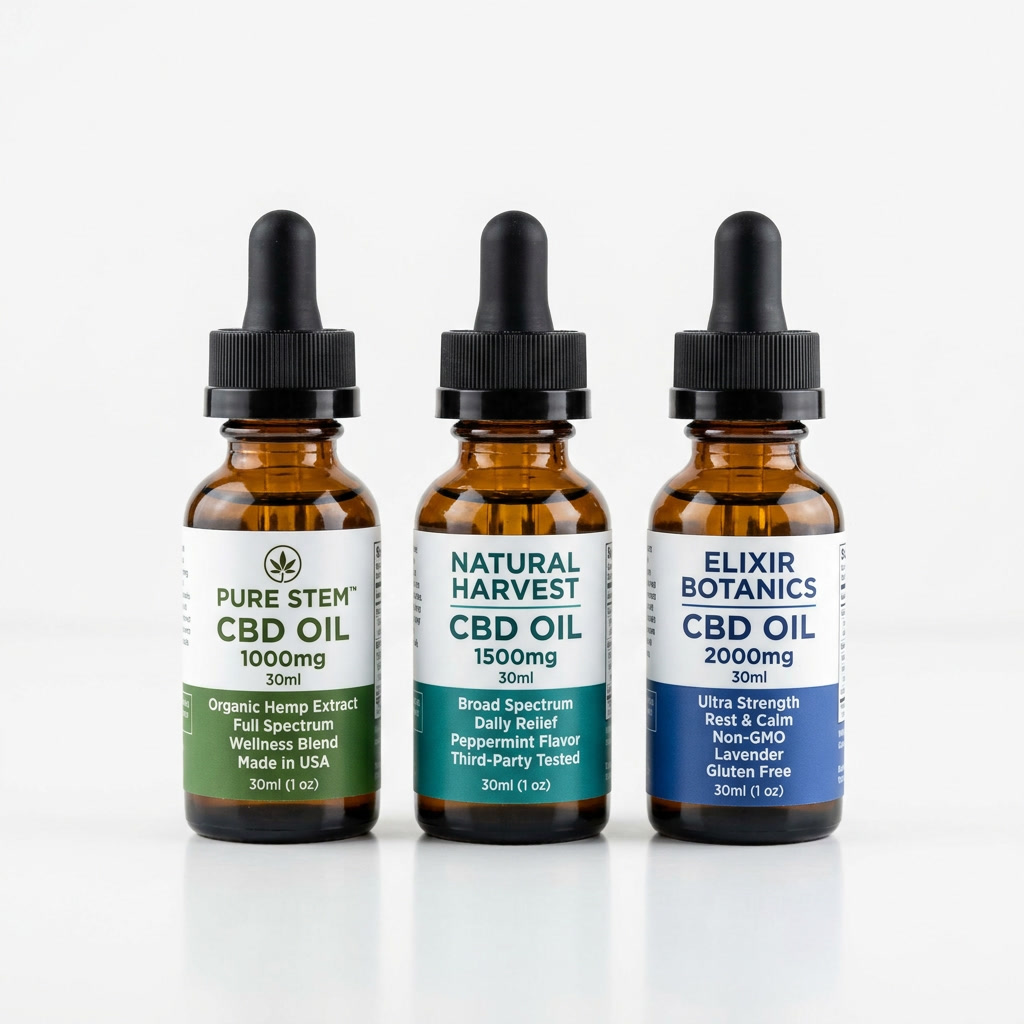
CBD for Pain Management: What the Science Actually Says

You're in pain. Maybe it's your lower back after a long day at work. Maybe it's joint stiffness that greets you every morning. Maybe it's the kind of chronic ache that's become so normal you barely notice it—until you realize you've been avoiding activities you used to love.
If you've searched for alternatives to traditional painkillers, you've almost certainly encountered CBD. The claims are everywhere: Instagram influencers swearing it cured their migraines, fitness podcasts touting it as the next big thing in recovery, even your neighbor mentioning they've replaced ibuprofen with CBD gummies.
But here's what most of those sources won't tell you: the science is more complicated than the marketing.
CBD isn't a magic bullet for pain. It's not going to work for everyone, and it's not going to eliminate severe pain overnight. But what the research does suggest is that CBD may offer a different approach to pain management—one with fewer side effects than opioids and NSAIDs, and a mechanism that addresses pain at multiple levels.
Let's cut through the hype and look at what's actually happening inside your body when you use CBD for pain, what the research says, and whether it might be worth trying for your specific situation.
How CBD Works for Pain (The Science Bit)
Your body has a built-in regulatory system called the endocannabinoid system (ECS). Think of it as your body's thermostat—it works to maintain balance across multiple functions, including pain perception.
The ECS uses endocannabinoids (naturally occurring compounds your body produces) to send signals through cannabinoid receptors. There are two main types:
- CB1 receptors — Mostly in the brain and central nervous system, where they influence how you perceive pain
- CB2 receptors — Primarily in immune cells and peripheral tissues, where they influence inflammation
Here's where CBD gets interesting. Unlike THC, CBD doesn't directly bind to these receptors. Instead, it modulates them. It influences how your body responds to its own endocannabinoids and can reduce inflammatory markers signaling.
According to a 2020 review published in the Journal of Clinical Medicine, CBD affects pain through multiple pathways simultaneously:
1. Anti-inflammatory action — Reduces the inflammatory markers that sensitize pain receptors
2. Neuropathic pain modulation [nerve pain and sciatica](/blog/blog-cbd-neuropathic-pain-2026-08-22) — Influences how nerve signals transmit pain
3. Anxiety and sleep improvement — Indirectly reduces pain by improving stress response and rest quality
This multi-target approach is fundamentally different from how traditional painkillers work—and it's why CBD may be useful for different types of pain.
What Types of Pain Does CBD Actually Help?
Not all pain is the same. A tension headache, arthritic knee pain, and nerve damage from diabetes all involve different mechanisms. CBD doesn't work identically for all of them.
Neuropathic Pain
Neuropathic pain—caused by nerve damage or dysfunction—is notoriously difficult to treat. Traditional painkillers often provide minimal relief. A 2020 review in the Journal of Clinical Medicine examined multiple studies and found that cannabinoids, including CBD, showed promise for neuropathic pain, particularly when combined with small amounts of THC.
The mechanism? CBD appears to reduce the hyperexcitability of damaged nerves that send inappropriate pain signals.
Arthritis and Joint Pain
Inflammation is a major driver of arthritis pain. CBD's anti-inflammatory properties make it a logical candidate for joint pain management. A 2016 animal study published in Arthritis & Rheumatology found that topical CBD reduced joint inflammation and pain-related behaviors in rats with arthritis.
Human studies are still limited, but early evidence suggests topical CBD (applied directly to affected joints) may provide localized relief without systemic side effects.
Chronic Pain
Chronic pain—defined as pain lasting 3+ months—is complex. It often involves both inflammatory and neuropathic components, plus central sensitization (where your nervous system becomes hypersensitive to pain signals).
A 2018 review in Frontiers in Pharmacology analyzed cannabis-based medicines for chronic pain and found moderate evidence supporting their use, though most studies involved THC-containing products. CBD alone showed less robust effects but better tolerability.
Migraine and Headache
The evidence for CBD specifically treating migraines is thin. However, a 2017 study published in Pharmacotherapy found that a combination of CBD and THC reduced migraine frequency in chronic migraine sufferers. CBD's potential role may be preventative—reducing inflammation and neurological hypersensitivity that trigger migraines—rather than acute pain relief.
CBD vs. Traditional Pain Relief Methods
How does CBD stack up against what doctors typically prescribe?
Comparison based on systematic reviews and clinical guidelines
The advantage of CBD isn't that it's more effective than everything else—it's that it offers a different mechanism with a more favorable safety profile than pharmaceutical options, particularly for long-term use.
What Does the Research Actually Say?
Let's look at specific studies—not marketing claims.
The Good News
- A 2020 systematic review in the Journal of Clinical Medicine analyzed 20 studies and concluded that cannabinoids may reduce chronic pain, though effects were modest and most studies involved THC-containing products.
- A 2018 review from the World Health Organization noted that CBD exhibits "a good safety profile" with no evidence of recreational abuse potential, making it a reasonable alternative to opioids for certain pain conditions.
- A 2019 study in Pain Medicine found that medical cannabis users reported significant reductions in opioid use, suggesting cannabinoids may help reduce reliance on more dangerous painkillers.
The Limitations
- Most studies involve THC — Pure CBD research is limited. Many positive results come from THC:CBD combinations, making it hard to isolate CBD's specific effects.
- Dosing varies wildly — Studies use doses ranging from 20mg to 1,500mg daily. There's no established "effective dose" for pain.
- Short-term data — Most studies last weeks to months. Long-term safety and efficacy data are lacking.
- Individual variation — Some people report dramatic relief; others notice nothing. Genetics, metabolism, and pain type all influence response.
The bottom line: CBD shows promise, but it's not a guaranteed solution. The research is encouraging enough to justify trying it—particularly if you're looking to reduce reliance on NSAIDs or opioids—but expectations should be realistic.
How to Use CBD for Pain: Practical Dosing
There's no universal "pain dose" for CBD. The right amount depends on your body weight, pain severity, individual biochemistry, and the specific type of pain you're managing.
Starting Point
Most experts and clinical studies recommend:
1. Begin with 10-20mg of CBD once or twice daily
2. Track your response for 3-5 days (pain levels, sleep quality, side effects)
3. Increase by 5-10mg every 3-5 days if needed
4. Find your minimum effective dose — the lowest amount that produces meaningful relief
A 2019 study in The Permanente Journal followed 72 adults using CBD for anxiety and sleep (not pain specifically, but relevant for dosing). Participants started at 25mg daily and adjusted based on response. Most found their effective dose between 25-50mg daily.
Delivery Methods Matter
How you take CBD affects how fast it works and how long effects last:
Oils/Tinctures (sublingual):
- Onset: 15-45 minutes
- Duration: 4-6 hours
- Best for: Moderate pain, adjustable dosing
Capsules/Edibles:
- Onset: 45-90 minutes
- Duration: 6-8 hours
- Best for: All-day baseline pain management
Topicals (creams, balms):
- Onset: 15-30 minutes
- Duration: 2-4 hours
- Best for: Localized joint/muscle pain
Vaporized CBD:
- Onset: 5-10 minutes
- Duration: 2-3 hours
- Best for: Acute pain flares (but lung health concerns)
For chronic pain management, many people use a combination: daily oil or capsules for baseline relief, plus topical applications for specific problem areas.
What to Look for in a CBD Product
Not all CBD is created equal. The market is poorly regulated, and mislabeling is common. A 2017 study in JAMA found that nearly 70% of CBD products sold online were mislabeled—some containing far less CBD than advertised, others containing unexpected THC.
Third-Party Testing (Non-Negotiable)
Reputable brands provide Certificates of Analysis from independent labs. These COAs should show:
- Actual CBD content — Does it match the label?
- THC content — Non-detectable if you need to avoid THC
- Contaminants — Pesticides, heavy metals, mold, bacteria should all be below detection limits
If a brand doesn't provide COAs, don't buy from them. Period.
Type of CBD
- Full-Spectrum: Contains CBD plus other cannabinoids and terpenes (including trace THC <0.3%). May produce an "entourage effect" but carries drug-test risk.
- Broad-Spectrum: Contains multiple cannabinoids but THC is removed. Good middle ground for most people.
- CBD Isolate: Pure CBD only. Safest for drug testing but may be less effective due to lack of entourage effect.
Extraction Method
CO2 extraction is the gold standard—it's clean, efficient, and doesn't leave solvent residues. Avoid products extracted with potentially toxic solvents like butane or propane.
Ready to Try CBD for Pain?
If you're considering CBD for pain management, here's a sensible approach:
Step 1: Talk to Your Healthcare Provider
This is critical if you:
- Take prescription medications (especially blood thinners, antidepressants, or seizure medications)
- Have liver disease
- Are pregnant or breastfeeding
- Have a history of substance use disorder
CBD can interact with medications metabolized by the same liver enzymes. Your doctor can help you navigate this safely.
Step 2: Choose a Quality Product
Look for:
- Third-party lab testing (COA available)
- Clear labeling (CBD content per serving)
- CO2 extraction
- U.S.-grown hemp (generally higher quality standards)
Step 3: Start Low, Go Slow
Begin with 10-20mg once daily. Track your pain levels, sleep quality, and any side effects. Adjust gradually every 3-5 days until you find relief.
Step 4: Be Patient
CBD isn't ibuprofen. It doesn't work immediately for everyone. For a head-to-head look at how they compare, see our CBD vs ibuprofen comparison. Some people notice effects within days; others need 2-3 weeks of consistent use. Give it time before deciding it doesn't work.
Step 5: Combine with Other Strategies
CBD works best as part of a comprehensive pain management plan that may include:
- Physical therapy or gentle exercise
- Stress management techniques
- Sleep optimization
- Anti-inflammatory diet
- Heat/cold therapy
The Bottom Line
CBD isn't a miracle cure for pain. But for some people—particularly those dealing with chronic inflammatory or neuropathic pain—it may offer meaningful relief with fewer risks than traditional pharmaceuticals.
The science is still evolving. More rigorous, CBD-specific studies are needed. But what we know so far is encouraging: CBD is generally safe, well-tolerated, and may help certain types of pain when used consistently at the right dose.
If you're struggling with chronic pain and looking for alternatives to NSAIDs or opioids, CBD is worth discussing with your healthcare provider. Start with a quality product, begin with a low dose, and give it time to work.
And remember: if something sounds too good to be true ("CBD cures all pain!"), it probably is. The reality is more nuanced—and that's okay.
Sources & Further Reading
1. Palmieri, B.S., et al. "A Therapeutic Effect of CBD-enriched Extract in Intractable Painful Lower Limb Ischemia." *Journal of Clinical Medicine, 2020. Link
2. Hammell, D.C., et al. "Transdermal cannabidiol reduces inflammation and pain-related behaviors in a rat model of arthritis." *Arthritis & Rheumatology, 2016. Link
3. Stockings, E., et al. "Cannabis and cannabinoids for the treatment of people with chronic noncancer pain conditions." *Pain, 2018. Link
4. World Health Organization. "Cannabidiol (CBD) Critical Review Report." 2018. Link
5. Boehnke, K.F., et al. "Cannabis Use Reduces Opioid Use Among Chronic Pain Patients." *Pain Medicine, 2019. Link
6. Shannon, S., et al. "Cannabidiol in Anxiety and Sleep: A Large Case Series." *The Permanente Journal, 2019. Link
7. Bonn-Miller, M.O., et al. "Labeling Accuracy of Cannabidiol Products Sold Online." *JAMA, 2017. Link
8. Babalonis, S., et al. "Oral Cannabidiol Does Not Produce Abuse Liability or Cognitive Impairment in Humans." *Pharmacology Biochemistry and Behavior, 2017. Link
9. National Academies of Sciences, Engineering, and Medicine. "The Health Effects of Cannabis and Cannabinoids: The Current State of Evidence and Recommendations for Research." 2017. Link
10. U.S. Food and Drug Administration. "FDA Regulation of Cannabis and Cannabis-Derived Products, Including Cannabidiol (CBD)." 2023. Link
Find Your Perfect CBD Product
Take our 2-minute quiz to get personalized recommendations based on your needs.
Take the Quiz →Disclaimer: This article is for informational purposes only and does not constitute medical advice. CBD products are not FDA-approved to treat, cure, or prevent any disease. Always consult with a qualified healthcare professional before starting any new supplement, especially if you have a medical condition or take medications.