CBD for Back Pain: What the 2023–2026 Research Actually Says

You've probably seen the claims: rub on a CBD cream, swallow a few drops, and your aching lower back will finally quiet down. It's an appealing promise, especially when you've tried heat packs, stretching, and over-the-counter pills that only take the edge off. But before you spend money on another bottle, it's worth asking a harder question: does the science actually back it up?
The honest answer is more complicated than the marketing. Back pain is one of the most common reasons people reach for CBD, and a growing body of research from the last few years is finally looking at it directly. Some of that research is encouraging. Some of it is sobering. And a lot of it is still thin.
This guide walks through what the 2023–2026 studies actually found, where the evidence is strong, where it's weak, and how to think about CBD for back pain without falling for hype. If you're weighing whether to try it, this is the context you need.
Why Back Pain Is Such a Common Reason People Try CBD
Back pain is one of the most common reasons people seek medical attention, and it's a leading cause of disability worldwide. It's also notoriously hard to treat. Conventional options range from physical therapy and anti-inflammatories to opioids, and each comes with limits or side effects. That gap in good options is exactly why so many people look for alternatives.
CBD, or cannabidiol, is the non-intoxicating compound from the cannabis plant that has drawn the most attention. Unlike THC, it doesn't get you high, which makes it more approachable for people who want symptom relief without the psychoactive effects. A 2023 review in the Annals of Agricultural and Environmental Medicine noted that CBD is relatively safe, generally well tolerated, and easily available — which is precisely why so many patients with low back pain end up trying it on their own.
That accessibility is a double-edged sword. It means people can experiment, but it also means they're often doing so without much guidance. Understanding what the research does and doesn't support can help you make a more informed choice.
The Key Study: A 2023 Review of CBD for Low Back Pain
The most direct look at this question came in 2023, when researchers published what they described as the first narrative review of CBD alone for acute and chronic back pain. Published in the Annals of Agricultural and Environmental Medicine, the review combed through the literature and included 10 studies.
The findings were mixed, and the authors were candid about it. For acute low back pain — the short-term, sudden kind — they found evidence of effectiveness was essentially lacking. The one clinical trial conducted in an emergency department showed no superiority of CBD over placebo for acute back pain.
For chronic low back pain, the picture was more hopeful but still not conclusive. Most of the studies in the review concerned chronic rather than acute pain, and while most results suggested a beneficial effect of cannabinoids, the authors stressed that hard evidence is still missing.
> "Although most of the results suggest a beneficial effect of cannabinoids in relieving chronic LBP, hard evidence is lacking. Rigorous randomized controlled trials are needed."
That's the honest state of the field: promising signals, but not proof.
What a 2024 Study of Edible Cannabis Found
One of the more useful recent studies came from the University of Colorado Boulder, published in Frontiers in Pharmacology in 2024. Researchers tracked 249 people with chronic low back pain who chose to use edible cannabis products over two weeks, categorizing the products as CBD-dominant, THC-dominant, or a combination of both.
The results were nuanced. During acute use, higher THC doses were associated with greater short-term pain reduction. CBD, on the other hand, was primarily associated with short-term tension relief — but there were no associations between CBD dose and acute pain relief.
Over the two-week period, people using all forms of cannabis reported pain reductions. But here's the interesting part: the trends suggested that more frequent use of CBD-dominant edibles may be associated with greater reductions in perceived pain over the observation period, though this finding didn't reach statistical significance.
The takeaway isn't that CBD is a proven painkiller. It's that CBD and THC may work differently, and that CBD's role in back pain might be more about tension and longer-term perception than immediate pain relief.
The Big Cochrane Review: A Reality Check
If you want the most rigorous assessment available, it's hard to beat the Cochrane Collaboration. In January 2026, Cochrane published an updated systematic review of cannabis-based medicines for chronic neuropathic pain, analyzing 21 studies with 2,187 participants.
The findings were a reality check for anyone expecting dramatic results. For CBD-dominant medicines, the review found no clear evidence of an effect on pain relief of 50% or greater, with very low-certainty evidence. The same held for THC-dominant and balanced THC/CBD medicines on that threshold.
The review did note that balanced THC/CBD medicines may increase ratings of "much" or "very much" improved, and may increase pain relief of at least 30% — but it flagged these as low-certainty evidence that wasn't clinically relevant. In plain terms: the effects were small, uncertain, and not the kind of dramatic relief people hope for.
This matters because it's the highest-quality evidence we have, and it doesn't support the idea that CBD is a reliable, powerful treatment for nerve-related back pain. It's a useful counterweight to the marketing.
What About CBD for Musculoskeletal Pain?
Back pain is often musculoskeletal — involving muscles, joints, and connective tissue rather than nerves. A 2023 review in Experimental Biology and Medicine looked at CBD specifically in the context of musculoskeletal regenerative medicine, covering conditions like osteoarthritis, back pain, and myofascial pain syndrome.
The review highlighted CBD's anti-inflammatory, immunomodulatory, and antinociceptive (pain-reducing) properties, and noted that CBD is considered safe and well tolerated, with no serious adverse effects reported in the studies reviewed. It also pointed to interesting preclinical work on tissue regeneration.
But the authors were clear that this is an area still undergoing expansion. They called for additional randomized clinical trials to clarify efficacy and understand the cellular mechanisms. So while the biology is promising, the clinical proof is still catching up.
How People Actually Use CBD for Back Pain
Beyond clinical trials, there's real-world data on how people use CBD. A 2023 study in Medical Cannabis and Cannabinoids surveyed long-term, self-dosing CBD users and found that back and/or joint pain was among the most common primary symptoms people were trying to address.
The study's numbers are worth noting:
- Mean daily dose: 53.1 mg
- Median daily dose: 40.8 mg
- Dose range: 8–390 mg per day
Participants reported that their symptom scores improved after taking CBD, and their self-perception of general health improved. Perhaps most striking, 31.2% of participants decreased or completely stopped their over-the-counter drugs, and 19.2% decreased or stopped prescription drugs over the four-week study — with those taking CBD for chronic pain reducing drug use the most.
This is observational data, not proof of efficacy. But it tells you something real about how people incorporate CBD into their routines and why they stick with it.
Why the Research Is Still Thin
If you're wondering why there isn't a definitive answer yet, you're not alone. The researchers themselves point to several reasons.
First, high-quality randomized controlled trials in humans are still lacking. A 2025 review in CNS Spectrums noted that while potential mechanisms of action have been identified for conditions including chronic pain, the evidence base remains an emerging field.
Second, back pain is heterogeneous. It can be acute or chronic, nerve-related or musculoskeletal, and it affects people with very different co-morbidities. That makes it hard to design studies that produce clean, generalizable results.
Third, a 2025 systematic review in the British Journal of Pharmacology found that there has not been a breakthrough in the pharmacotherapy of chronic primary pain conditions, including chronic low back pain. Interestingly, it noted that CBD and ketamine were the only two agents tested across all three major chronic primary pain conditions — a sign that CBD is being taken seriously, even if results are modest.
The bottom line: the research is real and growing, but it's not settled. Anyone who tells you CBD definitively cures back pain is overstating the evidence.
CBD vs. Traditional Pain Relief
It's natural to want to compare CBD to what you're already using. Here's a rough sense of how they stack up, based on the research:
The honest framing is that CBD isn't a replacement for proven treatments. It's best understood as a complementary option with a relatively favorable safety profile — one that some people find helpful, but that doesn't have the same weight of evidence behind it as, say, physical therapy.
How to Choose a CBD Product for Back Pain
If you decide to try CBD, product choice matters more than you might think. The research points to a few practical considerations.
For back pain specifically, you have a few main formats to consider:
- Topicals and creams — applied directly to the painful area, good for localized discomfort
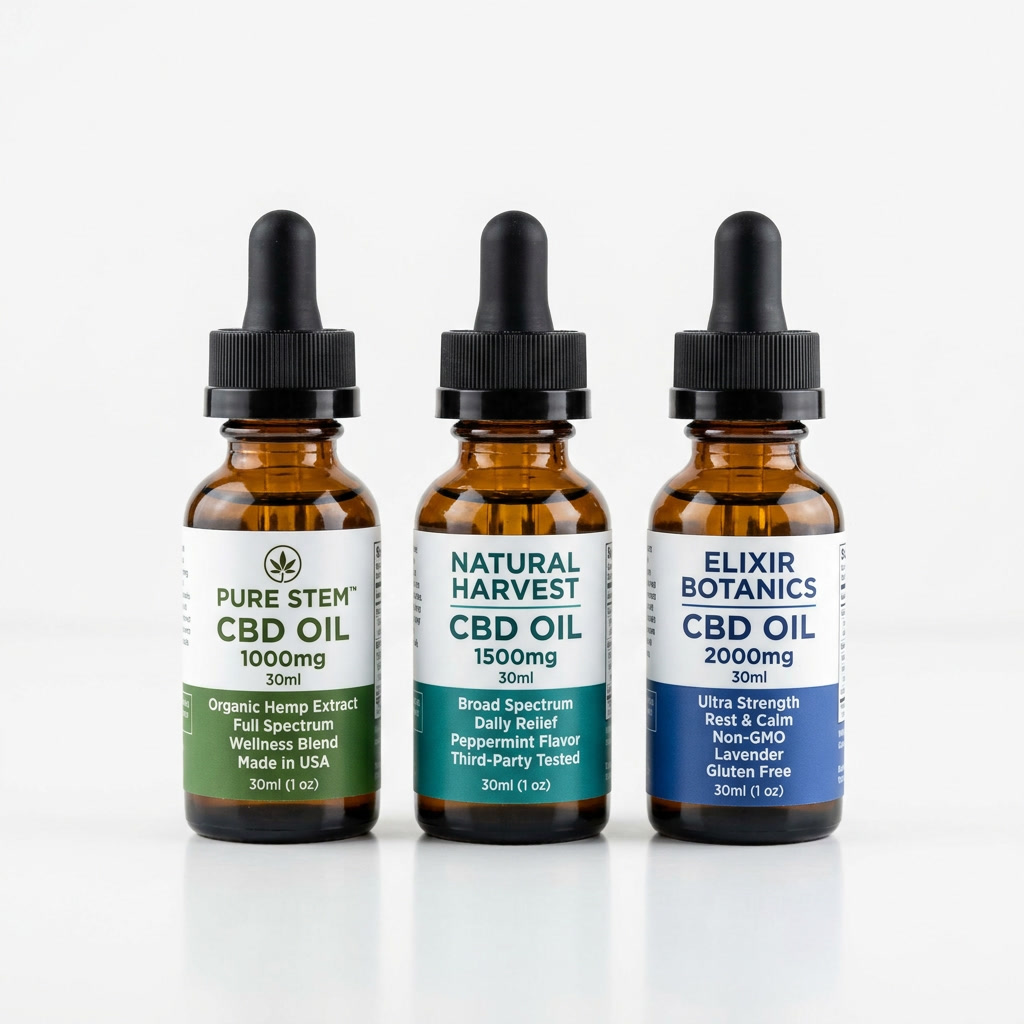
- Oils and tinctures — taken under the tongue, absorbed systemically
- Gummies and edibles — convenient, but slower to take effect
There's no single "right" answer, and the 2024 Colorado study suggests that how CBD is delivered and whether it's combined with THC can change the experience. If you're new to this, starting with a CBD topical for a localized area, or a CBD oil for more general use, are reasonable places to begin.
Dosing: Where to Start
Dosing is one of the least standardized parts of CBD use, and the research reflects that. The 2023 self-dosing study found a wide range — from 8 mg to 390 mg per day — with a mean around 53 mg.
A sensible, conservative approach:
1. Start with a low dose, around 10–20 mg once daily
2. Track your response for 2–3 weeks
3. Increase gradually by 5–10 mg if needed
4. Find your minimum effective dose and stay there
Everyone responds differently, so what works for one person may not work for another. Keeping a simple journal of dose, timing, and symptoms can help you spot patterns within a couple of weeks.
Safety and Side Effects
CBD is generally considered safe and well tolerated, and the 2023 musculoskeletal review noted no serious adverse effects in the studies it examined. But "generally safe" isn't the same as "risk-free."
A few things to keep in mind:
- CBD can interact with certain medications, including blood thinners and some antidepressants
- Product labeling is often inaccurate, so what's on the label may not match what's in the bottle
- Quality varies widely between brands, so third-party testing matters
- If you're pregnant, nursing, or managing a serious condition, talk to a doctor first
The 2025 CNS Spectrums review made the point that cannabis, like all medicines, has potential benefits and harms — and that long-term use may not be risk-free. That's a fair caution to carry with you.
The Bottom Line
So where does this leave you? The most honest summary is that CBD shows genuine promise for back pain, but the evidence is not yet strong enough to call it a proven treatment. The 2023 review found signals of benefit for chronic back pain but no hard proof. The 2024 Colorado study found CBD's role may be more about tension and longer-term perception than immediate relief. And the 2026 Cochrane review found no clear evidence that CBD-dominant products reliably reduce nerve pain by 50% or more.
What the research does support is that CBD is generally safe, well tolerated, and worth exploring as a complementary option — especially for people who want to reduce their reliance on other medications. The 2023 self-dosing study found that a meaningful share of people reduced their OTC and prescription drug use while using CBD.
If you're curious, the practical path is to start low, go slow, track your results, and talk to your doctor — especially if you take other medications. CBD isn't a cure, and anyone who promises one is selling you something. But for many people, it's a reasonable, low-risk tool to have in the mix alongside the treatments that have stronger evidence behind them.
Ready to explore your options? Browse CBD products for pain, or dig deeper into how CBD fits into chronic pain management and CBD for sciatica. If you're comparing it to conventional options, our breakdown of CBD vs. ibuprofen and the best CBD topicals for pain are good next reads. And if you're unsure how much to take, our CBD dosage guide by weight can help you find a starting point.
Related Reading
For the strongest recent trial evidence on cannabis for chronic low back pain, see Cannabis for back pain and migraine: what actually works.
Find Your Perfect CBD Product
Take our 2-minute quiz to get personalized recommendations based on your needs.
Take the Quiz →Disclaimer: This article is for informational purposes only and does not constitute medical advice. CBD products are not FDA-approved to treat, cure, or prevent any disease. Always consult with a qualified healthcare professional before starting any new supplement, especially if you have a medical condition or take medications.