CBD for Anxiety: What the Research Actually Shows
The 3 AM Spiral
Your heart races. Your thoughts won't stop spinning. You've replayed the same conversation from three days ago at least twenty times, and sleep feels like a distant memory you once knew.
If this sounds familiar, you're far from alone. According to the National Institute of Mental Health, an estimated 31.1% of U.S. adults will experience an anxiety disorder at some point in their lives. That's nearly one in three people walking around with racing hearts, tight chests, and minds that won't quiet down.
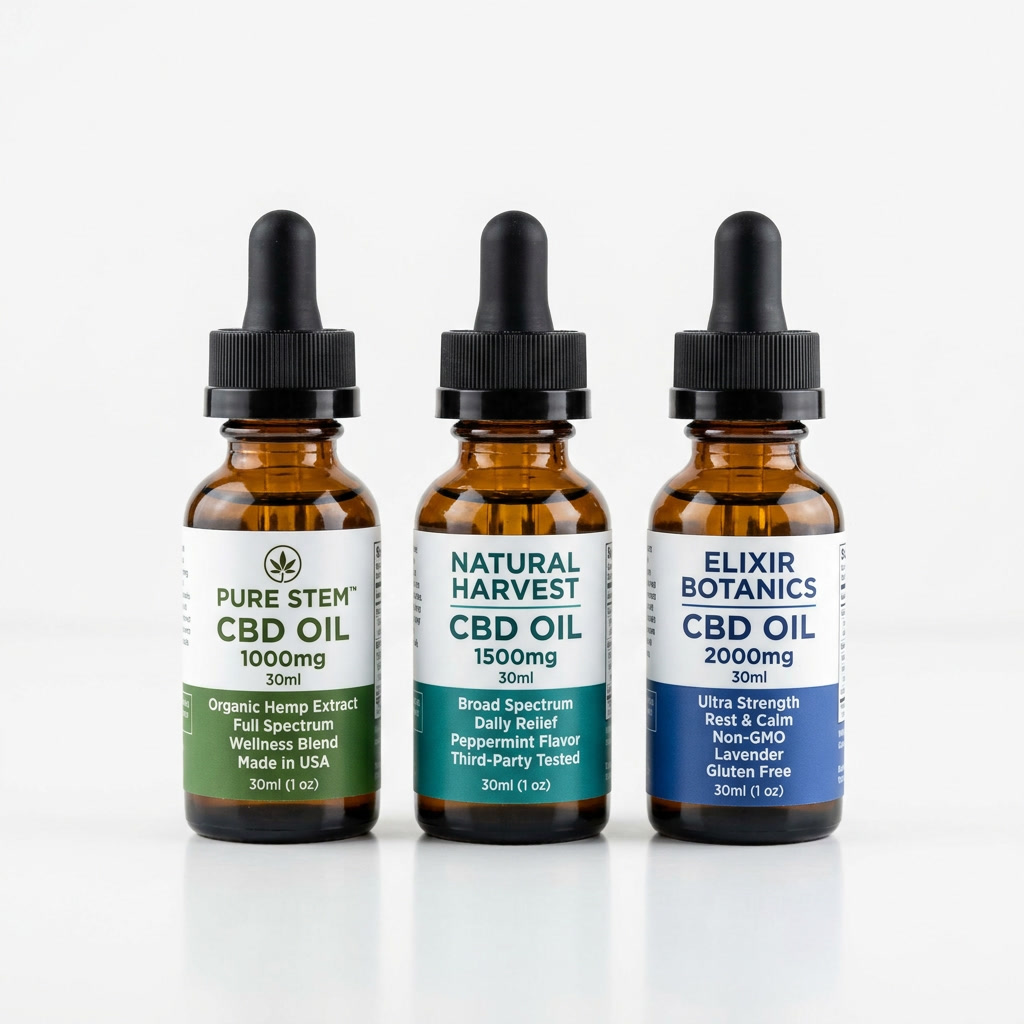
Against this backdrop, CBD has exploded into mainstream consciousness. Walk into any wellness store, and you'll find gummies, oils, capsules, and creams all promising relief. But between the bold marketing claims and the skeptical headlines, where does the actual science stand?
Beyond the hype and the hashtags lies a surprisingly robust body of research—and some important caveats anyone considering CBD for anxiety needs to understand.
What Happens in an Anxious Brain
Before diving into CBD research, understanding what anxiety actually looks like in the brain helps make sense of why certain compounds might help.
Anxiety disorders involve a complex interplay between several brain regions. The amygdala—often called the brain's "fear center"—becomes hyperactive, scanning for threats and triggering fight-or-flight responses even when no real danger exists. Meanwhile, the prefrontal cortex, responsible for rational thought and emotional regulation, struggles to calm things down.
The endocannabinoid system plays a crucial role in regulating this emotional circuitry. This system, discovered in the 1990s, consists of receptors throughout the brain and body that respond to both internally produced compounds (endocannabinoids) and plant-derived cannabinoids like CBD. Research published in Neuropharmacology shows that this system helps modulate fear responses, stress adaptation, and emotional memory—all central to anxiety disorders.
The Research Landscape: Preclinical Findings
Animal studies laid the groundwork for understanding CBD's anxiolytic properties, and the findings proved remarkably consistent.
A landmark study published in the Journal of Psychopharmacology established that CBD produced anxiety-reducing effects in the elevated plus maze—a standard test for anxiety in rodents. Crucially, researchers discovered something unexpected: CBD's effects followed what scientists call an "inverted U-shaped dose-response curve."
What does this mean in plain English? Low doses didn't work very well. Moderate doses reduced anxiety significantly. But higher doses? They stopped working entirely.
The Dose Question: Why More Isn't Always Better
A study published in Frontiers in Pharmacology directly tested this question. Researchers recruited 60 healthy volunteers and assigned them to receive either placebo, the anti-anxiety medication clonazepam (1mg), or one of three CBD doses: 100mg, 300mg, or 900mg.
The results revealed that familiar inverted U-shaped curve:
- 100mg: No significant anxiolytic effect
- 300mg: Significant anxiety reduction
- 900mg: No significant anxiolytic effect
Only the 300mg dose produced meaningful anxiety relief.
What This Means For You
Mind the dose. The research consistently shows that more isn't better. Finding the sweet spot in the middle of the dose-response curve matters more than maximizing milligrams.
Choose quality products. The unregulated supplement market contains products with inaccurate labeling. Third-party testing and reputable brands matter enormously.
Don't stop prescribed medications. CBD may offer benefits, but abruptly discontinuing prescribed anti-anxiety medications can cause serious withdrawal effects.
Ready to explore CBD for anxiety? Take our CBD Product Finder Quiz for personalized recommendations!
---
Sources & Further Reading
1. National Institute of Mental Health. "Any Anxiety Disorder." NIMH Statistics
2. Blessing EM, et al. "Cannabidiol as a Potential Treatment for Anxiety Disorders." *Neurotherapeutics, 2015. PubMed
3. Bergamaschi MM, et al. "Cannabidiol reduces the anxiety induced by simulated public speaking in treatment-naïve social phobia patients." *Neuropsychopharmacology, 2011. PubMed
4. Zuardi AW, et al. "Inverted U-Shaped Dose-Response Curve of the Anxiolytic Effect of Cannabidiol during Public Speaking in Real Life." *Frontiers in Pharmacology, 2017. Full Text
5. Shannon S, et al. "Cannabidiol in Anxiety and Sleep: A Large Case Series." *The Permanente Journal, 2019. PubMed
6. Campos AC, et al. "Multiple mechanisms involved in the large-spectrum therapeutic potential of cannabidiol in psychiatric disorders." *Philosophical Transactions of the Royal Society B, 2012. PubMed
7. Iffland K, Grotenhermen F. "An update on safety and side effects of cannabidiol: A review of clinical data and relevant animal studies." *Cannabis and Cannabinoid Research, 2017. PubMed
8. Campos AC, Guimarães FS. "Evidence for a potential role for TRPV1 receptors in the dorsolateral periaqueductal gray in the attenuation of the anxiolytic effects of cannabinoids." *Progress in Neuro-Psychopharmacology, 2009. PubMed
Find Your Perfect CBD Product
Take our 2-minute quiz to get personalized recommendations based on your needs.
Take the Quiz →Disclaimer: This article is for informational purposes only and does not constitute medical advice. CBD products are not FDA-approved to treat, cure, or prevent any disease. Always consult with a qualified healthcare professional before starting any new supplement, especially if you have a medical condition or take medications.