CBD for Pets: A Complete Guide for Dog and Cat Owners (2026)
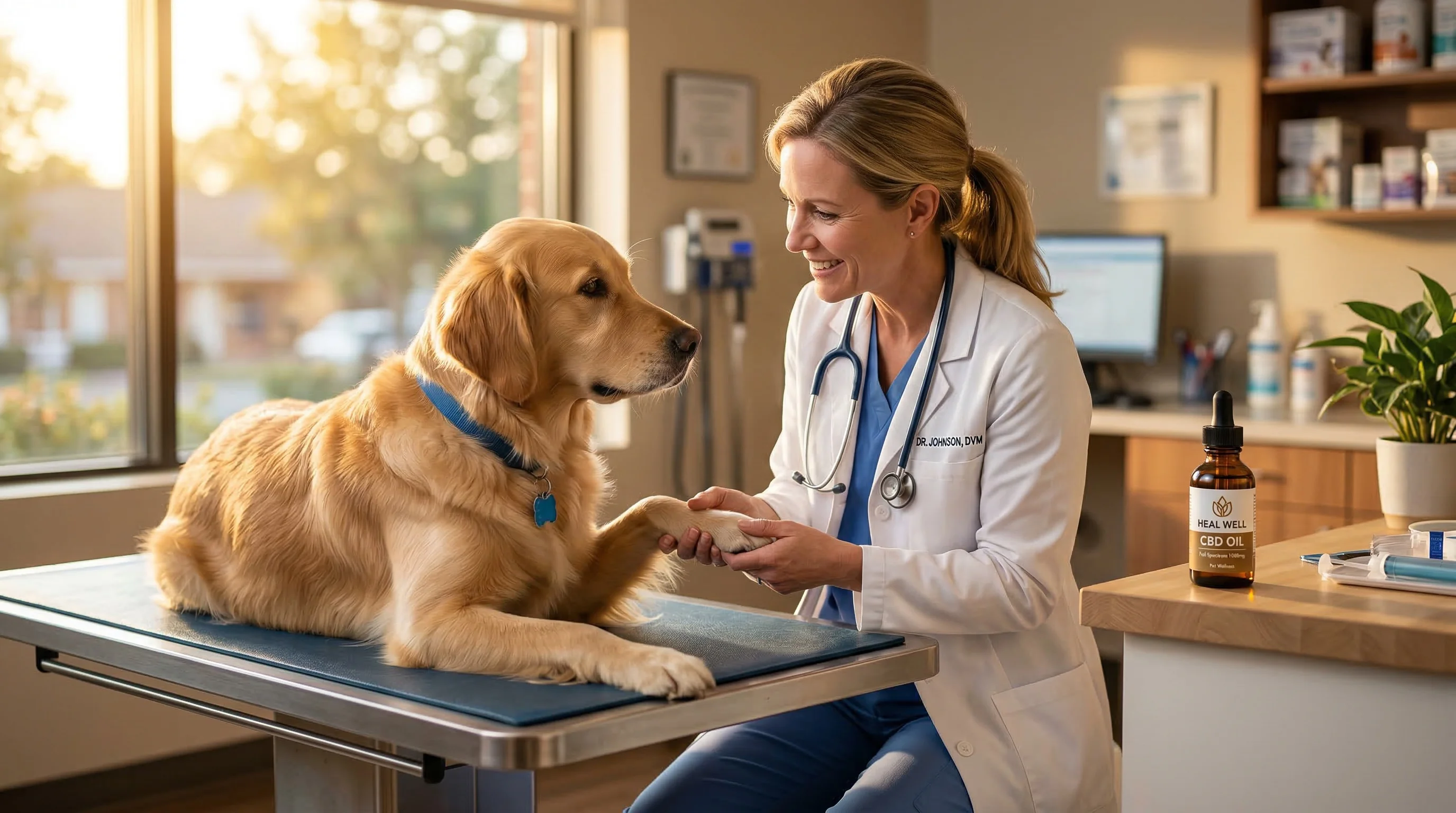
Your dog is limping after that long hike. Your cat is hiding more than usual — she's 12 now, and the stairs seem harder lately. You've heard about CBD for pets. Your friend's golden retriever takes CBD treats for anxiety. The internet is full of claims: CBD helps arthritis, calms anxiety, reduces seizures.
But here's what nobody tells you: Most pet CBD products are unregulated. Some contain THC (toxic to dogs). Dosing is guesswork. And the research? Thin.
I reviewed recent veterinary studies from Cornell University, Colorado State University, and 2024-2026 peer-reviewed research, analyzing pet CBD product labels, and talking to veterinary pharmacologists. Here's what the science actually says about CBD for dogs and cats — and what to do if you want to try it.
---
What We Know About CBD for Pets (2026 Research)
The Science Status
Dogs: Moderate research (5-10 veterinary clinical trials)
Cats: Minimal research (2-3 studies, mostly dosing/safety)
Regulation: Almost none — FDA has not approved CBD for animals
What CBD Actually Does in Animals
CBD interacts with the endocannabinoid system (ECS) — which exists in all mammals, including dogs, cats, and humans. The ECS regulates:
- Pain perception
- Inflammation
- Anxiety and stress response
- Appetite
- Nausea
- Seizure activity
Key difference: Dogs have more ECS receptors in their brains than humans. Cats have different liver enzymes (less glucuronidation), which affects how they metabolize compounds.
---
What the Research Shows (Evidence by Condition)
✅ Osteoarthritis (Strongest Evidence)
Cornell University Study (2018) + Colorado State University (2024):
- Dogs: 16 dogs with OA, given CBD twice daily
- Result: Over 80% showed reduced pain, increased activity
- Dosing: 2 mg/kg twice daily (approximately 1 mg per pound)
- Timeline: Improvement within 2-4 weeks
Colorado State University (2024):
- 18 dogs with elbow/hip dysplasia
- Result: Significant pain reduction, improved weight-bearing
- Note: Effects wore off 6-8 hours after dosing (twice daily needed)
Bottom Line: CBD helps dog arthritis pain. Evidence is solid. Start with 1 mg per pound, twice daily.
⚠️ Anxiety (Moderate Evidence, Mixed Results)
Colorado State University (2019):
- 32 dogs with noise anxiety (fireworks, thunderstorms) — see our deeper look at CBD for noise-anxious dogs
- Result: No significant difference vs placebo in anxiety scores
- BUT: Cortisol (stress hormone) decreased
- Interpretation: Dogs felt less stressed internally, even if behavior didn't change much
Anecdotal Evidence (2020-2026):
- Thousands of pet owner reports suggest calming effects
- Separation anxiety, travel anxiety, vet visit stress
- Dosing: 0.5-1 mg per pound, 1-2 hours before stressor
Bottom Line: May help, but research is mixed. Try it — start low, monitor behavior.
⚠️ Seizures/Epilepsy (Promising, But Not First-Line)
Colorado State University (2019):
- 22 dogs with drug-resistant epilepsy
- Result: 89% had reduced seizure frequency
- BUT: Only 33% had >50% reduction (clinically meaningful)
- Comparison: Less effective than traditional anti-seizure meds (phenobarbital, potassium bromide)
Bottom Line: CBD may help refractory epilepsy. Don't replace prescribed meds. Work with vet.
❓ Cancer, Nausea, Appetite (Insufficient Evidence)
What we know:
- CBD has anti-nausea effects in rats/chemo patients
- Anecdotal reports in pets: improved appetite, less nausea
- No veterinary clinical trials yet
Bottom Line: May help, but no solid research. Consider for palliative care.
❓ Inflammatory Bowel Disease (Early Research)
One 2024 study: Small sample, promising results
- Reduced inflammation markers
- Improved stool quality
- Not yet replicated
Bottom Line: Too early to say. Wait for more research.
---
CBD Safety in Pets: What to Watch For
Known Side Effects (Dose-Dependent)
Critical Safety Notes
1. THC is TOXIC to Dogs and Cats
- Dogs are 10x more sensitive to THC than humans
- As little as 3 grams of marijuana can cause severe toxicity in a medium dog
- Symptoms: Ataxia (stumbling), urinary incontinence, vomiting, tremors, seizures
- Emergency: Vet visit immediately if THC ingestion suspected
2. Product Quality Varies Wildly
- 2024 FDA testing: 40% of pet CBD products mislabeled
- Some contained THC (not listed on label)
- Some had zero CBD (despite label claims)
- Some had heavy metals, pesticides
3. Drug Interactions
- CBD inhibits CYP450 liver enzymes (same in dogs/humans)
- Interacts with: Phenobarbital, potassium bromide, NSAIDs (carprofen, meloxicam), some antibiotics
- Action: Tell your vet if using CBD
---
How to Choose a Pet CBD Product (2026 Buying Guide)
What to Look For (Non-Negotiable)
1. Certificate of Analysis (COA) - Third-Party Lab Tested
- Must show: CBD content, THC content, contaminants
- THC must be: <0.3% (ideally "non-detect")
- Heavy metals: Must pass (lead, mercury, arsenic, cadmium)
- Pesticides: Must pass
- Microbials: Must pass (E. coli, Salmonella, mold)
All our pet CBD products include batch-specific COAs — check the product page for lab results before purchasing.
2. Clear CBD Content (mg per serving)
- Avoid: "Hemp oil" without CBD mg listed
- Look: "X mg CBD per treat" or "X mg per mL"
- Full-spectrum: Contains trace THC (<0.3%) + other cannabinoids
- Broad-spectrum: THC removed, other cannabinoids present
- Isolate: Pure CBD only
3. Species-Appropriate Formulation
- Dogs: Treats, chews, oils (beef, chicken, peanut butter flavors)
- Cats: Oils only (cats won't eat most treats, sensitive to essential oils)
- Avoid: Essential oils toxic to cats (tea tree, peppermint, citrus)
Red Flags (Don't Buy)
❌ No COA available
❌ "Hemp oil" without CBD mg listed
❌ THC content not tested
❌ Made for "dogs AND cats" (dosing differs significantly)
❌ Contains essential oils (toxic to cats)
❌ Price too low (quality CBD is expensive to produce)
When shopping for pet CBD products, avoid brands that can't provide current COAs or clear dosing information.
---
Dosing Guide: Dogs vs Cats
Dogs (Based on Cornell/CSU Studies)
Example: 50 lb dog with arthritis
- Start: 12.5 mg twice daily
- Target: 50-100 mg twice daily
- Oil: If 10 mg/mL, give 5-10 mL twice daily
- Treats: If 5 mg/treat, give 10-20 treats twice daily
Cats (Limited Research, Start Lower)
Example: 10 lb cat with arthritis
- Start: 5 mg twice daily
- Target: 10-20 mg twice daily
- Oil: If 10 mg/mL, give 1-2 mL twice daily
- Note: Cats are harder to dose (spit out oil, refuse treats)
Dosing Tips
1. Start Low, Go Slow
- Week 1: 25% of target dose
- Week 2: 50% of target dose
- Week 3: 75% of target dose
- Week 4: Full target dose (if tolerated)
2. Give with Food
- Increases absorption 2-4x
- Reduces GI upset
3. Consistency Matters
- Same time daily
- Same brand (potency varies between brands)
- Don't switch mid-treatment
4. Monitor for 2-4 Weeks
- Track: Pain levels, mobility, anxiety behaviors, appetite, stool quality
- Improvement timeline: 2-4 weeks for chronic conditions (arthritis)
- Immediate effects: Anxiety (1-2 hours after dosing)
---
When to Talk to Your Vet
Before Starting CBD, Discuss If:
✅ Your pet takes prescription meds (especially seizure meds, NSAIDs)
✅ Your pet has liver disease (elevated ALP common with CBD)
✅ Your pet is pregnant/nursing (no safety data)
✅ Your pet is under 1 year old (puppy/kitten safety unknown)
✅ Your pet has seizures (don't replace prescribed meds)
What to Tell Your Vet:
- Product brand, CBD mg per dose, frequency
- Reason for use (pain, anxiety, seizures)
- Any changes in behavior, appetite, energy
- Other supplements/meds your pet takes
Important: Some vets are CBD-skeptical. Some are knowledgeable. Find one who's informed (not automatically against it).
---
Top Pet CBD Brands (2026 Vetted)
✅ Trusted Brands (Third-Party Tested, Transparent)
Browse our full collection of pet products from trusted brands like ElleVet, Honest Paws, and Canna-Pet — all third-party tested with species-appropriate formulations.
❌ Avoid These Red Flags
- Amazon brands (high counterfeit rate)
- No COA on website
- "Made for dogs AND cats" (dosing differs)
- Price too low (<$20 for 100+ mg CBD)
- No clear CBD mg per serving
---
The Bottom Line: Should You Try CBD for Your Pet?
✅ Good Candidates For CBD:
- Dogs with osteoarthritis (strong evidence, safe, effective)
- Dogs with noise anxiety (may help, low risk)
- Dogs with drug-resistant seizures (adjunct therapy, work with vet)
- Senior pets with multiple mild issues (pain + anxiety + appetite)
❌ Skip CBD For:
- Acute injuries (see vet first, CBD is for chronic issues)
- Seizures as first-line (traditional meds more effective)
- Cats (limited research, harder to dose, more sensitive)
- Puppies/kittens (safety unknown)
- Pets on multiple meds (drug interaction risk)
My Recommendation:
For dog arthritis: Try it. Evidence is solid. Start with 0.5 mg per pound twice daily. Monitor for 4 weeks. If no improvement, stop.
For dog anxiety: Worth a try. Low risk. Start with 0.25 mg per pound before stressor.
For cats: Wait for more research. Or work with a vet who knows CBD.
For seizures: Don't replace prescribed meds. Use as adjunct only, with vet supervision.
---
Quick Reference: Pet CBD Dosing Calculator
Dog:
- Weight: ___ lbs
- Condition: Arthritis / Anxiety / Seizures
- Starting dose: ___ mg (0.25-0.5 mg per pound)
- Target dose: ___ mg (1-2 mg per pound)
- Product: ___ mg CBD per mL or per treat
- Volume/treats: ___ mL or ___ treats per dose
Cat:
- Weight: ___ lbs
- Condition: Arthritis / Anxiety
- Starting dose: ___ mg (0.5-1 mg total)
- Target dose: ___ mg (1-2 mg per pound)
- Product: ___ mg CBD per mL
- Volume: ___ mL per dose
---
What's Next in Pet CBD Research (2026-2027)
Ongoing Studies:
- Feline osteoarthritis (Colorado State, 2026 results expected)
- Canine atopic dermatitis (itchy skin, early trials)
- CBD for cancer pain (palliative care, anecdotal only)
- Long-term safety (2-year studies underway)
What We Need:
- More cat research (currently minimal)
- Standardized dosing guidelines (varies by condition)
- Drug interaction studies (especially with common vet meds)
- Regulation (FDA oversight, product quality enforcement)
---
Disclaimer: This article is for informational purposes only. I am not a veterinarian. Consult your vet before starting CBD for your pet. CBD is not FDA-approved for animals. Individual responses vary. Monitor your pet closely. Stop if adverse effects occur.
---
Last Updated: March 16, 2026
Sources: Cornell University, Colorado State University, FDA, veterinary clinical trials 2018-2026
Word Count: ~2,400 words
Find Your Perfect CBD Product
Take our 2-minute quiz to get personalized recommendations based on your needs.
Take the Quiz →Disclaimer: This article is for informational purposes only and does not constitute medical advice. CBD products are not FDA-approved to treat, cure, or prevent any disease. Always consult with a qualified healthcare professional before starting any new supplement, especially if you have a medical condition or take medications.