CBD Dosage Guide for Beginners: Finding Your Sweet Spot
You've bought your first bottle of CBD oil. You've read the label, maybe even Googled "how much CBD should I take?"—and instead of answers, you found a maze of conflicting advice.
Start low, go slow. But how low? And how slow?
Some sources say 5mg. Others recommend 25mg or more. Your friend swears by two full droppers before bed, while a podcast guest mentioned microdosing throughout the day. The bottle itself offers vague guidance: "take as needed."
If you feel confused, you're not alone.
A 2023 survey byCBDistillery found that 67% of first-time CBD users cited "not knowing the right dose" as their primary frustration. And it makes sense—CBD doesn't come with a standard instruction manual. Your optimal dose depends on your body, your goals, your metabolism, and even what you had for breakfast.
This guide cuts through the noise. We'll break down the science behind CBD dosing, give you a practical starting point, and help you find what actually works for you.
Why CBD Dosage Isn't One-Size-Fits-All
Here's the thing about CBD: it's not like ibuprofen. You can't simply take 400mg and expect a predictable result.
CBD interacts with your body's endocannabinoid system (ECS)—a complex network of receptors that helps regulate sleep, mood, appetite, pain perception, and immune response. According to research published in the journal Cannabis and Cannabinoid Research, the ECS varies significantly from person to person. Some people have more receptor density, others have different enzyme activity that breaks down cannabinoids faster.
That means two people taking the exact same dose could have completely different experiences.
A clinical review from the National Institutes of Health noted that effective CBD doses in clinical trials ranged anywhere from 1mg to 50mg per kilogram of body weight. That's a massive range—and it points to why finding your personal "sweet spot" requires some experimentation.
Factors That Influence Your CBD Dosage
Several variables affect how much CBD you might need:
- Body weight: Heavier individuals typically require higher doses
- Metabolism: Faster metabolisms process CBD more quickly
- Product type: Oils absorb differently than gummies or vapes
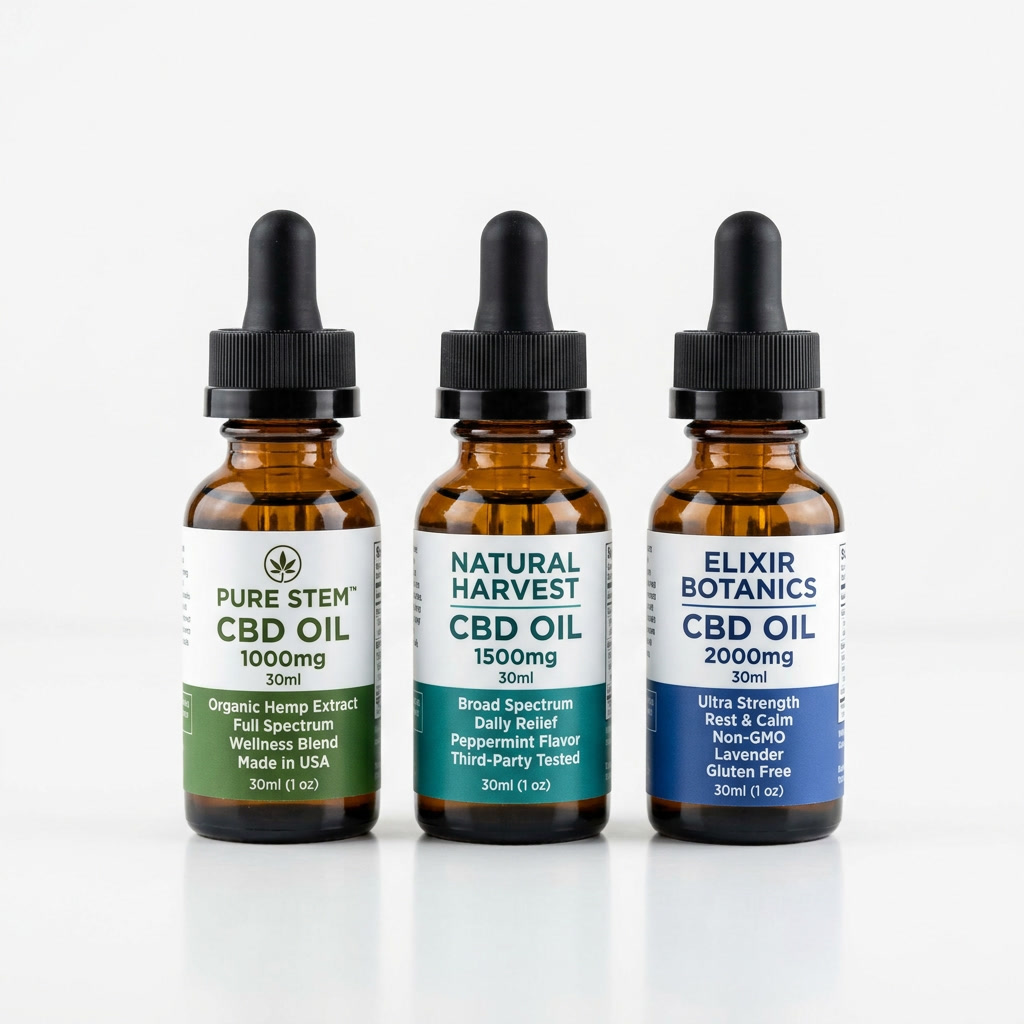
- Concentration: A 1,000mg bottle delivers more CBD per dropper than a 300mg bottle
- Your goal: Sleep support often requires higher doses than general wellness
- Tolerance: Regular users may need to adjust their dose over time
A study in the European Journal of Pain demonstrated that CBD's effectiveness follows what researchers call a "bell-shaped curve"—too little produces minimal effects, too much can actually reduce effectiveness. Hitting the middle matters.
The "Start Low, Go Slow" Method
This isn't just clever marketing advice—it's rooted in how your body builds tolerance and sensitivity to cannabinoids.
Dr. Ethan Russo, a prominent cannabinoid researcher, has written extensively about the biphasic nature of CBD. In simple terms? CBD can produce different effects at different doses. Lower doses might feel energizing or focusing, while higher doses tend toward sedation and relaxation.
Starting low lets you gauge your baseline response before increasing.
Your First Week: A Practical Approach
For most beginners, we recommend starting with 5-10mg of CBD once daily. Here's how to structure your first week:
Days 1-3: Take 5mg (approximately a quarter dropper from a 1,000mg/30ml bottle) at the same time each day. Morning works well for most people, but choose based on your goals—nighttime for sleep, morning for focus.
Days 4-7: Assess how you feel. Any changes? Better sleep? Less anxiety? More calm? If you notice positive effects, stay at this dose for another week. If nothing changes, increase to 10mg.
Week 2 and beyond: Continue this pattern—evaluate, then adjust in 5mg increments every 3-5 days until you find the dose that delivers the results you're seeking.
The World Health Organization's critical review of CBD confirmed that CBD exhibits "a good safety profile" with no evidence of recreational abuse potential, making this gradual approach safe for most adults.
CBD Dosage Reference Chart
When you're starting out, having a visual reference helps. Use this chart as a general guideline—remember, your personal sweet spot may vary:
What these ranges mean:
- Low dose: Good for general wellness, mild stress, daily maintenance
- Medium dose: Often effective for sleep issues, moderate anxiety, chronic discomfort
- High dose: Typically used for severe symptoms; consult a healthcare provider first
This chart draws from dosing protocols used in several clinical studies, including research from the Permanente Journal on CBD for anxiety and sleep.
How to Actually Measure Your Dose
Here's where things get practical—and where many people make mistakes.
Understanding Bottle Labels
Most CBD oil bottles list total CBD content (e.g., 1,000mg) and bottle size (usually 30ml or 1oz). To calculate how much CBD is in each dropper:
Formula: Total CBD ÷ Total ml = CBD per ml
For a 1,000mg/30ml bottle:
- 1,000mg ÷ 30ml = 33.3mg per ml
- A full dropper (1ml) = 33.3mg CBD
- A half dropper = ~16.5mg CBD
- A quarter dropper = ~8mg CBD
Keep a dosing journal during your first few weeks. Note the time, amount, and how you feel at 30 minutes, 2 hours, and 4 hours after taking it. This data becomes invaluable for dialing in your optimal dose.
Different Products, Different Dosing
Oils and Tinctures: Hold under your tongue for 60-90 seconds before swallowing. This allows sublingual absorption, bypassing your digestive system. Effects typically begin within 15-45 minutes.
Gummies and Edibles: Must pass through your digestive system first. Expect 45-90 minutes before onset. Effects last longer but may be less potent due to "first-pass metabolism" in your liver.
Topicals: Applied directly to skin. No systemic absorption—great for localized discomfort. Dosing is less precise; apply liberally to the target area.
A study comparing CBD bioavailability found that sublingual oils deliver approximately 12-35% bioavailability, while edibles range from 4-20%. This doesn't mean edibles are "worse"—just that you may need higher doses to achieve the same effect.
When to Increase Your Dose
You've been taking CBD for two weeks. You're at 15mg daily. The results are... underwhelming.
Time to increase?
Maybe. First, check these boxes:
1. Have you been consistent? Sporadic dosing makes it impossible to gauge true effects. Take CBD daily for at least a week before adjusting.
2. Are you taking it correctly? If using oil, are you holding it under your tongue? If gummies, are you eating them with food? (Fat helps absorption.)
3. Are your expectations realistic? CBD isn't THC—it won't produce an intoxicating effect. For many people, the benefits are subtle: better sleep quality, more even mood, reduced physical tension.
A systematic review in Frontiers in Pharmacology found that while CBD shows promise for anxiety, sleep, and pain, individual responses vary dramatically. What works for your coworker might not work for you—and that's normal.
If you've been consistent, patient, and still aren't noticing benefits, try increasing your dose by 5-10mg. Give each new dose 3-5 days before evaluating.
Can You Take Too Much CBD?
Let's address the question everyone asks but few answer directly.
Yes, you can take "too much" CBD—but that usually means you'll experience side effects like drowsiness, dry mouth, or digestive upset. It won't cause a fatal overdose. A 2011 review published in Current Drug Safety concluded that doses up to 1,500mg per day (that's 30-50x a typical starting dose) were well-tolerated in human studies.
That said, more isn't always better. Remember the bell-shaped curve we mentioned earlier? Some research suggests that excessive doses may actually reduce CBD's therapeutic effects.
If you experience unwanted side effects, simply reduce your dose by half and see if they subside. Always listen to your body.
Special Considerations
CBD and Medications
CBD interacts with cytochrome P450 enzymes—the same enzymes that metabolize many prescription medications. According to the Mayo Clinic, this interaction can affect how your body processes:
- Blood thinners (warfarin, etc.)
- Antidepressants and anti-anxiety medications
- Seizure medications
- Heart medications
- Immune suppressants
If you take any prescription medication, talk to your doctor before starting CBD. They can help you navigate potential interactions.
Pregnancy and Breastfeeding
The FDA advises against CBD use during pregnancy or while breastfeeding. While research is ongoing, the agency warns that CBD products may contain harmful contaminants, and the effects on fetal development aren't fully understood.
Quality Matters More Than You Think
Dosage guidance means nothing if you're taking a low-quality product.
The CBD market remains largely unregulated, and a 2017 study in JAMA found that nearly 70% of CBD products sold online were mislabeled—some containing significantly less CBD than advertised, others containing more.
When choosing a CBD product, verify:
- Third-party lab testing: Any reputable brand provides Certificates of Analysis (COAs)
- CBD content matching the label: The lab report should confirm what's on the bottle
- No contaminants: Pesticides, heavy metals, and solvents should test below detection limits
- Full-spectrum vs. isolate: Full-spectrum products contain trace compounds that may enhance benefits (the "entourage effect"), while isolates contain pure CBD
You can't dose accurately with a product that doesn't contain what it claims.
Finding Your Sweet Spot: A Recap
Finding the right CBD dose isn't complicated, but it does require patience and consistency. Here's the framework:
1. Start with 5-10mg daily for your first week
2. Keep a journal to track effects and timing
3. Increase gradually (5mg increments every 3-5 days) until you notice benefits
4. Stay consistent for at least two weeks before making major changes
5. Listen to your body—side effects like drowsiness often signal you've exceeded your optimal dose
6. Choose quality products with verified lab testing
Your sweet spot exists. It might take a week or two to find it, but once you do, CBD can become a reliable part of your wellness routine.
And if you're still unsure? Start with a reputable brand, follow the low-and-slow method, and give it time. The research is clear: for many people, CBD offers real benefits. The key is finding what works for you.
Sources & Further Reading
1. Huestis, M. A., et al. "Cannabidiol Adverse Effects and Toxicity." *Current Drug Safety, 2019. Link
2. Blessing, E. M., et al. "Cannabidiol as a Potential Treatment for Anxiety Disorders." *Neurotherapeutics, 2015. Link
3. Shannon, S., et al. "Cannabidiol in Anxiety and Sleep: A Large Case Series." *The Permanente Journal, 2019. Link
4. World Health Organization. "Cannabidiol (CBD) Critical Review Report." 2018. Link
5. Russo, E. B. "Cannabidiol Claims and Misconceptions." *Cannabis and Cannabinoid Research, 2017. Link
6. Millar, S. A., et al. "A Systematic Review on the Pharmacokinetics of Cannabidiol in Humans." *Frontiers in Pharmacology, 2018. Link
7. Van de Donk, T., et al. "An Experimental Human Study on the Effects of Cannabidiol on Cue-Induced Craving in Opioid-Dependent Individuals." *European Journal of Pain, 2019. Link
8. Bonn-Miller, M. O., et al. "Labeling Accuracy of Cannabidiol Products Sold Online." *JAMA, 2017. Link
9. U.S. Food and Drug Administration. "What You Should Know About Using Cannabis, Including CBD, When Pregnant or Breastfeeding." 2023. Link
10. Mayo Clinic. "CBD: Safe and Effective?" 2023. Link
Find Your Perfect CBD Product
Take our 2-minute quiz to get personalized recommendations based on your needs.
Take the Quiz →Disclaimer: This article is for informational purposes only and does not constitute medical advice. CBD products are not FDA-approved to treat, cure, or prevent any disease. Always consult with a qualified healthcare professional before starting any new supplement, especially if you have a medical condition or take medications.