Beating the Winter Blues: Can CBD Help with Seasonal Mood and SAD?

The 3 PM Darkness That Hits Different in February
It's 3 PM and you're already exhausted. The sky outside is that steel-gray color that makes your bedroom look like a cave at noon. Your coworker mentions they've been "feeling off" since November. Your best friend cancelled plans again because "the weather just drains them."
Welcome to late winter in the Northern Hemisphere. And if you're nodding along, you're far from alone.
Seasonal Affective Disorder—SAD, for short—affects roughly 5% of adults in the U.S., with symptoms typically appearing in late fall or early winter and disappearing during spring and summer. But here's what most articles won't tell you: up to 20% of people experience milder seasonal mood changes that don't quite hit clinical depression levels but still make winter feel like an emotional marathon.
That gray-sky exhaustion? The carb cravings that hit like clockwork? The sense that your social battery drains twice as fast in January? These aren't character flaws. They're biological responses to real environmental changes.
And while light therapy boxes and vitamin D supplements have long been the go-to recommendations, a newer player is entering the conversation: CBD.
But here's the thing—CBD isn't a magic winter sunlamp for your brain. The reality is more nuanced, more interesting, and frankly, more honest than the wellness influencers selling "CBD cures seasonal depression" would have you believe.
So let's dig into what's actually happening in your body during these dark months, how CBD might fit into a broader mood support strategy, and what the science really says.
Where CBD Enters the Conversation
CBD—cannabidiol, one of over 100 compounds found in cannabis—has accumulated substantial research interest for mood and anxiety support over the past decade. Unlike THC, CBD doesn't produce psychoactive effects. You won't feel "high." Instead, CBD appears to work through multiple pathways that are particularly relevant to seasonal mood challenges.
Let's look at the mechanisms.
CBD and the Endocannabinoid System
Your body has an endocannabinoid system (ECS)—a network of receptors, enzymes, and signaling molecules that helps regulate mood, sleep, appetite, stress response, and immune function. Think of it as your body's homeostasis manager, constantly working to keep systems in balance.
The ECS includes two primary receptor types: CB1 receptors (predominantly in the brain and central nervous system) and CB2 receptors (mainly in immune cells). CBD doesn't bind directly to these receptors the way THC does. Instead, it appears to work indirectly—enhancing your body's own endocannabinoid signaling and modulating how receptors respond.
A 2024 review in Neurotherapeutics highlighted that the ECS is particularly active in brain regions involved in emotional processing and stress regulation, including the prefrontal cortex, hippocampus, and amygdala. When the ECS is functioning optimally, mood regulation is smoother. When it's dysregulated, anxiety and depression become more likely.
Here's the seasonal connection: chronic stress and circadian disruption can deplete endocannabinoid tone. Your body produces fewer endocannabinoids, receptor sensitivity changes, and the whole system becomes less efficient at mood regulation. CBD may help restore this balance—not by overriding your system, but by supporting its natural function.
CBD and Serotonin Signaling
Remember that serotonin drop we discussed? CBD appears to influence serotonin signaling through the 5-HT1A receptor, one of the multiple serotonin receptor subtypes in your brain. This is significant because many conventional antidepressants (SSRIs) work by increasing serotonin availability in the synaptic cleft.
Research from the University of São Paulo published in 2023 demonstrated that CBD's anxiolytic (anxiety-reducing) effects are mediated, at least in part, through 5-HT1A receptor activation. In animal models, blocking this receptor prevented CBD from reducing anxiety-like behaviors.
The practical implication: CBD may support mood through serotonin pathways without the side effect profile of prescription antidepressants. This doesn't mean CBD replaces SSRIs for clinical depression—but for mild-to-moderate seasonal mood changes, it could offer support.
CBD's Anti-Inflammatory Effects
That inflammation-depression connection? CBD has demonstrated anti-inflammatory properties in multiple studies. Research published in Free Radical Biology and Medicine in 2024 showed that CBD reduces pro-inflammatory cytokines and oxidative stress in neural tissue.
If inflammation contributes to seasonal mood symptoms—as emerging research suggests—then CBD's anti-inflammatory action could theoretically address one of the underlying drivers, not just mask symptoms.
This is particularly relevant because conventional antidepressants don't directly target inflammation. Mood improvement through anti-inflammatory pathways represents a fundamentally different mechanism of action.
CBD and Sleep Regulation
Poor sleep and mood disorders are bidirectional—bad mood disrupts sleep, and poor sleep worsens mood. This cycle is especially problematic in winter when circadian rhythms are already challenged.
CBD has shown promise in sleep research through multiple mechanisms. A 2023 clinical trial published in The Permanente Journal followed 72 adults with anxiety and sleep complaints. After one month of CBD supplementation, 79% reported decreased anxiety scores and 67% reported improved sleep. Importantly, sleep improvements were sustained throughout the three-month study period.
For winter mood issues specifically, better sleep quality could help break the fatigue-depression cycle. When you sleep better, your circadian rhythm stabilizes, your emotional resilience improves, and your brain's ability to process stress increases.
How People Are Actually Using CBD for Winter Mood
Despite the research gap, thousands of people are experimenting with CBD for seasonal mood support. Based on user reports, wellness practitioner observations, and emerging case studies, several patterns emerge.
Dosing Strategies
Most successful CBD mood protocols involve consistent daily dosing rather than as-needed use. This makes mechanistic sense—CBD's effects on the endocannabinoid system and inflammation accumulate over time.
Common dosing ranges from user reports:
- Morning dose: 15-25 mg to support daytime mood and focus
- Evening dose: 25-40 mg to support sleep quality and wind-down
- Total daily range: 30-65 mg split between morning and evening
Some users report benefits at lower doses (10-15 mg total daily), while others—particularly those with higher body weight or more severe symptoms—find they need 50-100 mg daily for noticeable effects.
The research suggests starting low and titrating up slowly. A 2024 dosing study in Cannabis and Cannabinoid Research found that individual responses to CBD vary dramatically based on genetics, metabolism, and baseline endocannabinoid tone. What works for your coworker might underdose you—or overshoot.
Timing Matters
Because CBD can be mildly alerting at lower doses and more sedating at higher doses, timing is strategic:
- Morning (15-25 mg): Supports daytime mood, helps manage stress reactivity throughout the day
- Evening (25-40 mg): Promotes relaxation, supports sleep quality, may reduce nighttime anxiety
Some users benefit from a small midday dose (10-15 mg) during the darkest winter months, particularly if afternoon fatigue hits predictably between 2-4 PM.
Delivery Methods
CBD is available in multiple forms, each with different absorption profiles:
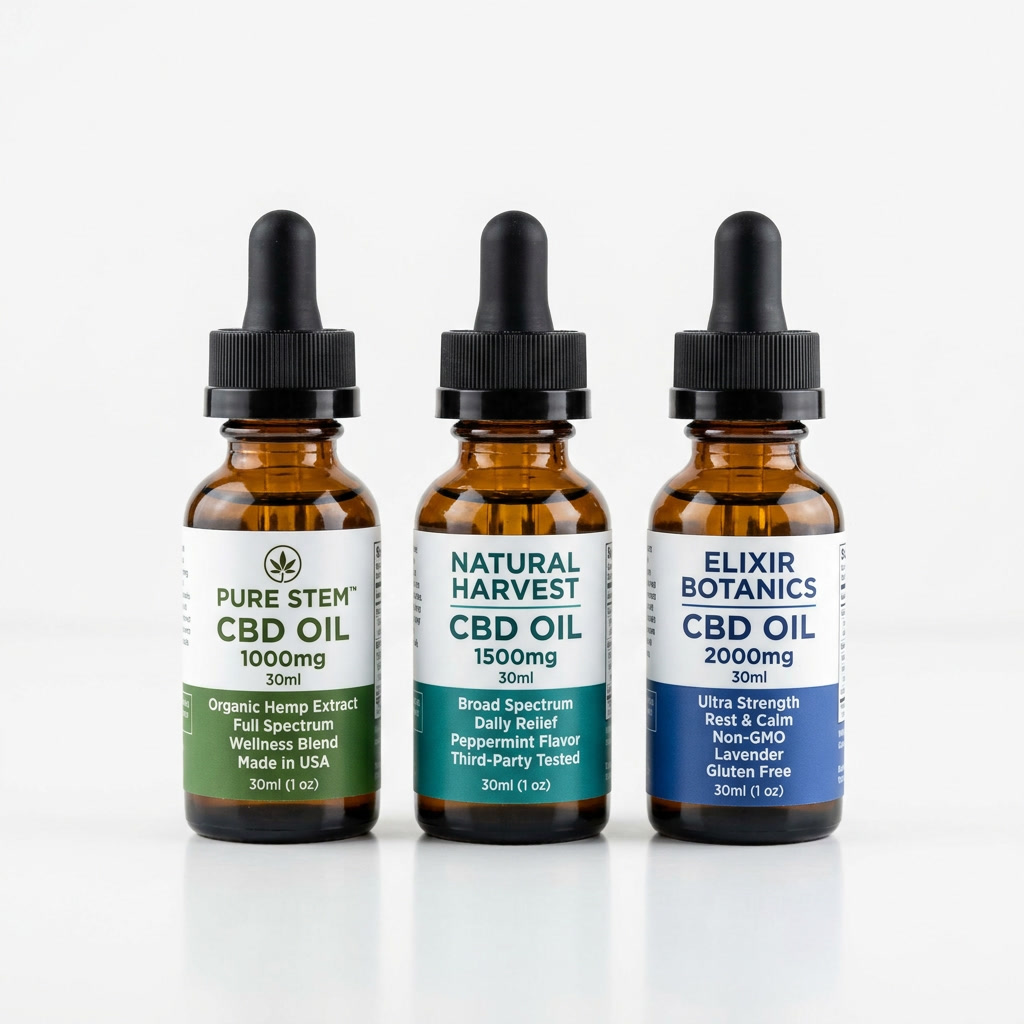
Oils/Tinctures (sublingual): Absorbed under the tongue, effects begin within 15-30 minutes, last 4-6 hours. Good for precise dosing and flexibility.
Capsules/Softgels: Slower onset (45-90 minutes) but longer duration (6-8 hours). Convenient for consistent daily dosing.
Edibles (gummies, chocolates): Similar to capsules but with variable absorption depending on stomach contents. Taste can mask hemp flavor some people dislike.
Vaporized CBD: Fastest onset (within minutes) but shortest duration (2-3 hours). Less practical for mood support but useful for acute anxiety spikes.
For seasonal mood support specifically, oils and capsules are most practical—they provide steady blood levels and don't require repeated dosing throughout the day.
Full-Spectrum vs. Isolate
CBD products fall into three categories:
- Full-spectrum: Contains CBD plus other cannabinoids (including trace THC, typically <0.3%), terpenes, and flavonoids from the hemp plant
- Broad-spectrum: Contains multiple cannabinoids and compounds but no THC
- CBD isolate: Pure CBD only
The "entourage effect" theory suggests that full-spectrum products work better because cannabinoids and terpenes enhance each other's effects. Some research supports this—a 2023 study in Scientific Reports found that full-spectrum CBD produced greater anti-inflammatory effects than isolate at equivalent CBD doses.
For mood support specifically, some users report better results with full-spectrum products, possibly due to trace THC's mood-modulating effects or the presence of other cannabinoids like CBG and CBN. However, isolate works well for those who want to avoid any THC exposure (drug testing concerns, personal preference, sensitivity to THC).
Who Should Be Cautious with CBD?
CBD is generally well-tolerated, but certain situations warrant caution or medical consultation:
Drug Interactions
CBD is metabolized by the cytochrome P450 enzyme system in the liver—the same system that processes many prescription medications. CBD can inhibit these enzymes, potentially increasing blood levels of other medications.
Medications that may interact with CBD include:
- SSRIs and SNRIs (common antidepressants)
- Blood thinners (warfarin, etc.)
- Benzodiazepines
- Certain anti-seizure medications
- Some heart medications
This doesn't mean you can't use CBD with these medications—it means you should talk to your doctor first. They may recommend starting with lower doses, monitoring blood levels, or adjusting timing to minimize interactions.
Pregnancy and Breastfeeding
Safety data for CBD use during pregnancy and breastfeeding is limited. Most health authorities recommend avoiding cannabinoids during these periods due to unknown effects on fetal and infant development.
Pre-existing Liver Conditions
High doses of CBD (hundreds of milligrams daily) have been associated with elevated liver enzymes in some studies, particularly in epilepsy patients taking prescription CBD. For typical wellness doses (under 100 mg daily), risk appears low—but anyone with liver disease should consult their physician.
Quality and Contamination Concerns
The CBD market is notoriously poorly regulated. A 2023 analysis by the FDA found that only 31% of CBD products were accurately labeled for CBD content, and some contained detectable THC levels despite being marketed as "THC-free."
How to protect yourself:
- Choose products with third-party lab testing (Certificate of Analysis)
- Look for COA results showing CBD content, THC content, and contaminant screening (pesticides, heavy metals, solvents, microbes)
- Buy from reputable brands with transparent sourcing
- Avoid products making disease treatment claims (legitimate CBD companies don't claim to "cure depression")
The Bottom Line on CBD and Winter Mood
The winter blues are real. They're biological, not a personal failing. And while CBD isn't a replacement for professional mental healthcare or foundational wellness practices, it may offer meaningful support for some people navigating seasonal mood changes.
The science is still evolving—more SAD-specific trials would help clarify CBD's role and optimal dosing. But the mechanisms are plausible, early research is promising, and thousands of people report subjective benefits.
Here's what we know with confidence:
- CBD influences systems disrupted in seasonal mood disorders (serotonin, inflammation, circadian rhythms, stress response)
- Research supports CBD's anxiolytic effects
- Many users report mood and sleep improvements with consistent CBD use
- CBD is generally safe and well-tolerated at typical wellness doses
- Quality matters enormously—choose tested products from reputable sources
And here's what remains uncertain:
- Optimal dosing specifically for SAD
- Long-term effectiveness compared to standard treatments
- Which individuals are most likely to benefit
- How CBD compares to or combines with light therapy and other SAD interventions
If you're struggling this winter, you deserve support. Whether that includes CBD depends on your symptoms, preferences, and response to other interventions. Talk to a healthcare provider, especially if symptoms are severe or persistent.
And remember: spring is coming. The days are getting longer now, even if it doesn't feel like it yet. Your biology knows this, even if your mood hasn't caught up.
Find Your Perfect CBD Product
Take our 2-minute quiz to get personalized recommendations based on your needs.
Take the Quiz →Disclaimer: This article is for informational purposes only and does not constitute medical advice. CBD products are not FDA-approved to treat, cure, or prevent any disease. Always consult with a qualified healthcare professional before starting any new supplement, especially if you have a medical condition or take medications.