CBD and Sunburn: What the 2026 Research Actually Says About UVA/UV Damage and Skin Recovery
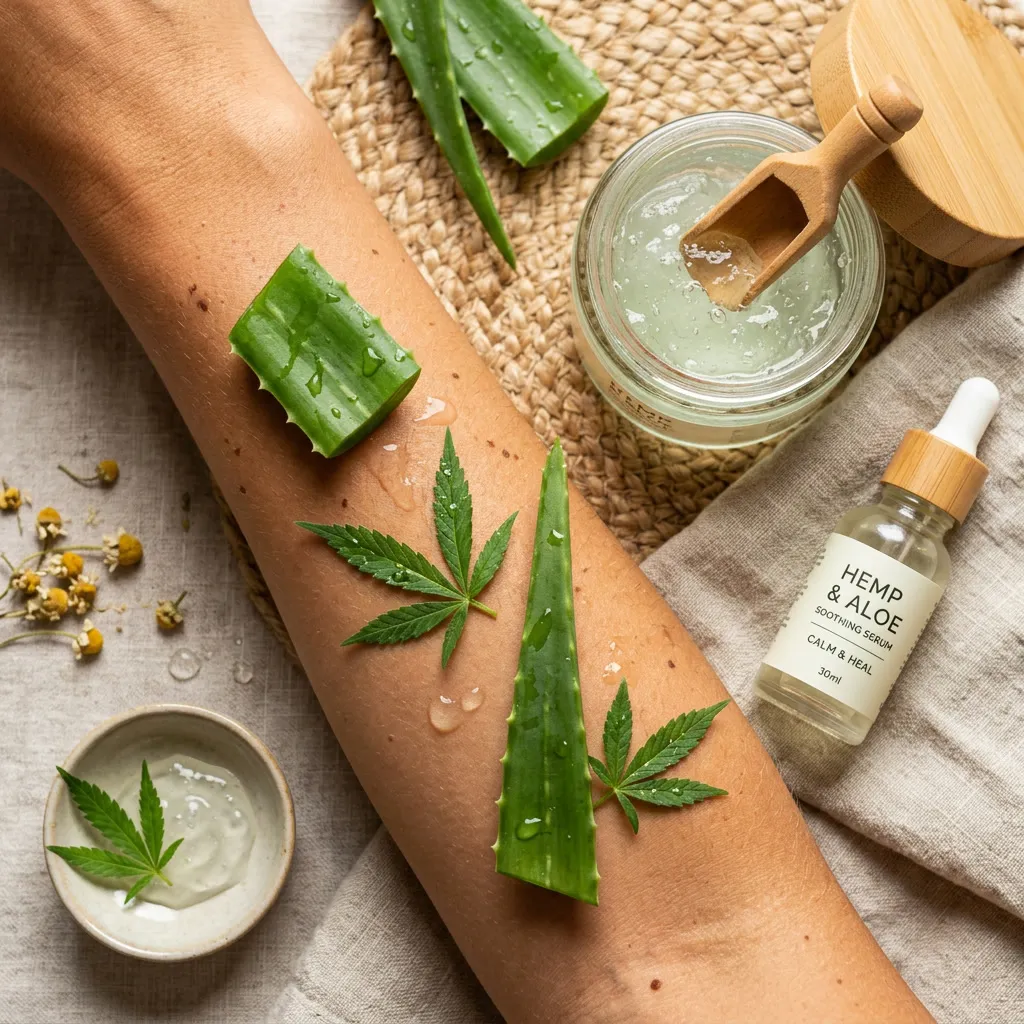
You spent the afternoon by the water. You reapplied sunscreen once, maybe. And now, looking in the mirror, your shoulders are glowing a shade of red that's going to sting for the next three days. Late summer is peak sunburn season, and it's also when searches for "CBD cream for sunburn" spike. The beauty aisles and skincare feeds are full of CBD balms promising to calm angry, sun-stressed skin — but promises and evidence are different things. So we did what we always do at Cannetics: we went to the actual research published between 2023 and 2026 and asked a simple question. What can CBD topicals realistically do for sunburned skin, and what can't they do?
The short version, before we dive in: the science on CBD and UV-damaged skin is genuinely interesting, and it's getting better fast. But CBD is a recovery support, not a sunscreen, not a cure, and not a replacement for the basics — cool water, aloe, hydration, and staying out of the sun while your skin heals. Here's what the studies actually show, where the evidence is still thin, and how to use a CBD topical on sunburned skin safely if you decide to try one.
What Sunburn Actually Does to Your Skin
Sunburn isn't just "hot skin." It's a real inflammatory injury. Ultraviolet radiation — mostly UVB, but UVA plays a supporting role — damages DNA in skin cells and triggers a cascade of oxidative stress and inflammatory signaling. That's what produces the redness, heat, swelling, and the trademark tenderness. Peeling that follows a few days later is your body shedding badly damaged cells.
There's a reason dermatologists group UVA and UVB damage together under "photoaging" and "photodamage." UVB burns the surface, while UVA penetrates deeper, generating reactive oxygen species that break down collagen and damage cell structures over time. A single bad sunburn is uncomfortable; a lifetime of them compounds. This is the injury landscape that CBD researchers have been probing for the past few years — and the findings are more specific than most product pages would have you believe.
The 2026 UVA Study Everyone's Talking About
The most relevant recent paper is a May 2026 study published in Antioxidants, which looked at how human melanocytes — the pigment cells in your skin — respond to UVA radiation in the presence of phytocannabinoids like CBD and CBG. UVA exposure drives oxidative stress in these cells, disrupting their metabolism and pushing them toward the kind of cellular damage that accumulates with repeated sun exposure.
What the researchers found was striking: in the lab, CBD and CBG reduced UVA-driven oxidative stress and helped normalize metabolic responses in the exposed skin cells. In other words, when skin cells were hit with UVA and then exposed to cannabinoids, the damage signature was measurably softer than in cells left to fend for themselves.
An earlier 2024 in vitro study in Cells reached a similar conclusion from a different angle: phytocannabinoids applied after UVA irradiation modulated redox and inflammatory signaling in human skin cells. That timing detail matters — it suggests CBD's role is in what happens after exposure, during the recovery window, not in preventing the burn itself.
> The honest takeaway: these are cell studies, not sunburned-people studies. They show a plausible mechanism, not a proven treatment.
What About UVB — The Burn Ray?
Most of the "CBD and sunburn" buzz is really about UVB, because that's the wavelength that produces the actual burn. A 2025 study in Photochemistry and Photobiology found that full-spectrum cannabidiol reduced UVB-induced skin damage in an animal model, partly by inhibiting TGF-β1 signaling and the NLRP3 inflammasome — two key drivers of the inflammatory response that makes sunburn hurt.
That's meaningful, because inflammation is exactly what you're feeling when your sunburn throbs. But the same caveats apply: this was a preclinical model, not a randomized trial of sunburned humans applying CBD balm. No published study to date has tested a CBD topical head-to-head against standard sunburn care in a clinical trial. Some research suggests real anti-inflammatory activity; nobody has yet proven the clinical outcome.
The Anti-Inflammatory Case: Stronger Than the Marketing, Weaker Than the Hype
Step back from individual studies and look at the accumulating evidence. A 2025 systematic review and meta-analysis in Frontiers in Pharmacology examined cannabis and cannabinoids across dermatology and found the strongest support for symptom relief — particularly itching — with more modest evidence for broader outcomes like redness and overall skin condition. A 2025 narrative review in the Journal of Cosmetic Dermatology similarly concluded that CBD has genuine therapeutic potential in skin conditions, largely through its anti-inflammatory and sebum-regulating properties, while calling for larger standardized trials.
What does that mean for sunburn specifically? Sunburned skin is inflamed and itchy as it heals. The symptoms CBD has shown the most credible effect on — inflammation and itch — overlap almost perfectly with the symptoms of sunburn recovery. That's the legitimate argument for trying a CBD balm after a burn. It's not that CBD heals the burn; it's that it may take the edge off the inflammatory discomfort while your skin does the healing on its own.
What CBD Cannot Do: The Sunscreen Reality Check
Let's be blunt, because this matters for your skin's health: CBD is not a sunscreen, and no study supports using it as one. Sunscreen works through physical blockers (zinc oxide, titanium dioxide) and chemical filters that absorb or reflect UV radiation before it damages your cells. CBD does none of that. There is no SPF equivalent, and applying a CBD balm instead of sunscreen would leave you completely unprotected.
The lab studies we've discussed all involve cannabinoids applied around or after UV exposure in controlled conditions. Even the most optimistic reading of that research describes damage mitigation, not damage prevention. If you see a CBD skincare product implying sun protection, that's marketing doing the heavy lifting.
There's one more nuance worth knowing. The 2024 pilot randomized clinical study published in the Journal of the American Academy of Dermatology tested a topical nanoencapsulated CBD cream against UVA-induced DNA injury in skin. The results were encouraging for the idea that CBD formulations might support skin under UV stress — but this was a specialized nanoencapsulated product studied under research conditions, not the balm on a store shelf, and it wasn't a sunscreen trial either.
The Recovery Window: Barrier Support and Healing
Sunburn recovery is really two processes: calming the inflammation, and rebuilding the skin barrier so moisture stays in and irritants stay out. The second process is where another strand of research becomes relevant.
A 2025 study in Biomolecules tested CBD on ex vivo human skin exposed to pollution-induced damage — a different insult than UV, but one that attacks the same targets: oxidative stress, inflammatory signaling, and barrier function. CBD reduced all three. A 2024 review in the International Journal of Molecular Sciences covered CBD's role in cutaneous wound healing more broadly, noting evidence that cannabidiol may support the proliferation and migration phases of skin repair, though the authors flagged that most data remains preclinical.
And a 2026 pilot feasibility study in Cannabis and Cannabinoid Research found that a topical cannabis balm was well tolerated over 12 weeks of daily use — a small but useful signal that regular application of these products doesn't typically cause problems for compromised skin.
Put together, the plausible case looks like this: CBD topicals may support the barrier-repair and anti-inflammatory side of sunburn recovery. What they cannot do is accelerate healing dramatically, reverse DNA damage, or substitute for any part of standard sunburn care.
How to Use a CBD Topical on Sunburned Skin
If you decide to try CBD for post-sun recovery, how you use it matters as much as whether you use it.
Cool the skin first. Rinse with cool (not ice-cold) water or apply cool compresses for 10-15 minutes before anything else touches the burn. Never apply any balm to hot, actively radiating skin — trap the heat in and you'll make it worse.
Skip broken skin. If you have blisters, open peeling, or raw patches, don't apply CBD or anything else beyond a plain bland moisturizer. Open sunburned skin is an infection risk, and oils and balms aren't sterile.
Choose the right format. For intact, red, tender skin:
- Balms and salves — richer, occlusive, best for overnight hydration on dry tight areas
- Lotions and creams — lighter, spread easily on tender skin, better for daytime and larger areas
- Avoid cooling menthol formulas on fresh burns — they feel good briefly but can irritate inflamed skin
Apply gently. Don't rub. A thin layer, patted on, twice daily. Pair it with a fragrance-free moisturizer and drink more water than you think you need — sunburn pulls fluid to the skin's surface and dehydrates you systemically.
Do a patch test first if you've never used the product. Sunburned skin is more reactive than healthy skin, and the last thing it needs is a contact allergy layered on top.
Product Shopping Guide: What to Look For
Not all CBD topicals are created equal, and on damaged skin, quality matters more than usual.
- Third-party tested — look for a current certificate of analysis confirming CBD content and the absence of heavy metals and pesticides
- Full-spectrum or broad-spectrum — the 2025–2026 lab research suggesting antioxidant benefit mostly used full-spectrum extracts, which include minor cannabinoids and terpenes
- Fragrance-free — fragrance is one of the most common topical irritants, and sunburned skin doesn't need it
- Supportive ingredients — aloe, panthenol, ceramides, and colloidal oatmeal complement CBD's role; they're the actual workhorses of sunburn care
- Realistic CBD dose — products listing CBD in the hundreds of milligrams per container generally deliver meaningful amounts per application; "hemp seed oil" products often contain little to no actual CBD
If you're building a post-sun routine, browse our curated selection in the CBD topicals and creams category, and for a deeper dive into skin conditions, our guide to CBD and skin health covers the broader research landscape.
When Sunburn Is Not "Just Sunburn" — See a Doctor
Most sunburns heal at home in three to seven days. But some are medical situations, and no topical — CBD or otherwise — is the right response to them. Get medical care if you notice:
- Blisters over a large area, or blisters on the face, hands, or genitals
- Fever, chills, or nausea alongside the burn — that's a systemic reaction, not just skin
- Signs of infection: increasing pain after day two, pus, red streaks spreading from the burn
- Severe pain that doesn't respond to over-the-counter measures
- Signs of heat exhaustion: dizziness, rapid pulse, confusion — this is an emergency
Also talk to a doctor before regular CBD topical use if you're pregnant, breastfeeding, or taking medications with known skin sensitivities.
Frequently Asked Questions
Can CBD heal a sunburn faster?
There's no clinical evidence that CBD speeds up sunburn healing. Some lab and animal research from 2023–2026 suggests CBD may reduce oxidative stress and inflammatory signaling in UV-exposed skin cells, which is the right direction for recovery support — but no human trial has shown faster healing. Treat CBD as a comfort measure layered on top of proven care: hydration, cool compresses, and moisturizer.
Is CBD balm a natural sunscreen?
No. CBD provides no measurable sun protection factor and cannot prevent sunburn. The 2026 research on CBD and UVA applies to cells exposed to radiation, not protection from it. Always use a broad-spectrum SPF 30+ sunscreen, and reapply every two hours in direct sun.
Should I put CBD oil on peeling skin?
Peeling skin is a sign your body is shedding damaged cells — it's normal and best left alone. You can apply a light CBD lotion or moisturizer to intact peeling skin to reduce tightness and itching, but avoid balms on skin that's actively peeling off or raw underneath. Never pick or peel skin manually.
Will CBD help with sunburn itch?
This is actually CBD's strongest evidence-backed use case. A 2025 meta-analysis of topical cannabinoid studies found a statistically significant reduction in itching across skin conditions. Since itch is one of the most miserable parts of the peeling phase, a CBD lotion may genuinely help — with the caveat that it's symptom relief, not skin repair.
How long after sunburn can I start using CBD topicals?
Once the skin has cooled — typically a few hours after exposure, after cool rinses — and as long as there are no blisters or broken skin, a light CBD lotion is generally fine to try. Save richer balms for the drier, tighter days that follow, and stop immediately if anything stings or increases redness.
Can I use CBD topicals on my child's sunburn?
Pediatric CBD skin research is essentially nonexistent. For children, stick to pediatrician-approved approaches: cool baths, fragrance-free moisturizer, hydration, and appropriate pain relief if needed. Check with your pediatrician before introducing any CBD product to a child's skin.
The Bottom Line
The 2023–2026 research paints CBD as a promising supporting actor in sunburn recovery — and nothing more. Cell studies from 2024 and 2026 show CBD reducing oxidative stress and inflammatory damage in UVA-exposed skin cells. A 2025 UVB study found full-spectrum CBD reduced burn-related inflammation in animal models. A 2025 meta-analysis found topical cannabinoids meaningfully reduce itch. These are real signals, and they map neatly onto what sunburned skin needs: less inflammation, less itch, better barrier hydration.
But the honest gaps are just as clear. No human trial has tested CBD topicals on sunburn directly. CBD is not a sunscreen, cannot prevent UV damage, and shouldn't replace the boring basics that actually work. If you get caught out this summer: cool the skin, hydrate, moisturize, stay covered — and if you want a CBD balm in the mix as a comfort layer, the evidence suggests it's a reasonable, well-tolerated addition, not a miracle. Explore our full range of CBD topicals and creams, and see our related guides on CBD for eczema and CBD anti-aging skincare for more on what cannabinoids can do for your skin.
Citations
- PMID 42351996 | Antioxidants (Basel) | 2026 | Metabolic Responses of Melanocytes and Melanoma Cells to UVA Radiation and Phytocannabinoids Exposure
- PMID 39025264 | Journal of the American Academy of Dermatology | 2024 | Topical nanoencapsulated cannabidiol cream as an innovative strategy combating UV-A-induced nuclear and mitochondrial DNA injury: A pilot randomized clinical study
- PMID 38891097 | Cells | 2024 | Modulation of Redox and Inflammatory Signaling in Human Skin Cells Using Phytocannabinoids Applied after UVA Irradiation: In Vitro Studies
- PMID 38958000 | Photochemistry and Photobiology | 2025 | Full-spectrum cannabidiol reduces UVB damage through the inhibition of TGF-β1 and the NLRP3 inflammasome
- PMID 37569799 | International Journal of Molecular Sciences | 2023 | Cannabidiol and Cannabigerol Modify the Composition and Physicochemical Properties of Keratinocyte Membranes Exposed to UVA
- PMID 41181596 | Frontiers in Pharmacology | 2025 | Cannabis and cannabinoids in dermatology: a systematic review and meta-analysis of quantitative outcomes
- PMID 41178006 | Journal of Cosmetic Dermatology | 2025 | The Therapeutic Potential of Cannabidiol in Skin Conditions
- PMID 41594552 | Biomolecules | 2025 | Cannabidiol Mitigates Pollution-Induced Inflammatory, Oxidative, and Barrier Damage in Ex Vivo Human Skin
- PMID 39000244 | International Journal of Molecular Sciences | 2024 | Cutaneous Wound Healing and the Effects of Cannabidiol
- PMID 41467893 | Cannabis and Cannabinoid Research | 2026 | A Randomized, Open-Label Trial to Assess Feasibility and Tolerability of Topical Cannabis Balms for the Treatment of Aromatase Inhibitor-Associated Musculoskeletal Syndrome (AIMSS)
Find Your Perfect CBD Product
Take our 2-minute quiz to get personalized recommendations based on your needs.
Take the Quiz →Disclaimer: This article is for informational purposes only and does not constitute medical advice. CBD products are not FDA-approved to treat, cure, or prevent any disease. Always consult with a qualified healthcare professional before starting any new supplement, especially if you have a medical condition or take medications.