Topical CBD for Fibromyalgia: What a 12-Week Study Really Found

If you live with fibromyalgia, you know the routine. You wake up tired no matter how long you slept. Your shoulders, hips, or back ache in a way that moves around and refuses to sit still. Some days are manageable. Other days, even a light touch on your skin feels like too much. So when a headline says a CBD cream helped people with fibromyalgia pain, it is tempting to hope this is finally the simple answer.
We want to give you the honest version, not the hype version. In 2026, researchers published a small 12-week study on a CBD-containing topical for localized fibromyalgia pain. It is genuinely interesting, and it is also very early. Here is what that study actually found, what a larger review says about nociplastic pain, why a THC and CBD oil trial is a different thing entirely, and how to think about topical CBD in practical terms.
What Fibromyalgia Pain Actually Feels Like
Fibromyalgia is not one symptom. It is a cluster. The defining feature is widespread pain that lasts for months, often paired with fatigue, unrefreshing sleep, brain fog, and tenderness in specific spots. Many people also describe sensitivity to light, sound, and touch that feels out of proportion.
Researchers increasingly group fibromyalgia under the umbrella of nociplastic pain. The idea is simple. In nociplastic pain, the nervous system itself becomes over-reactive. The problem is less about damaged tissue and more about how the brain and spinal cord process signals. That distinction helps explain why standard anti-inflammatory drugs often disappoint people with fibromyalgia.
This is also why people look beyond the usual options. When the standard toolkit does not do enough, it is reasonable to explore alternatives carefully, including CBD for fibromyalgia.
Why People Look at CBD for Fibromyalgia
CBD, short for cannabidiol, is one of the naturally occurring compounds in the cannabis plant. Unlike THC, it does not produce a high. People use it for a wide range of complaints, and pain is the most common reason.
The interest in CBD for pain is not random. The body has an endocannabinoid system, a network of receptors and signaling molecules involved in pain, mood, sleep, and immune activity. CBD appears to interact with this system indirectly rather than by binding strongly to the classic receptors. That indirect action is why effects tend to be subtle and why researchers are still working out what CBD does.
For fibromyalgia specifically, the appeal is understandable. The condition involves pain processing, sleep problems, and inflammation-linked symptoms at once, and CBD is discussed as if it might touch several of those together. That is a reasonable hypothesis. It is not yet a proven result. The honest position in 2026 is that fibromyalgia evidence remains pilot-scale and mixed.
The 12-Week Topical Study, Explained
The study behind the recent interest is a 12-week pilot feasibility study published in Cannabis and Cannabinoid Research in July 2026 (PMID 42421470). Its title is careful on purpose. It describes a CBD-containing topical formulation for localized pain in fibromyalgia, and it calls itself a pilot feasibility study.
Two words in that title carry a lot of weight.
First, topical. This was not a pill or an oil swallowed by mouth. It was applied to the skin, aimed at localized pain, meaning a specific area rather than the whole body.
Second, feasibility. A feasibility study asks whether something can be done, whether people will stick with it, and whether there are obvious safety problems. It is a small early step that comes before larger trials. It is not built to prove that a treatment reduces pain.
So a CBD topical was studied in people with fibromyalgia over 12 weeks, and the researchers were looking at whether this approach is workable. It does not mean topical CBD is an established treatment. If you see this framed as proof that CBD cream treats fibromyalgia, that framing is wrong.
Why "Feasibility" Is Not a Dirty Word
It is easy to be dismissive about a small pilot, but feasibility matters. Many promising ideas never reach a large trial because the small study reveals that people cannot tolerate the product or use it consistently. A well-run feasibility study is genuinely useful. It clears the path, or it closes a door early before a lot of time and money get wasted.
At the same time, treat feasibility results with calm realism. A pilot can hint at a signal. It can suggest that something is worth testing properly. It cannot tell you how well a product works for the general population, because the number of participants is small.
The takeaway is this. The topical study moved the question forward. It is not a verdict. Think of it as an early green light, not a finished journey.
The Bigger Picture: A Review of Cannabis-Based Medicines
If one small pilot is a single dot, a review helps you see the pattern. In July 2026, researchers published a scoping review in the Journal of Pain and Palliative Care Pharmacotherapy titled "Cannabis-Based Medicines for Nociplastic Pain: A Scoping Review of Efficacy, Safety, and Patient Outcomes" (PMID 42484346).
A scoping review maps out what has been studied rather than pooling numbers into one grand answer. That makes it useful for seeing the shape of the field. For nociplastic pain conditions like fibromyalgia, the picture is what you would expect from an area still maturing. There is interest, there are signals, and there is wide variation in how studies are designed, what they measure, and who they include. That variation is why no one can yet point to a single clean number and say this is how well cannabis-based medicines work for fibromyalgia.
The safety and patient outcome parts matter too. How people feel and function day to day is not the same as a pain score. Sleep, fatigue, mood, and side effects all shape whether a treatment is worth it.
THC and CBD Oil Is Not the Same as CBD Only
This is where a lot of people get confused, so let us be very clear.
Another 2026 study, published in Pain Research and Management, looked at a 1:1 THC to CBD cannabis oil for fibromyalgia symptoms. It was a randomized, double-blind, placebo-controlled trial, and it reported on feasibility, safety, and preliminary efficacy (PMID 42142029). That is a stronger design than a single-arm pilot, and it is valuable research.
But a 1:1 THC to CBD oil is not the same product as a CBD-only topical. THC is the compound that produces a high, and a 1:1 ratio means THC is present in equal measure to CBD. That oil is typically taken by mouth, so it affects the whole body, not just one painful area. It also brings the intoxicating effects, the dosing caution, and the legal and safety considerations that come with THC.
CBD-only topical products, by contrast, are applied to the skin and contain little or no THC. They do not get you high. What they can and cannot do is a different question.
So when you read about the THC to CBD oil trial, do not carry those results over to a CBD cream. They are related ideas, but they are not interchangeable. If you are weighing options for broader chronic pain, start from a grounded overview like CBD for chronic pain before assuming any one product fits your situation.
What We Know About Low-Dose CBD
CBD research also has to face a basic pharmacology problem. How much CBD actually reaches the body, and how does it behave once it is there? That is the question behind a 2026 review in the British Journal of Clinical Pharmacology focused on the pharmacokinetics, efficacy, and safety of low-dose cannabidiol (PMID 42473010).
Pharmacokinetics is the study of what the body does to a drug, meaning how it is absorbed, distributed, broken down, and cleared. For CBD this is genuinely tricky. CBD taken by mouth has low and variable absorption, which is one reason dosing is so confusing for consumers. Apply it to the skin and the absorption question changes again, because skin is designed to keep things out. Only a fraction of a topical may cross into deeper tissue, and even less may reach the bloodstream.
This matters for fibromyalgia because nociplastic pain is a whole-nervous-system story. A topical might calm a local area, which can be meaningful if your pain concentrates in your hands, neck, or low back. Whether it shifts a system-wide pain condition is a much harder question, and the pharmacokinetic evidence does not let us pretend otherwise.
Topical Versus Ingested: Two Different Tools
People often ask which is better, a cream or an oil that you swallow. The honest answer is that they are different tools for different jobs.
A topical is applied directly where it hurts. Because much of the effect stays local, it suits concentrated pain, a sore joint, or tight muscles. Topicals are also easy to stop if you do not like the feel, and they carry a lower risk of the systemic side effects that come with swallowing a compound.
An ingested oil or tincture travels through your whole body after digestion. That is what you might want if the problem is widespread and systemic, and it is also what makes dosing harder to predict, because absorption varies from person to person.
For fibromyalgia, which is both widespread and often concentrated in certain areas, some people find a layered approach makes sense. A topical for the spots that flare, and a broader strategy for the overall condition. Whichever route interests you, going in with clear expectations helps. Our CBD dosage guide walks through how to start low and adjust slowly.
What to Look For in a CBD Topical
If you decide to try a topical, product quality matters. The CBD market is loosely regulated, and labels do not always match what is inside the tube or jar.
A few practical things to check. Look for a certificate of analysis, often called a COA, from a third-party lab. That document shows the actual cannabinoid content of a batch, and it can also flag contaminants like pesticides or heavy metals. Look for clear labeling of how much CBD is in the product, not just a big number on the front of the package.
Check what else is in the formula. Many people with fibromyalgia also have sensitive skin, so fragrance and harsh additives can be a problem even if the CBD itself is fine. A short, gentle ingredient list is usually easier to tolerate.
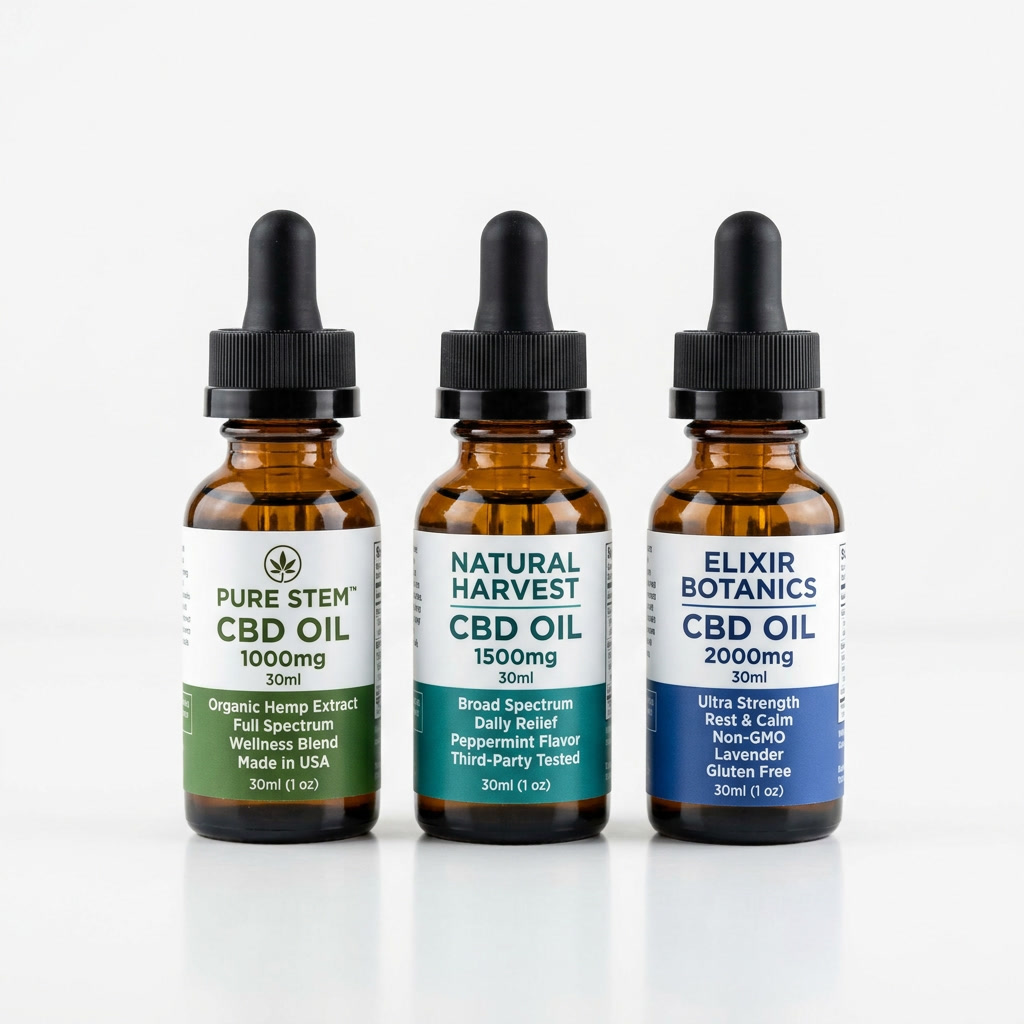
Finally, be wary of dramatic claims. A reputable product will not promise to cure fibromyalgia or to replace your medical care. You can browse options in our CBD topicals and creams collection, and compare them with CBD oils and tinctures if you are weighing routes.
How People Use Topical CBD in Practice
There is no official, universal protocol for topical CBD, and the research does not give a precise dose. That absence is frustrating, but it is also normal for a young field.
Most people start with a small amount on a small area. Apply a thin layer to clean skin over the area that hurts, then wait and see how it feels. Some people notice a sensation of warmth, cooling, or calm. Others notice nothing at the first application. Both are ordinary outcomes.
A few days of once-daily use tells you very little. A stretch of consistent use over a couple of weeks is more informative than a single hopeful afternoon.
Track what happens. A simple note about pain level, sleep, and how your body feels each day can be surprisingly revealing. Memory is unreliable when you are tired and hurting, and a short log turns a vague impression into something you can actually evaluate.
How Long Before You Might Notice Something
This is one of the most common questions, and the useful answer is that it varies. Some people report a local effect fairly soon after applying a topical, within minutes to an hour. Others feel nothing clear for days or weeks, or at all. With ingested CBD, the timeline is different again, because it has to be absorbed and processed, and low and variable absorption can stretch the window out.
Fibromyalgia itself complicates the picture. Symptoms fluctuate, flares come and go, and better sleep one week can change how you feel the next. That makes it hard to know whether a change came from a product or from the condition simply moving on its own. For a fuller discussion of timing across forms, see how long CBD takes to work.
Decide in advance what you would count as a meaningful change, then give the product a fair window. If nothing changes after a reasonable trial, that is real information, and it is fine to stop.
Safety and Honest Limits
CBD is not risk-free simply because it is sold widely. A few honest points are worth holding onto.
CBD can interact with some medications. It affects certain liver enzymes that break down other drugs, which means it can change how those drugs behave in your body. If you take prescription medication, especially anything with a narrow safety margin, talk to your clinician or pharmacist before adding CBD. This is basic drug interaction awareness.
Side effects are usually mild for many people, and can include drowsiness, changes in appetite, or digestive upset, more often with ingested forms than topicals. Topical use tends to be better tolerated locally, though skin irritation is possible, especially with sensitive skin.
And then the biggest limit of all. The evidence for CBD in fibromyalgia is early. The topical study was a small feasibility pilot. The broader review shows a field still finding its footing. The THC to CBD trial is a different product class entirely. Anyone claiming certainty here is overselling what we know.
Action Steps
If you want to move forward thoughtfully, here is a simple path.
1. Set a realistic goal. Decide whether you hope to ease a specific painful area, improve how you feel overall, or simply try something new with low risk.
2. Talk to your clinician first, particularly if you take other medications or have health conditions. Bring the study details with you.
3. Choose a quality topical. Look for third-party testing, clear CBD content labeling, and a simple ingredient list.
4. Start small and slow. Apply a little to a small area. Note how your skin and your body respond before expanding.
5. Keep a simple log. Record pain, sleep, and mood for a couple of weeks. That turns a hopeful guess into something you can judge.
6. Give it a fair trial, then decide. If you notice nothing meaningful after a reasonable window, stop. That is a valid outcome, not a failure.
7. Keep the bigger picture in view. A topical is one part of managing fibromyalgia, alongside sleep, pacing, movement that suits you, and the care of your medical team.
Bottom Line
Topical CBD for fibromyalgia is interesting and worth watching, but the honest headline is that the evidence is still early and mixed. The 2026 12-week study was a small pilot focused on feasibility, which means it asked whether this approach can be tested and tolerated, not whether it definitively relieves pain. The scoping review of cannabis-based medicines for nociplastic pain shows a field with real signals and real variation. The 1:1 THC to CBD oil trial is a different product entirely and should not be confused with a CBD-only topical. And the pharmacology review reminds us that low-dose CBD behaves in ways that resist simple promises.
If you want to explore CBD for fibromyalgia, do it with clear eyes. Choose a tested product, start small, keep notes, and give it a fair but bounded trial. Hold the hope and the skepticism together. That is exactly how the science itself is proceeding, one careful step at a time.
Find Your Perfect CBD Product
Take our 2-minute quiz to get personalized recommendations based on your needs.
Take the Quiz →Disclaimer: This article is for informational purposes only and does not constitute medical advice. CBD products are not FDA-approved to treat, cure, or prevent any disease. Always consult with a qualified healthcare professional before starting any new supplement, especially if you have a medical condition or take medications.