CBD for Dental Anxiety: What the 2024 RCT and Research Show
Your palms get sweaty the moment you pull into the dental office parking lot. The sound of the drill makes your chest tighten. You've rescheduled that root canal three times, and part of you wonders if you'll ever actually go through with it. You're not alone — dental anxiety is one of the most common reasons people avoid the dentist, and it's a big part of why so many adults put off essential care.
If you've been reading about CBD, you've probably seen claims that it can calm nerves before a procedure. But here's the honest question: does the science actually back that up? In 2024, researchers published a double-blind randomized trial testing CBD before endodontic (root canal) treatment. The results are more nuanced than the marketing suggests — and they're worth understanding before you decide whether CBD belongs in your pre-appointment routine.
In this guide, we'll break down what dental anxiety is, what the 2024 RCT actually found, what the broader research on CBD and anxiety shows, and how to think about using CBD responsibly if you're curious. We'll be straight with you about the limitations, because you deserve real information, not hype.
What Dental Anxiety Is and Why It Matters
Dental anxiety is the fear or unease people feel about dental visits, and it's far more common than most people realize. A 2026 cross-sectional survey of adults in Dentistry Journal found that 60.5% of respondents reported some degree of pre-procedural anxiety, with 11.7% reporting moderate-to-severe levels. Tooth extractions and periodontal surgery were the procedures that triggered the most anxiety.
The consequences go beyond discomfort. People with dental anxiety are more likely to delay or skip appointments, which means small problems turn into bigger ones — cavities become root canals, and gum issues become advanced disease. That avoidance is exactly why finding ways to manage anxiety matters, not just for comfort but for long-term oral health.
It's also worth noting that dental anxiety isn't a single thing. For some people it's a general nervousness about being in the chair; for others it's a specific fear of needles, drills, or pain. Understanding what's driving your anxiety is the first step to managing it, whether that's with breathing techniques, sedation options, or — potentially — something like CBD.
Why People Turn to CBD for Dental Anxiety
CBD has become a go-to for people looking for a natural way to take the edge off. It's widely available, generally well tolerated, and doesn't produce the "high" associated with THC. For someone facing a dental appointment, the appeal is obvious: take something an hour before, feel calmer in the chair, and avoid the grogginess or side effects that can come with prescription sedatives.
The logic isn't crazy. CBD interacts with the endocannabinoid system, a signaling network involved in regulating stress, pain, and mood. And there's a real body of research exploring CBD for anxiety more broadly. But here's the catch: the evidence for CBD specifically in the dental chair is much thinner than the marketing suggests, and the one randomized trial we have on the topic didn't find a clear benefit. That's a crucial distinction, and we'll get into it in detail. If you're new to how CBD works, our guide to CBD for anxiety and clinical trials is a good place to start.
The 2024 RCT: What the Study Actually Found
The centerpiece of this topic is a 2024 study published in the Journal of Endodontics — the official journal of the American Association of Endodontists. The trial, led by de Andrade Silva and colleagues, was a double-blind, randomized clinical trial testing a CBD-rich cannabis extract before endodontic treatment.
Here's how it worked. Patients were randomly assigned to receive either the CBD-rich extract or a placebo before their root canal procedure. Researchers measured anxiety using the Modified Dental Anxiety Scale and a visual analog scale, both before and immediately after treatment. They also measured salivary cortisol (a stress hormone) and tracked postoperative pain at 24, 48, and 72 hours, plus 7 days after the session.
Now for the honest part — and this is important. The study did not find a significant difference between the CBD group and the placebo group in reducing dental anxiety or postoperative pain. In fact, the mean anxiety scores were actually higher in the CBD group than the placebo group at each assessment point. The authors concluded there was no evidence of a benefit from the intervention, and they called for more research to determine clinical outcomes.
This is a sobering result, and it's exactly the kind of finding that rarely makes it into marketing materials. It doesn't mean CBD is useless — it means the evidence for CBD specifically for dental anxiety is not there yet, and the one randomized trial we have didn't show a benefit.
Why the RCT Result Matters (and What It Doesn't Mean)
It's tempting to dismiss a single negative trial, but this one deserves attention for a few reasons. First, it's the most rigorous study we have on CBD for dental anxiety — a double-blind, placebo-controlled design is the gold standard. Second, it measured both subjective anxiety and a biological marker (cortisol), which strengthens the findings. Third, it's published in a respected dental journal, not a wellness blog.
But a single study is never the final word. This was a relatively small trial, and the dose, timing, and formulation of the CBD extract all matter. It's possible that a different dose, a different delivery method, or a longer lead time before the appointment could produce different results. We simply don't know yet. What this means for you: if you're hoping CBD will reliably calm you before a dental procedure, the current evidence doesn't support that expectation. That's not a reason to write CBD off entirely — it's a reason to be realistic about what it can and can't do, and to talk to your dentist about options that are better supported.
What the Broader Research on CBD and Anxiety Shows
To understand the dental anxiety picture, it helps to look at the wider evidence on CBD and anxiety. Here the research is more extensive, but it's also more mixed than the headlines suggest.
A 2025 systematic review and meta-analysis in Cannabis and Cannabinoid Research examined different cannabinoid formulations for anxiety-related disorders, pooling 21 placebo-controlled randomized trials across social anxiety disorder, generalized anxiety disorder, PTSD, and related conditions. The authors found some signal for certain formulations, but the picture was far from uniform.
A larger 2026 systematic review and meta-analysis in The Lancet Psychiatry took a broader view, analyzing 54 randomized trials of cannabinoids for mental health conditions. The findings were sobering: there were no significant effects on outcomes associated with anxiety across the trials analyzed. The authors concluded that the routine use of cannabinoids for mental disorders is "currently rarely justified" given the scarcity of high-quality evidence.
The bottom line: CBD shows real promise in some contexts, but the clinical evidence for anxiety is inconsistent, and the strongest reviews find little to no benefit for anxiety outcomes. That context matters a lot when you're considering CBD for a specific, high-stakes situation like a dental procedure.
How CBD Works (and Why Dosing Is Tricky)
If you're going to consider CBD at all, it helps to understand the basics. CBD interacts with the endocannabinoid system, which helps regulate stress responses, pain perception, and mood. Unlike THC, CBD doesn't bind strongly to the receptors that produce a "high" — instead, it appears to influence the system more subtly, which is why it's generally considered non-intoxicating.
But CBD's effects depend heavily on dose, timing, and how it's taken. Oral CBD (oils, tinctures, gummies) has to pass through the digestive system and liver, which means it takes longer to kick in — often 30 to 90 minutes — and its absorption can be unpredictable. Sublingual oils (held under the tongue) absorb faster. The dose that works for one person may do nothing for another, and there's no official recommended dose for anxiety. This variability is a big reason the research is so inconsistent, and it's why you'd need to know your response well in advance of an appointment — not experiment for the first time in the waiting room.
How People Actually Use CBD Before a Dental Visit
Despite the limited evidence, many people do try CBD before dental appointments, and it's worth understanding the common approaches — even if the science doesn't fully back them up yet.
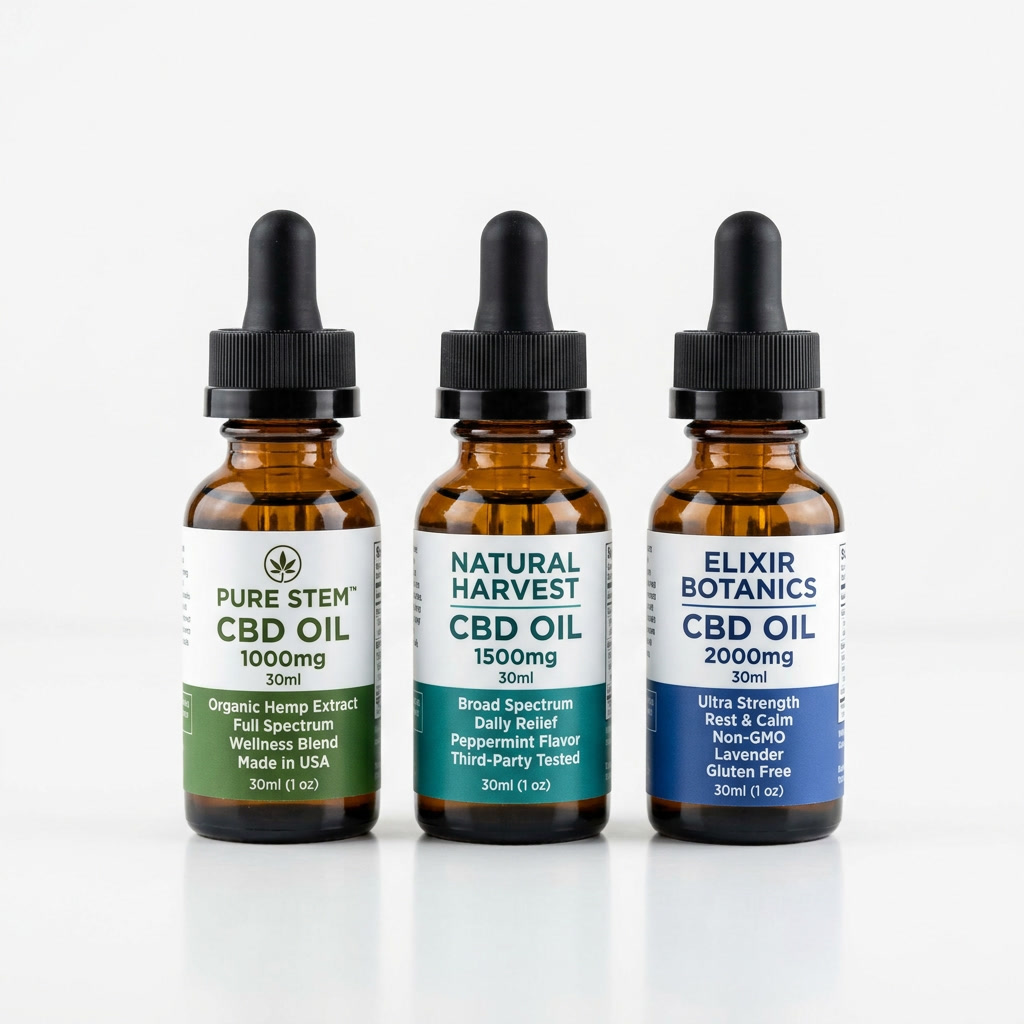
The most common method is an oral CBD oil or tincture taken about an hour before the appointment, held under the tongue for 30 to 60 seconds before swallowing. Some people prefer CBD gummies or edibles, which are convenient but take longer to absorb and are harder to dose precisely. A few people use CBD topicals, though these are unlikely to help with anxiety since they don't reach the bloodstream in meaningful amounts.
If you're curious about trying CBD, our CBD oils and tinctures and CBD gummies and edibles pages are good places to compare options. But here's the honest guidance: because the evidence for CBD specifically for dental anxiety is weak, don't rely on it as your only strategy. And definitely don't try a new product for the first time on the day of your appointment.
Safer, Better-Supported Ways to Manage Dental Anxiety
If the evidence for CBD is thin, what actually works? The good news is that there are well-established strategies with much stronger support.
Talk to your dentist. This is the single most important step. Dentists deal with anxious patients every day, and they have a range of tools — from clear communication and gentle techniques to nitrous oxide (laughing gas), oral sedatives, and IV sedation for more severe cases. Being upfront about your anxiety lets them tailor the experience to you.
Use behavioral techniques. Deep breathing, progressive muscle relaxation, and distraction (music, podcasts, or a movie during the procedure) are simple, free, and effective for many people. Agreeing on a "stop signal" with your dentist — like raising your hand — can give you a sense of control that reduces anxiety.
Consider established anxiety treatments. If your dental anxiety is severe or part of a broader anxiety condition, cognitive behavioral therapy (CBT) has strong evidence behind it. For some people, prescription anti-anxiety medication taken before a procedure is appropriate — but that's a decision to make with your dentist and doctor.
Build a routine. Regular, low-stress visits can help desensitize you over time. The more familiar the environment becomes, the less intimidating it tends to feel.
Honest Limitations: What We Still Don't Know
Let's be direct about the limits of the current evidence. We have exactly one randomized controlled trial of CBD for dental anxiety, and it found no significant benefit. That's a very thin evidence base, and it's not enough to recommend CBD as a reliable tool for this purpose.
The broader anxiety research is more extensive but inconsistent, with the largest and most rigorous reviews finding little to no benefit for anxiety outcomes. There's also a real placebo effect at play, which means some of the relief people report may not be from the CBD itself.
We also don't have good data on the ideal dose, timing, or formulation of CBD for a dental setting. The 2024 RCT used a specific CBD-rich extract at a specific dose, and we can't assume other products or doses would behave the same way. And because CBD products aren't tightly regulated, what's in the bottle can vary widely from what's on the label.
None of this means CBD is dangerous or worthless — it means the honest answer is "we don't know yet," and that's not the same as "it works."
Safety Considerations Before You Try CBD
If you do decide to try CBD, safety should come first. CBD is generally well tolerated, but it's not risk-free, and it can interact with other medications.
CBD is known to affect how the liver processes certain drugs, which can change how your medications work. If you take blood thinners, antidepressants, seizure medications, or any prescription drug, talk to your doctor or pharmacist before using CBD. This is especially important if you're also taking medication for anxiety or sedation around a dental procedure — combining them could have unintended effects.
There's also the question of what's actually in the product. Because CBD isn't tightly regulated, some products contain more THC than labeled, which could show up on a drug test or produce unexpected effects. Always choose products with third-party lab testing, and start with a low dose. If you're pregnant, nursing, or have a medical condition, check with a healthcare provider first.
When to Talk to a Dentist (and What to Ask)
The most important takeaway from all of this is simple: if dental anxiety is affecting your care, talk to your dentist. You don't have to figure this out alone, and there are options with much stronger evidence than CBD.
Here are a few questions worth asking at your next visit:
- Can we go over the procedure step by step before we start?
- What sedation or anxiety-management options do you offer?
- Can we agree on a signal for me to pause if I need a break?
- Is there anything I should avoid taking before my appointment?
If you're considering CBD, mention it to your dentist and doctor. They can help you weigh the potential benefits against the risks, especially if you're taking other medications. And if your anxiety is severe or part of a broader anxiety condition, a mental health professional can help you build a more comprehensive plan.
Frequently Asked Questions
Does CBD help with dental anxiety?
The current evidence is limited. The 2024 double-blind randomized trial in the Journal of Endodontics found no significant difference between CBD and placebo for reducing dental anxiety or postoperative pain before endodontic treatment. More research is needed before CBD can be recommended for this purpose.
Is CBD safe to take before a dental appointment?
CBD is generally well tolerated, but it can interact with other medications, including sedatives and anti-anxiety drugs. Always talk to your dentist and doctor before combining CBD with any medication, and choose products with third-party lab testing.
How much CBD should I take for anxiety?
There's no official recommended dose for anxiety, and the evidence is inconsistent. Some studies use doses from 25 mg to 200 mg, but effects vary widely by person and product. If you're considering CBD, start low and go slow — but don't experiment for the first time on the day of a dental appointment.
What are the best alternatives to CBD for dental anxiety?
Well-supported options include talking to your dentist about sedation (nitrous oxide, oral sedatives, or IV sedation), using behavioral techniques like deep breathing and distraction, and considering cognitive behavioral therapy for severe anxiety. These have much stronger evidence than CBD.
Can CBD help with dental pain after a procedure?
The 2024 RCT found no significant difference in postoperative pain between the CBD and placebo groups. While some research on CBD for pain is promising, the evidence for dental pain specifically is not established. Follow your dentist's pain-management instructions.
Bottom Line
Dental anxiety is real, common, and worth addressing — but the evidence for CBD as a solution is not there yet. The 2024 double-blind randomized trial of CBD before endodontic treatment found no significant benefit for anxiety or pain, and the broader research on CBD and anxiety is mixed, with the largest reviews finding little to no effect. That doesn't mean CBD is useless, but it does mean you shouldn't rely on it as your primary strategy for a dental appointment.
The most effective approach is to talk to your dentist about your anxiety, explore well-supported options like sedation and behavioral techniques, and only consider CBD as a possible complement — with your doctor's input, especially if you take other medications. If you're curious about CBD for other purposes, our guide to CBD for anxiety and clinical trials and CBD for oral health cover the research in more depth. And if you do want to explore CBD products, our CBD oils and tinctures and CBD gummies and edibles pages are a good starting point. But for dental anxiety specifically, the honest answer is: the science is still catching up, and your dentist is your best ally.
Citations
PMID | Journal | Year | Title
39505200 | Journal of Endodontics | 2024 | Effect of Preoperative Oral Cannabidiol-Rich Cannabis Extract on Anxiety and Postoperative Pain after Endodontic Treatment: A Double-Blind Randomized Clinical Trial
42505746 | Dentistry Journal | 2026 | Dental Anxiety Prevalence, Correlates, and Patient-Preferred Management Strategies in Romanian Adults: A Cross-Sectional Survey
40956670 | Cannabis and Cannabinoid Research | 2025 | Effects of Different Cannabinoid Formulations on Anxiety-Related Disorders, and Tourette Syndrome: A Systematic Review and Meta-Analysis
41856154 | The Lancet Psychiatry | 2026 | The efficacy and safety of cannabinoids for the treatment of mental disorders and substance use disorders: a systematic review and meta-analysis
41316488 | Journal of Cannabis Research | 2025 | Placebo effects in a RCT assessing 30 days of low dose Cannabidiol (CBD) treatment for psychological distress in stressed students at risk for depression
42454450 | Journal of Psychopharmacology | 2026 | Acute behavioural effects of low-dose cannabidiol: A randomised crossover trial in healthy volunteers
42380607 | Molecular Psychiatry | 2026 | Effects of cannabidiol on anxiety- and depressive-like behaviors and cognition: a systematic review and meta-analysis of preclinical studies
Find Your Perfect CBD Product
Take our 2-minute quiz to get personalized recommendations based on your needs.
Take the Quiz →Disclaimer: This article is for informational purposes only and does not constitute medical advice. CBD products are not FDA-approved to treat, cure, or prevent any disease. Always consult with a qualified healthcare professional before starting any new supplement, especially if you have a medical condition or take medications.