CBD and Cluster & Trigeminal Headaches: What the 2023–2026 Research Shows

If you've ever been gripped by a cluster headache, no one needs to explain why it earned its brutal nickname. It's usually a single-sided, eye-watering, restless agony that hits like clockwork — often at the same time of night, in bouts that can stretch for weeks. Some people call it the "suicide headache," not because they're dramatic, but because the intensity genuinely reaches a point where sufferers understand the name all too well. And if you live with trigeminal neuralgia, you know a different kind of lightning — sudden, electric jolts of facial pain so sharp that even a breath of wind across your cheek can feel like an attack.
If standard treatments haven't fully controlled your symptoms — or if you've been watching your prescription fill dates roll by and wondering whether there's another layer of support worth exploring — you're not alone in asking about CBD. Cannabinoids have been talked about for pain for years, and the science around headache pathways has moved quickly. Between 2023 and 2026, researchers published real clinical trials and mechanistic studies that finally give us something concrete to point to.
Here's the honest version of what we know: CBD is a support tool, not a replacement for your headache medication, and the direct evidence for cluster headaches specifically is still thin. But the 2023–2026 research on migraine, the CGRP pathway, and cannabinoid pain signaling is genuinely encouraging — and it's worth understanding before you spend a cent.
What a Cluster Headache Actually Is
Cluster headaches are one of the most severe primary headache disorders known to medicine. They get their name from the way they cluster in time — attacks arriving in bouts (often called cluster periods) that can last weeks or months, followed by periods of remission that may last months or years. During a bout, attacks can occur one to eight times a day, frequently waking people from sleep.
The pain is almost always strictly one-sided and centers around the eye, temple, or forehead. It builds quickly to peak intensity — often within minutes — and can last anywhere from 15 minutes to three hours. Along with the pain, the affected side may show autonomic signs like a red, watering eye, a drooping eyelid, nasal congestion, or forehead sweating. And unlike migraine, where people typically want to lie still in a dark room, people with cluster headaches often pace, rock, or press their head against something — the restlessness is one of the condition's hallmarks.
The term "suicide headache" is not an exaggeration of severity; it's a stark description of the intensity that patients and clinicians use to communicate how extreme the pain can be. That's part of why it deserves careful, respectful discussion — and why anyone exploring CBD as an addition needs honest expectations, not hype.
Trigeminal Neuralgia: Lightning in the Face
Trigeminal neuralgia is a different disorder entirely, though it lives in the same neighborhood of the nervous system. It's a chronic pain condition affecting the trigeminal nerve — the large nerve that carries sensation from your face to your brain. The pain is typically described as sharp, electric, or shock-like, and it strikes in brief but severe paroxysms that can be triggered by everyday actions: brushing your teeth, chewing, talking, or even a light touch.
Both cluster headache and trigeminal neuralgia involve the trigeminal system, which is why they're often grouped together in pain research even though their clinical pictures are very different. That shared anatomy matters for CBD, because the trigeminal nerve and its pain-processing pathways are central to how researchers are now thinking about cannabinoids and head pain.
How These Differ from Migraine
It's easy to lump all head pain together, but cluster headache, trigeminal neuralgia, and migraine are distinct conditions with different mechanisms and different treatments. Understanding the difference is the first step toward realistic expectations about CBD.
- Migraine is typically throbbing, often one-sided, and frequently accompanied by nausea, light and sound sensitivity, and sometimes an aura. Attacks can last hours to days.
- Cluster headache is intensely one-sided, orbital, rapid in onset, short in duration, and accompanied by autonomic symptoms. It arrives in circadian patterns and in bouts.
- Trigeminal neuralgia is a facial pain disorder — sharp, electric, brief paroxysms triggered by touch or movement — rather than a headache per se.
What unites them is that they all route through the trigeminal-vascular system and the brain's pain-processing network. That shared biology is the reason a drug studied for migraine can sometimes inform thinking about other trigeminal pain — and why the 2026 migraine trial is relevant reading even for people whose primary struggle is cluster or trigeminal.
The CGRP Pathway: The Common Thread in Head Pain
If you've heard of the newer migraine preventives, you've heard of CGRP — calcitonin gene-related peptide. CGRP is a small protein released from trigeminal nerve endings that dilates blood vessels and promotes neurogenic inflammation. It has become one of the most important targets in headache medicine because it appears to play a central role in migraine attacks, and there's growing evidence it matters in cluster headache and other trigeminal pain as well.
When a trigeminal nerve fiber fires, it releases CGRP and other signaling molecules that drive the cascade of events behind pain and inflammation in the head. This is where cannabinoids enter the story, because the endocannabinoid system is deeply wired into this same territory.
How Cannabinoids Interact with Headache Pain Pathways
Cannabinoids — the active compounds in cannabis, including CBD — act on the endocannabinoid system, a network of receptors (CB1 and CB2) and signaling molecules that helps regulate pain, inflammation, and nervous-system excitability across the body. CB1 receptors are abundant in areas of the brain and spinal cord that process pain, including the trigeminal system. CB2 receptors are more associated with immune cells and inflammation.
The mechanistic hope for CBD in headache is that it can modulate this pain-processing circuitry — damping neuronal excitability, reducing inflammation, and influencing how the trigeminal system responds to triggers — without the psychoactive "high" that comes with THC. CBD also interacts with a range of other receptors and channels involved in pain signaling, which is part of why it's been studied so widely for chronic pain conditions.
It's important to note that much of this mechanistic picture comes from preclinical research, not from large human trials in cluster headache specifically. But it gives us a plausible biological reason why the clinical research that does exist — much of it in migraine — has been worth pursuing.
What the 2023–2026 Research Actually Shows
This is where the picture sharpens. The past few years have produced genuinely relevant studies, including a landmark 2026 randomized trial in people.
A 2026 RCT on vaporized cannabis for acute migraine
The most important recent human data is a randomized, double-blind, placebo-controlled crossover trial published in Headache in 2026, examining vaporized cannabis versus placebo for acute migraine. Randomized controlled trials are the gold standard in medicine, and a blinded, placebo-controlled crossover design is exactly what the field has been waiting for. The study reported on real patients treating actual migraine attacks, moving beyond the retrospective surveys and anecdotal reports that dominated earlier literature (Schuster, Headache, 2026).
This matters for the cluster and trigeminal community because it's proof-of-concept that inhaled cannabis can be studied rigorously for head pain — and because the underlying trigeminal-vascular mechanisms overlap.
Cannabinoids and CGRP: the mechanistic mouse evidence
A 2025 study in Cephalalgia took a different, more targeted approach. Researchers produced migraine-like symptoms in mice by administering CGRP centrally — essentially triggering the very pathway implicated in migraine and cluster — and then showed that cannabinoids rescued those symptoms (Zorrilla, Cephalalgia, 2025). A related 2025 paper found that combining CBD with Δ9-THC was more effective at alleviating migraine-like symptoms than either compound alone — an argument for the "entourage effect," where whole-plant compounds work together (Zorrilla, Cephalalgia, 2025).
These studies are animal models, so they can't tell us what will happen in a person. But they provide some of the cleanest mechanistic evidence yet that cannabinoids act on the CGRP pathway directly — the same pathway central to migraine and implicated in cluster headache.
Real-world and clinical-perspective reports
Beyond controlled trials, the recent literature adds texture. A 2025 real-life retrospective report in Frontiers in Pharmacology tracked women using full-spectrum cannabis extracts for chronic pain syndromes, reporting multi-symptom improvement in everyday conditions (Soares Silva, Front Pharmacol, 2025). This kind of data is lower-quality evidence than an RCT, but it reflects how people actually use these products over time.
A 2025 clinical perspective in JAAPA asked directly whether CBD should be used for migraine, and a 2025 review in Current Opinion in Neurology examined whether cannabinoids are "helpful or harmful" in headache more broadly (Luu, JAAPA, 2025; Kuruvilla, Curr Opin Neurol, 2025). Both arrive at a measured conclusion: there's promise, but the evidence base is still developing, and these compounds are not substitutes for established headache treatments.
> "Cannabinoids appear to modulate the CGRP-related pain pathways implicated in migraine and other trigeminal headaches, but direct human data — especially for cluster headache — remains limited, and patients should treat these products as adjuncts rather than replacements." — synthesized from recent Cephalalgia and neurology reviews (2025)
The Honest Limitations: Little Direct Cluster-Specific Human Data
I want to be direct with you, because you deserve better than oversimplification. There is almost no high-quality, human, cluster-headache-specific evidence for CBD. The 2026 RCT was in acute migraine, not cluster attacks. The mouse studies were preclinical. The retrospective and review literature is promising but doesn't constitute proof for cluster headache specifically.
Cluster headache is also a distinct beast. It's less common than migraine, harder to recruit large trial populations for, and its attacks are shorter and more intense — which changes the calculus for how fast an intervention needs to work. A vaporized or inhaled product might theoretically act quickly, but no trial has tested it against an active cluster attack in a controlled way.
That gap is not a reason to dismiss CBD — it's a reason to hold it with humility. The right frame is: the biology is plausible, the adjacent evidence (migraine, CGRP, chronic pain) is encouraging, and the direct proof you might wish for simply doesn't exist yet. Anyone telling you CBD is a proven cluster-headache treatment is overstating the evidence.
How People Use CBD for Headache Pain
If you're considering trying CBD as a support measure, it helps to understand the main formats and how they differ in onset and duration. There's no "correct" product for everyone, and the choice often comes down to how quickly you need relief versus how long you want effects to last.
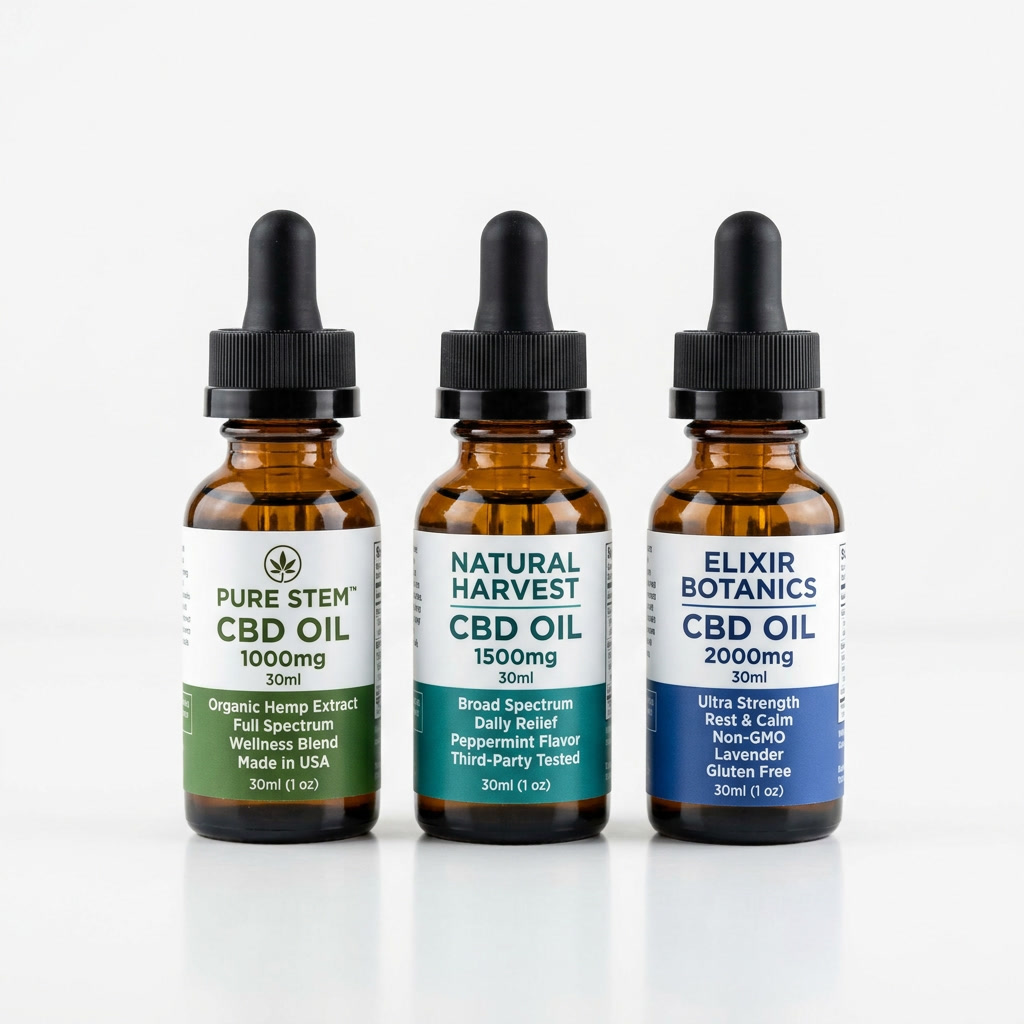
- CBD oils and tinctures are taken under the tongue, where absorption begins quickly. They're the most common choice for people who want reasonably fast onset with control over dosing. Many people keep a dropper bottle on hand during a cluster period.
- CBD gummies and edibles pass through digestion, so onset is slower (often 30–90 minutes) but effects tend to last longer. These suit people who want sustained, background support rather than acute rescue.
- CBD capsules and softgels are similar to edibles in timing — predictable and convenient — and can be helpful for keeping a consistent daily routine.
- Topicals apply to the skin and are unlikely to meaningfully address deep, nerve-driven head pain, since CBD doesn't reliably penetrate to the trigeminal nerve roots. They're not the main tool for headache, though some people use them on neck and shoulder tension.
For a condition like cluster headache, where attacks strike fast and are short, the timing mismatch is a real consideration. A slow-onset oral product is a poor rescue tool for a 15-minute attack. If anything, the more compelling use is daily preventive support during a cluster period — but that's precisely where the evidence is thinnest, so treat it as an experiment, not a certainty.
Realistic Expectations: What CBD Can and Can't Do
Let's set expectations clearly, because disappointment usually comes from mismatch.
What CBD might do:
- Modulate pain signaling through the endocannabinoid system and CGRP-related pathways (supported by the 2025 animal data).
- Offer a supportive, generally well-tolerated option alongside your prescribed treatment, especially for people who also wrestle with anxiety, sleep disruption, or chronic pain more broadly.
- Potentially contribute to a multi-pronged approach, since headache often coexists with muscle tension, poor sleep, and stress.
What CBD is not:
- A replacement for your prescribed acute or preventive headache medication. Do not stop a treatment that's working to try CBD.
- A proven rescue for an active cluster attack — no controlled human trial supports that use.
- A guaranteed preventive for trigeminal neuralgia. The evidence simply isn't there yet.
If you already manage migraine and are curious about the broader picture, our guide on CBD for migraine covers that territory in depth. For chronic pain more generally, including nerve and inflammatory pain, our CBD for chronic pain resource is worth a read.
Safety and Talking to Your Doctor
CBD is generally well tolerated, but it is not side-effect-free, and it does interact with other medications. This is especially important for headache, because many people with cluster headache or trigeminal neuralgia are on multiple drugs — including triptans, anticonvulsants, calcium-channel blockers, and CGRP monoclonal antibodies.
- Drug interactions are real. CBD is processed by the liver's CYP450 enzymes, and it can raise or lower blood levels of other drugs metabolized the same way. This can make a medication more potent than intended or less effective.
- Common side effects include drowsiness, dry mouth, diarrhea, and changes in appetite. These are typically mild but worth planning around.
- Product quality varies enormously. Because CBD is not tightly regulated, third-party lab testing matters. Look for products with a certificate of analysis (COA) showing actual cannabinoid content and confirming the absence of contaminants.
- Start low and go slow. If you and your doctor decide to try it, begin with a low dose, keep a symptom diary, and adjust gradually. Headache conditions are variable, so a diary helps you tell whether any change is real or just the natural ebb and flow of your condition.
Before adding CBD — or changing anything about your headache treatment — talk to your neurologist or pain specialist. Bring them the product you're considering and the dose. A good doctor wants to help you layer in safe options; they just want to make sure nothing conflicts with what you're already taking.
Action Steps
If you're ready to explore CBD thoughtfully as a support tool, here's a sensible sequence:
1. Talk to your doctor first. Review your current medications and ask specifically about CBD drug interactions. This is non-negotiable if you take anything for headache or any chronic condition.
2. Choose a reputable product with third-party lab testing. Look for a certificate of analysis, clear labeling, and a known brand. Decide between oils and tinctures for faster onset, gummies and edibles for longer-lasting support, or capsules and softgels for routine consistency.
3. Start low and keep a headache diary. Track attacks, intensity, triggers, and any supplement you add. Give it weeks, not days — and be honest with yourself about what the diary shows.
4. Use CBD as an addition, not a substitution. Keep taking your prescribed treatment exactly as directed unless your doctor tells you otherwise.
5. Reassess with your clinician. After a month or two, review the diary with your doctor and decide whether CBD is earning its place in your routine.
The Bottom Line
The 2023–2026 research has moved CBD and head pain from anecdote toward actual evidence. A 2026 randomized controlled trial showed vaporized cannabis can be studied rigorously for acute migraine, and 2025 studies demonstrated that cannabinoids act on the CGRP pathway implicated across migraine, cluster headache, and trigeminal pain. That's real progress.
But the honest bottom line is that direct, cluster-headache-specific human data is still scarce, and CBD belongs in your toolbox as a support — not as a stand-in for the treatments your neurologist has built around you. If you're curious, the responsible path is clear: talk to your doctor, choose a clean, tested product, start low, and keep track of what actually happens.
When head pain has made you feel powerless, exploring a carefully chosen support tool is a reasonable, hopeful step. Just keep your expectations grounded, keep your doctor in the loop, and let the evidence — not the marketing — guide you.
Find Your Perfect CBD Product
Take our 2-minute quiz to get personalized recommendations based on your needs.
Take the Quiz →Disclaimer: This article is for informational purposes only and does not constitute medical advice. CBD products are not FDA-approved to treat, cure, or prevent any disease. Always consult with a qualified healthcare professional before starting any new supplement, especially if you have a medical condition or take medications.