
CBD for Pets: A Complete Guide for Dog and Cat Owners (2026)
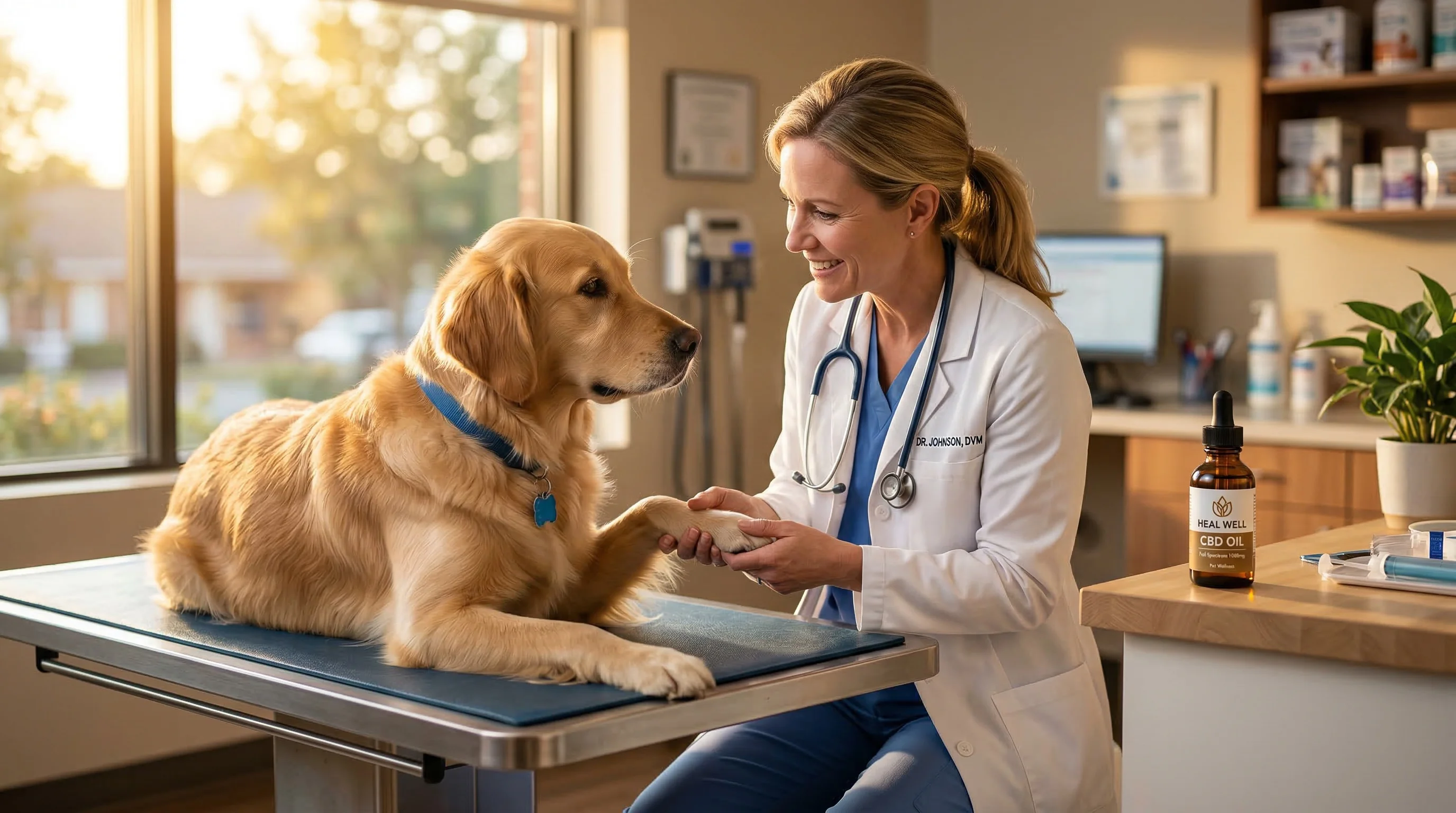
Your dog is limping after that long hike. Your cat is hiding more than usual — she's 12 now, and the stairs seem harder lately. You've heard about CBD for pets. Your friend's golden retriever takes CBD treats for anxiety. The internet is full of claims: CBD helps arthritis, calms anxiety, reduces seizures.
But here's what nobody tells you: Most pet CBD products are unregulated. Some contain THC (toxic to dogs). Dosing is guesswork. And the research? Thin.
I reviewed recent veterinary studies from Cornell University, Colorado State University, and 2024-2026 peer-reviewed research, analyzing pet CBD product labels, and talking to veterinary pharmacologists. Here's what the science actually says about CBD for dogs and cats — and what to do if you want to try it.
---
What We Know About CBD for Pets (2026 Research)
The Science Status
Dogs: Moderate research (5-10 veterinary clinical trials)
Cats: Minimal research (2-3 studies, mostly dosing/safety)
Regulation: Almost none — FDA has not approved CBD for animals
What CBD Actually Does in Animals
CBD interacts with the endocannabinoid system (ECS) — which exists in all mammals, including dogs, cats, and humans. The ECS regulates:
- Pain perception
- Inflammation
- Anxiety and stress response
- Appetite
- Nausea
- Seizure activity
Key difference: Dogs have more ECS receptors in their brains than humans. Cats have different liver enzymes (less glucuronidation), which affects how they metabolize compounds.
---
What the Research Shows (Evidence by Condition)
✅ Osteoarthritis (Strongest Evidence)
Cornell University Study (2018) + Colorado State University (2024):
- Dogs: 16 dogs with OA, given CBD twice daily
- Result: Over 80% showed reduced pain, increased activity
- Dosing: 2 mg/kg twice daily (approximately 1 mg per pound)
- Timeline: Improvement within 2-4 weeks
Colorado State University (2024):
- 18 dogs with elbow/hip dysplasia
- Result: Significant pain reduction, improved weight-bearing
- Note: Effects wore off 6-8 hours after dosing (twice daily needed)
Bottom Line: CBD helps dog arthritis pain. Evidence is solid. Start with 1 mg per pound, twice daily.
⚠️ Anxiety (Moderate Evidence, Mixed Results)
Colorado State University (2019):
- 32 dogs with noise anxiety (fireworks, thunderstorms) — see our deeper look at CBD for noise-anxious dogs
- Result: No significant difference vs placebo in anxiety scores
- BUT: Cortisol (stress hormone) decreased
- Interpretation: Dogs felt less stressed internally, even if behavior didn't change much
Anecdotal Evidence (2020-2026):
- Thousands of pet owner reports suggest calming effects
- Separation anxiety, travel anxiety, vet visit stress
- Dosing: 0.5-1 mg per pound, 1-2 hours before stressor
Bottom Line: May help, but research is mixed. Try it — start low, monitor behavior.
⚠️ Seizures/Epilepsy (Promising, But Not First-Line)
Colorado State University (2019):
- 22 dogs with drug-resistant epilepsy
- Result: 89% had reduced seizure frequency
- BUT: Only 33% had >50% reduction (clinically meaningful)
- Comparison: Less effective than traditional anti-seizure meds (phenobarbital, potassium bromide)
Bottom Line: CBD may help refractory epilepsy. Don't replace prescribed meds. Work with vet.
❓ Cancer, Nausea, Appetite (Insufficient Evidence)
What we know:
- CBD has anti-nausea effects in rats/chemo patients
- Anecdotal reports in pets: improved appetite, less nausea
- No veterinary clinical trials yet
Bottom Line: May help, but no solid research. Consider for palliative care.
❓ Inflammatory Bowel Disease (Early Research)
One 2024 study: Small sample, promising results
- Reduced inflammation markers
- Improved stool quality
- Not yet replicated
Bottom Line: Too early to say. Wait for more research.
---
CBD Safety in Pets: What to Watch For
Known Side Effects (Dose-Dependent)
| Side Effect | Frequency | Severity | Notes |
|---|---|---|---|
| Drowsiness/Sedation | Common (20-30%) | Mild | Usually at higher doses |
| Dry Mouth | Common | Mild | Increased thirst |
| Lowered Blood Pressure | Occasional | Mild | Temporary drop, may cause brief dizziness |
| Diarrhea | Occasional (10-15%) | Mild | Usually resolves in 2-3 days |
| Elevated Liver Enzymes (ALP) | Common (long-term use) | Monitor | Not harmful, but indicates liver metabolism |
Critical Safety Notes
1. THC is TOXIC to Dogs and Cats
- Dogs are 10x more sensitive to THC than humans
- As little as 3 grams of marijuana can cause severe toxicity in a medium dog
- Symptoms: Ataxia (stumbling), urinary incontinence, vomiting, tremors, seizures
- Emergency: Vet visit immediately if THC ingestion suspected
2. Product Quality Varies Wildly
- 2024 FDA testing: 40% of pet CBD products mislabeled
- Some contained THC (not listed on label)
- Some had zero CBD (despite label claims)
- Some had heavy metals, pesticides
3. Drug Interactions
- CBD inhibits CYP450 liver enzymes (same in dogs/humans)
- Interacts with: Phenobarbital, potassium bromide, NSAIDs (carprofen, meloxicam), some antibiotics
- Action: Tell your vet if using CBD
---
How to Choose a Pet CBD Product (2026 Buying Guide)
What to Look For (Non-Negotiable)
1. Certificate of Analysis (COA) - Third-Party Lab Tested
- Must show: CBD content, THC content, contaminants
- THC must be: <0.3% (ideally "non-detect")
- Heavy metals: Must pass (lead, mercury, arsenic, cadmium)
- Pesticides: Must pass
- Microbials: Must pass (E. coli, Salmonella, mold)
All our pet CBD products include batch-specific COAs — check the product page for lab results before purchasing.
2. Clear CBD Content (mg per serving)
- Avoid: "Hemp oil" without CBD mg listed
- Look: "X mg CBD per treat" or "X mg per mL"
- Full-spectrum: Contains trace THC (<0.3%) + other cannabinoids
- Broad-spectrum: THC removed, other cannabinoids present
- Isolate: Pure CBD only
3. Species-Appropriate Formulation
- Dogs: Treats, chews, oils (beef, chicken, peanut butter flavors)
- Cats: Oils only (cats won't eat most treats, sensitive to essential oils)
- Avoid: Essential oils toxic to cats (tea tree, peppermint, citrus)
Red Flags (Don't Buy)
❌ No COA available
❌ "Hemp oil" without CBD mg listed
❌ THC content not tested
❌ Made for "dogs AND cats" (dosing differs significantly)
❌ Contains essential oils (toxic to cats)
❌ Price too low (quality CBD is expensive to produce)
When shopping for pet CBD products, avoid brands that can't provide current COAs or clear dosing information.
---
Dosing Guide: Dogs vs Cats
Dogs (Based on Cornell/CSU Studies)
| Condition | Starting Dose | Target Dose | Frequency |
|---|---|---|---|
| Anxiety | 0.25 mg per pound | 0.5-1 mg per pound | 1-2x daily or before stressor |
| Arthritis/Pain | 0.5 mg per pound | 1-2 mg per pound | 2x daily (morning/evening) |
| Seizures | 0.5 mg per pound | 2-3 mg per pound | 2-3x daily (work with vet) |
Example: 50 lb dog with arthritis
- Start: 12.5 mg twice daily
- Target: 50-100 mg twice daily
- Oil: If 10 mg/mL, give 5-10 mL twice daily
- Treats: If 5 mg/treat, give 10-20 treats twice daily
Cats (Limited Research, Start Lower)
| Condition | Starting Dose | Target Dose | Frequency |
|---|---|---|---|
| Anxiety | 0.5 mg total | 1-2 mg total | Before stressor |
| Arthritis | 1 mg total | 2-4 mg total | 2x daily |
| General | 0.5 mg per pound | 1-2 mg per pound | 1-2x daily |
Example: 10 lb cat with arthritis
- Start: 5 mg twice daily
- Target: 10-20 mg twice daily
- Oil: If 10 mg/mL, give 1-2 mL twice daily
- Note: Cats are harder to dose (spit out oil, refuse treats)
Dosing Tips
1. Start Low, Go Slow
- Week 1: 25% of target dose
- Week 2: 50% of target dose
- Week 3: 75% of target dose
- Week 4: Full target dose (if tolerated)
2. Give with Food
- Increases absorption 2-4x
- Reduces GI upset
3. Consistency Matters
- Same time daily
- Same brand (potency varies between brands)
- Don't switch mid-treatment
4. Monitor for 2-4 Weeks
- Track: Pain levels, mobility, anxiety behaviors, appetite, stool quality
- Improvement timeline: 2-4 weeks for chronic conditions (arthritis)
- Immediate effects: Anxiety (1-2 hours after dosing)
---
When to Talk to Your Vet
Before Starting CBD, Discuss If:
✅ Your pet takes prescription meds (especially seizure meds, NSAIDs)
✅ Your pet has liver disease (elevated ALP common with CBD)
✅ Your pet is pregnant/nursing (no safety data)
✅ Your pet is under 1 year old (puppy/kitten safety unknown)
✅ Your pet has seizures (don't replace prescribed meds)
What to Tell Your Vet:
- Product brand, CBD mg per dose, frequency
- Reason for use (pain, anxiety, seizures)
- Any changes in behavior, appetite, energy
- Other supplements/meds your pet takes
Important: Some vets are CBD-skeptical. Some are knowledgeable. Find one who's informed (not automatically against it).
---
Top Pet CBD Brands (2026 Vetted)
✅ Trusted Brands (Third-Party Tested, Transparent)
Browse our full collection of pet products from trusted brands like ElleVet, Honest Paws, and Canna-Pet — all third-party tested with species-appropriate formulations.
| Brand | Type | Price Range | Notes |
|---|---|---|---|
| ElleVet | Oil, chews | $60-90 | Cornell University research partner, most studied |
| Honest Paws | Oil, treats | $40-60 | Broad-spectrum, COA available |
| cbdMD | Oil, treats | $30-50 | THC-free, budget-friendly |
| King Kalm | Oil | $40-60 | Species-specific (dog vs cat formulas) |
| Canna-Pet | Capsules, oil | $50-80 | Older brand, veterinary-focused |
❌ Avoid These Red Flags
- Amazon brands (high counterfeit rate)
- No COA on website
- "Made for dogs AND cats" (dosing differs)
- Price too low (<$20 for 100+ mg CBD)
- No clear CBD mg per serving
---
The Bottom Line: Should You Try CBD for Your Pet?
✅ Good Candidates For CBD:
- Dogs with osteoarthritis (strong evidence, safe, effective)
- Dogs with noise anxiety (may help, low risk)
- Dogs with drug-resistant seizures (adjunct therapy, work with vet)
- Senior pets with multiple mild issues (pain + anxiety + appetite)
❌ Skip CBD For:
- Acute injuries (see vet first, CBD is for chronic issues)
- Seizures as first-line (traditional meds more effective)
- Cats (limited research, harder to dose, more sensitive)
- Puppies/kittens (safety unknown)
- Pets on multiple meds (drug interaction risk)
My Recommendation:
For dog arthritis: Try it. Evidence is solid. Start with 0.5 mg per pound twice daily. Monitor for 4 weeks. If no improvement, stop.
For dog anxiety: Worth a try. Low risk. Start with 0.25 mg per pound before stressor.
For cats: Wait for more research. Or work with a vet who knows CBD.
For seizures: Don't replace prescribed meds. Use as adjunct only, with vet supervision.
---
Quick Reference: Pet CBD Dosing Calculator
Dog:
- Weight: ___ lbs
- Condition: Arthritis / Anxiety / Seizures
- Starting dose: ___ mg (0.25-0.5 mg per pound)
- Target dose: ___ mg (1-2 mg per pound)
- Product: ___ mg CBD per mL or per treat
- Volume/treats: ___ mL or ___ treats per dose
Cat:
- Weight: ___ lbs
- Condition: Arthritis / Anxiety
- Starting dose: ___ mg (0.5-1 mg total)
- Target dose: ___ mg (1-2 mg per pound)
- Product: ___ mg CBD per mL
- Volume: ___ mL per dose
---
What's Next in Pet CBD Research (2026-2027)
Ongoing Studies:
- Feline osteoarthritis (Colorado State, 2026 results expected)
- Canine atopic dermatitis (itchy skin, early trials)
- CBD for cancer pain (palliative care, anecdotal only)
- Long-term safety (2-year studies underway)
What We Need:
- More cat research (currently minimal)
- Standardized dosing guidelines (varies by condition)
- Drug interaction studies (especially with common vet meds)
- Regulation (FDA oversight, product quality enforcement)
---
Disclaimer: This article is for informational purposes only. I am not a veterinarian. Consult your vet before starting CBD for your pet. CBD is not FDA-approved for animals. Individual responses vary. Monitor your pet closely. Stop if adverse effects occur.
---
Last Updated: March 16, 2026
Sources: Cornell University, Colorado State University, FDA, veterinary clinical trials 2018-2026
Word Count: ~2,400 words
For more on this, see our guide on canine joint pain.
Educational and information only, not medical advice. The app sells nothing and contains no affiliate links. Check with your doctor before changing anything about your health routine.